Views: 0 Author: Site Editor Publish Time: 2026-06-12 Origin: Site


Choosing your primary seating is not just an aesthetic preference. It represents a critical investment in your daily productivity and your long-term musculoskeletal health. Many buyers struggle with a very common dilemma today. Should you pick the commanding, executive appeal of a classic leather seat? Or should you rely on the utilitarian, modern design of a mesh model? You must understand one core truth immediately. Neither material holds universal superiority over the other. Your optimal choice depends strictly on ambient temperature control, your daily seated hours, and your specific ergonomic requirements. We need to completely dismiss the stubborn myth claiming premium quality always equals leather. In reality, modern synthetic weaves often outclass traditional hides in active work environments. You will soon learn the exact mechanical differences between these popular materials. We will break down their direct impact on your posture, thermal comfort, and overall lifespan. By the end, you can make a strictly evidence-based decision for your personal workspace.
Thermal Regulation: A breathable office chair (mesh) significantly outperforms leather in non-climate-controlled environments, eliminating heat buildup during 8+ hour shifts.
Support Mechanics: High-quality mesh provides suspension-based support that adapts to micro-movements, whereas leather relies on underlying foam padding that may compress over time.
Durability vs. Maintenance: Leather (especially genuine top-grain) offers superior spill resistance and longevity if conditioned, while low-tier mesh is prone to sagging and abrasion.
Cost-to-Performance: Dollar for dollar in the mid-market segment, an adjustable mesh chair typically offers more ergonomic adjustments than a similarly priced leather chair.
You cannot make an informed choice without understanding the underlying material science. Manufacturers engineer modern seating surfaces using vastly different structural philosophies. They design one material to stretch and suspend. They design the other to compress and conform. Let us look closely at these distinct mechanical properties.
Engineers construct modern mesh seating using a highly specific structural composition. They weave together nylon, elastomer, or synthetic fabric threads. They then stretch this woven matrix tightly over a rigid polymer or metal frame. This unique architecture delivers two vital mechanical properties. First, it offers incredibly high tensile strength. Second, it provides high spatial permeability. High-end weaves use advanced elastomers to ensure the fabric returns to its original shape after bearing weight. You rely entirely on this taut, spring-like surface to hold you up.
A leather chair utilizes a completely different layered composition. You are not just sitting on leather; you sit on a complex stack of materials. We must clarify the critical differences across leather grades, as performance varies wildly among them.
Top-Grain Leather: This is genuine animal hide. It retains natural pores, offering slight breathability. It stretches naturally and lasts decades if conditioned properly.
Bonded Leather: Manufacturers blend leftover leather scraps with polyurethane binders. It looks like genuine leather but lacks true structural integrity. It traps heat and frequently peels within a few years.
PU/Faux Leather: This is a fully synthetic plastic layer stamped with a grain pattern. It offers zero natural breathability. It feels supple initially but degrades quickly under heavy friction.
These material differences dictate how the seat distributes your body weight. When you sit in a mesh chair, you experience a "trampoline" effect. The taut surface distributes your weight across a suspension system. It pulls back against your body mass evenly. Conversely, a leather seat distributes weight through a "cushion" effect. Your body compresses a dense block of high-density foam located underneath the hide. The foam crushes downward until it matches your body contours.
Temperature regulation plays a massive role in seated comfort. Human bodies generate continuous heat. Sitting in one spot for hours forces that heat into your immediate surroundings. How your seat handles this thermal load dramatically affects your daily focus.
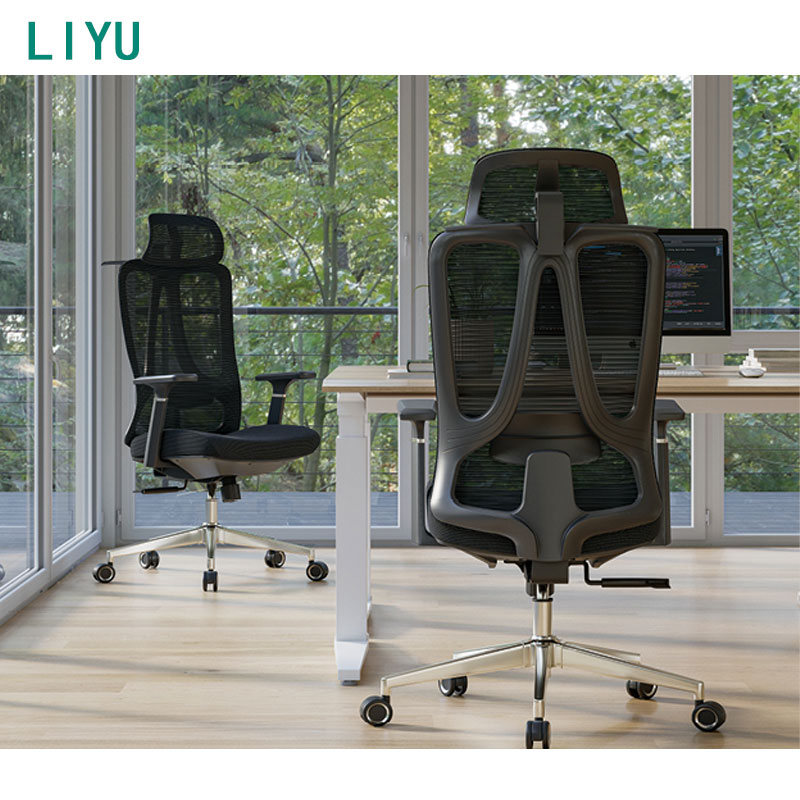
We must look at the basic physics of body heat retention. When your back and thighs press against a solid surface, heat gets trapped. A breathable office chair excels in active work environments because it solves this physical problem. The open woven structure allows continuous, passive air circulation. As your body warms up, cooler room air passes directly through the backrest and seat pan. This continuous convective cooling prevents sweat from pooling on your skin. You remain dry and comfortable, even during intense focus periods.
Leather acts as a potent thermal insulator. It absorbs your body heat and holds it against your skin. You must face the harsh reality of sitting in a leather seat during summer months. If you work in a poorly ventilated home office, the experience becomes genuinely uncomfortable. You will experience distinct stickiness. You will feel frustrating temperature fluctuations. When you first sit down in winter, the material feels freezing cold. After an hour, it becomes uncomfortably hot and humid.
You must tie your final choice directly to your workspace climate control capabilities. If you run a powerful air conditioning system constantly, leather poses fewer issues. If your room temperature fluctuates wildly throughout the day, you need open weaves.
Common Mistake: Buying a thick executive leather seat for a home office lacking proper AC. You will inevitably resort to placing a towel over the seat by mid-July to stop the sweating.
Aesthetic appeal means nothing if your spine suffers. Proper seating must actively facilitate healthy postures. We evaluate chairs based on their ability to align your pelvis, support your lumbar curve, and reduce muscular fatigue.
Human spines require movement. You naturally shift, lean, and twist while working. An ergonomic task chair equipped with a flexible backrest accommodates these spinal micro-movements perfectly. The elastomer weave stretches as you push back, providing dynamic tension. It actively resists your weight, preventing you from slouching deeply. Leather seats usually provide static support. Once you compress the underlying foam, it stays rigid. You conform to the chair, rather than the chair conforming to your shifting posture.
Proper lower back support prevents chronic pain. A high-end adjustable mesh chair almost always features an independent lumbar system. You can easily manipulate this support pad. You can move it up, down, in, or out to hit your exact lumbar lordosis curve. Leather chairs frequently rely on fixed, built-in padding. The manufacturer guesses the average user's lumbar height. If your torso is longer or shorter than average, that fixed bump pushes into your spine incorrectly.
Both materials carry specific structural degradation risks over time.
Leather's Risk: Cheap foam inside lower-tier leather models compresses flat over time. We call this "bottoming out." You end up sitting on hard plastic or plywood underneath. This causes severe tailbone pain.
Mesh's Risk: Cheap synthetic weaves eventually lose their tension. They begin to sag deeply in the center. This sagging creates a hammock effect, rolling your hips inward and causing severe hip pain.
Ergonomic Feature | Mesh Characteristics | Leather Characteristics |
|---|---|---|
Weight Distribution | Suspension spreads weight evenly across the frame. | Foam compression supports weight via density. |
Lumbar Support | Often independent, highly adjustable, and targeted. | Often integrated, fixed, and relies on generic padding. |
Micro-movements | Dynamic; flexes naturally with the user's shifts. | Static; restricts movement once foam compresses. |
You must maintain your furniture to protect your investment. Different materials demand radically different cleaning protocols. They also exhibit very different wear patterns after years of daily friction.
Leather holds a distinct advantage regarding acute messes. It naturally repels liquid spills, dust accumulation, and pet hair. You can wipe coffee off a smooth hide in three seconds with a damp cloth. Mesh presents a different hygiene challenge completely. The tiny woven gaps trap biscuit crumbs, skin cells, and dust. You cannot simply wipe it down. You must actively vacuum the seat pan weekly. For deep stains, you require specialized fabric cleaning machines to extract liquids from the weave.
No material lasts forever under daily stress. You must anticipate how your seat will degrade.
Leather Risks:
Bonded or PU variants suffer from aggressive peeling and flaking. Once it starts peeling, it leaves a mess everywhere.
Genuine top-grain hide suffers from severe cracking if you do not regularly condition it. Sunlight and dry air accelerate this degradation rapidly.
Mesh Risks:
Lower quality weaves suffer from fraying edges where they meet the plastic frame.
The rough texture causes clothing abrasion. It acts like fine sandpaper against delicate fabrics over time.
The elastomer strands permanently stretch and lose tension after years of heavy, concentrated use.
We must look realistically at the budget tier. If you buy a $300 mesh office chair, manufacturers typically invest that budget into decent mechanisms and sturdy frames. It generally retains its functional integrity for several years. Conversely, a $300 leather model usually forces the manufacturer to use cheap PU plastic hides and low-grade foam to achieve the "executive look." The foam goes flat quickly. The PU plastic peels within eighteen months. Dollar for dollar in the mid-market segment, you extract much higher longevity from woven designs.
You now understand the mechanics, thermal properties, and maintenance needs. You need a straightforward framework to finalize your decision. Use these criteria to match the material to your specific daily reality.
You sit at your desk working 6 to 10+ hours a day.
You struggle with temperature regulation or naturally tend to run hot.
Your workspace lacks reliable, strong air conditioning during the summer months.
You require highly specific, multi-point adjustments like seat pan depth manipulation and 4D armrests.
You work in client-facing environments, such as law firms or executive suites. You prioritize establishing visual authority and classic aesthetics.
Your room features strict, powerful climate control year-round.
You have shorter seated durations. You prefer plush, immediate comfort for brief meetings or reading sessions.
You eat lunch at your desk frequently and need ultimate spill resistance.
Best Practice: Always test sit a woven seat for at least thirty minutes if possible. Some aggressive plastic frames dig into wide thighs. You need to ensure the seat pan width accommodates your body comfortably.
You must evaluate your seat as a functional tool rather than just office decor. For strict ergonomic performance and sustained daily use, the woven synthetic design stands as the objective winner for most modern knowledge workers. Its ability to dissipate heat and adapt dynamically to your spine provides massive biological benefits. Leather remains a highly valid choice for specific scenarios. It dominates in executive aesthetics, strict climate-controlled rooms, and environments prone to frequent liquid spills.
You have a clear set of next-step actions to take. Audit your daily seated hours honestly. Assess your room's baseline temperature during the hottest month of the year. Finally, always prioritize mechanical adjustability over visual appearance when finalizing your shortlist. A beautiful seat means nothing if it forces you to visit a chiropractor.
A: Material alone does not cure back pain. You need adjustable lumbar support, seat tilt, and neutral posture facilitation. These features appear more frequently in task-focused mesh designs. They actively support spinal alignment better than basic models. Always prioritize the lumbar mechanism over the fabric type.
A: They certainly can. Highly abrasive, cheap synthetic weaves cause pilling on delicate fabrics like wool or thin knits. Premium elastomer weaves or smooth leather surfaces reduce this friction significantly. Always check the material grade if you wear delicate clothing daily.
A: Premium elastomer weaves and genuine top-grain leather can both last five to ten years or more. Conversely, low-grade nylon weaves or cheap foam-backed PU leather typically degrade within one to three years. Your initial investment dictates the lifespan heavily.
A: Usually, you cannot easily fix it. Once synthetic fibers permanently stretch and lose their tensile strength, they stay that way. You generally need to replace the entire seat pan or the whole chair. This reality highlights why robust warranties remain crucial during purchase.