
Views: 0 Author: Site Editor Publish Time: 2026-07-31 Origin: Site


Executive office design often forces a compromise between striking minimalist aesthetics and the rigorous demands of daily ergonomic support, physical well-being, and material durability. Selecting high-end seating means balancing visual impact with functional longevity. A white leather office desk chair, while visually commanding, introduces specific risks regarding maintenance, material degradation, structural assembly, and ergonomic viability over long hours. You cannot simply pick a chair based on a showroom display. The reality of daily use requires a deeper understanding of how materials perform under stress and how mechanical components support the human body.
This guide provides a structured evaluation framework for selecting seating that satisfies architectural design standards, supports physical well-being, prevents procurement friction, and offers a verifiable return on investment. We will break down material grades, mechanical requirements, and the logistical realities of handling premium white upholstery.
Every piece of furniture in an executive space communicates a specific message about the organization. The specific office chair upholstery color you select heavily influences the perception of the room. White signals transparency, modernism, and meticulous attention to detail. It brightens the workspace, reflects natural light, and creates a stark, professional contrast against darker architectural elements like walnut desks, charcoal flooring, or exposed concrete walls.
Integrating modern office seating into broader branded workplace design initiatives ensures the chair complements rather than clashes with its surroundings. A successful executive chair must offer visual authority while blending seamlessly with the company's aesthetic standards. Furthermore, it must align with corporate sustainability goals and material sourcing standards, ensuring that the visual impact does not compromise ethical or functional requirements. When architects and interior designers specify furniture, they look for pieces that act as functional sculptures. The chair must look as good from the back as it does from the front, considering it is often the first thing seen when entering an office.
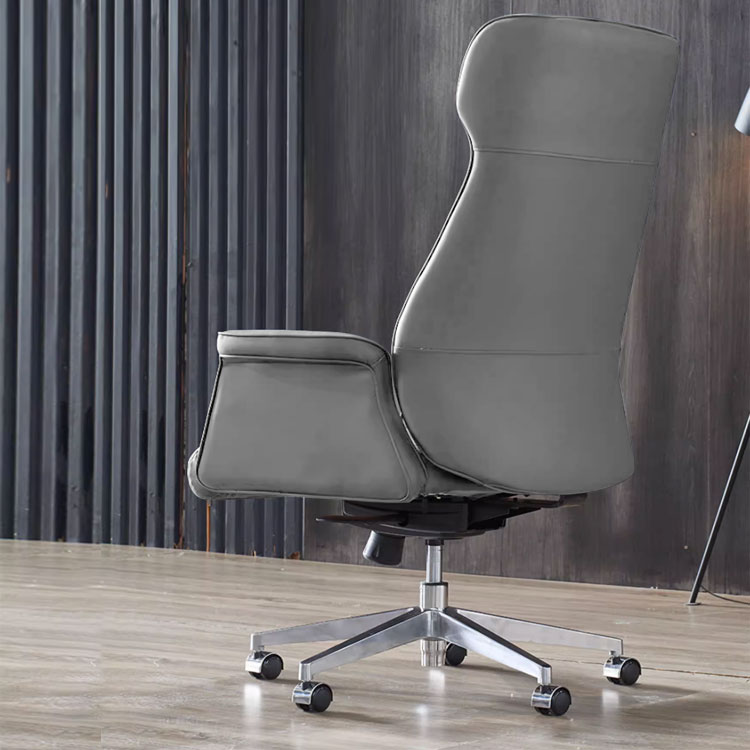
Understanding leather grading is the most important step when selecting a white chair. Full-grain leather represents the highest quality, offering exceptional durability, breathability, and the ability to develop a rich patina over time. However, pure white full-grain leather is rare and expensive. Achieving a stark white finish requires heavy pigmentation, which can mask the natural characteristics of the hide and alter its breathability. The thickness of full-grain leather typically ranges from 1.2mm to 1.5mm, providing a robust feel that resists puncturing and tearing.
Top-grain leather serves as the industry standard for high-end executive chairs. It balances softness with structural integrity. The top layer is sanded to remove imperfections, and a protective topcoat is applied. This topcoat provides necessary stain resistance and color consistency, making it highly practical for white upholstery. Top-grain leather maintains a supple texture while offering a uniform appearance that fits perfectly in modern office environments.
Bonded leather carries severe implementation risks. Manufactured by mixing leather scraps with polyurethane binders, it lacks the structural integrity of whole hides. In high-contrast white finishes, the probability of peeling, cracking, and rapid degradation is exceptionally high. Bonded leather should be strictly avoided for primary executive seating. Once the thin top layer begins to delaminate, the chair cannot be repaired and must be replaced.
| Material Grade | Thickness Profile | Durability Rating | Suitability for White Finish |
|---|---|---|---|
| Full-Grain Leather | 1.2mm - 1.5mm | Very High | Low (Hard to achieve pure white without heavy pigment) |
| Top-Grain Leather | 0.9mm - 1.2mm | High | High (Excellent color consistency and stain resistance) |
| Bonded Leather | Variable (Composite) | Low | Very Low (High risk of visible peeling and cracking) |
| High-Grade PU/Silicone | 1.0mm - 1.3mm | Medium-High | Very High (Non-porous, highly resistant to staining) |
Modern synthetic alternatives, such as high-grade polyurethane (PU) and silicone leathers, have advanced significantly. These engineered materials offer excellent thermal regulation, high stain resistance, and strict colorfastness. For a white chair, silicone leather provides a non-porous surface that resists dye transfer far better than natural hides. It does not require the intensive conditioning that natural leather demands.
When comparing natural hides to engineered synthetics, buyers must weigh the upfront cost and environmental impact against predictable uniformity. Natural leather requires ongoing maintenance, while premium synthetics offer easier upkeep and consistent visual appeal over their lifespan. High-end synthetics are now formulated to mimic the grain and hand-feel of top-grain leather so closely that it is often difficult to tell the difference without checking the backing material.
Natural leather presents a distinct tactile sensation. When first sitting down, the material feels cool, eventually warming to match body temperature. Synthetic formulations often bypass this initial coldness but may lack the deep breathability of natural hides. This thermal dynamic plays a major role in user comfort.
Seasonal temperature fluctuations affect comfort during extended focus periods. In warmer climates or poorly ventilated offices, leather can capture and retain heat. Understanding how the material interacts with the local office climate is necessary for maintaining user comfort throughout the day. If the office runs hot, a perforated leather design might be required to facilitate better airflow.
The industry is filled with beautiful designer chairs that fail to provide adequate anatomical fit. This designer height/weight trap occurs when sleek profiles lack the necessary adjustments to accommodate varied body types. Buyers must verify backrest height, seat width, and weight capacities before purchasing. A chair that looks authoritative but causes physical strain is a failed investment. You need to look for seat pans that offer depth adjustment, allowing the user to slide the seat forward or backward to accommodate different leg lengths.
Dynamic support mechanisms are non-negotiable for a standard 8-to-10-hour workday. Chairs must feature weight-activated or easily adjustable tilt-tension mechanisms. These allow the user to shift postures safely, maintaining spinal support whether leaning forward to type or reclining to read. A synchronous tilt mechanism, where the backrest reclines at a 2:1 ratio compared to the seat pan, keeps the user's feet flat on the floor while opening the hip angle.
Lumbar and pelvic alignment vary greatly across different chair silhouettes. High-back ribbed designs offer different support profiles compared to segmented cushion designs. Chairs that prioritize a sleek, flat profile over natural spinal curvature will cause lower back pain. Additionally, the seat pan architecture must include a waterfall edge design to reduce pressure on the popliteal fold behind the knees, promoting healthy blood circulation.
User preferences regarding thermal dissipation heavily influence chair selection. Mesh seating provides continuous airflow, making it ideal for users who run warm or work in warmer environments. Leather executive chairs offer secure, slightly warm, and structured support. The choice depends on the office's climate control capabilities and the individual user's thermal sensitivity.
| Feature | Premium Leather Seating | Performance Mesh Seating |
|---|---|---|
| Airflow & Breathability | Low to Moderate (Depends on perforations) | Maximum |
| Structural Support | High (Firm, molded foam backing) | Moderate (Relies on tensioned fabric) |
| Maintenance Requirements | High (Conditioning, careful cleaning) | Low (Vacuuming, occasional wiping) |
| Visual Authority | Very High (Classic executive presence) | Moderate (Technical, task-oriented look) |
Technical evaluation requires reviewing standard adjustments: seat height, tilt lock, and armrest adjustability. Armrests must adjust in height, width, and pivot to support the arms without elevating the shoulders. Many designer chairs compromise by using fixed armrests to maintain a clean visual line. This creates significant ergonomic risks, leading to neck and shoulder tension over time. If a chair features fixed loop arms, verify that the desk height perfectly aligns with the armrest height to prevent postural strain.
The frame and base materials dictate the overall aesthetic of the chair. Specifying a custom office chair finish allows the seating to integrate perfectly with the architectural environment. Polished aluminum offers a classic mid-century modern look, while a matte black powder coat provides high-contrast contemporary appeal. Brushed bronze or brass introduces a warm, luxury executive feel.
The chosen finish directly impacts durability. Polished aluminum hides minor scuffs well, whereas matte black bases may show shoe marks more prominently. Selecting a finish that withstands daily interaction with footwear ensures the chair maintains its premium appearance. A standard executive base should measure at least 27 to 29 inches in diameter to provide adequate stability when fully reclined.
Caster selection must match the office flooring. Hard nylon casters are designed for carpeted floors, allowing smooth movement without snagging. Soft polyurethane casters are mandatory for hard floors, such as wood, tile, or polished concrete, to prevent scratching and ensure safe, controlled mobility. Using the wrong casters will destroy expensive flooring and create a slipping hazard.
The pneumatic cylinder dictates the chair's height adjustment reliability. Verify that the chair utilizes a Class 4 gas lift cylinder. This class is the standard for commercial and executive weight ratings, typically supporting up to 350 or 400 pounds. It ensures longevity and prevents the slow sinking issue common in lower-grade hardware.
White leather is highly vulnerable during transit and assembly. Self-assembly introduces the risk of staining the upholstery with warehouse dust, grease from the pneumatic cylinder, or hand oils. Manufacturer-assembled shipping or certified white-glove delivery services mitigate these risks entirely, ensuring the chair arrives in pristine condition.
Upon receipt, execute a strict unboxing protocol. Inspect the white upholstery immediately under bright lighting. Check all seams for tight stitching, verify panel alignment, and ensure the complete absence of transit dirt or manufacturing residues.
Evaluate return policies and trial periods before finalizing the purchase. A 30-day in-office trial allows the user to confirm that the chair meets both the aesthetic demands of the space and their specific ergonomic needs. This trial period is critical for identifying any long-term discomfort that a brief showroom test cannot reveal. Keep all original packaging intact during this period, as most manufacturers require it for return shipping.
Dye transfer is the most significant risk associated with white leather. Raw denim and dark, unwashed fabrics will transfer dye onto the white surface, causing permanent stains. Mitigation strategies include applying specialized leather barrier coatings upon delivery and avoiding high-risk clothing when using the chair.
Ultraviolet (UV) degradation poses another severe threat. Direct sunlight exposure dries out natural leather and causes white pigments to yellow over time. Strategic desk placement away from direct sunlight or the installation of UV-protective window treatments is necessary to preserve the chair's color and structural integrity.
A realistic maintenance schedule prevents premature degradation. Dust the chair weekly with a dry microfiber cloth. For natural leather, apply a high-quality conditioner monthly to prevent cracking. Address spills immediately by blotting—never rubbing—with a clean, damp cloth.
Understanding the manufacturer's warranty is essential. Warranties often differentiate between mechanical components and upholstery. The mechanical frame and cylinder may carry a 10-to-12-year warranty, while the foam and leather upholstery are typically limited to 3-to-5 years. Read the fine print to understand what constitutes normal wear and tear versus a manufacturer defect.
A: Yes, it requires consistent maintenance. White leather shows dust, dirt, and dye transfer more readily than dark colors. Synthetic white leathers are easier to wipe clean, while natural white leather requires regular conditioning and immediate spill response to prevent permanent staining.
A: Top-grain leather is a durable, solid hide with a protective topcoat, offering excellent longevity and stain resistance. Bonded leather is made from leather scraps glued together with polyurethane. Bonded leather is highly prone to peeling and cracking under daily commercial use.
A: Yes, provided it features the correct mechanical adjustments. Ergonomics relies on the chair's tilt mechanism, lumbar support, and adjustability, not just the upholstery. However, leather retains more heat than mesh, which may affect long-term thermal comfort.
A: Keep the chair out of direct sunlight to prevent UV degradation. Avoid harsh chemical cleaners or bleach, which strip the protective topcoat. Clean only with pH-balanced leather cleaners and apply a protective conditioner regularly.
A: You must use soft-tread polyurethane casters. Standard hard nylon casters will scratch and damage hardwood, laminate, or polished concrete floors. Soft casters ensure safe, smooth rolling without leaving permanent marks.
A: A chair upholstered in top-grain leather or high-grade synthetic leather should last 7 to 10 years with proper maintenance. The mechanical frame often lasts longer, but the seat foam and upholstery will eventually show signs of wear based on daily usage hours.


