
Views: 0 Author: Site Editor Publish Time: 2026-07-30 Origin: Site


High-stakes boardroom meetings require sustained focus. Physical discomfort from inadequate seating directly degrades executive performance and decision-making. Procurement teams struggle to balance the authoritative, premium aesthetic expected in a boardroom with the rigorous ergonomic requirements necessary for multi-hour sessions. When executives sit through consecutive quarterly reviews or strategic planning sessions, the physical toll of poor lumbar support or restrictive seat pans manifests as distraction and fatigue. You need seating that actively supports posture while projecting corporate authority. This guide provides a technical framework for evaluating materials, structural integrity, and ergonomic features to ensure your investment in executive seating delivers both longevity and verifiable comfort. We break down the mechanical specifications, upholstery grades, and structural components that separate commercial-grade assets from disposable furniture.
Establishing a procurement hierarchy requires placing micro-adjustability at the forefront of your selection process. Seat height, depth, and back support serve as the baseline criteria before you even look at aesthetic finishes. A chair that looks impressive but fails to support the user will quickly become a liability in long meetings. You must evaluate how well the chair adapts to the human body before considering its visual impact on the room. The fit-first approach mandates that every chair in the boardroom can be adjusted to accommodate the specific biomechanical needs of the person sitting in it. This means looking for independent seat pan sliders, adjustable lumbar tension, and armrests that move in multiple dimensions. When you prioritize fit, you eliminate the ergonomic risks associated with static, one-size-fits-all seating.
Designing an executive profile means projecting corporate authority without sacrificing biomechanical support. The right chair integrates advanced ergonomic mechanisms seamlessly into a classic silhouette. This balance ensures that the seating enhances the boardroom's professional atmosphere while actively preventing fatigue during extended sessions. Manufacturers achieve this by hiding complex tilt mechanisms within sleek aluminum housings and integrating lumbar curves directly into the backrest frame rather than using bulky external pads. The goal is to maintain clean, authoritative lines while providing the dynamic support required for modern work. You want a chair that commands respect visually but feels like a highly engineered ergonomic tool once occupied.
Boardrooms are shared environments. Users vary significantly in height, weight, and posture preferences. Evaluating a boardroom chair requires ensuring it offers intuitive adjustments that accommodate this diversity. Features like adjustable tilt tension and sliding seat pans allow different individuals to find their optimal seating position quickly. A 95th percentile male and a 5th percentile female must both be able to sit comfortably at the same table. This requires a seat height range of at least 4.5 inches and a seat depth adjustment of 2 to 3 inches. Standardizing comfort means selecting a chair with a wide enough adjustment range to capture the vast majority of your user base without requiring specialized, individual seating assignments.
Calculating expected weekly hours of use determines the necessary durability rating for your seating fleet. A chair used for two hours a week requires different structural integrity than one occupied for six hours daily. Understanding your specific usage patterns prevents under-specifying materials and mechanisms, ensuring the chairs withstand the actual demands of your environment. For high-frequency boardrooms, you need mechanisms tested to withstand continuous dynamic loading. This involves evaluating the cycle testing data provided by the manufacturer. A chair rated for 24/7 intensive use will feature thicker steel components in the tilt mechanism and higher density foam in the seat pan compared to a standard conference chair designed for occasional use.
Analyzing premium hides involves looking at breathability, patina development, and tear resistance. Full-grain leather offers maximum durability and develops a rich patina over time because it retains the entire grain layer of the hide. Top-grain leather provides an optimal balance of luxury, uniform appearance, and spill resistance, making it highly suitable for corporate settings. It is sanded to remove natural blemishes and treated with a protective finish, which makes it easier to clean and maintain in a commercial environment.
Napa leather plays a specific role in luxury executive seating. Assessing its ultra-soft texture and specialized chrome-tanning durability reveals why it holds high prestige value. It delivers exceptional comfort while maintaining a refined appearance under regular use. The tanning process leaves the leather incredibly supple, allowing it to stretch and recover as the user moves, which prevents the upholstery from pooling or wrinkling over the seat cushion.
Deconstructing the chemical composition of synthetic leathers helps clarify their performance limitations. PU leather and bonded leather consist of synthetic coatings or leather scraps bound with polyurethane. While they offer initial cost savings, they present significant lifespan trade-offs. Bonded leather, in particular, contains only a small percentage of actual leather fibers, which are glued together and embossed with a grain pattern.
Evaluating these trade-offs reveals a high risk of peeling and delamination within 24 to 36 months under high-use conference room conditions. The friction from users shifting in their seats breaks down the polyurethane coating, exposing the fabric or composite backing underneath. For a long-term investment, these materials often fail to meet the durability standards required for professional environments, leading to premature replacement cycles and a degraded boardroom aesthetic.
Required conditioning schedules for a genuine leather office chair are essential to prevent desiccation and cracking. Regular application of quality leather conditioners maintains the material's suppleness and extends its lifespan significantly. In dry, climate-controlled office buildings, leather loses its natural moisture rapidly. A quarterly conditioning protocol restores these oils and keeps the hide flexible.
Sanitization realities for high-traffic boardrooms dictate how you handle office chair upholstery. Cleaning agents interact differently with various upholstery types. Harsh chemicals and alcohol-based disinfectants strip natural oils from genuine leather, causing irreversible damage. You must establish specific cleaning protocols using pH-neutral leather cleaners to maintain hygiene without destroying the material.
| Upholstery Material | Durability Rating | Breathability | Maintenance Requirement | Commercial Lifespan |
|---|---|---|---|---|
| Full-Grain Leather | Excellent | High | High (Quarterly Conditioning) | 10+ Years |
| Top-Grain Leather | Very Good | Moderate | Moderate (Bi-annual Conditioning) | 7-10 Years |
| Napa Leather | Good | High | High (Specialized Care) | 7-10 Years |
| PU / Synthetic Leather | Poor | Low | Low (Wipe Clean) | 2-3 Years |
| Bonded Leather | Very Poor | Low | Low (Wipe Clean) | 1-2 Years |
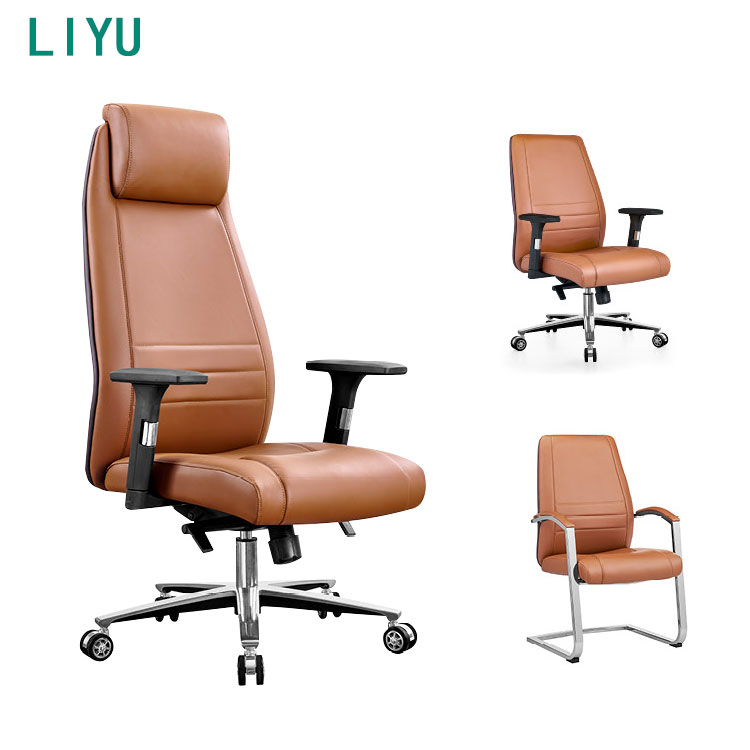
Evaluating passive versus active lumbar support structures is critical in high-back boardroom chairs. Active support adjusts to the user's movements, while passive support relies on the chair's fixed curve. Integrated contouring provides continuous sacral support without compromising the classic executive aesthetic, ensuring the spine maintains its natural alignment. The sacrum forms the base of the spine; if a chair fails to support this area, the pelvis rolls backward, flattening the lumbar curve and causing immediate strain. A properly engineered office chair leather executive will feature a pronounced lower curve that catches the pelvis and prevents this backward rotation, keeping the user upright and engaged.
Evaluating knee-tilt versus synchro-tilt mechanisms determines how well the chair supports movement. Synchro-tilt mechanisms allow the backrest to recline at a faster rate than the seat pan, typically at a 2:1 ratio. This keeps feet flat on the floor during deep recline and prevents the front edge of the seat from lifting and cutting off circulation to the lower legs. Adjustable tilt tension is vital to accommodate varying user weights seamlessly, providing appropriate resistance for everyone. A tension knob or weight-activated mechanism ensures that a lighter user can recline easily while a heavier user receives enough pushback to feel secure.
Overly plush, thick cushions fail in long meetings because they cause postural collapse and aggravate pressure points. When a cushion is too soft, the user sinks through the foam and rests on the hard seat pan beneath, cutting off blood flow. Identifying high-resiliency, molded polyurethane foam is key. This type of foam maintains its shape, provides firm support, and prevents bottoming out over years of use. Seat depth is equally important. There should be a two-inch gap between the back of the user's knees and the front edge of the seat. Chairs with sliding seat pans allow users to adjust this depth, preventing nerve compression in the legs.
Navigating the trade-off between fixed and 3D/4D adjustable armrests involves balancing a sleek executive profile with ergonomic necessity. Adjustable arms support the shoulders and neck better by allowing users to bring the armrests close to their body at the correct height. Fixed loop arms look highly professional but often force users to shrug their shoulders or lean awkwardly to find support. Clearance considerations are also crucial; you must ensure armrests do not obstruct the chair from sliding under standard boardroom tables. If the arms hit the table edge, the user is forced to sit too far back from their work surface, leading to forward head posture and upper back strain.
Comparing load-bearing capabilities reveals the superiority of reinforced aluminum and steel over standard nylon frames. Metal frames provide the rigidity necessary for heavy daily use and prevent the chair from flexing or squeaking when users shift their weight. Wood veneers, while aesthetically pleasing, require secondary internal metal reinforcement to meet commercial durability standards. A solid cast aluminum frame offers the best strength-to-weight ratio, ensuring the chair is robust enough for continuous use but light enough to move easily around the boardroom.
Specifying Class 4 pneumatic gas lift cylinders ensures reliable height adjustment and longevity. These heavy-duty cylinders handle higher weight capacities without failing or slowly sinking over time. Evaluating the diameter and pitch of the five-point base is necessary to prevent tipping during deep reclines, ensuring user safety. A wider base diameter, typically 26 to 28 inches, provides a larger footprint and greater stability. The pitch, or angle of the base legs, must be engineered to distribute weight evenly across all five casters, regardless of the user's position in the chair.
Selecting the right casters prevents floor damage and ensures smooth mobility. Hard casters work best for low-pile commercial carpets, allowing the chair to roll without excessive friction. Conversely, soft, polyurethane-coated casters are required for hardwood or polished concrete floors to prevent scratching and provide appropriate traction. Using hard casters on a hard floor causes the chair to slide unpredictably, creating a safety hazard and damaging the flooring surface over time. Always specify the caster type based on the exact flooring material in your boardroom.
Evaluating the true value of boardroom seating requires looking past the initial purchase order and analyzing the expected replacement cycles. A high-quality genuine leather chair built on a steel frame will easily function for a decade. In contrast, a bonded leather chair with a plastic base will require replacement every two to three years as the upholstery peels and the pneumatic cylinder fails. Factoring in the labor costs of repeated procurement, assembly, and disposal makes the longer-lasting, higher-quality chair the more fiscally responsible choice for corporate environments.
Understanding manufacturer warranties is critical. You must separate the coverage for the frame, the moving mechanisms, and the upholstery. Many manufacturers offer a lifetime warranty on the frame but only cover the leather for three years. Read the fine print to understand what constitutes normal wear and tear versus a manufacturing defect. The importance of ANSI/BIFMA certification serves as a baseline indicator of safety and durability. BIFMA testing subjects chairs to rigorous mechanical stress, including back pull tests, base drop tests, and caster durability cycles. Specifying only BIFMA-certified seating guarantees a minimum standard of commercial viability.
Mitigating the risk of purchasing visually impressive chairs that cause user fatigue requires strict adherence to ergonomic standards. Chairs that lack proper lumbar support or adjustability will lead to lumbar strain after just 30 minutes, undermining the purpose of the boardroom. Procurement teams often fall in love with a specific architectural look, ignoring the fact that the chair forces the user into a rigid, uncomfortable posture. You must mandate that any chair considered for the boardroom passes a strict ergonomic evaluation before its visual design is even discussed.
Addressing the thermal properties of leather is necessary for user comfort. Avoid placing leather chairs in direct sunlight or unventilated rooms. Proper climate control prevents material degradation and stops users from sweating excessively during long meetings. Leather absorbs ambient temperature; in a cold room, the chairs will feel icy, and in a hot room, they will trap body heat. Maintaining a consistent, moderate temperature in the boardroom ensures the leather remains comfortable to the touch and prevents the hide from drying out prematurely.
Conducting a structured multi-week testing protocol with a representative user group gathers objective feedback on comfort and fit. This pilot test prevents costly mistakes by ensuring the selected chairs actually meet the needs of the people using them before a full order is placed. Set up a scoring matrix that asks users to rate the chair on lumbar support, ease of adjustment, seat comfort, and overall fatigue after a two-hour meeting. Use this data to make an objective final decision.
Planning for extended lead times associated with custom upholstery is crucial for project management. Coordinating freight delivery, assembly, and staging requires clear communication with vendors to ensure the boardroom is ready on schedule without last-minute compromises. High-end leather chairs are often built to order, which can mean lead times of 8 to 12 weeks. Factor this into your project timeline and require the vendor to provide a detailed logistics plan for unboxing, assembling, and placing the chairs in the boardroom, as well as removing all packaging materials from the site.
A: Executive chairs prioritize premium materials like leather and a commanding aesthetic, often featuring high backs and fixed arms. Ergonomic chairs focus primarily on adjustability, biomechanical support, and breathable materials. Modern high-quality boardroom seating merges both concepts, offering luxury finishes with integrated, hidden ergonomic mechanisms.
A: Napa leather undergoes a specialized chrome-tanning process that makes it exceptionally soft and pliable. It offers superior breathability and durability while projecting a high-end aesthetic. It resists creasing and maintains its smooth texture, making it ideal for premium corporate environments.
A: With proper maintenance and a commercial-grade metal frame, a genuine leather chair should last 7 to 10 years in a standard boardroom setting. Regular conditioning prevents the leather from drying out, while the heavy-duty frame withstands daily use.
A: Top-grain leather is often preferred for corporate settings because it is sanded to remove imperfections, offering a uniform look and better stain resistance. Full-grain is more durable and develops a unique patina but may show natural hide blemishes that some find unprofessional.
A: Wipe them down regularly with a damp cloth to remove dust. Apply a high-quality, pH-neutral leather conditioner every 3 to 6 months to keep the material supple. Keep chairs away from direct sunlight and extreme heat sources.
A: No. Bonded leather consists of synthetic materials mixed with leather scraps and polyurethane. It lacks durability and typically begins to peel or delaminate within 24 to 36 months under frequent use, making it a poor long-term investment.
A: Synchro-tilt mechanisms recline the backrest at a faster ratio than the seat pan, usually 2:1. This keeps the user's feet flat on the floor and maintains proper circulation in the legs, significantly reducing fatigue during extended periods of sitting.


