Views: 0 Author: Site Editor Publish Time: 2026-06-01 Origin: Site


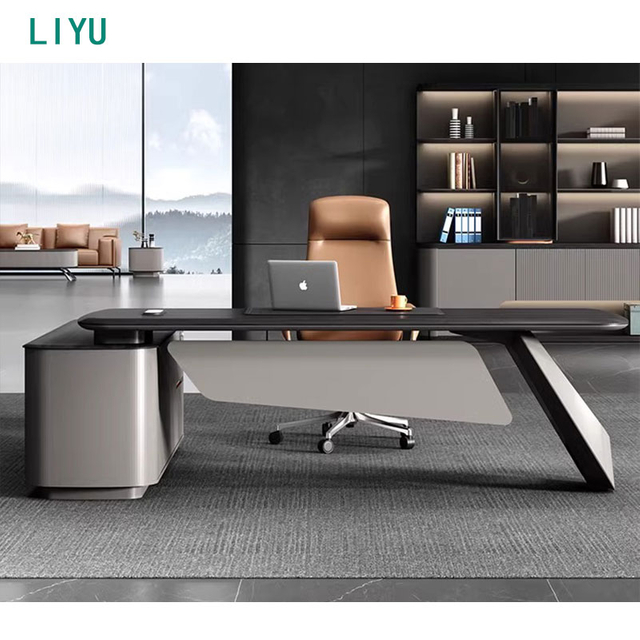
An executive desk acts as more than just basic furniture. It serves as essential professional infrastructure. This centerpiece directly impacts your daily workflow, mental focus, and corporate presence. Executives and business owners frequently struggle finding the right workspace balance. Standard straight desks often force constant, frustrating task-switching. You simply run out of room for paper documents when monitors occupy the center. Conversely, massive U-shaped desks dominate too much floor space. They restrict room flow and create an imposing physical barrier during client meetings.
You need a smarter workspace design. We introduce the L-shaped executive desk as the optimal middle ground. It offers perfectly compartmentalized workspaces for seamless daily operations. You gain superior spatial return on investment without overwhelming your room footprint. Furthermore, it delivers authoritative aesthetics perfectly suited for modern leadership. Read on to discover how this specific layout transforms private offices into highly efficient, deeply organized command centers.
Task Zoning: Separates digital workflows (monitors/tech) from analog tasks (reviewing contracts, signing documents) to reduce cognitive load.
Space Optimization: Yields a higher "usable surface area per square foot" compared to straight or U-shaped alternatives, preserving room for client seating.
Future-Proofing: Modular, reversible configurations offer long-term adaptability if office layouts or corporate locations change.
Professional Authority: Serves as a visual anchor in a private office, communicating stability, leadership, and organized efficiency.
We call this layout the "cockpit" concept. The 90-degree angle creates a wrap-around command center. You can build a powerful multi-monitor setup on one side. The return section stays completely clean. This creates a dedicated, distraction-free zone. You use it exclusively for deep work or one-on-one meetings. Physical separation naturally reduces physical desktop clutter. It also removes hidden mental friction. You stop shuffling important papers over your keyboard.
Let us look closely at task-switching. Physical separation of tasks strongly mitigates mental fatigue. You might handle laptop work, data analysis, and emails on the main surface. You then turn your chair exactly 90 degrees. You now review physical documents or sign contracts on the return desk. They remain perfectly isolated. You focus entirely on one mode of work at a time. This simple physical turn acts as a mental reset button. It keeps cognitive load exceptionally low throughout a demanding workday.
Ergonomics play a massive role in daily workflow. Monitor positioning dictates your daily physical comfort. We recommend placing your primary monitor 50 to 80 centimeters from your eyes. You should position this directly on the main desk. Position any secondary screens on the sides. Angle them inward at 15 to 30 degrees. This specific curvature prevents severe neck strain. It mimics the natural field of human vision. You work significantly longer hours without feeling physical exhaustion or shoulder tension.
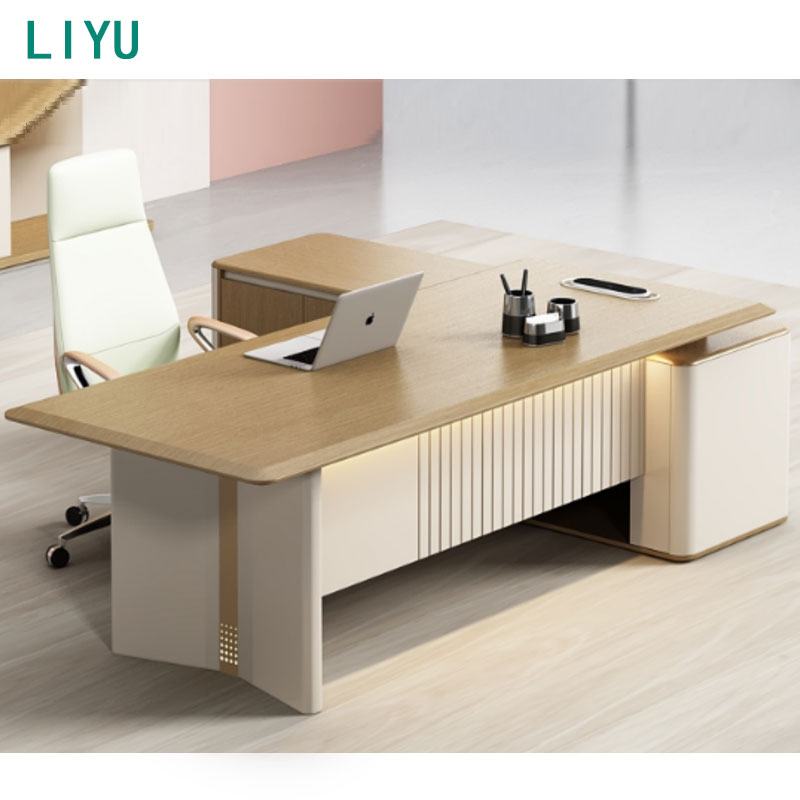
You must carefully evaluate surface area against total room footprint. A corner executive desk excels dramatically in this metric. We routinely contrast the L-shape with standard straight desks. Straight models heavily limit your usable surface. Professionals outgrow them quickly. We also contrast them with massive U-shaped configurations. U-shapes offer maximum storage capacity. However, they heavily restrict room flow. They swallow entire rooms. L-shapes push the bulk of the furniture footprint to the perimeter. They hug the walls. You immediately reclaim the center of your space.
This perimeter placement actively preserves the "client zone." You open up the center of the private office. You can now add comfortable collaborative seating. You might bring in premium leather armchairs or a small coffee table. Some executives install interactive whiteboarding areas. The L-shape allows you to host people comfortably. You maintain a professional distance without feeling entirely boxed in by bulky furniture.
Visual weight heavily affects spatial perception. An L-shaped layout feels substantial and commanding. However, it looks visually lighter than a fully enclosed U-shaped setup. Many modern designs maintain an open-leg framework. Others utilize sleek, suspended modesty panels. They successfully hide messy cables without looking like a massive block of wood. Your room feels much brighter. It feels distinctly more spacious.
Consider the table below. It highlights a quick comparison of spatial efficiency across popular desk types:
Desk Layout Type | Usable Surface Area | Room Footprint Impact | Collaboration Friendliness |
|---|---|---|---|
Straight Desk | Low to Medium | Minimal | High (Creates open floor plan) |
U-Shaped Desk | Maximum | Heavy (Dominates the room) | Low (Creates a barrier) |
L-Shaped Desk | High | Moderate (Pushed to perimeter) | Excellent (Opens room center) |
Materials make a profound statement of corporate identity. Your CEO office table signals your core business values. It tells visiting clients exactly who you are. Sustainable hardwoods, like rich walnut or classic oak, convey immense stability. They project tradition and environmental consciousness. These premium materials remain ideal for finance, law, or strategic consulting sectors. Alternatively, you might prefer modern glass and high-grade metal. Brushed steel or matte black framing projects sleek modernism. It signals corporate transparency and forward-thinking innovation. Tech startups and creative agencies strongly prefer these contemporary finishes.
You must critically consider glare and natural lighting. We strictly warn buyers about natural light interactions. Office windows change how desk finishes look throughout the day. Highly polished wooden surfaces reflect sunlight directly. They create blinding glare during peak afternoon hours. You will inevitably suffer from severe eye fatigue. We highly recommend matte finishes for offices featuring extensive windows. They diffuse intense light softly. They also hide daily fingerprints far better than gloss finishes.
The layout remains highly authoritative but surprisingly accessible. The main desk acts as the definitive boundary of authority. It establishes your clear leadership position in the room. Meanwhile, the return desk allows for relaxed, side-by-side collaboration. Team members can seamlessly pull up a chair next to the return. You review internal documents together. You comfortably maintain your authority while actively fostering teamwork.
You must respect mandatory floor clearances before purchasing. We provide hard specifications for buyers. You must ensure 35 to 47 inches of absolute clearance behind the main desk. In metric terms, this requires 90 to 120 centimeters. This open space allows for proper executive chair rollback. You need perfectly safe movement when standing up or turning. Do not push your desk tightly against the back wall. You will feel trapped.
Desk depth standards matter immensely for long-term health. Your main working surface requires specific dimensions. It must be at least 23 to 31 inches deep. This equals 60 to 80 centimeters. Shallow desks routinely cause serious eye fatigue. They force massive 27-inch monitors too close to your face. Deep desks give your eyes proper resting distance.
Cable management mastery separates amateur setups from professional ones. Comprehensive wire management remains an absolute necessity. You must maintain a clean, pristine appearance. Sit-stand desk variations require extra attention. You must strictly leave 20 to 30 centimeters of cable slack. This prevents accidental cord tearing during motorized height adjustments. Bind cables tightly inside flexible snakes or under-desk trays.
Stability on uneven floors requires commercial-grade hardware. A heavy L-shaped frame proves highly sensitive to slight floor unevenness. Uneven floors directly cause desk wobble. They lead to severe drawer misalignment over time. We heavily emphasize the necessity of commercial-grade leveling glides.
Follow this checklist for ergonomic setup realities:
Measure your required chair rollback clearance (minimum 35 inches).
Confirm primary monitor depth distance (minimum 23 inches).
Secure sufficient cable slack for motorized sit-stand movements.
Adjust all leveling glides precisely before placing heavy equipment on top.
You need a clear, actionable roadmap before buying. We recommend prioritizing a L shaped boss desk that easily adapts to your changing workflow. An office desk with storage must offer both daily utility and structural integrity. Follow these precise evaluation criteria.
First, always prioritize reversible returns. We highly recommend purchasing desks featuring reversible configurations. You can build them left-handed or right-handed during the initial installation. This provides excellent future-proofing. It maximizes adaptability for future corporate office moves. Your room layout might change completely next year. A reversible desk adapts instantly without requiring a replacement.
Second, rigorously evaluate integrated storage capabilities. Look closely at the built-in pedestals. Check for secure, lockable lateral file drawers. They protect sensitive client documents and internal data. You should also verify structural support. Sometimes the storage pedestal acts as the primary supportive leg. It must bear the weight of heavy desktop equipment safely. Check the drawer glides for smooth, silent operation.
Third, check for seamless power integration. Desktop cable clutter rapidly ruins executive presence. Look for built-in power modules. Concealed charging stations keep your smartphone and tablet fully powered. They hide messy adapter cords entirely. A smart executive desk routes power directly to the surface via sleek grommet holes. This integration keeps you connected without sacrificing visual elegance.
Reversibility check: Ensure the return can swap sides via modular brackets.
Storage audit: Confirm drawer depth accommodates standard and legal file sizes.
Power audit: Verify built-in USB-C and standard AC outlet availability.
We offer a definitive final verdict on this workspace upgrade. The L-shaped layout provides the absolute ultimate balance. It combines expansive, dedicated surface area with authoritative aesthetics. It delivers unmatched spatial efficiency for private corporate rooms. You gain a highly focused command center without sacrificing essential client collaboration space. It acts as the backbone of a highly productive day.
We actively encourage buyers to take action immediately. Measure your private office today. You must factor in door swing radius accurately. Do not forget the 36-inch minimum chair clearance behind your seating position. Prioritize modular models. Look specifically for reversible configurations. Demand robust cable management systems. You will transform your daily workflow entirely. You will command the room effectively.
Map out your exact floor plan clearances today.
Select material finishes matching your specific brand identity.
Invest in reversible designs for maximum future flexibility.
Prioritize deep desk surfaces for superior monitor ergonomics.
A: No. While they fit corners well, in private executive offices, they are often placed in the center of the room facing the door (with the return extending backward along a side wall) to act as a physical room divider and command center.
A: The return is the secondary, smaller desk section. A left-return desk means the secondary section is on your left when sitting at the main desk. Reversible models allow you to choose the orientation during assembly.
A: While it varies by material, high-end solid wood or commercial steel-frame L-desks comfortably support 200–300+ lbs, safely accommodating multiple monitors, heavy executive accessories, and extensive file storage. Heavy items should be placed directly over the leg supports or storage pedestals.