Views: 0 Author: Site Editor Publish Time: 2026-03-10 Origin: Site


Choosing the right executive desk matters. It shapes your workspace and productivity.But what should you look for? Size, storage, comfort, and design all matter.In this guide, you will learn how to choose the right executive desk for a professional office.
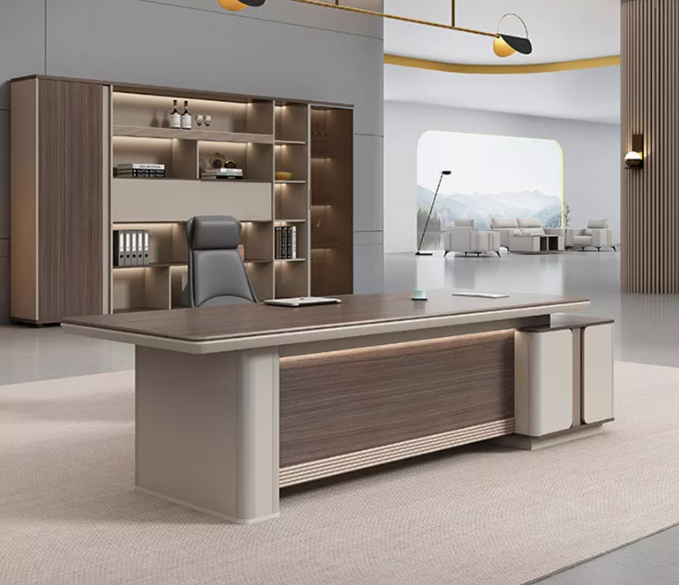
One of the first aspects to evaluate when selecting an executive desk is its size, because the desk must provide enough workspace while still fitting comfortably within the office layout. A desk that is too small may restrict productivity because there is not enough room for computers, documents, or meetings, while an oversized desk may dominate the room and reduce mobility within the workspace.
Executives typically require a desk that supports multiple monitors, paperwork, writing space, and occasionally visitor discussions, which means the working surface must be wide and deep enough to accommodate these tasks. Most executive desks range between 60 and 87 inches in width, although larger executive suites may support even wider desks that create a stronger visual presence.
Office Size | Recommended Desk Width | Typical Use |
Small office | 60–65 inches | Compact executive workspace |
Medium office | 66–75 inches | Standard managerial offices |
Large executive suite | 76–87 inches | Leadership offices and meeting use |
Always measure office space before purchasing an executive desk to ensure comfortable movement and proper workspace layout.
The build quality of an executive desk significantly affects its durability, appearance, and long-term value because executives rely on this furniture daily for important work tasks. High-quality desks typically use durable materials such as solid wood, engineered wood panels, metal frames, or premium laminates that resist wear and maintain their appearance over time.
Solid wood desks are often considered the traditional choice for executive offices because they convey stability and prestige while providing excellent durability. Engineered wood panels such as E1-grade boards are widely used in modern commercial furniture because they offer strong structural support while maintaining environmental safety standards for indoor office use.
Metal frames are often integrated into contemporary desk designs to increase stability and load-bearing capacity, particularly for desks that support multiple monitors or heavy office equipment. When evaluating materials, it is also important to consider surface finishes, because high-quality finishes protect the desktop from scratches, stains, and long-term wear.
Executives frequently manage documents, reports, contracts, and office accessories throughout the workday, which means storage is an essential component of a well-designed executive desk. Without adequate storage, important materials may clutter the desktop and reduce efficiency.
Most executive desks include built-in drawers, cabinets, and file storage systems that allow users to organize documents while keeping the working surface clear. Some desks also include hidden compartments, sliding storage panels, or integrated file drawers designed to accommodate standard office folders.
Storage features also play a role in maintaining confidentiality because executives often handle sensitive information that must be stored securely. Lockable drawers and cabinets therefore become important additions that protect confidential documents while keeping them easily accessible.
Comfort is another critical factor when selecting an executive desk because professionals often spend long hours reviewing documents, working on computers, or conducting virtual meetings. A desk that does not support ergonomic posture may lead to discomfort, fatigue, or long-term health problems.
Most executive desks follow a standard height of approximately 74 centimeters (29 inches), which allows the user's elbows to rest comfortably near a 90-degree angle when typing. Adequate legroom beneath the desk is equally important because it allows natural movement and prevents cramped posture during long work sessions.
Some modern executive desks also include height-adjustable mechanisms that allow users to alternate between sitting and standing positions throughout the day, promoting healthier work habits and reducing fatigue.
Modern executive offices rely heavily on technology, which means an executive desk must support the integration of digital devices while maintaining an organized workspace. Computers, monitors, phones, chargers, and communication systems often generate multiple cables that can easily create clutter if not managed properly.
A high-quality executive desk usually incorporates cable management systems such as wire routing holes, cable trays, hidden power outlets, or integrated wiring boxes that guide cables beneath the desk surface. These systems help maintain a clean and professional appearance while also reducing potential safety hazards caused by tangled cables.
Durability is essential for executive furniture because these desks must withstand daily professional use for many years. A durable executive desk typically features reinforced desktop panels, sturdy frames, and protective surface coatings that resist scratches, heat, and moisture.
When evaluating durability, businesses should also consider manufacturing quality, hardware reliability, and structural design because these factors influence the desk’s ability to maintain stability over time.
Beyond functionality, an executive desk must also complement the overall style of the office because furniture strongly influences the perception of professionalism within a workspace. A well-designed desk that aligns with the office decor creates visual harmony and reinforces the company’s brand identity.
Executive desks often serve as focal points within the office, meaning their color, material, and design should match other furniture such as chairs, cabinets, and conference tables. When clients visit an executive office, the desk is often the first piece of furniture they notice, making its design an important component of the company’s image.
Product Type | Key Features | Suitable Environments |
Versatile Executive Desk | Cable management, E1 panels, heat dissipation | Corporate offices |
Sophisticated Executive Desk | Large footprint, integrated power access | Executive suites |
Premium Executive Desk | Leather inlay desktop, strong MDF structure | CEO offices |
Modern Executive Desk | Multiple sizes, cable routing systems | Leadership workspaces |
Luxury Executive Desk | LED lighting, fingerprint lock drawers | High-end executive rooms |
The Versatile Executive Desk is designed for decision-makers who require a structured and professional workspace where focused work and confidential discussions can take place comfortably. Its thick desktop profile and modern luxury appearance create a commanding visual presence suitable for corporate offices and executive suites. Constructed using E1-grade panels and finished with water-based baking paint, the desk offers durability and easy maintenance, while cable routing boxes and heat-dissipation systems help maintain a tidy and comfortable workspace.
The Sophisticated Executive Desk provides a large working footprint measuring up to 3200 millimeters in width, which allows executives to manage multiple monitors, documents, and meetings at the same time. Integrated power access, lighting systems, and thermal management features transform the desk into a complete workstation that supports modern digital workflows.
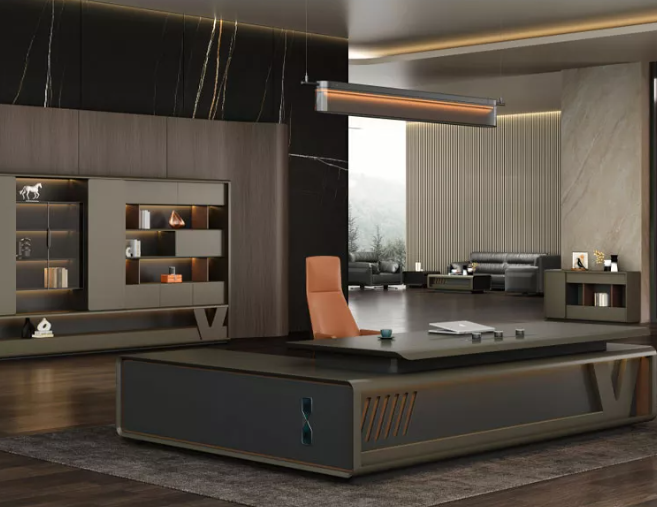
The Premium Executive Desk focuses on high-quality materials and refined design elements that create a composed and professional workspace. Its stable desktop structure and leather inlay writing surface provide comfort during long work sessions, while integrated cable management systems help maintain organization.
The Modern Executive Desk with Storage offers flexible size options that allow businesses to match desk dimensions with different office layouts. Built with E1-grade panels and advanced cable routing solutions, the desk supports device-heavy work environments while maintaining a clean aesthetic.
Finally, the Luxury Executive Desk integrates advanced technologies including intelligent LED lighting, fingerprint-locked drawers, and built-in cable boxes that enhance security and organization. These features demonstrate how executive desks have evolved from simple work surfaces into integrated professional workstations.
Selecting the right executive desk requires balancing several factors including size, materials, storage capacity, ergonomics, durability, and professional design. A well-chosen desk provides more than a place to work; it creates an organized environment that supports leadership responsibilities and enhances workplace productivity.
By evaluating these elements carefully and considering professional furniture solutions such as those developed by Foshan Liyu Furniture Co., Ltd., businesses can create executive offices that combine functionality, comfort, and visual authority. The right executive desk not only supports daily tasks but also reinforces the professional image of the organization while providing long-term value for modern workplaces.
A: Choose an executive desk with proper size, strong materials, storage, ergonomic height, and cable management.
A: An executive desk supports organization, productivity, and creates a professional workspace impression.
A: Measure your office space and ensure the executive desk fits comfortably while allowing movement.
A: An executive desk usually costs between $300 and $1200+, depending on materials and features.
A: An executive desk offers larger workspace, more storage, and stronger professional presence.