
Views: 0 Author: Site Editor Publish Time: 2026-07-25 Origin: Site


The architectural shift toward warm modern environments has replaced sterile, white-and-glass corporate aesthetics with organic textures. This transition makes a premium walnut office table a primary specification for executive and commercial spaces. Selecting a walnut desk is rarely a purely aesthetic decision. Specifiers must navigate the structural trade-offs between solid lumber and engineered substrates. You have to manage the complexities of integrating modern power and data routing. You also need to account for long-term wear in high-traffic environments.
This guide provides a technical evaluation framework for specifying workspace surfaces. We compare material realities, structural requirements, and integration risks. This ensures the final selection meets both design intent and operational demands. Understanding these variables prevents premature surface failure. It guarantees the workspace functions exactly as intended without structural compromise.
Establishing the baseline requirements for a modern workspace means balancing the psychological warmth of natural wood grain with the rigorous demands of daily commercial use. Workspaces must facilitate focused tasks while projecting a specific architectural identity. Walnut serves as an anchor material in modern minimalist and industrial-leaning palettes. It offers a tight grain, rich color variation, and natural density. Unlike lighter woods that can feel overly residential, American Black Walnut provides visual weight. It delivers the sophistication necessary for professional environments.
When evaluating manager office furniture standards, functional requirements extend beyond mere surface area. Executive and management desks require specific dimensions to accommodate multi-monitor setups. They need client-facing modesty panels for privacy and integrated storage solutions. Wood surfaces also offer superior acoustic properties compared to glass or metal. They absorb ambient noise rather than reflecting it. This contributes to a quieter, more focused work environment.
Specifying the right dimensions involves understanding the spatial dynamics of the room. A standard executive desk measures 72 inches wide by 36 inches deep. This footprint allows for dual monitors, a laptop dock, and physical document review space. You must ensure a minimum clearance of 48 inches behind the desk for chair movement. Client-facing areas require at least 36 inches of clearance. Modesty panels should drop at least 18 inches from the work surface. These panels conceal wiring and provide privacy. Integrating these elements requires precise planning. You cannot simply drop a desk into a room and expect it to function perfectly.
Acoustic management is another critical factor. Hard surfaces like glass and steel bounce sound waves across the room. This creates an echo chamber that disrupts concentration. Walnut, with its cellular structure, dampens sound transmission. A thick walnut top absorbs high-frequency noises from keyboards and phone calls. When paired with acoustic wall panels and soft seating, the desk becomes part of a comprehensive sound management strategy. You must evaluate the entire room's acoustic profile before finalizing the desk material.
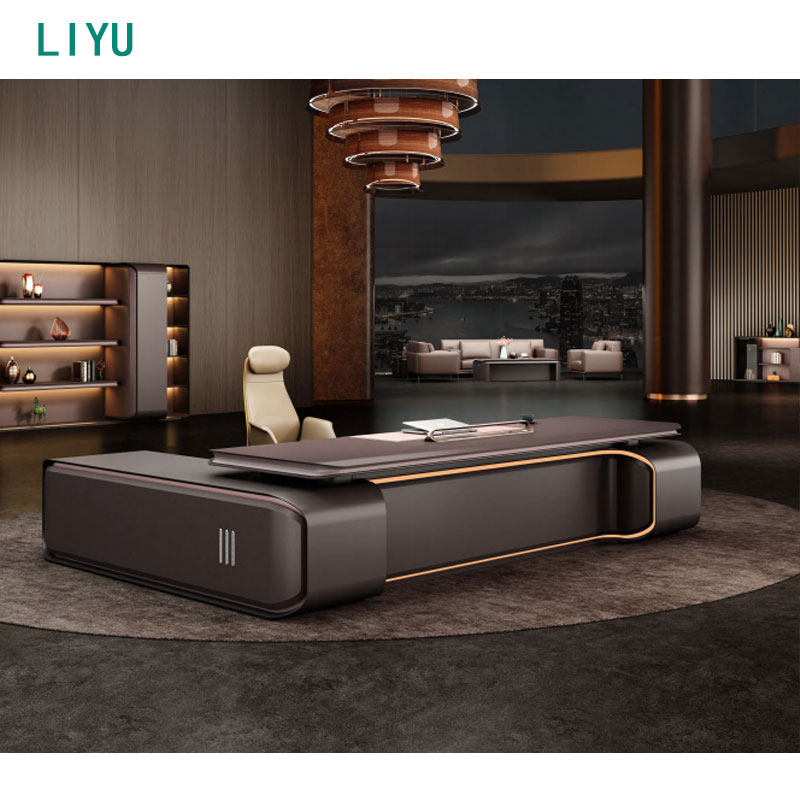
The core material dictates the table's lifespan, structural behavior, and maintenance requirements. Specifiers must objectively evaluate the environment before selecting the substrate. You have to look at humidity control, traffic levels, and maintenance capabilities.
A solid wood office table offers unmatched aesthetic depth and high perceived value. Because the material is continuous throughout, it allows for deep sanding and refinishing multiple times over its lifecycle. Scratches or dents can be repaired. You can restore the surface to its original condition with standard woodworking tools.
However, solid wood presents significant structural constraints. It is highly susceptible to volumetric changes caused by humidity fluctuations. Without strict HVAC and humidity controls, solid walnut can warp, cup, or crack. The material is also exceptionally heavy. It requires robust steel or thick timber underframes to prevent sagging over long spans. Specify solid wood only when the facility maintains consistent climate control. The project must allow for premium, kiln-dried lumber with proper moisture content.
Moisture content is the most critical variable when specifying solid wood. Kiln-dried walnut should have a moisture content between 6% and 8% for indoor use. If the wood is too wet, it will shrink and crack as it acclimates to the office environment. If it is too dry, it will absorb moisture from the air and swell. You must verify the moisture content with a pinless moisture meter before accepting delivery. The office environment must maintain a relative humidity between 40% and 50% year-round. Failure to control humidity will result in catastrophic structural failure of the desk surface.
A wood veneer office desk represents the standard for scalable commercial applications. By applying a thin slice of real walnut over a medium-density fiberboard (MDF) or high-grade plywood core, manufacturers achieve exceptional dimensional stability. The engineered core prevents the warping and seasonal movement associated with solid lumber. Veneer also allows for consistent grain matching. You can specify slip matching or book matching across large conference tables or multiple workstations.
The primary vulnerability of veneer lies in its edges and surface thickness. If poorly banded, edges can chip from chair arm impacts. Furthermore, limited refinishing cycles are possible because the veneer layer is thin. When evaluating veneer, verify the thickness of the top wear layer. Insist on solid wood edge banding to protect vulnerable perimeters from delamination.
Veneer thickness varies significantly among manufacturers. Standard commercial veneer is often 1/42 of an inch thick. This allows for zero refinishing. Premium architectural veneer can be up to 1/16 of an inch thick. This thicker layer permits light sanding and refinishing if the surface sustains minor damage. The core material is equally important. High-density MDF provides a perfectly flat substrate that prevents telegraphing. Telegraphing occurs when imperfections in the core show through the veneer. Plywood cores offer better screw-holding capacity for mounting hardware. You must weigh these factors based on the specific application.
High-Pressure Laminate offers a high-durability alternative for extremely high-traffic areas. Modern printing techniques mimic walnut grain convincingly. However, HPL compromises on tactile warmth and authentic grain variation. It serves best in secondary workstations or collaborative areas where impact resistance prioritizes over executive aesthetics.
| Material Type | Dimensional Stability | Refinishing Capability | Weight Profile | Ideal Application |
|---|---|---|---|---|
| Solid Walnut | Low (Requires climate control) | High (Multiple sandings) | Very Heavy | Executive suites, heritage spaces |
| Walnut Veneer (MDF Core) | High (Resists warping) | Low (Light sanding only) | Moderate | Standard commercial offices |
| HPL (Walnut Print) | Very High | None | Moderate | High-traffic collaborative zones |
Modern workspaces demand seamless integration of technology and ergonomics. A heavy walnut top requires precise engineering to function correctly with modern hardware. You cannot ignore the mechanical requirements of the desk frame.
Modern adjustable sit-stand frames elevate user comfort and productivity far beyond legacy static desks. However, integrating a heavy walnut top with an adjustable standing desk frame requires careful calculation. A 1.5-inch thick solid walnut slab can weigh upwards of 80 to 100 pounds depending on dimensions. When combined with multi-monitor setups, heavy monitor arms, and computer hardware, the total dynamic load can easily exceed the capacity of standard single-motor frames.
Specify dual-motor or dual-stage lifting columns with a minimum lifting capacity of 300 pounds. This ensures smooth, stable transitions without motor strain. Hardware specifications should include minimalist profiles. Look for hidden under-desk motor housings and flush-mounted digital handsets. These maintain clean architectural lines and prevent visual clutter beneath the walnut surface.
Frame rigidity is paramount when elevating a heavy top. At standing height, a poorly engineered frame will wobble during typing. This instability disrupts focus and creates a frustrating user experience. Specify frames with thick steel columns and reinforced crossbars. The feet should be solid steel, not hollow aluminum. You must test the lateral stability of the frame before committing to a large-scale deployment. A heavy walnut top exacerbates any inherent weakness in the lifting mechanism.
Effective commercial table design requires pre-planned cable routing. Factory-machined grommets and power troughs in veneer desks offer clean, sealed edges. Attempting to route holes on-site in solid wood risks splitting the grain and damaging the finish. Under-desk cable management trays must be securely mounted. When attaching hardware to MDF cores, use threaded inserts rather than standard wood screws. This prevents stripping and ensures the tray can support the weight of power bricks and thick data cables.
Edge design impacts both ergonomics and durability. A chamfered or waterfall edge reduces pressure on the user's forearms during typing. Square edges provide a sharp, modern look but can cause discomfort over long periods. For veneer tables, solid wood edge banding of at least 2mm thickness is critical. It prevents chipping from chair arms and daily impacts.
The edge profile also dictates the visual thickness of the desk. A reverse bevel edge makes a thick slab appear lighter and more elegant. A built-up edge on a veneer top creates the illusion of a solid slab without the associated weight. You must select an edge profile that aligns with the room's architectural language. Industrial spaces often favor square edges with exposed steel banding. Modern minimalist spaces benefit from knife edges or subtle chamfers. The edge is the most frequently touched part of the desk. It must withstand constant abrasion from clothing, watches, and chair arms.
A walnut desk must harmonize with the surrounding architectural elements to achieve a cohesive warm modern aesthetic. You have to coordinate materials carefully.
Walnut pairs exceptionally well with specific materials. Matte black steel legs and hardware reinforce an industrial minimalist aesthetic. Brushed copper or brass details elevate the space for executive environments. Accessory integration should be intentional. Matching walnut keyboard trays, flush-fit desk shelves, and color-aligned desk pads keep the primary surface uncluttered. They maintain material continuity throughout the workspace.
Lighting plays a massive role in how walnut appears in a room. Warm lighting (2700K to 3000K) enhances the red and brown undertones of the wood. Cool lighting (4000K and above) can make walnut look flat and gray. You must coordinate the desk placement with both natural and artificial light sources. Avoid placing the desk in direct, harsh sunlight without UV protection. The hardware finish should match the room's door hardware and light fixtures. Consistency in metal finishes prevents visual chaos and reinforces a deliberate design strategy.
The finish dictates how the wood interacts with light, liquids, and daily wear. Polyurethane and conversion varnishes provide high protection. They represent the commercial standard for chemical and spill resistance. They seal the wood entirely. Hard-wax oils offer superior tactile warmth and a matte, natural appearance. However, they require frequent reapplication to maintain their protective barrier. Walnut naturally lightens over time with UV exposure. High-quality commercial finishes include UV inhibitors to slow this patination process. They maintain the wood's original dark richness.
Conversion varnish is the most durable option for commercial environments. It cures through a chemical reaction, creating an incredibly hard, non-porous surface. It resists coffee spills, hand sanitizers, and standard cleaning chemicals. Water-based polyurethanes offer a more environmentally friendly option with lower VOC emissions. They dry clear and do not yellow over time. Hard-wax oils penetrate the wood fibers rather than sitting on top. They allow you to feel the actual grain of the wood. You must choose the finish based on the client's willingness to perform ongoing maintenance.
Integrating a new walnut desk into an office with existing built-ins or contrasting white architectural elements requires careful tone balancing. To address the white desk clash transition, use dark hardware accents on the desk. This anchors it within a lighter room. Aligning the grain direction of the desk with the primary sightlines of the room helps integrate the piece without visual clashing.
You can bridge the gap between a dark walnut desk and light cabinetry by introducing transitional elements. A walnut floating shelf above white cabinets ties the room together. A rug with warm earth tones grounds the desk and connects it to the surrounding architecture. You must view the desk as part of a holistic design ecosystem. It cannot exist in isolation. The grain pattern should run parallel to the longest wall in the room. This elongates the space and creates a sense of order.
Specifying heavy, premium materials introduces logistical and maintenance variables that must be managed proactively. You cannot ignore the physical realities of moving and maintaining large pieces of furniture.
Ongoing maintenance differs drastically by finish. Oiled solid wood requires periodic re-oiling to prevent drying and cracking. This demands a strict facility maintenance schedule. Lacquered commercial veneers require only standard non-abrasive cleaning. They are significantly easier to maintain in high-traffic environments.
Facility managers must train cleaning staff on proper protocols for wood surfaces. Ammonia-based glass cleaners will strip hard-wax oils and degrade polyurethane finishes over time. You must specify pH-neutral wood cleaners. Microfiber cloths prevent micro-scratches that dull the finish. For oiled surfaces, the maintenance team must apply a fresh coat of maintenance oil every six to twelve months. They must buff it into the surface and allow it to cure overnight. This preventative maintenance extends the life of the desk indefinitely.
Shipping, handling, and assembling large walnut tables involve considerable logistical complexity. Solid slabs are prone to freight damage if improperly crated. The sheer weight necessitates white-glove installation teams. They must be equipped to handle heavy loads without damaging office doorways, elevators, or the table itself.
Material sourcing impacts corporate ESG goals and indoor air quality. Evaluate suppliers for FSC-certified wood sourcing. Ensure that engineered substrates are CARB Phase 2 compliant. This minimizes formaldehyde emissions. Low-VOC finishes further protect indoor air quality, particularly in enclosed executive offices.
Sustainable forestry practices ensure the long-term availability of American Black Walnut. FSC certification guarantees the wood was harvested responsibly. You must request documentation from the manufacturer to verify these claims. Indoor air quality is a major concern in modern sealed office buildings. Off-gassing from cheap MDF cores or high-VOC lacquers causes headaches and respiratory issues. Specifying GREENGUARD Gold certified products eliminates this risk. It ensures the workspace remains healthy and productive.
Choosing between solid walnut and high-grade walnut veneer depends entirely on the environment's climate control capabilities and the required scale of the deployment. Solid walnut suits heritage executive spaces with stable humidity. Veneer provides the dimensional stability required for scalable commercial applications.
Before finalizing a specification, verify the substrate quality and wood moisture content. Confirm that the finish provides adequate chemical and UV resistance for the specific room conditions. Ensure that the underframe hardware possesses the dynamic weight capacity to handle the heavy wood top alongside all required technology.
Follow these next steps to finalize your specification:
A: Yes. Solid walnut finished with hard-wax oils requires periodic re-oiling to prevent the wood from drying out. It also demands strict indoor humidity control between 40% and 50% to prevent warping, cracking, or cupping. Tables with commercial lacquer finishes require less maintenance but still need climate stability.
A: Yes, provided it uses a high-density core like MDF or premium plywood and thick solid wood edge banding. The durability relies heavily on the commercial-grade clear coat applied over the veneer to resist scratches, spills, and daily wear.
A: American Black Walnut naturally lightens when exposed to UV light. To mitigate this, specify finishes containing UV inhibitors. Utilize window treatments during peak sunlight hours and periodically rotate desk accessories to prevent uneven lightening on the surface.
A: Yes, but you must distribute the clamping force to prevent indenting the natural wood. Use a steel reinforcement plate between the monitor arm clamp and the desk surface. Ensure the desk thickness is at least 1 inch to support the localized weight.
A: Standard commercial veneer desks typically use a 1-inch to 1.18-inch thickness for a sleek, modern profile. For solid wood executive desks, a 1.5-inch to 2-inch slab provides the necessary visual weight and structural rigidity to prevent sagging over wide spans.
A: Walnut features a tighter grain and rich, dark, warm undertones, lending itself to sophisticated, modern, or industrial aesthetics. Oak has a more open, pronounced grain and lighter, cooler tones, which align better with Scandinavian or transitional design styles.


