

The short answer. Care routines follow the surface, not the desk. Laminate and melamine tops need only a damp microfiber cloth and mild soap; natural veneer adds a "wipe with the grain" rule and a no-standing-water rule; lacquer finishes want soft, dye-free cloths and no solvents; powder-coated stee

The short answer. Matching a desk and chair comes down to three rules: keep 250–300 mm of height difference between the 750 mm desktop and the seat's highest working position, hold one style family across every piece, and let one color temperature (or one swatch set) run through desk, chair and stor
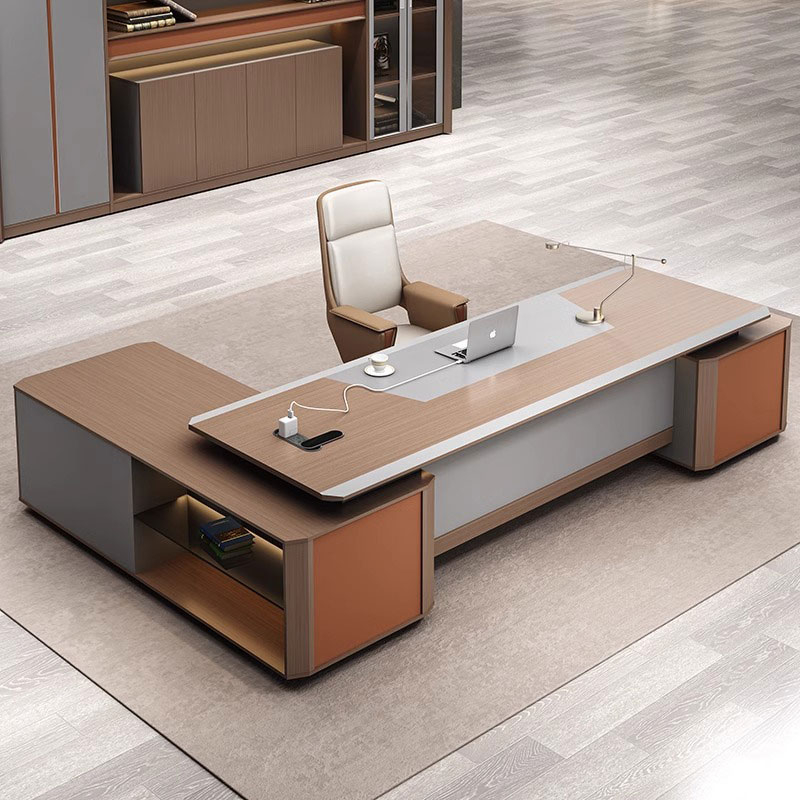
The short answer. Sourcing executive desks from China runs on six moves: verify the factory behind the catalog, run the OEM/ODM process in the right order (drawing, then sample, then production), understand that MOQs vary by model and pricing steps down in tiers, choose the packaging and shipping te

The short answer. These are tier names, not different products. An executive desk is the category: senior-management desks, typically 160–240 cm. A manager desk is the working end of the category: 140–180 cm, storage-forward, cost-per-unit driven. A CEO desk is the flagship end: 200 cm and wider (te
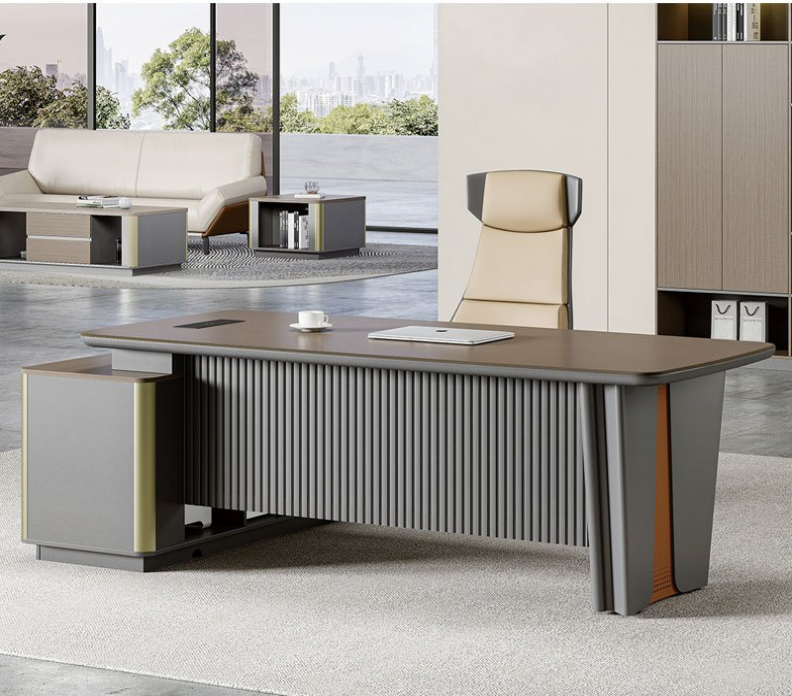
The short answer. Executive desks handle storage three ways. A desk with drawers puts everything below the top in pedestals and drawer banks: fastest to install, no wall needed. A desk with hutch stacks cabinets over the worksurface: maximum capacity per square meter, but it needs wall anchoring and

The short answer. In a room of 10 m² or less, a 140–160 cm straight executive desk against a wall, or a compact L-shaped corner desk, fits with proper chair clearance; rooms of 10–15 m² take a 160–180 cm desk with a side cabinet; larger rooms accept full L-shaped or hutch configurations. Home versio


