
Views: 0 Author: Site Editor Publish Time: 2026-07-01 Origin: Site


Specifying a modern white office table for commercial interiors requires balancing architectural appeal with the operational reality of high-traffic wear, staining, and surface degradation. White furniture delivers a clean aesthetic that brightens workspaces, but facility managers frequently deal with premature yellowing, deep scratches, and compromised edge seams. You need a specification strategy that prevents these failures without relying on unsustainable maintenance protocols.
The core problem is maintaining aesthetic integrity under heavy daily use. Evaluating substrate materials, edge banding technologies, and structural frameworks ensures long-term performance and compliance in commercial environments. This guide breaks down how to assess core materials, manage lighting impacts, and specify the right construction methods to keep your commercial spaces looking sharp, functional, and structurally sound over years of continuous use.
Lighting dramatically alters how white surfaces appear on the floor. Evaluating the impact of color temperature, measured in Kelvins, is a mandatory step before approving any finish schedule. Warm lighting (around 2700K to 3000K) casts a yellow hue, making a crisp white look aged or dirty. Cool lighting (4000K and above) can render the same surface stark, blue, or overly clinical. You must test physical material samples under the exact lighting conditions planned for the space.
UV resistance ratings dictate the long-term color fastness of the table. Desks placed near exterior glazing or under skylights are highly susceptible to photo-degradation. Specifying substrates with high UV resistance prevents the yellowing effect that ruins the aesthetic of a commercial workspace design. Coordinating these white surfaces with interior paint schemes requires matching warm or cool wall undertones. A soft "Painter's White" on the walls can ground the furniture, preventing the room from feeling like a laboratory.
| Lighting Temperature (Kelvin) | Visual Impact on White Surfaces | Recommended Application |
|---|---|---|
| 2700K - 3000K (Warm) | Pulls yellow/amber undertones; can make pure white look aged. | Lounge areas, hospitality zones, breakrooms. |
| 3500K (Neutral) | Maintains true white appearance; balanced and natural. | General open-plan offices, private offices. |
| 4000K - 5000K (Cool) | Pulls blue/grey undertones; creates a stark, high-contrast look. | Laboratories, clinical spaces, high-focus task areas. |
Commercial environments destroy residential-grade furniture. Defining ANSI/BIFMA standards for load-bearing capacity and surface wear resistance is non-negotiable. These standards ensure the desk can handle heavy monitor arms, leaning users, and the daily impact of office equipment without structural deflection or surface failure.
Surface finish selection involves strict trade-offs. Matte finishes resist fingerprints and reduce glare, but they are highly prone to visible scuffing from hard objects like laptops and binders. Gloss finishes offer an easy-wipe surface that repels dry-erase markers and coffee spills, but they show micro-scratches immediately. Selecting the right finish depends on the specific functional zone and the expected traffic levels of the department.
Designing the office layout around the table dictates the flow and energy of the room. Floating configurations facing doors project authority and openness, whereas perimeter wall placements maximize floor space for collaboration. The physical placement influences how the table integrates with the surrounding architecture and MEP (Mechanical, Electrical, Plumbing) floor boxes.
Balancing high-contrast elements is vital for visual grounding. Dark flooring, vibrant accent walls, or textured acoustic panels help anchor the white table within the broader color palette. This contrast prevents the table from getting lost visually and adds necessary depth to the overall interior scheme, ensuring the white surface pops rather than washes out.
Comparing wear resistance and impact tolerances of various modern office table materials is critical for daily commercial use. High-Pressure Laminate (HPL) offers superior durability against scratches, impacts, and heat compared to Thermally Fused Laminate (TFL). HPL consists of multiple layers of kraft paper saturated with phenolic resin, pressed under high heat, making it the standard for high-traffic horizontal work surfaces.
When evaluating lifespan ratios for large-scale deployments across corporate campuses, HPL provides better long-term value. TFL might suffice for vertical surfaces, modesty panels, or lower-traffic areas, but a primary work surface requires the robust protection HPL affords. Specifying a minimum thickness of 1-1/8 inches for the core substrate prevents sagging over wide spans.
Specifying non-porous materials is necessary for healthcare, laboratories, or high-spill breakroom zones. Solid surface materials (like Corian) and engineered quartz offer seamless, hygienic options that resist staining and bacterial growth. However, addressing weight considerations, sub-structure requirements, and freight logistics is critical when utilizing these heavy materials. You will need reinforced steel under-structures to prevent cracking.
The base of the table matters just as much as the top. Specifying powder-coated white steel frames ensures resistance to chipping and scuffing from shoes, vacuums, and chairs. Color matching the steel frame to the tabletop finish creates a unified, premium look. Ensure the powder coat specification includes a zinc-rich primer if the tables will be used in humid environments.
Edge banding is the primary failure point for white tables. Laser edge banding fuses the edge tape directly to the substrate using a polymer functional layer, eliminating the visible "dark line" common with traditional EVA or PUR glue. This seamless transition prevents dirt accumulation and moisture ingress, which cause the core to swell and the edge to peel.
Specifying impact-resistant ABS or PVC edging (minimum 2mm thickness) is essential for high-traffic collision zones where chairs frequently bump the table. A thick, durable edge band protects the core material and maintains the crisp white aesthetic over time. Never accept 0.5mm melamine edge tape on a commercial work surface.
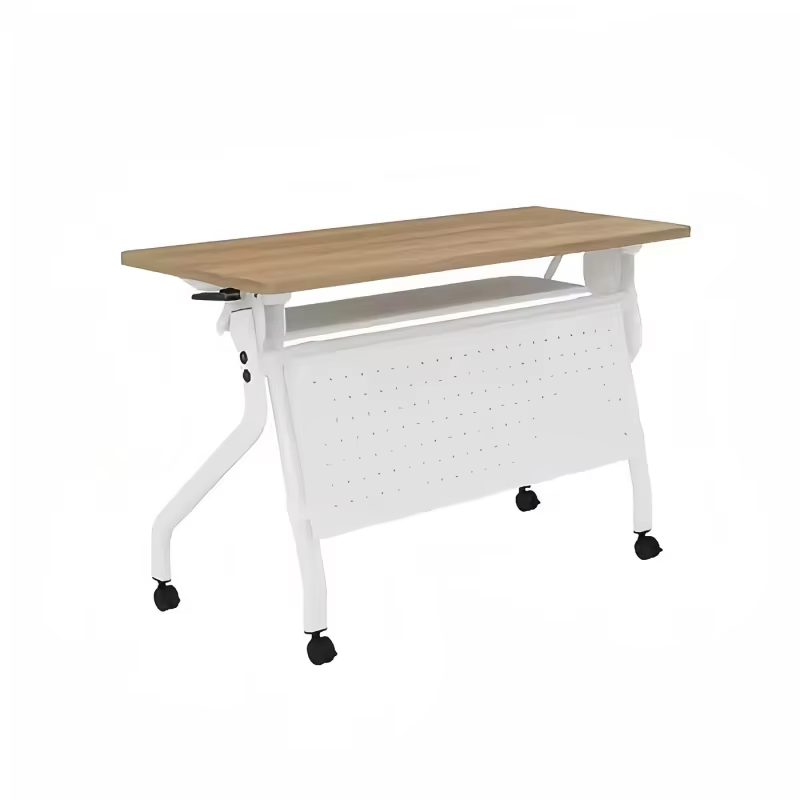
Training rooms require rapid flexibility. Specifying a white training table with flip-top mechanisms, nesting capabilities, and locking casters allows facilities teams to reconfigure the room without compromising structural rigidity. The mechanisms must feature heavy-duty steel hinges and dual-locking casters to withstand constant movement and prevent wobbling during use.
Integrating modesty panels and wire management in matching white or contrasting neutral finishes keeps the space looking organized. A clutter-free under-desk area is vital in modular setups where tables are frequently rearranged. Daisy-chain power systems should be specified to allow tables to connect seamlessly without running multiple cords to floor cores.
Executive spaces demand seamless technology integration. Integrating power and data modules, such as flush-mount grommets and pop-up units, directly into a continuous white surface requires precise CNC routing and clean finishing. The hardware should match or complement the white aesthetic, utilizing anodized aluminum or matte white faceplates.
Specifying a custom office finish ensures the table aligns exactly with surrounding architectural millwork and wall panels. This level of coordination elevates the boardroom from functional to impressive. Large boardroom tables often require multi-piece tops; ensure the seams are joined with heavy-duty draw bolts and alignment dowels for a perfectly flush surface.
Ergonomics play a major role in modern offices. Specifying heavy-duty dual or quad motor frames in matching white powder-coat finishes ensures stability at maximum height. A wobbly desk ruins the user experience and damages monitor mounts. The lifting columns should feature a 3-stage design for maximum height range and stability.
Managing cable pathways dynamically during height transitions is critical to preserve clean visual lines. Flexible cable spines, energy chains, or integrated tracking systems keep cords concealed whether the desk is at a sitting or standing position. Ensure the power cables have sufficient slack to accommodate the full range of motion without unplugging equipment.
Open plans present unique acoustic and visual challenges. Acoustic considerations are necessary to mitigate sound reverberation when utilizing expansive hard white surfaces. Adding acoustic PET felt desk screens or suspended ceiling baffles helps control noise levels and provides visual privacy.
Cable management solutions must conceal high-volume wiring to maintain the minimalist aesthetic. Continuous central cable troughs with hinged access doors allow IT teams to manage data runs efficiently. Pairing central white tables with matching white vertical storage units, like credenzas or lateral filing systems, creates visual continuity across the floorplate.
The risk of dye-lot variations in large volume or phased orders is significant. A "cool white" table placed next to a "warm white" table looks disjointed and unprofessional. Mitigation involves requesting physical control samples, specifying single-batch production for the entire floorplate, and securing extra attic stock for future replacements or expansions.
Managing unsightly power bricks, data boxes, and structural beams beneath floating central tables is essential for a clean look. Specifying integrated under-desk metal trays and white fabric cable socks provides 360-degree visual appeal, ensuring the table looks good from any angle, especially in glass-walled offices.
Identifying approved cleaning agents that will not degrade, strip, or stain the white finish must happen before installation. Establishing a repair protocol for deep scratches, ink stains, and dye transfer from clothing ensures the facilities team can maintain the investment properly. Provide the janitorial staff with a strict list of prohibited abrasive cleaners.
Specify commercial-grade, UV-resistant substrates and seamless edge banding technologies to ensure your white office tables survive daily use. Prioritize manufacturers that provide BIFMA-certified HPL or solid surfaces, utilize laser edge banding, offer robust height-adjustable configurations, and provide transparent dye-lot controls.
A: High-Pressure Laminate (HPL) and solid surface materials offer the best resistance against scratches and daily wear in commercial environments compared to standard melamine. HPL provides a hardened wear layer that withstands heavy use.
A: Specify materials with high UV resistance ratings and avoid placing tables in direct, unfiltered sunlight. Regular cleaning with approved, non-abrasive agents also prevents chemical buildup that causes discoloration.
A: Yes, provided they feature impact-resistant ABS or PVC edge banding, durable HPL surfaces, and heavy-duty steel flip-top mechanisms designed for constant reconfiguration and movement.
A: Use standardized color matching systems like RAL or Pantone, and always review physical draw-downs and material samples under the specific Kelvin temperature lighting of the installation site.
A: Laser edge banding fuses the edge tape directly to the core without traditional glue, eliminating the visible dark line that collects dirt and creating a seamless, moisture-resistant edge.


