
Views: 0 Author: Site Editor Publish Time: 2026-07-02 Origin: Site


Selecting a wooden office chair for a modern private office creates an immediate tension between classic aesthetics and modern ergonomic requirements. Executives demand the authoritative visual weight of wood. Yet, rigid wooden frames often fail to support the dynamic movement necessary for an eight-hour workday. Choosing a chair based purely on design forces a compromise that leads to physical discomfort and decreased productivity.
A successful seating strategy requires a technical evaluation framework. You must assess structural integrity, ergonomic baselines, dimensional compatibility, and commercial-grade durability. This approach ensures the final selection satisfies both high-end design standards and strict operational health requirements. You need a chair that looks the part but performs like a highly engineered tool.
Defining a successful seating investment requires looking beyond the showroom appeal. A high-performing executive chair must deliver visual weight, align with corporate brand identity, provide sustained user comfort, and carry robust warranty coverage. Historically, executive seating relied on traditional, rigid banker chairs. These models prioritized status over human biomechanics. Modern workspaces have shifted this paradigm entirely.
Today, the focus is on ergonomically integrated wooden models. The conceptual trade-off between the static nature of wood and the dynamic movement of modern ergonomic science requires careful navigation. Wood does not yield to body weight. Ergonomics demands continuous micro-movements. Bridging this gap involves sophisticated engineering, marrying rigid structural elements with flexible, supportive contact points. When you sit down, the chair should respond to your posture changes without feeling loose or unstable.
We see many offices make the mistake of prioritizing the look of a heavy oak or mahogany frame over the actual mechanics hidden underneath. A chair is a tool for work. If the user is distracted by lower back pain or restricted blood flow to their legs, the aesthetic value of the furniture becomes irrelevant. The goal is to find a piece that commands respect visually while secretly operating as a high-performance ergonomic machine.
Fully wood-framed chairs utilize timber as the primary load-bearing structure. The legs, seat pan base, and backrest uprights are carved or milled from solid stock. These chairs project undeniable authority and craftsmanship. They are highly appropriate for brief meetings, guest seating, or highly stylized private offices where the user spends limited time at the desk.
However, solid wood frames carry inherent limitations. They lack structural flex. Integrating complex ergonomic mechanisms into solid wood is technically challenging and often compromises the frame's integrity. Users sitting in these chairs for prolonged periods frequently experience pressure points and restricted circulation due to the unyielding nature of the material. You cannot easily hide a complex synchro-tilt mechanism inside a solid block of walnut without weakening the wood.
Furthermore, solid wood is heavy. Moving a fully wooden chair across a carpeted floor requires significant effort, which can lead to user fatigue and accelerated wear on the floor surface. For primary task seating, fully wood-framed models generally fall short of modern occupational health standards.
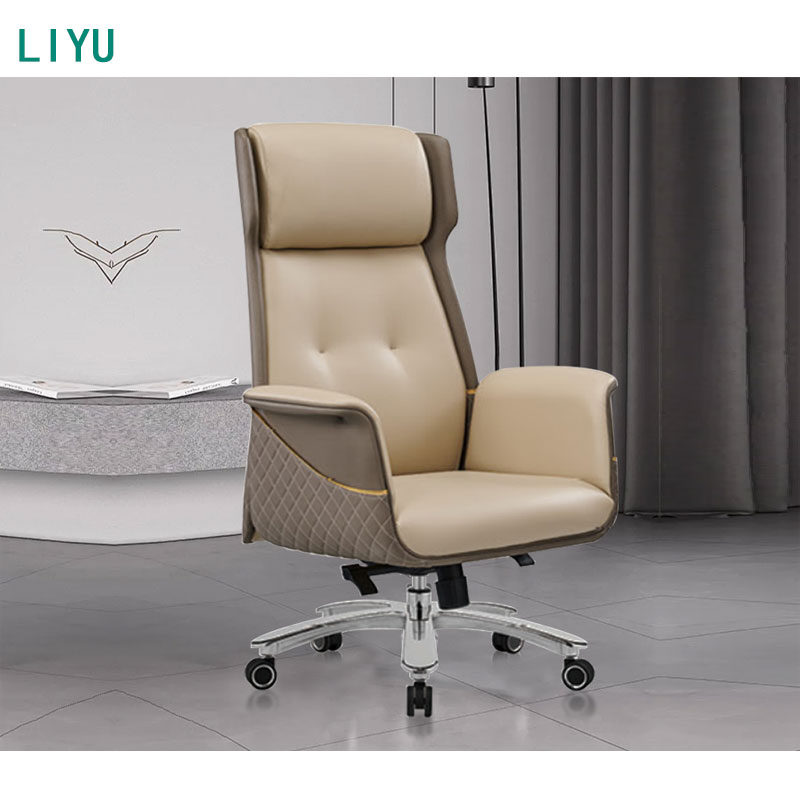
A more practical solution for daily use is an executive chair with wood accents. Manufacturers construct these hybrid models using steel or aluminum core frames. They then clad the metal in wood veneers or integrate solid wooden armrests and base caps. This hybrid construction allows for multi-point adjustability, including seat pan depth sliding, 4D armrests, and synchro-tilt mechanisms, without sacrificing the premium aesthetic.
Modern hybrid designs utilize molded plywood veneers to achieve subtle, dynamic backrest flex. This technique, popularized during the mid-century modern movement, provides a level of ergonomic give that solid wood simply cannot replicate. When evaluating the cost-to-value ratio, hybrid chairs often present a superior investment. They deliver the desired visual impact while ensuring the mechanical longevity and user health required in professional environments.
The engineering behind these hybrid models is fascinating. By using a metal skeleton, manufacturers can bolt heavy-duty pneumatic cylinders and tilt mechanisms directly to steel, rather than relying on wood screws that might strip out over time. The wood becomes a decorative shell, protecting the mechanics while providing the warm, authoritative look expected in a private office.
Heavy daily use requires advanced mechanical support. Knee-tilt and synchro-tilt mechanisms are essential for executive seating. A synchro-tilt mechanism allows the backrest to recline at a faster rate than the seat pan, keeping the user's feet flat on the floor and maintaining healthy circulation. Center-tilt mechanisms, often found on older or lower-end wooden chairs, lift the front edge of the seat, causing uncomfortable pressure under the thighs.
| Mechanism Type | Functionality | Best Use Case |
|---|---|---|
| Center-Tilt | Pivots from the center of the seat pan. Lifts the front edge when reclining. | Conference rooms, short-term seating. |
| Knee-Tilt | Pivots from the front of the seat. Keeps feet flat on the floor during recline. | Executive desks, moderate daily use. |
| Synchro-Tilt | Backrest and seat pan recline at a 2:1 ratio. Opens the torso angle. | Primary task seating, 8+ hour workdays. |
Lumbar support integration is another critical factor. When a backrest incorporates rigid wooden elements, achieving proper lower back support requires ingenuity. Look for models utilizing suspended upholstery or adjustable internal lumbar pads hidden beneath the fabric or leather. The seat pan design must feature a waterfall edge and high-resiliency molded foam to counteract the rigidity of the wooden substrate beneath it.
A common design pitfall involves desk and countertop clearance. Thick, fixed wooden armrests frequently clash with premium desk edges. This collision scratches the wood finish on both the chair and the desk. It also prevents the user from pulling up close to their keyboard, leading to forward head posture and shoulder strain. Always measure armrest height against the desk's under-clearance.
Anthropometric scaling is equally vital. Rigid wooden frames affect users of different body sizes differently. Fixed frame widths can pinch larger users. Non-adjustable wooden seat pans can restrict leg movement for shorter users, compromising vascular circulation behind the knees. Adjustable seat depth is a mandatory feature for chairs intended for prolonged use.
When evaluating a chair, consider the 5th to 95th percentile of user heights. A chair with a fixed wooden seat pan depth of 20 inches will cut into the calves of a shorter user, while leaving a taller user without adequate thigh support. Hybrid models with sliding seat pans solve this issue entirely.
The durability of an office chair wood finish separates commercial investments from residential furniture. Commercial environments require catalyzed polyurethane finishes or advanced UV-cured topcoats. These commercial-grade sealants withstand daily impacts from desks, rings, and buttons far better than standard residential lacquers.
| Feature | Solid Wood Construction | Molded Plywood with Veneer |
|---|---|---|
| Structural Stability | Prone to warping with humidity changes | Highly stable, resists warping |
| Ergonomic Flex | Rigid, no natural give | Engineered for dynamic movement |
| Finish Consistency | Natural grain variations | Uniform appearance across batches |
| Weight | Heavy, reduces mobility | Lighter, easier to maneuver |
High-quality veneers applied over molded plywood often provide better structural stability and resistance to warping than solid wood components. Lifecycle maintenance requires specific care. Prevent checking and fading by keeping the chair out of direct UV exposure and avoiding harsh chemical cleaners that can strip the protective topcoat.
We frequently see facilities managers make the mistake of using standard janitorial supplies on high-end wood finishes. Ammonia-based glass cleaners or heavy-duty degreasers will break down a catalyzed lacquer over time, leaving the wood exposed to moisture and oils from human skin. Stick to damp microfibers and specialized wood soaps.
Textile selection interacts directly with the wooden frame. Top-grain leather offers a classic pairing with wood, providing excellent durability and a premium feel. Performance fabrics offer better breathability but may create different wear patterns against wooden armrests. Regardless of the material, foam density specifications are non-negotiable. Require a foam density of at least 2.5 lbs per cubic foot to ensure the seat does not compress and bottom out against the hard wooden base over time.
If you choose leather, understand that it requires conditioning to prevent cracking, especially in dry, climate-controlled office buildings. Fabric options, particularly those with high double-rub counts (over 100,000 Wyzenbeek), offer incredible longevity but lack the traditional executive aesthetic. The choice depends on the specific visual goals of the private office.
A brief showroom sit is insufficient for evaluating executive seating. Facilities managers and executives must employ an extended-use testing protocol. Test the chair in an actual work environment for a minimum of two to four hours. This duration reveals pressure points and ergonomic deficiencies that are masked during a five-minute trial.
Perform a comprehensive adjustability check using this protocol:
Verify that all mechanical levers, tension knobs, and pneumatic cylinders operate smoothly. Ensure that adjusting the chair does not cause moving metal parts to scrape against wooden panels or decorative components.
Aligning a custom chair finish with existing private office casegoods ensures a cohesive aesthetic. Matching stains to desks, credenzas, and shelving requires physical finish samples. Relying on digital photos guarantees a mismatch due to screen calibration differences.
Understand the procurement realities. Requesting custom stains or paints extends lead times significantly. Manufacturers may also enforce minimum order quantities for custom runs. Be aware of color matching risks. Natural grain variations in species like walnut or maple mean that even with an exact stain match, the final appearance will exhibit slight natural discrepancies.
When you send a control sample to a manufacturer, they will typically send back a "strike-off" for your approval. This is a small piece of the actual wood species used on the chair, finished with your custom stain. You must review this strike-off in the actual lighting conditions of the private office, as fluorescent, LED, and natural daylight will drastically alter the perceived color of the wood.
When sourcing commercial office seating, BIFMA certification is a non-negotiable baseline. This certification guarantees the chair has passed rigorous weight capacity and cycle testing. It protects the organization from liability and ensures the product can withstand heavy daily use.
Evaluate the commercial warranty carefully. Look for specific exclusions. Many warranties cover the metal frame for a lifetime but limit coverage on the wood finish, moving mechanical parts, and pneumatic cylinders to three or five years. Read the fine print regarding weight limits, as standard BIFMA testing covers users up to 275 pounds. If you require seating for larger individuals, you must specify heavy-duty or bariatric models.
Wooden chairs are inherently heavier than their mesh or plastic counterparts. This increased weight impacts user mobility and accelerates floor wear. Caster selection is critical. Specify soft-tread polyurethane casters for hard floors like wood or concrete to prevent scratching. Use hard nylon casters exclusively for carpeted private offices.
If you place a heavy wooden chair with hard nylon casters on a hardwood floor, you will destroy the floor finish within weeks. The rigid casters will grind dirt and debris directly into the polyurethane floor sealant. Always double-check the caster specification before finalizing the purchase order.
Solid wood components react to their environment. Fluctuations in office humidity and temperature cause wood to expand, contract, or even crack. Mitigate this risk by maintaining strict climate control parameters within the office. Alternatively, specify chairs utilizing engineered wood cores or high-grade plywood, which offer superior dimensional stability under varying environmental conditions.
Winter months in colder climates are particularly harsh on solid wood furniture. Heating systems strip moisture from the air, causing wood to shrink and joints to loosen. Maintaining an indoor relative humidity between 40% and 60% will protect the investment and prevent structural failures.
The optimal wooden office chair is rarely constructed entirely of solid wood. It is a highly engineered hybrid prioritizing commercial-grade mechanisms and high-density foam beneath a premium wood veneer. This approach guarantees both the authoritative aesthetic executives demand and the ergonomic support they require.
A: Fully solid wooden chairs are rarely suitable for 8-hour use due to their rigidity. However, hybrid designs featuring wood accents, high-density foam, and adjustable synchro-tilt mechanisms provide excellent ergonomic support for full workdays.
A: Protect the finish by keeping the chair out of direct sunlight to prevent UV fading. Clean the wood components regularly with a dry or slightly damp microfiber cloth, strictly avoiding harsh chemical solvents that degrade commercial sealants.
A: Hardwoods such as walnut, oak, and maple offer the best durability. Their natural density, combined with commercial-grade catalyzed polyurethane sealants, provides strong resistance against daily impacts and wear.
A: Yes, many commercial manufacturers offer custom staining and veneer matching. This process requires physical samples and typically extends procurement lead times while sometimes requiring minimum order quantities.
A: They can if equipped with the wrong casters. Always specify soft-tread polyurethane casters for hard floors. Additionally, using a glass or polycarbonate chair mat provides maximum protection against heavy chair movement.
A: A high-quality, BIFMA-certified hybrid chair typically lasts between 7 to 12 years under standard commercial use. The lifespan depends heavily on the quality of the mechanical components and the durability of the topcoat finish.
A: It depends on the armrest design. Fixed wooden armrests often clash with desk edges. You must measure the desk's under-clearance and compare it against the chair's maximum armrest height to prevent finish damage.


