
Views: 0 Author: Site Editor Publish Time: 2026-08-18 Origin: Site


The boardroom operates as a high-stakes environment where physical comfort directly impacts executive focus, decision-making stamina, and client impressions. Sourcing the right seating presents a unique challenge. You must find chairs that simultaneously project corporate authority, withstand high-frequency use, and provide ergonomic support for a constantly rotating cast of users with varying body types. It is not enough for a chair to simply look impressive; it must perform under pressure. To move beyond aesthetic appeal, buyers need a systematic evaluation framework. This means focusing on material durability, mechanical reliability, and overall value when procuring boardroom seating. Choosing an office executive leather chair requires careful consideration of how the chair will function in a shared space over thousands of hours of meetings.
Defining the visual requirements of the space is the first step in the procurement process. You must analyze modern minimalist profiles versus the classic style of a traditional tufted leather executive chair to project success and corporate taste. The design language of the chair should align with the company's brand identity and the architectural style of the boardroom. A tech startup might favor sleek, low-profile seating with polished aluminum accents, while a legacy law firm may require high-back, dark leather chairs with wood veneer bases.
There is often a trade-off between heavily padded, static status chairs and modern, kinetically responsive ergonomic designs. While a massive, overstuffed chair might look imposing, it rarely provides the necessary support for long meetings. The baseline requirement is that chairs must facilitate active posture during multi-hour meetings, not just passive lounging. Users need to remain alert and engaged. Heavy padding can cause users to sink into a C-curve spinal posture, which compresses the diaphragm and reduces oxygen flow, leading to fatigue.
Shared seating presents a distinct challenge. Unlike a dedicated desk chair adjusted for a single person, a boardroom chair must fit a 5'2" user and a 6'4" user in the same day. This requires versatile design elements that cater to a broad spectrum of body types without requiring complex manual adjustments. When executives enter a meeting, they rarely take the time to adjust seat depth or backrest height. The chair must adapt to them automatically.
Universal seat pan depths and standardized weight capacities are necessary. A minimum rating of 275 to 300 lbs ensures the chair can safely and comfortably support most users. Chairs that fail to accommodate this variability will cause discomfort and distraction during critical discussions. A seat pan that is too deep will cut off circulation behind the knees of shorter users, while a seat pan that is too shallow will leave taller users without adequate thigh support.
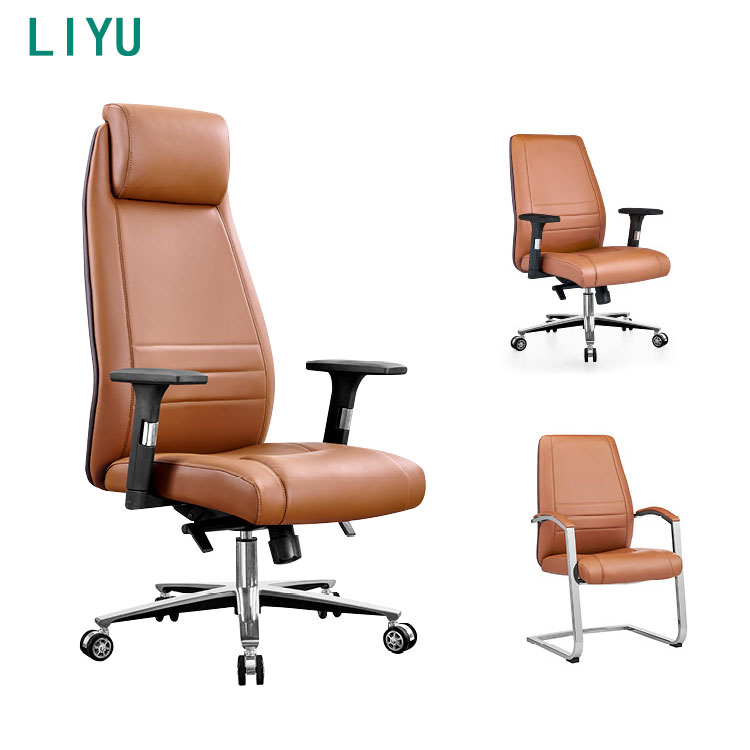
Understanding leather grades is critical for making an informed purchasing decision. Full-grain leather is unaltered, offers maximum durability, and develops a rich patina over time. It retains the natural grain of the hide, making it incredibly strong and resistant to moisture. Top-grain leather is sanded to remove imperfections and given a uniform finish, making it highly durable and more consistent in appearance. Both represent the pinnacle of quality for a genuine leather office chair.
Top-grain is generally considered the industry standard for high-end commercial office environments. It provides an excellent balance of stain resistance, longevity, and professional appearance. It withstands daily use while maintaining its premium look and feel. Because the outermost layer is treated, it resists spills better than untreated full-grain leather, making it highly practical for environments where coffee and water are frequently consumed.
| Leather Grade | Durability | Maintenance Needs | Best Application |
|---|---|---|---|
| Full-Grain | Maximum (15+ years) | High (Requires regular conditioning) | Executive private offices |
| Top-Grain | High (10-15 years) | Moderate (Wipeable, occasional conditioning) | High-use boardrooms |
| Bonded Leather | Low (2-3 years) | Low (Prone to peeling regardless of care) | Not recommended for commercial use |
Bonded leather consists of polyurethane mixed with leather scraps. It has inherent structural weaknesses and is prone to delamination and peeling under friction. While it offers a lower initial procurement barrier, its short lifespan makes it a poor investment for high-traffic boardrooms. Once bonded leather begins to peel, it cannot be repaired and leaves unsightly flakes on users' clothing, severely damaging the professional image of the space.
High-grade faux leathers, such as silicone-based or advanced PVC/PU blends, are viable alternatives. They are easily sanitized, making them suitable for high-spill environments or healthcare-adjacent boardrooms. They offer better durability than bonded leather while providing a consistent, cleanable surface. Modern synthetic leathers have advanced significantly, offering a texture and breathability that closely mimics real leather without the associated maintenance requirements.
A primary complaint regarding leather seating is heat retention during long, tense meetings. To combat this, look for perforated leather panels or ribbed designs that promote airflow. Aniline-dyed genuine leather also possesses natural temperature-adapting qualities, improving overall comfort. Unlike synthetic materials that trap body heat, natural leather breathes, allowing moisture to dissipate and keeping the user comfortable over extended periods.
Ease of cleaning is another critical factor. Commercial-grade office chair upholstery must resist coffee spills, hand oils, and frequent sanitization without color fading or material degradation. Proper maintenance ensures the chairs remain presentable and hygienic over years of use. Facilities teams require materials that can be wiped down quickly between meetings using standard commercial non-abrasive cleaners.
The foundation of any quality chair is its frame and base. Reinforced polished aluminum or steel frames provide superior strength compared to standard nylon or plastic five-point bases. A robust frame prevents warping and ensures long-term stability. When users lean back or shift their weight, a metal frame resists the torsional stress that causes plastic frames to crack or squeak over time.
Class 4 pneumatic cylinders are essential for reliable height adjustment, preventing the chair from sinking over time. Caster quality also matters. Specify dual-wheel casters tested for rollability, weight distribution, and quiet operation to protect boardroom flooring and ensure smooth movement. A chair that drags or gets stuck on carpet creates an immediate distraction and frustrates the user.
In shared spaces, complex adjustments are often ignored. Identify the minimum viable adjustments: seat height, tilt lock, and tilt tension. These allow users to quickly customize the chair to their basic needs without consulting a manual. If a chair has seven different levers, most users will only ever touch the height adjustment, rendering the other ergonomic features useless.
Advanced mechanisms, such as weight-sensitive synchro-tilt, automatically adjust recline resistance based on the user's body weight. This eliminates the need for complex manual knobs, providing instant, intuitive support for every individual who uses the chair. A 120 lb user and a 250 lb user will experience the exact same level of supportive resistance when leaning back, ensuring universal comfort.
High-density, cold-cured polyurethane foam prevents the bottoming out effect better than standard cut foam. This ensures the seat remains supportive even after hours of continuous use. Avoid overly plush, thick padding that leads to spinal misalignment and postural fatigue. Cold-cured foam retains its shape and resilience for years, whereas cheap cut foam compresses permanently within months.
Prioritize structured contouring that supports the sit-bones. A waterfall seat edge is an ergonomic necessity, reducing pressure on the popliteal region behind the thighs and promoting healthy blood circulation during extended meetings. A sharp or rigid seat edge will restrict blood flow, causing numbness in the legs and forcing the user to constantly shift their position to find relief.
Evaluating long-term durability is essential. A cheaper chair replaced frequently often requires more capital over a decade than a premium chair that lasts. Consider the hidden costs of cheap seating, including the disruption of replacing matched sets, disposal fees, and the negative brand perception generated by degraded furniture. When a single chair in a matching set of twelve fails, finding an exact replacement years later is nearly impossible, forcing the replacement of the entire set to maintain visual uniformity.
Investing in high-quality materials upfront mitigates these risks. Chairs built with commercial-grade components withstand the daily abuse of a busy boardroom. The structural integrity of a well-built chair ensures that it remains safe and functional, preventing workplace injuries related to equipment failure.
A commercial-grade warranty should cover 10+ years on the frame and mechanisms, and 3-5 years on leather upholstery and foam. This level of coverage protects your investment in luxury executive seating. Warranties are a direct reflection of the manufacturer's confidence in their product's durability.
Purchasing from manufacturers that guarantee the availability of replacement parts, such as casters and gas cylinders, extends the fleet's lifespan. This support ensures that minor component failures do not require replacing the entire chair. A broken caster should be a five-minute maintenance task, not a reason to discard a perfectly good piece of furniture.
Exact measurements are required to ensure chairs fit the space. Armrest height must be compared against table apron clearance so chairs can be tucked in fully. This prevents damage to both the chairs and the table. If armrests constantly strike the edge of the table, the leather will tear and the table veneer will chip.
Calculate the required footprint by factoring in the chair's base diameter. Allow a minimum of 30 to 36 inches of clearance behind the chair for safe navigation and comfortable movement within the boardroom. Overcrowding a table with too many wide chairs makes the space feel cramped and restricts the ability of attendees to enter and exit the meeting smoothly.
Caster selection depends entirely on the flooring. Hard casters are designed for carpeted boardrooms, while soft, polyurethane-coated casters are necessary for hardwood, tile, or polished concrete. Mismatched casters risk permanent floor scoring and may necessitate low-profile chair mats. Using hard plastic casters on a hardwood floor will grind dirt into the finish, causing thousands of dollars in damage over a single year.
Establish a realistic, low-friction maintenance schedule for facilities management. Genuine leather requires conditioning treatments every 6-12 months to prevent cracking under HVAC-induced low humidity. Regular maintenance preserves the material's integrity and appearance. Dust and dirt act as abrasives; wiping down the chairs weekly with a damp cloth prevents these particles from wearing away the leather's protective finish.
The optimal boardroom seating balances authentic top-grain materials with intuitive, weight-activated ergonomics. When shortlisting options, filter first by table clearance and weight capacity, second by genuine leather verification, and third by warranty length.
A: Executive chairs feature a higher backrest, premium upholstery, and an authoritative design intended to project status. Standard ergonomic task chairs typically have highly exposed mechanisms, utilize mesh materials, and focus purely on functional adjustability for dedicated desk work.
A: With proper conditioning and maintenance, top-grain leather chairs can easily last 10-15 years. In most cases, the mechanical components, such as the gas cylinder or casters, will dictate the end of the chair's functional life before the leather degrades.
A: We strongly advise against bonded leather for high-use areas due to inevitable peeling and delamination. If genuine leather is outside the budget, high-grade vinyl or commercial-grade fabric are far more durable alternatives for a boardroom setting.
A: Treated top-grain leather and advanced faux leathers offer the best wipeability, allowing for quick sanitation and spill removal. Woven fabrics carry a much higher risk of permanent staining and absorb odors more readily.
A: Modern luxury chairs integrate fixed but ergonomically curved lumbar support into their design. They have moved away from the overly plush, unsupportive designs of the past, providing structured support necessary for long meetings.
A: Measure the distance from the floor to the lowest point of the table apron. Compare this measurement to the maximum armrest height of the chair. The armrest height must be lower than the apron clearance to allow the chair to tuck in fully.


