
Views: 0 Author: Site Editor Publish Time: 2026-07-23 Origin: Site


Designing a modern private office requires balancing high-end architectural aesthetics with daily ergonomic support. Custom millwork and premium desks demand seating that matches their visual weight. Prioritizing looks over physical support leads to user fatigue and premature structural failure. Selecting the right seating requires navigating these competing priorities. A poorly built frame causes discomfort during long meetings and degrades quickly under heavy use. Buyers need a structured evaluation framework to avoid these pitfalls. This guide breaks down construction methods, ergonomic trade-offs, value tiers, and long-term maintenance requirements. You will learn how to assess material integrity and mechanical reliability. We focus on practical application, ensuring your seating investment delivers both visual impact and reliable performance for daily operations.
Seating in a private suite serves multiple functions beyond basic support. It acts as a primary focal point, signaling status and aligning with the overarching architectural design. Client-facing aesthetics demand premium materials and flawless finishes. The primary user still requires sustained focus and physical comfort to maintain productivity.
You must differentiate between primary task seating and secondary guest options. Primary chairs demand high adjustability to accommodate dynamic postures throughout the workday. Secondary seating, such as guest or conference chairs, prioritizes design and material continuity. Users typically occupy guest seating for shorter durations, making rigid frames more acceptable.
When outfitting an executive suite, the visual weight of the chair must anchor the room. A lightweight mesh chair often looks out of place behind a massive walnut desk. The seating must bridge the gap between heavy casegoods and human-scale ergonomics. This requires careful specification of frame materials, base dimensions, and upholstery textures.
Understanding the market hierarchy helps align expectations with reality. Wooden office seating generally falls into three distinct tiers based on construction methods and intended use.
| Seating Tier | Primary Material | Ergonomic Adjustability | Best Application |
|---|---|---|---|
| Tier 1: Imports | Laminate / Plywood | Low (Height only) | Temporary workstations |
| Tier 2: Hybrids | Metal Core / Wood Clad | High (Synchro-tilt, Depth) | Primary executive desks |
| Tier 3: Bespoke | Solid Hardwood | Low to Medium | Statement pieces, short meetings |
Durability separates professional furniture from residential alternatives. Reliable commercial office seating must meet stringent BIFMA or ANSI certification requirements. These standards test weight capacity, base stability, and structural integrity under continuous use.
Residential-grade wooden chairs consistently fail in professional settings. Their casters crack under heavy loads, pneumatic cylinders lose pressure rapidly, and wooden joints suffer stress fractures from repetitive reclining. Always verify commercial certifications before specifying seating for a private office. Look for specific test results, such as the 300-pound drop test and the back pull test, to ensure the frame can handle daily abuse.
Inspect the connection points between the seat pan and the mechanism. Commercial chairs use heavy-gauge steel plates and machine screws threaded into metal inserts. Residential chairs often rely on wood screws driven directly into plywood, which strip out after a few months of use.
Solid carved frames and steam-bent wood represent traditional furniture making. Craftsmen shape the wood to follow human anatomy, preserving rich colors and natural grain patterns. This approach creates a striking, unified aesthetic that complements high-end millwork.
Fully wooden frames present physical limitations. They carry heavier overall weight and lack natural flex. Integrating modern ergonomic mechanisms into solid wood proves difficult without compromising the frame's integrity. These chairs serve best in low-duration scenarios, such as one-hour meetings, or highly stylized executive suites where design takes absolute precedence.
When specifying a solid office chair in wood, pay attention to the joinery. Mortise and tenon joints reinforced with corner blocks provide the necessary strength. Avoid chairs that rely solely on dowels or butt joints, as these will loosen over time from the racking forces generated when users shift their weight.
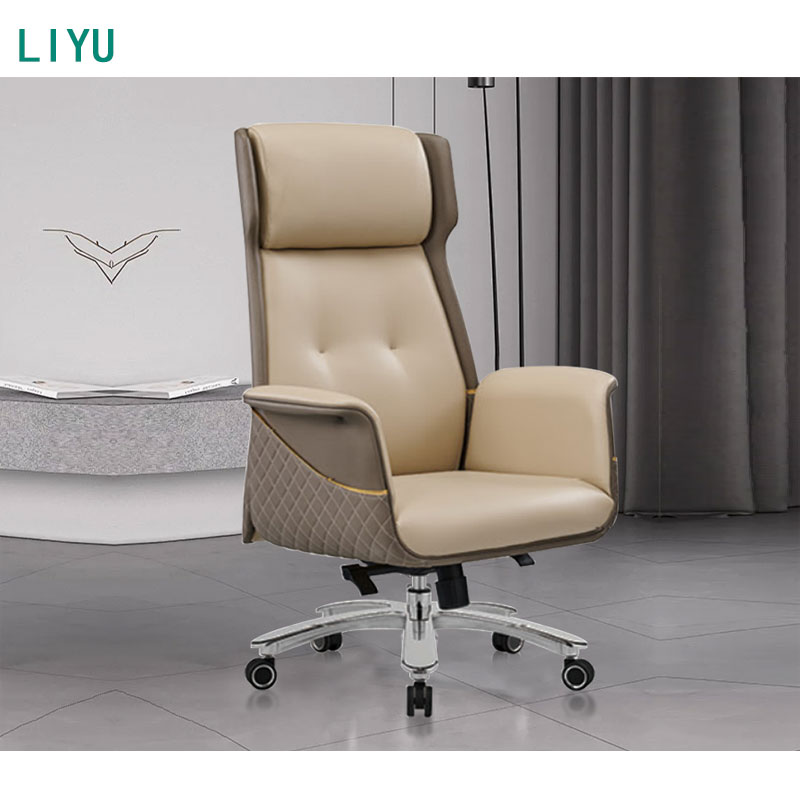
For users requiring all-day support, hybrid construction provides the optimal solution. An executive chair with wood accents utilizes a steel or aluminum core frame. Manufacturers then clad this metal skeleton in wood or attach wooden bases and armrests.
This hybrid approach preserves the classic executive aesthetic while accommodating advanced ergonomic mechanisms. Heavy-duty synchro-tilt systems, seat sliders, and multi-position tilt locks integrate seamlessly into the metal chassis. The user receives necessary dynamic support without sacrificing the visual warmth of wood.
The metal core handles all structural loads. The wood components act purely as decorative elements. This separation of function ensures the chair remains stable even if the wood experiences minor seasonal expansion or contraction.
Selecting the right material impacts long-term durability. Solid hardwoods and commercial veneers behave differently under stress and environmental changes.
Solid wood offers rich depth and can be sanded and refinished multiple times. It remains susceptible to warping or cracking from humidity changes. High-grade commercial veneer provides excellent structural stability and consistent grain matching. Veneer carries a risk of delamination or chipping at the edges, making deep scratches difficult to repair.
For high-traffic areas, specify high-ply commercial veneer over a Baltic birch core. This construction resists warping and provides a stable substrate for the finish. Ensure the manufacturer uses edge banding made from solid wood rather than thin veneer tape to protect the vulnerable corners from impact damage.
Integrating height, tilt, and tension controls into a wooden chassis presents a significant engineering challenge. Bulky metal levers disrupt clean wooden lines. Premium manufacturers address this by hiding pneumatic cylinders within wooden sleeves or integrating low-profile tilt-lock levers directly into the seat pan structure.
Some designs utilize cable-driven mechanisms. These allow the control paddles to sit flush against the wooden frame, routing the cables internally to the central tilt housing. This keeps the aesthetic clean while providing full functionality.
Fixed seat depths pose a critical ergonomic risk. Overly deep wooden seat pans compress the popliteal crease behind the knees, effectively cutting off circulation to the lower legs. Wooden seat pans must feature a waterfall front edge design. This downward curve promotes healthy blood flow and allows for proper leg folding during prolonged sitting.
When evaluating a chair, measure the seat depth. A standard depth of 18 to 19 inches accommodates most users. If the chair lacks a seat slider mechanism, ensure the fixed depth does not force the user to perch on the front edge to keep their feet flat on the floor.
Raw wood seats remain hard and unyielding. They cannot meet the comfort requirements of an eight-hour workday. Proper padding integration is essential. Manufacturers must use high-density molded foam overlays.
This specific density prevents the user from bottoming out and feeling the hard wooden sub-frame beneath the upholstery. Look for foam with an Indentation Load Deflection (ILD) rating suitable for commercial seating. The foam should hold its shape after thousands of compression cycles.
The choice of tilt mechanism dictates the chair's movement profile. Knee-tilt mechanisms work exceptionally well for executive lounging, keeping the user's feet flat on the floor while reclining. Center-tilt mechanisms offer basic rocking but often lift the feet, causing pressure under the thighs.
Synchro-tilt mechanisms provide the best ergonomic support by opening the torso angle. They require more space within the frame to install. Hybrid chairs easily accommodate synchro-tilt systems, while solid wood frames usually rely on simpler knee-tilt or center-tilt hardware due to space constraints.
Achieving a cohesive look requires exact color coordination. Specifying a custom chair finish ensures the seating matches existing office casegoods and custom architectural millwork. Buyers should request physical strike-offs from the manufacturer.
Matching wood grains across different species introduces complications. Applying a walnut stain to an oak chair will not replicate the smooth grain of actual walnut. Always evaluate finish samples on the exact wood species used for the chair frame.
Provide the chair manufacturer with a physical control sample of your desk. They will adjust the stain formulation to account for the natural base color of the chair's wood. Approve the final strike-off in the actual lighting conditions of the private office, as fluorescent and LED lights alter color perception.
The durability of an office chair wood finish determines how well it withstands daily abuse. Catalyzed lacquers and commercial polyurethanes offer superior protection against scratches and spills. Oil finishes provide a natural, matte look but require frequent reapplication.
Armrests and wooden bases remain highly vulnerable to desk collisions and shoe scuffs. Selecting a high-wear polyurethane finish for these specific contact points extends the chair's visual lifespan. Specify a finish with a minimum dry film thickness of 3 mils for commercial applications.
| Finish Type | Durability Level | Maintenance Requirement | Visual Appearance |
|---|---|---|---|
| Catalyzed Lacquer | High | Low (Wipe clean) | Smooth, variable sheen |
| Commercial Polyurethane | Very High | Low (Wipe clean) | Thick, protective build |
| Penetrating Oil | Low | High (Regular re-oiling) | Natural, matte, close to grain |
Upholstery selection impacts both aesthetics and maintenance. Top-grain leather pairs naturally with wood, offering high durability and classic appeal. Commercial-grade performance fabrics provide better breathability for warmer climates.
Vinyl offers easy cleaning but lacks the tactile comfort and premium feel expected in executive suites. When specifying leather, ensure it is semi-aniline rather than fully pigmented. Semi-aniline leather retains natural breathability while offering a protective topcoat against stains.
Wood reacts to its environment. HVAC fluctuations and inconsistent relative humidity levels cause solid wood to expand and contract, potentially stressing joints. Direct UV exposure from large office windows leads to fading or bleaching of the finish.
Position wooden chairs away from direct sunlight or utilize UV-blocking window treatments. Maintain indoor relative humidity between 40% and 60% to prevent the wood from drying out and cracking. Monitor the environment during seasonal transitions when HVAC systems switch between heating and cooling.
Establish realistic cleaning schedules to protect the investment. Avoid harsh commercial solvents, as they rapidly degrade lacquers and polyurethanes. Use a damp microfiber cloth for daily dust removal.
For minor damage on wooden bases and arms, keep manufacturer-approved touch-up markers on hand. Address scratches immediately before moisture penetrates the raw wood. Train the janitorial staff on proper cleaning techniques to prevent accidental damage from abrasive pads or ammonia-based glass cleaners.
Read warranties carefully, as manufacturers often split coverage. The warranty for the pneumatic cylinder and metal mechanisms typically spans five to ten years. The warranty for the wooden frame and the applied finish might only cover one to three years.
Clarify these distinctions before finalizing a purchase. Ensure the warranty covers commercial use. Many warranties become void if the chair is used for more than a standard single-shift (eight hours a day) or if the user exceeds the stated weight capacity.
Choosing wooden seating for a private office requires a deliberate compromise between architectural aesthetics, structural longevity, and ergonomic performance. Solid wood frames offer unmatched traditional appeal but often fall short during long work sessions. Hybrid models provide the most practical solution, delivering necessary mechanical support while maintaining a premium visual standard.
A: Catalyzed lacquers and commercial-grade polyurethanes offer the highest durability. They create a hard protective shell that resists scratches, spills, and daily friction much better than traditional oil or wax finishes.
A: Yes, if it utilizes a hybrid design. By building the chair around a steel or aluminum core, manufacturers can integrate advanced synchro-tilt mechanisms and seat sliders, matching the dynamic support of standard task chairs.
A: Send a physical control sample of your desk's wood to the chair manufacturer. They will create a strike-off on the chair's specific wood species for your approval before production begins.
A: It depends entirely on the specific model. Chairs with internal steel or aluminum reinforcements generally achieve BIFMA certification, while purely residential wooden chairs usually fail the weight and durability testing.
A: Select models featuring metal scuff plates on the base arms. Alternatively, specify a highly durable polyurethane finish and ensure the chair is equipped with the correct casters for your floor type to minimize dragging.
A: High-ply commercial veneer offers better structural stability and resists warping. Solid wood can be sanded and refinished multiple times, giving it a longer potential lifespan if properly maintained.
A: A seat pan that is too deep presses against the back of the knees, restricting blood flow. Because wood does not flex, a proper waterfall front edge and correct seat depth are critical for preventing lower leg numbness.


