
Views: 0 Author: Site Editor Publish Time: 2026-08-04 Origin: Site


Boardroom seating serves a dual function within any corporate environment. It must project corporate stability and prestige while physically supporting stakeholders through high-stakes, multi-hour sessions. A common failure point occurs when organizations prioritize aesthetic luxury over structural durability and ergonomic reality. This misstep inevitably leads to premature upholstery degradation, mechanical failures, and significant user discomfort during extended meetings. Implementing a technical evaluation framework is essential to assess leather grading, mechanical reliability, and long-term investment cycles. When sourcing a modern leather office chair for boardroom environments, understanding the intersection of commercial-grade construction and passive ergonomics ensures the seating performs as well as it looks. We need to look past the showroom shine. You must evaluate the frame, the foam density, and the hide quality. This ensures the seating performs under heavy daily use without failing your team.
Boardroom requirements differ significantly from individual workstation seating. Task chairs demand highly personalized, multi-point adjustments for a single user over years of daily use. In contrast, conference seating requires cleaner architectural lines, intuitive "sit-and-go" comfort, and a uniform appearance across the room. Success metrics for these spaces include strict visual consistency, acoustic discretion, and immediate comfort. Squeaking frames, noisy upholstery materials, or complex adjustment levers disrupt the focus required in executive environments. When outfitting a large conference space, we look for chairs that operate silently. The mechanical components must not grind or pop when a user shifts their weight. Acoustic discretion is a highly underrated metric in boardroom design. You want the focus on the presentation, not the furniture.
Furthermore, visual consistency plays a massive role in corporate branding. A room with twenty identical, perfectly aligned chairs projects order and competence. If the chairs have highly complex, visible levers and knobs sticking out in every direction, the room looks cluttered. We prioritize clean lines and hidden mechanisms. The chair should look like a single, cohesive architectural element rather than a piece of heavy machinery.
Passive ergonomics form the foundation of effective meeting seating. Features like waterfall seat edges reduce pressure on the lower thighs. Integrated lumbar support maintains spinal alignment without requiring users to manipulate highly visible, complex adjustment levers. The goal is to provide immediate, unthinking support the moment a stakeholder sits down. We rely heavily on passive systems because boardroom users rarely take the time to adjust a chair. They sit down and expect it to work.
Inclusive sizing and universal fit dictate how well the chair serves a rotating cast of users. You must evaluate seat pan width and backrest height to ensure the chair comfortably accommodates the 5th to 95th percentile of body types without manual intervention. Seat pan depth and foam density directly impact blood flow during prolonged negotiations. A seat pan that is too deep will cut off circulation behind the knees of shorter users. Inadequate foam density will cause taller or heavier users to bottom out against the rigid seat pan frame. We always check the foam compression ratings before approving a chair for a multi-hour meeting space.
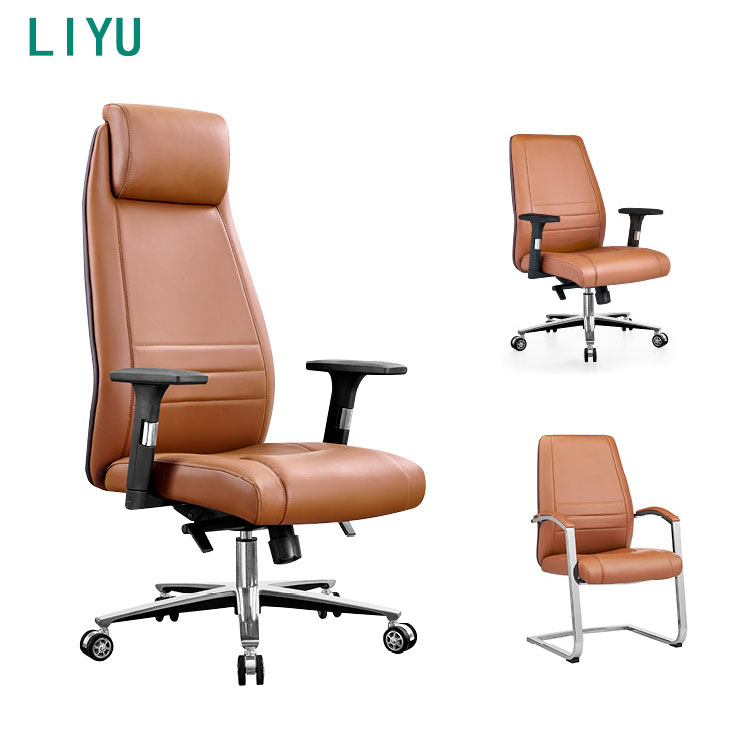
Understanding leather classifications prevents rapid material failure. Full-grain leather represents the highest tier, utilizing the entire hide intact. It offers maximum durability and develops a natural patina over time. Top-grain leather has its outermost layer sanded away to remove imperfections, resulting in a highly uniform appearance. Top-grain is exceptionally common in commercial applications due to its consistent aesthetic and softer initial feel. A genuine leather office chair made from either grade provides superior breathability and temperature regulation properties compared to lower-tier synthetics. This keeps users comfortable during long meetings.
When we inspect leather hides for commercial use, we look at the grain structure. Full-grain hides retain the dense, tightly packed fibers of the outer skin. This makes them incredibly resistant to punctures and tearing. Top-grain hides, while slightly less durable due to the sanding process, offer a more predictable finish. This predictability is often preferred by interior designers who need twenty chairs to look exactly identical. Both options breathe naturally, allowing body heat to dissipate rather than pooling against the user's back.
Bonded leather consists of a polyurethane coating applied over a backing of pulverized leather scraps. It carries a high risk of delamination, where the top layer peels and flakes away under friction. This material is generally unsuitable for heavy commercial use. We have seen bonded leather chairs completely disintegrate within two years in busy conference rooms. The friction from users sliding in and out of the chair simply shreds the thin polyurethane topcoat.
High-grade synthetic leathers, such as advanced polyurethane or commercial vinyl, offer viable alternatives. When evaluating these materials, rely on commercial durability metrics. A minimum of 100,000+ Wyzenbeek double rub count is standard for high-traffic environments. This ensures the synthetic material outlasts standard commercial polyester fabrics while mimicking the look of real leather. High-grade synthetics are also non-porous, making them much easier to sanitize between meetings.
| Material Type | Durability Rating | Breathability | Best Commercial Application |
|---|---|---|---|
| Full-Grain Leather | Excellent (15+ years) | High | Executive boardrooms, premium client-facing spaces |
| Top-Grain Leather | Very Good (10-15 years) | Moderate-High | Standard boardrooms, executive offices |
| High-Grade Polyurethane | Good (5-10 years) | Low-Moderate | Secondary meeting rooms, high-traffic areas |
| Bonded Leather | Poor (1-3 years) | Low | Not recommended for commercial use |
The dyeing process dictates how office chair upholstery ages. Aniline leather is dyed exclusively with soluble dyes, retaining the hide's natural surface but offering minimal stain resistance. Semi-aniline leather includes a thin protective topcoat, balancing natural appearance with practical durability. Pigmented leather features a polymer surface coating containing pigments, providing the highest resistance to fading and scuffing.
Assess the environmental conditions of the room. UV exposure in glass-walled boardrooms accelerates color fading and material degradation. In heavily sunlit rooms, pigmented leather or UV-resistant high-grade synthetics often outperform untreated aniline hides. We always check the lightfastness rating of the upholstery before specifying it for a perimeter boardroom with floor-to-ceiling windows. Faded leather looks unprofessional and degrades the overall aesthetic of the space.
The foundation of any commercial seating is its base and frame. Technical requirements mandate reinforced cast aluminum or steel bases over high-density nylon for boardroom applications. A stable, heavy-duty five-point star base design paired with quality casters is non-negotiable to prevent tipping during deep recline. Nylon bases flex under heavy loads, which can lead to catastrophic failure over time. Cast aluminum provides rigid, unyielding support.
Pneumatic cylinders control height adjustment and bear the brunt of the user's weight. Specify Class 4 pneumatic cylinders, which are designed for heavy commercial use. Standard weight ratings typically sit at 250 lbs, but heavy-duty models supporting 300+ lbs are recommended to accommodate all potential users safely. A failed cylinder results in a chair that slowly sinks to the floor during a meeting, which is both disruptive and embarrassing for the user.
Tilt mechanisms dictate how the chair responds to movement. Knee-tilt mechanisms pivot near the front of the seat pan, allowing the user to recline while keeping their feet flat on the floor. This reduces under-thigh pressure. Weight-sensing synchro-tilt mechanisms are highly advantageous for shared spaces. These self-adjusting systems automatically balance recline tension based on the specific user's body weight, eliminating the need for manual tension knobs.
Armrest design also requires careful selection. Fixed architectural arms provide uniform aesthetics and are easier to specify for clearing table heights. This ensures chairs can be tucked in neatly. Adjustable arms offer better individual ergonomics but can disrupt visual consistency and frequently collide with table edges if left at varying heights. We generally recommend fixed arms for boardrooms to maintain a clean, orderly appearance when the room is empty.
The interior padding dictates long-term comfort and upholstery tension. High-density, cold-cured molded foam is the commercial standard. It retains its shape and supportive qualities far longer than standard cut foam blocks. As foam compresses and degrades over time, it loses volume. This volume loss directly impacts the tension of the leather upholstery, leading to unsightly wrinkling on the seat pan. High-density molded foam mitigates this risk, keeping the chair looking pristine.
We test foam density by pressing firmly into the seat pan. If you can feel the rigid frame underneath with moderate pressure, the foam is inadequate for commercial use. Cold-cured foam is poured into a mold, creating a sealed outer skin that resists air escape. This makes it highly resilient and capable of bouncing back to its original shape even after hours of continuous compression.
Evaluating the cost-to-lifespan ratio is critical for procurement. Budget chairs utilizing bonded leather and cut foam typically require replacement within 1 to 3 years. In contrast, commercial-grade luxury executive seating engineered with top-grain leather and aluminum frames offers a functional lifespan of 10 to 15+ years. Warranties play a significant role in this calculation. A 12-year or lifetime warranty on parts and mechanisms guarantees structural reliability, shifting the focus solely to upholstery maintenance.
When you factor in the labor costs of assembling, deploying, and eventually disposing of cheap chairs every two years, the initial savings evaporate quickly. Investing in heavy-duty frames and premium hides extends the replacement cycle significantly. We advise clients to look at the warranty document carefully. If the manufacturer only covers the foam and fabric for one year, they are telling you exactly how long they expect the product to last.
Establishing pricing tiers optimizes procurement across different facility zones. Ultra-Luxury models are reserved for main executive boardrooms, Contract-Grade Mid-Tier for standard meeting rooms, and Value Commercial for internal huddle spaces. Investing in top-tier genuine leather yields measurable business value in client-facing spaces where prestige is paramount. For internal meeting rooms, high-grade synthetics or premium fabric alternatives often suffice.
Alternative sourcing routes can stretch tight budgets. Commercial furniture liquidators or authorized remanufacturers of tier-one designer brands provide access to high-end structural frames and mechanisms. These are often reupholstered to meet current design standards. This approach allows organizations to acquire premium seating at a fraction of the original cost while still benefiting from commercial-grade engineering.
Boardroom seating faces unique environmental hazards. Hardware impacts occur frequently as chairs collide with heavy boardroom tables. To mitigate damage to both the boardroom chair and the table edge, specify models with edge protection, protective trim, or soft-padded arm caps. We have seen beautiful wood veneer tables destroyed by the hard plastic armrests of cheap conference chairs.
Caster selection must align with boardroom flooring. Soft polyurethane casters are mandatory for hard wood or stone floors to prevent scratching and reduce rolling noise. Hard nylon casters are designed specifically to grip and roll smoothly over carpeted surfaces. Using the wrong caster type will either damage your flooring or make the chairs incredibly difficult to move.
Genuine leather requires a strict maintenance schedule. Bi-annual conditioning prevents the hides from drying out and cracking in climate-controlled office environments. Immediate spill remediation is necessary to prevent staining, particularly on aniline leathers. We recommend keeping a dedicated leather care kit in the facility manager's office.
Multi-user sanitization presents a critical risk. Disinfecting chairs between meetings using harsh chemical wipes will strip natural oils and degrade leather topcoats rapidly. Facilities teams must use pH-balanced, leather-safe sanitizing agents to maintain hygiene without destroying the upholstery. Never use alcohol-based solvents on genuine leather hides.
Organizations expanding their footprint face the supply chain risk of discontinued models. A mismatched boardroom disrupts the intended visual prestige. Recommend sourcing exclusively from established commercial manufacturers with guaranteed continuity programs. This ensures that future replacements or additions will perfectly match the existing inventory years down the line. We always verify the manufacturer's product lifecycle guarantees before committing to a large-scale rollout.
Selecting a modern leather office chair for a boardroom requires balancing architectural elegance with commercial-grade durability, structural stability, and passive ergonomics. Visual appeal must be backed by heavy-duty mechanisms and resilient upholstery to withstand the rigors of continuous, multi-user environments. When shortlisting options, prioritize top-grain leather or high-rub-count synthetics. Insist on five-point cast aluminum bases, Class 4 pneumatic cylinders, and weight-activated or knee-tilt mechanisms to ensure universal comfort and longevity.
A: A boardroom chair focuses on passive ergonomics, cleaner aesthetics, and fixed arms for table clearance. It utilizes mechanisms like weight-activated tension designed for shared, immediate use. Standard task chairs feature highly visible, complex levers for personalized daily adjustments by a single user.
A: A commercial-grade genuine leather chair typically lasts 7 to 15 years. This lifespan depends heavily on the leather grade, the use of high-density molded foam, and strict adherence to bi-annual conditioning and maintenance protocols.
A: No. Bonded leather is highly prone to peeling, cracking, and flaking within a few years of heavy commercial use. For high-traffic boardrooms, high-grade commercial vinyl, polyurethane, or top-grain leather are objectively superior choices for longevity.
A: Full-grain and top-grain genuine leathers breathe naturally, adapting to body temperature and keeping users comfortable. Lower-tier synthetics tend to trap heat, though perforated synthetic designs can help mitigate this issue in warmer environments.
A: Select chairs with appropriate armrest heights that clear the table's underside. Utilize models with soft-padded arm caps or protective trim. Alternatively, specify a conference table with a recessed apron to prevent hardware collisions entirely.
A: The double rub count refers to the Wyzenbeek test, which measures a fabric's abrasion resistance. A machine rubs cotton duck fabric back and forth over the test material. For commercial boardroom environments, a minimum of 100,000 double rubs is recommended.


