
Views: 0 Author: Site Editor Publish Time: 2026-07-26 Origin: Site


Executive home office setups face a fundamental conflict. You want iconic, architectural aesthetics that reflect your personal style. Yet, the physical reality of sitting at a desk for 8 to 10 hours a day demands serious orthopedic support. Modern ergonomic task chairs frequently clash with curated interiors, looking like out-of-place machinery in an elegant room. Conversely, authentic vintage seating rarely provides the adjustability, lumbar support, and padding necessary to prevent long-term musculoskeletal strain.
You do not have to choose between a beautiful workspace and a healthy spine. A systematic approach to evaluating seating options bridges the gap between uncompromising design standards and modern orthopedic requirements. By understanding the structural elements hidden beneath classic silhouettes, you can select a mid century modern office chair that elevates your room while actively supporting your posture throughout the workday.
Establishing a successful executive home office requires strict criteria. True success demands visual cohesion with existing mid-century decor. You need clean lines, organic curves, and mixed materials. However, this visual harmony cannot sacrifice daytime productivity. A chair must support intense focus without causing physical distraction. When you sit down to work, the chair should disappear from your conscious thought. If you are constantly shifting to relieve pressure points, the chair is failing its primary purpose.
There is a distinct form-over-function risk when sourcing retro office furniture. The historical context of mid-century design explains this flaw. Workplace habits in the 1950s and 1960s differed drastically from modern computer-bound workflows. Executives did not spend eight continuous hours typing at a keyboard. They moved around, dictated notes, and held in-person meetings. This historical reality makes many original designs inherently flawed for contemporary full-time usage. The original designers prioritized striking silhouettes over dynamic lumbar support.
Physical posture directly impacts cognitive stamina. This is the hybrid remote worker productivity formula. Visual clutter from an ugly ergonomic chair causes psychological friction. Meanwhile, a poorly designed aesthetic chair causes physical fatigue. Both scenarios ultimately limit executive performance. You need a solution that addresses both the mind and the body. A well-designed workspace reduces cognitive load, allowing you to direct your full attention to complex problem-solving.
You must establish baseline comfort metrics before making a selection. These are the non-negotiable ergonomic requirements for an executive chair. Proper seat depth prevents pressure on the back of the knees. A waterfall edge design promotes healthy blood circulation in the legs. Adequate thoracic support keeps the upper back aligned during long meetings. Without these baselines, even the most visually stunning chair becomes a liability.
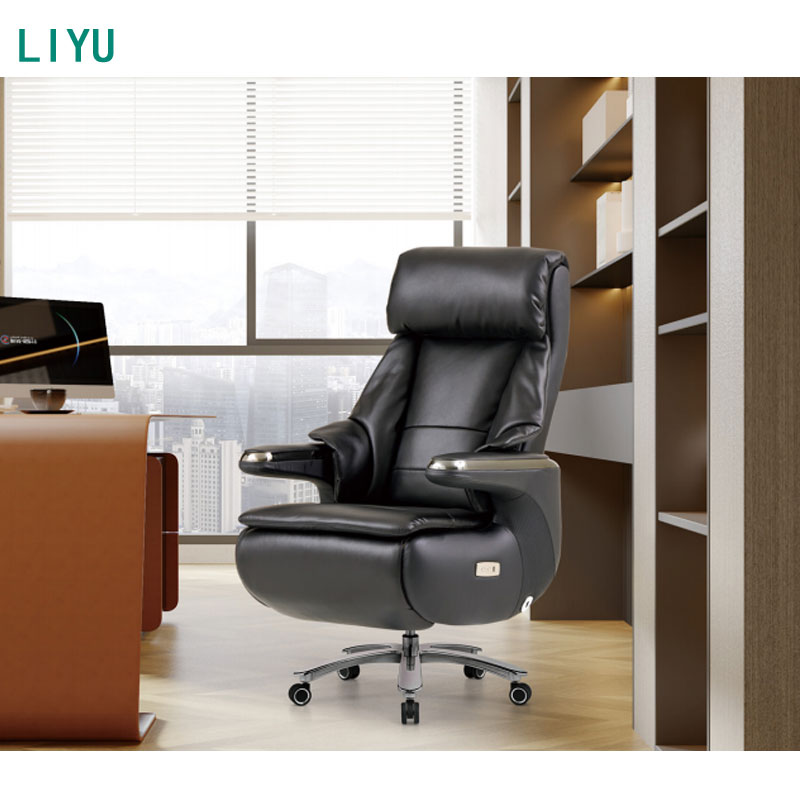
Evaluating chairs that maintain a sleek, minimalist profile requires attention to detail. You must ensure they still offer necessary lower-back curvature. Integrated lumbar support is often subtle in mid-century designs. Look for frames that naturally curve to match the human spine rather than relying on bulky external cushions. Some modern manufacturers hide adjustable lumbar mechanisms inside the upholstered backrest, allowing you to dial in the support without altering the chair's exterior lines.
Armrest height, desk clearance, and tension metrics are critical for daily comfort. Consider these specific factors when measuring your workspace. Measure armrest height to prevent shoulder elevation. Too high causes tension in the neck and shoulders; too low encourages slouching and forward head posture. Manage the spatial hazard of fixed, non-adjustable wooden armrests. They can easily damage the edges of premium desks if they sit too high. Ensure the chair can tuck seamlessly under your desk. This maintains room flow and visual cleanliness when not in use.
Differentiate between basic knee-tilt mechanisms and advanced synchronized tilt systems. Modern engineering allows synchronized tilt mechanisms to remain hidden within retro silhouettes. A synchronized tilt opens the angle between your torso and thighs as you recline. This keeps your feet flat on the floor and reduces pressure on your lower back. Basic center-tilt mechanisms lift your feet off the floor, cutting off circulation to your legs.
Selecting the right office chair materials impacts both aesthetics and temperature regulation. Compare top-grain, full-grain, and aniline leathers against synthetic alternatives. Authentic leather breathes, preventing heat buildup during long work sessions. Synthetic options often trap heat and degrade quickly under daily friction. Aniline leather develops a rich patina over time, enhancing the vintage aesthetic, whereas bonded leather simply peels and flakes.
Evaluate the construction of the wooden shell. Authentic molded plywood, utilizing walnut or rosewood veneers, offers superior flexibility and durability. The manufacturing process involves pressing multiple layers of wood veneer together with heat and resin. This creates a strong, flexible shell that moves slightly with your body. Cheaper MDF imitations lack the structural integrity needed to flex safely under human weight over time. They are rigid and prone to cracking at the mounting points.
Assess the seat cushioning carefully. High-resiliency foam or molded polyurethane is strictly required. Standard foam will compress and bottom out after six months of daily use. High-density materials ensure the seat maintains its supportive shape for years. Molded foam is cast into the exact shape of the seat pan, providing consistent density and preventing the upholstery from wrinkling or shifting.
| Material Type | Durability | Breathability | Maintenance Requirement |
|---|---|---|---|
| Top-Grain Aniline Leather | Excellent (Develops Patina) | High | Regular Conditioning |
| Bonded Leather | Poor (Prone to Peeling) | Low | Wipe Clean Only |
| Molded Plywood (Walnut/Rosewood) | Excellent (High Flex Strength) | N/A (Structural) | Occasional Wood Polish |
| MDF with Veneer | Moderate (Rigid, Brittle) | N/A (Structural) | Wipe Clean Only |
| High-Resiliency (HR) Foam | Excellent (Retains Shape) | Moderate | Vacuuming |
Analyze the stability trade-offs between base designs. While 4-star bases are historically accurate for mid-century design, they present tipping hazards. If you lean back too far or reach for a dropped pen, a 4-star base can easily lose its center of gravity. The 5-star base is the modern standard. It provides essential tip-prevention and allows for smooth, multi-directional rolling. The wider footprint distributes weight more evenly, reducing stress on the central pneumatic cylinder.
Follow strict guidelines for caster selection. Hard casters are designed exclusively for carpets. They feature a rigid plastic wheel that bites into the carpet fibers for traction. Soft, polyurethane-coated casters are mandatory to protect hardwood floors from scratches and gouges. The soft coating absorbs small debris like sand or dirt, preventing it from grinding into the wood finish. If you have a high-pile rug, you may need oversized casters to ensure smooth movement without bunching the fabric.
Authentic vintage pieces offer distinct advantages. They retain investment value, boast historical authenticity, and feature unmatched patina. Collectors highly prize original manufacturer marks and period-correct materials. Owning an original piece connects your workspace to the golden age of industrial design. The craftsmanship of mid-century originals often exceeds modern mass-produced standards.
However, the risks are substantial. High acquisition costs are just the beginning. They completely lack modern ergonomic features. Structural fatigue in decades-old plywood or fiberglass is a serious safety concern. The original shock mounts often dry rot and fail without warning. Furthermore, specialized restoration requires significant time and additional investment. Finding a craftsman skilled in restoring original aniline leather or repairing delaminated rosewood veneer is difficult.
Knowing how to spot a high-quality reproduction versus a cheap knock-off is vital. Focus on the accuracy of the dimensions. Inspect the quality of the die-cast aluminum hardware. Verify the sourcing and grain matching of the wood veneers. A high-quality reproduction will use seven-ply molded wood, just like the originals. The aluminum base should be polished to a mirror finish, not painted silver.
Navigate the realistic budget tier where performance, durability, and aesthetics intersect. Avoid low-tier, unsafe generic brands. A well-manufactured reproduction provides the iconic look while utilizing modern manufacturing techniques for better stability. Look for upgraded pneumatic cylinders and reinforced seat pans. These hidden improvements make the chair suitable for daily use without compromising the exterior silhouette.
Many low-tier replicas fail modern BIFMA standards. These standards dictate weight capacity and continuous use safety. Always verify that a reproduction meets commercial safety ratings before trusting it for a full workweek. A chair that fails BIFMA testing is likely to suffer from premature cylinder failure, cracked bases, or broken armrests.
The hybrid approach offers the best of both worlds. Contemporary manufacturers now design purpose-built ergonomic chairs utilizing mid-century visual cues. They incorporate wood accents, tailored upholstery, and minimalist frames into highly adjustable structures. You get the warmth of walnut veneer and the sophisticated look of tailored leather, combined with 4D armrests and dynamic lumbar support.
This category often provides the highest return on investment for remote executives. You require full-time comfort but refuse to compromise on room aesthetics. These chairs scale perfectly for the home office, delivering uncompromising orthopedic support wrapped in architectural design. They blend seamlessly with existing mid-century credenzas and desks while performing like high-end task seating.
Pairing a wooden office chair with your existing desk requires a deliberate framework. Advise on matching wood tones exactly or intentionally contrasting them. A walnut chair shell can beautifully contrast against a light oak desk. Avoid a forced matching set look, which often appears dated rather than curated. If your desk features a heavy, dark wood, consider a chair with a lighter veneer or a polished aluminum frame to break up the visual weight.
Apply specific design rules for diverse decors. Mid-century seating pairs exceptionally well with non-traditional desks. A sleek wooden chair softens an industrial steel desk. It adds warmth to minimalist concrete surfaces. It also grounds the modern aesthetic of adjustable standing desks, creating a layered, sophisticated environment. The organic curves of molded plywood provide a necessary counterpoint to the sharp, angular lines of modern office furniture.
Consider spatial planning and visual weight. The physical footprint of a chair impacts room flow. Floating backrests offer visual lightness, making small offices feel larger. High-back executive models carry a heavy, authoritative presence, ideal for anchoring spacious rooms. Ensure there is enough clearance behind the desk to fully recline and rotate the chair without hitting walls or bookshelves.
Break down the true value of your investment over time. A premium chair that lasts a decade with daily use offers vastly superior value compared to a cheap alternative. Low-quality chairs cause back pain, disrupt productivity, and require frequent replacement, making them a poor long-term decision. Investing in high-density foam and commercial-grade mechanisms ensures the chair performs exactly the same on day one thousand as it did on day one.
Implement an actionable testing framework during home trial periods. This is the executive sit-test protocol. Objectively evaluate lumbar support placement. Check the seat pan depth against your leg length. Monitor pressure distribution over an active, full workweek rather than a brief ten-minute test. Pay attention to how your lower back feels at 3:00 PM. If you experience fatigue or numbness in your legs, the seat pan is likely too deep or the foam is too dense.
Robust warranty and return policies are essential. A chair cannot be truly evaluated until your body adapts to it. Emphasize vendors that allow you to sit in the chair for a full workweek before committing. Look for warranties that cover the pneumatic cylinder and tilt mechanisms for at least five years. The upholstery and foam should carry a minimum three-year guarantee against abnormal degradation.
Understand the maintenance realities of premium materials. Establish routine care requirements. Schedule regular leather conditioning to prevent cracking. Implement hardware tightening protocols every six months to prevent squeaking and maintain structural integrity. Wipe down the aluminum base with a microfiber cloth to remove dust and prevent oxidation. Proper maintenance extends the life of the chair and preserves its aesthetic appeal.
Choosing a mid-century aesthetic does not require abandoning spinal health. You can achieve excellent premium workspace design while protecting your posture. Success depends entirely on prioritizing hidden ergonomic features and high-density materials over pure visual nostalgia. A well-selected chair serves as the functional centerpiece of your office, supporting both your physical well-being and your professional image.
Base your final decision on your specific user profile. If you work eight hours a day, prioritize modern hybrid designs with synchronized tilt and 5-star bases. If the chair is for brief, intermittent use, a high-end reproduction or restored vintage piece may suffice. Always let your daily workflow dictate the level of mechanical support required.
A: Authentic vintage models are rarely comfortable for 8-hour days due to static designs and degraded foam. However, modern hybrid chairs that combine mid-century aesthetics with updated ergonomic mechanisms, high-density foam, and adjustable lumbar support are highly comfortable for full-time executive use.
A: Top-grain aniline leather, kiln-dried molded plywood, and die-cast aluminum hardware are the most durable materials. High-resiliency molded polyurethane foam is also essential for the seat cushion to prevent sagging over time.
A: You must replace standard hard plastic or metal casters with soft, polyurethane-coated casters. These are specifically designed to glide smoothly over hardwood and tile without leaving scratches, gouges, or permanent marks.
A: Modifying the internal structure of a vintage chair is difficult and often ruins its value. The best approach is using a high-quality, low-profile external lumbar pillow designed for office seating, though this alters the clean visual lines of the original design.
A: Premium workspace design seamlessly integrates high-end aesthetics with uncompromising functional ergonomics. It features curated materials, visual cohesion, proper spatial planning, and commercial-grade furniture that supports intense cognitive work without causing physical fatigue.
A: A 4-star base has four legs and is historically accurate for many mid-century designs, but it poses a higher tipping risk when leaning back. A 5-star base is the modern ergonomic standard, providing superior stability, weight distribution, and smoother rolling mobility.
A: Focus on material contrast rather than exact matching. Pair a sleek walnut chair with a rough-hewn rustic oak desk to balance textures. For modern standing desks, choose a chair with a matching black or polished aluminum base to tie the distinct styles together seamlessly.


