
Views: 0 Author: Site Editor Publish Time: 2026-07-06 Origin: Site


Boardroom design presents an inherent tension between projecting organizational authority and maintaining physical comfort during multi-hour meetings. You need seating that communicates prestige without sacrificing the ergonomic support required for high-stakes decision-making. The core problem involves specifying a single chair model for a highly diverse user base. A boardroom chair must seamlessly accommodate varying heights, weights, and postural habits while resisting premature wear in a high-traffic corporate environment. Relying solely on aesthetic impressions leads to rapid degradation and user complaints. We use a technical evaluation framework focused on material science, mechanical durability, and long-term structural integrity to drive data-backed procurement. This approach ensures your investment in an executive leather office chair performs reliably across thousands of hours of shared use.
Defining the baseline requirements for boardroom seating means balancing visual weight with modern ergonomic standards. Historically, high backs and heavy tufted designs signaled authority. Today, corporate environments demand supportive physical architecture alongside those visual cues. A classic tufted design communicates tradition and established success. Conversely, modern, minimalist luxury executive seating signals innovation and agility. Evaluating these options requires looking at how successfully they merge visual prestige with actual physical support. You must look past the silhouette to examine the underlying frame and cushion structure. A chair might look impressive empty, but if the foam bottoms out after thirty minutes, it fails its primary function.
We evaluate performance by testing the chair under sustained loads. The visual impression matters for clients entering the room, but the mechanical performance dictates how your team operates during a four-hour strategy session. You need a chair that maintains its structural integrity and aesthetic appeal simultaneously. This requires specifying high-density molded foam and reinforced frames hidden beneath premium upholstery.
The shared seating dilemma defines boardroom environments. Different individuals use these chairs daily, ranging from a 5-foot-tall executive to a 6-foot-4-inch board member. Granular, manual adjustments fail in this context. Users rarely take the time to adjust seat depth, lumbar height, or tilt tension before a meeting begins. They sit down and expect immediate comfort. You need chairs that automatically adjust to user weight and posture.
Minimal manual intervention ensures every user receives adequate lumbar and pelvic support immediately upon sitting. We prioritize chairs with synchro-tilt mechanisms that open the torso angle without lifting the user's feet off the floor. This adaptability reduces fidgeting and physical distraction. When specifying for a shared environment, the best ergonomic features are the ones the user never has to touch.
Structural differences dictate the lifespan of a genuine leather office chair. Full-grain leather retains the entire natural hide structure, including the outermost layer. It offers maximum durability and natural breathability. Top-grain leather undergoes sanding to remove surface imperfections, creating a more uniform appearance while retaining excellent strength. Both grades provide exceptional durability in commercial settings. They develop a natural patina over time rather than degrading or cracking.
The lifespan ratio of these premium leathers far exceeds synthetic alternatives when properly maintained. In a heavy-use boardroom, top-grain leather resists punctures from pens and abrasion from denim. We consistently see top-grain upholstery outlast the mechanical components of the chair itself. Investing in these upper-tier hides eliminates the need for mid-cycle reupholstering.
| Leather Grade | Durability Profile | Breathability | Commercial Application |
|---|---|---|---|
| Full-Grain | Maximum tear resistance | Excellent natural airflow | Executive suites and premium boardrooms |
| Top-Grain | High abrasion resistance | Good airflow | Standard high-traffic conference seating |
| Split Leather | Moderate to low | Poor | Low-use secondary meeting rooms |
| Bonded Leather | Prone to rapid peeling | None | Not recommended for commercial use |
Bonded leather mixes polyurethane binders with leftover leather scraps. It presents significant failure points under continuous friction. Delamination and peeling occur rapidly in high-traffic areas, often within the first two years of deployment. Misleading marketing terminology often labels these composite materials as genuine leather. You must verify the exact grade of the office chair upholstery before finalizing a purchase order.
When bonded leather fails, it sheds small flakes of polyurethane onto carpets and users' clothing. This creates a maintenance nightmare and severely damages the professional appearance of the boardroom. Look for explicit terms like top-grain or full-grain on the specification sheet. If the manufacturer uses terms like "leather match" or "recycled leather," you are looking at a bonded product that will not survive commercial use.
Thermal retention plagues poor-quality leather during long meetings. Users experience discomfort as heat builds up against the backrest, leading to sweating and ruined garments. Solutions exist to mitigate this issue without abandoning the leather aesthetic. Perforated leather designs improve airflow significantly by allowing heat to escape through the backrest. Ribbed stitching patterns create micro-channels for heat dissipation across the seat pan.
Hybrid models utilizing a leather seat with a high-tension mesh back offer excellent climate control. This combination maintains a premium aesthetic where it counts while providing superior thermal regulation for the user's core. When evaluating solid leather backs, check the foam density behind the hide; open-cell foam breathes better than closed-cell alternatives, reducing the overall heat trap effect.
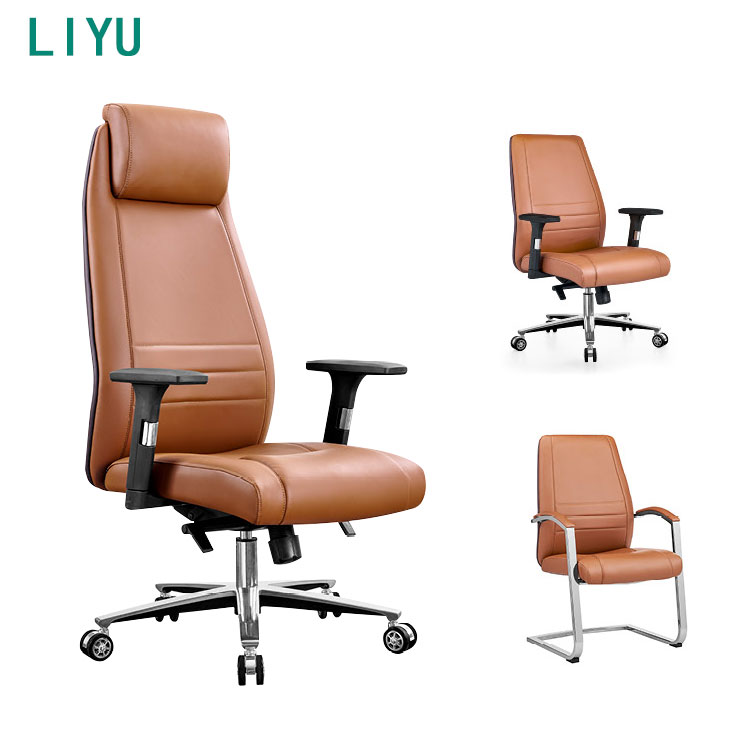
Traditional tilt-tension knobs require manual calibration by reaching under the seat and twisting a dial repeatedly. Users rarely adjust them in a boardroom setting. This leads to improper recline resistance. Lighter users cannot recline at all, while heavier users feel like they are falling backward. Weight-sensitive mechanisms automatically calibrate this resistance. They read the user's body weight through the seat pan and adjust the tilt tension instantly.
This dynamic support prevents users from fighting a stiff backrest. It encourages healthy movement during long presentations. Weight-activated mechanisms reduce the number of levers on the chair, creating a cleaner visual profile. This intuitive engineering represents the standard for modern shared seating environments.
Selecting overly plush, thick padding is a common pitfall in executive seating. Thick, low-density padding sags and loses structural support over time. It compresses unevenly under daily use, leading to pressure points on the user's tailbone. High-density molded foam cushions offer a firmer, supportive balance. They maintain their shape and provide consistent pelvic support without excessive bulk.
We specify foam with a density rating of at least 2.5 to 3.0 pounds per cubic foot for commercial applications. This ergonomic approach prevents lower back fatigue during extended sessions. The chair should feel firm upon initial contact, contouring slightly to the user's shape as it warms up, rather than allowing the user to sink deeply into the frame.
A waterfall seat edge reduces pressure on the popliteal artery behind the knee. This promotes lower extremity circulation during long meetings, preventing the numbness often associated with rigid seat pans. Height adjustability ranges must accommodate diverse users, typically offering a travel range of 4 to 5 inches. The seat depth should not be too deep; users' legs must fold properly without their feet dangling.
Fixed seat pans work well if the depth is universally accommodating, usually around 18 to 19 inches. Sliding seat pans offer more flexibility for shared seating environments, allowing taller users to extend the seat forward for better thigh support. However, sliding mechanisms add complexity and potential failure points, so they must be built with heavy-duty steel tracks.
Fixed, loop-style armrests dominate luxury executive designs. They provide a clean, continuous visual line and robust support for ingress and egress. Adjustable armrests offer better ergonomic support for typing but can look overly mechanical and cluttered in a formal boardroom. You must analyze the critical clearance required for your specific tables.
Armrests must not collide with or damage the boardroom table edge. Measure the distance from the floor to the underside of the table apron before specifying armrest heights. If the armrests hit the table, users cannot pull in close enough to work comfortably, and the constant impact will chip both the table veneer and the armrest finish.
Polished aluminum and reinforced steel frames offer superior load-bearing capabilities. They vastly outperform standard nylon or polymer bases, which can flex and crack under heavy lateral loads. A stable five-point base is a safety necessity. It prevents tipping during deep-recline postures in intense meetings. The wider the diameter of the base, the more stable the chair remains at maximum tilt.
Metal finishes provide visual and structural longevity. They resist scuffs from shoes and impacts from vacuum cleaners better than plastic alternatives. When specifying metal bases, ensure the underside is properly ribbed and reinforced. A hollow, thin-cast aluminum base can fail just as easily as cheap plastic. Solid engineering at the base level anchors the entire seating experience.
Specifying Class 4 gas lift cylinders ensures reliable height adjustment over years of use. Lower-class cylinders leak nitrogen gas and fail quickly under continuous commercial stress, resulting in chairs that slowly sink while the user is sitting. ANSI/BIFMA certification verifies commercial weight capacities through rigorous drop and cycle testing.
Standard commercial chairs support 275 lbs. Heavy-duty models supporting 300 to 400 lbs offer better inclusivity and structural peace of mind for diverse user bases. Upgrading to a heavy-duty cylinder adds minimal upfront cost but drastically reduces maintenance tickets and replacement cycles over the life of the boardroom.
Caster selection dictates floor protection and acoustic control. Hard nylon casters glide smoothly over commercial carpets. Soft polyurethane-coated casters protect hard floors, such as polished concrete or hardwood, from scratches. Using the wrong caster damages flooring rapidly. Hard casters on hard floors act like sandpaper, grinding dirt into the finish.
Caster selection also impacts acoustics. Soft casters roll silently, which is critical in A/V-equipped boardrooms where ambient noise disrupts microphones. We always check the caster stem diameter to ensure replacements can be easily sourced. A 11mm stem is standard; proprietary stem sizes trap you into buying expensive replacements directly from the manufacturer.
Reading commercial furniture warranties requires attention to detail. Frame and mechanism coverage often extends to 10 or 12 years, covering the metal components and gas cylinder. Upholstery coverage frequently drops to 3 to 5 years. You must understand these exclusions before purchasing. Natural wear and tear on leather, including slight stretching or color fading, is rarely covered.
Ensure the warranty covers structural failures of the foam and stitching rather than just the metal components. If the foam collapses after two years, the chair is useless, regardless of whether the aluminum base is still under warranty. Look for manufacturers that stand behind the compression rating of their seat cushions.
Maintaining leather requires operational commitment. You must establish required conditioning schedules with your facility team. Bi-annual conditioning prevents the leather from drying and cracking under HVAC airflow. Cleaning protocols should strictly avoid harsh chemicals, alcohol-based wipes, or abrasive sponges, which strip the protective topcoat from the hide.
Facility management must account for this maintenance overhead. Proper care extends the life of premium leather by decades. We recommend keeping a dedicated leather care kit in the facility manager's office. Immediate attention to spills prevents permanent staining, especially on lighter-colored executive seating.
Outfitting a full boardroom involves logistical planning. Batch consistency in leather dyeing ensures all chairs match perfectly. Hides absorb dye differently, so ordering chairs from different production runs can result in noticeable color variations around the table. Freight shipping requirements often involve palletized deliveries, requiring a loading dock and pallet jacks.
Installation services may be necessary for large orders, as unboxing and assembling twenty heavy executive chairs requires significant labor. Lead times for premium leather chairs can extend to several weeks or months. Plan your procurement cycle to align with boardroom renovation schedules, factoring in potential freight delays.
Calculating the number of chairs that fit around a table requires accurate measurements. Executive chairs feature wider wheelbases and broader shoulder profiles than standard task chairs. Allow at least 30 to 36 inches of linear width per chair along the table edge. This prevents users from bumping elbows or tangling casters when rolling in and out.
Measure the physical footprint of the five-point base, not just the seat width, to ensure adequate spatial clearance. If the bases overlap, users cannot move freely. We map out the chair footprints on the floor plan before finalizing the order to guarantee comfortable navigation around the room.
Selecting a massive high-back executive chair carries risks. It obstructs sightlines for shorter users across the table, creating a walled-off dynamic during collaborative discussions. It can also feel restrictive to taller users if the headrest hits their shoulders incorrectly. Mid-back leather alternatives offer a safer, more versatile option.
Mid-back designs provide universal accommodation without dominating the visual space of the room. They maintain prestige while improving sightlines and communication during meetings. A well-tailored mid-back chair looks sharper and functions better in a modern, active boardroom than an oversized, traditional high-back model.
A: Task chairs prioritize granular, manual adjustments for a single user performing focused work. Executive chairs prioritize broader, intuitive support and premium materials. They are designed for shared, high-profile environments where users need immediate comfort without manual calibration.
A: Top-grain and full-grain leather chairs typically last 7 to 10 years or more with proper maintenance. This contrasts sharply with bonded leather, which often exhibits peeling and structural failure within 2 to 3 years of daily commercial use.
A: Yes, modern iterations bridge the gap between traditional executive style and all-day support. They incorporate advanced synchro-tilt mechanisms, weight-activated tension, and high-density molded foam to prevent fatigue during extended sessions.
A: Top-grain leather serves as the commercial ideal. It offers the best balance of durability, natural appearance, and resistance to staining. Full-grain is also excellent but requires more maintenance, while split or bonded leathers degrade quickly.
A: Implement a bi-annual conditioning schedule using pH-balanced leather conditioners. Avoid placing chairs in direct UV exposure or near heating vents. Wipe up spills immediately with a dry cloth to maintain the leather's natural suppleness.
A: Commercial boardroom chairs should support a minimum of 275 lbs to meet ANSI/BIFMA standards. We strongly recommend specifying heavy-duty models rated for 300 to 400 lbs to ensure inclusive, reliable support for all potential users.


