
Views: 0 Author: Site Editor Publish Time: 2026-07-15 Origin: Site


Boardrooms serve as the physical locus of high-stakes corporate decision-making. The environment must project stability and authority while supporting physical focus during extended, multi-hour sessions. Procurement teams often struggle to balance aesthetic prestige with the ergonomic realities of a multi-user environment. Standardizing seating across diverse body types without defaulting to visually sterile, mesh task chairs is a primary challenge. Selecting the right seating requires moving beyond superficial design. You must evaluate material longevity, thermal comfort, structural integrity, and intuitive adjustability. This guide outlines the technical criteria for evaluating, shortlisting, and procuring a high-caliber cowhide office chair fleet. We will help you procure seating that delivers architectural alignment and measurable long-term value for your facility.
Establishing baseline requirements for boardroom seating is your first critical step. A proper chair must accommodate users ranging from the 5th to the 95th percentile in body size. This metric aligns with standard ANSI/BIFMA guidelines for commercial furniture. You must achieve this ergonomic flexibility while maintaining a uniform visual standard. Every chair around the conference table should look identical and pristine. Achieving this balance requires careful structural and material selection. When you manage a facility, you quickly learn that uniform appearance degrades if the underlying mechanics fail to support different body types.
Material choices directly signal corporate identity to stakeholders, clients, and investors. luxury executive seating establishes an immediate authoritative presence in the room. A natural leather finish communicates permanence, quality, and attention to detail. Standard mesh or fabric chairs often present a utilitarian, task-oriented appearance. They belong at individual workstations rather than in the primary executive meeting space. Upgrading to premium materials elevates the entire architectural feel of the room. It transforms a standard meeting space into a dedicated environment for serious negotiation and strategy.
Boardroom seating presents a unique multi-user dilemma. Personal desk chairs are calibrated once by a single user. Boardroom chairs are used by multiple different individuals every single day. The chair must provide immediate, intuitive comfort the moment someone sits down. Users will not spend five minutes adjusting levers and knobs before a meeting. The design must passively adapt to different weights and postures. This requires sophisticated internal mechanisms hidden beneath a classic exterior profile. If a chair requires an instruction manual, it fails the boardroom test.
To solve this, procurement specialists must look at the internal build quality just as closely as the exterior finish. The frame must withstand constant shifting, leaning, and rolling. The casters must glide silently over commercial carpeting or hard floors without snagging. Every component must work together to create a seamless user experience. When executives walk into the room, they should notice the elegance of the seating. When they leave three hours later, they should not have noticed the chair at all because it supported them perfectly.
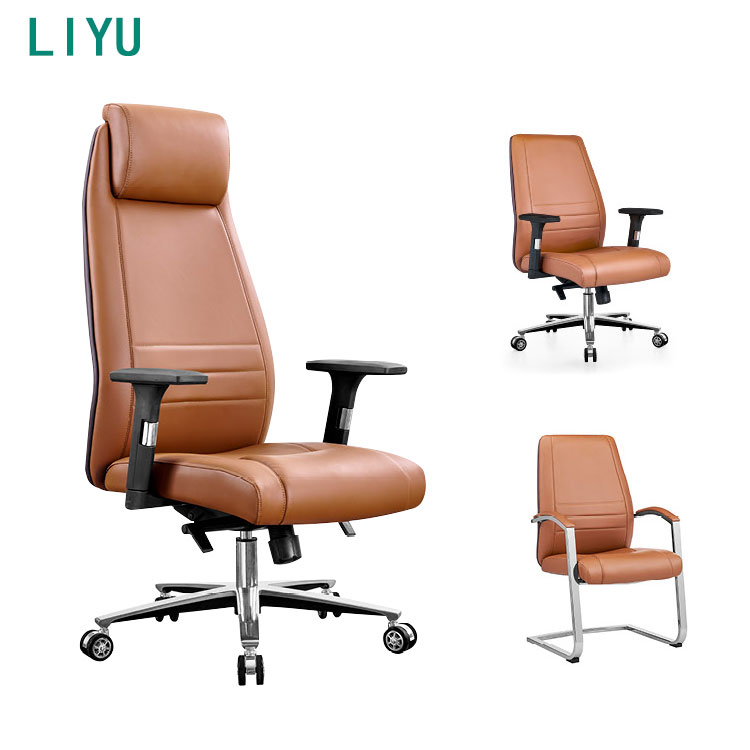
Understanding leather grading is essential when specifying a genuine leather office chair. Full-grain leather offers maximum durability and develops a natural patina over time. It represents the highest tier of hide quality. Top-grain leather is sanded slightly to remove natural imperfections and create uniformity. This sanding process makes top-grain highly durable and visually consistent. Top-grain is the preferred choice for bulk boardroom deployments. It ensures a consistent finish across dozens of chairs and reduces manufacturing defects. You get the strength of the natural hide without the unpredictable visual variations that can make a matched set look mismatched.
Tanning and finishing processes dictate how the leather handles daily corporate use. Aniline leather is untreated and highly susceptible to stains from coffee or water. Semi-aniline and pigmented finishes receive surface treatments for stain resistance and color uniformity. We strongly recommend semi-aniline finishes for commercial environments. They provide the ideal intersection of a soft, natural feel and commercial-grade protection. This ensures your investment survives accidental spills during catered meetings. Facility teams appreciate semi-aniline because it wipes clean easily without absorbing liquids immediately.
Thermal comfort is a common pain point during long executive sessions. Many users complain about chairs running warm after an hour of sitting. Natural, porous cowhide breathes and naturally dissipates body heat. Polyurethane (PU) and bonded leather trap heat against the user's body. Mesh offers excellent airflow, but it lacks the executive aesthetic required for boardrooms. Genuine cowhide stands as the superior luxury alternative. It regulates body temperature far better than any synthetic leather on the market. The natural pores in the hide act as microscopic ventilation channels.
You must strictly avoid synthetic and vegan alternatives in high-stakes environments. Bonded leather consists of leather scraps glued together with polyurethane binders. It suffers from delamination, peeling, and flaking within 18 to 24 months. Low-grade PVC synthetics often produce unpleasant chemical off-gassing in enclosed conference rooms. Premium high-density vegan leathers exist, but they still degrade faster than natural hides. The superior durability, tactile feel, and graceful aging of genuine cowhide justify its selection. When you factor in replacement cycles, synthetics always cost more in labor and disruption.
| Material Type | Breathability | Expected Lifespan | Visual Aging |
|---|---|---|---|
| Top-Grain Cowhide | High (Natural Pores) | 10 - 15 Years | Develops rich patina |
| Bonded Leather | Low (Traps Heat) | 1.5 - 3 Years | Peels and flakes |
| Polyurethane (PU) | Very Low | 2 - 4 Years | Cracks along stress points |
| Commercial Mesh | Maximum | 5 - 8 Years | Sags and loses tension |
Intuitive adjustability is the cornerstone of effective shared seating. Weight-activated tilt mechanisms automatically adjust recline tension based on the user's body weight. This eliminates the need for confusing manual tension knobs under the seat. Pneumatic seat height adjustment remains a strict necessity for accommodating different leg lengths. However, you should avoid complex, multi-lever systems in boardroom settings. Streamlined controls minimize visual clutter and prevent user confusion during important presentations. A single lever for height and a clean, integrated tilt mechanism represent the ideal configuration.
Armrest architecture directly impacts both user comfort and furniture longevity. Fixed loop executive arms look traditional and elegant around a large table. Adjustable 3D or 4D armrests offer highly customizable ergonomic support for long sessions. You must carefully evaluate the clearance hazard before making a final selection. Measure the armrest height relative to the boardroom table's undersurface. Choose armrests with protective leather wraps or drop-down configurations. This prevents leather scraping and structural damage when tucking chairs away. Damaged armrests are the number one reason boardroom chairs look prematurely aged.
Seat pan density determines comfort during multi-hour board meetings. Specify high-density, commercial-grade molded foam beneath the office chair upholstery. The foam should have a minimum density of 2.5 to 3.0 pounds per cubic foot. This prevents the seat from bottoming out and causing pressure point pain. A waterfall seat edge is equally critical for lower body health. The downward-sloping front edge promotes lower extremity circulation. It effectively reduces fatigue, leg numbness, and restlessness during extended discussions. Cheap foam degrades quickly, leaving users sitting directly on the hard plastic or plywood sub-frame.
Backrest architecture and lumbar support dictate upper body posture. Fixed passive lumbar support maintains a clean visual profile for the chair. Active adjustable lumbar support provides better targeted relief but adds mechanical complexity. Mid-back designs encourage active engagement and keep sightlines open across the table. They also fit better in smaller or glass-walled conference spaces. High-back designs lean toward traditional luxury executive seating. They offer total thoracic support and project maximum authority at the head of the table. Mixing high-back chairs at the ends with mid-back chairs along the sides is a common and effective design strategy.
A well-constructed cowhide chair boasts a lifecycle of 10 to 15 years. Synthetic leather or commercial fabric typically fails within 3 to 5 years. Genuine cowhide develops a rich patina and conforms to users over time. It grows more comfortable and visually appealing with age. Synthetics degrade, crack, and lose their structural integrity rapidly under daily use. Investing in natural materials drastically reduces the frequency of disruptive furniture replacements. You spend less time sourcing replacements and more time managing core facility operations.
Realistic maintenance protocols keep your investment looking pristine. Facility management should perform quarterly leather conditioning to prevent the hides from drying out. Immediate spill remediation is necessary to protect the semi-aniline finish. Replacing cheaper chairs carries hidden logistical burdens. You face disposal fees, re-procurement time, and assembly labor. Phased replacements of failing synthetic chairs also ruin boardroom aesthetic consistency. Maintaining a single fleet of high-quality leather chairs is far more efficient. A simple wipe-down routine extends the life of the chairs by years.
Base stability and caster selection guarantee universal safety and mobility. Heavy-duty steel or polished aluminum bases provide structural integrity and visual weight. Prioritize bases rated for at least 300 pounds to accommodate all potential users safely. Caster selection depends entirely on your boardroom flooring material. Use soft polyurethane casters for hardwood, LVT, or stone floors. Specify hard nylon casters for carpeted environments. Proper casters prevent floor damage and ensure smooth, silent mobility during meetings. Using the wrong casters will destroy expensive boardroom flooring in a matter of months.
The structural frame beneath the leather matters just as much as the hide itself. Look for reinforced steel or thick-walled aluminum seat pans. Avoid chairs that rely heavily on plastic structural components, as these become brittle over time. The gas cylinder that controls the height adjustment should be a Class 4 rating, which is the highest commercial standard. When the internal components match the quality of the exterior leather, the chair will easily survive a decade of heavy corporate use.
Navigating supply chain realities requires proactive project management. Premium, matched-hide bulk orders often carry extended lead times of 8 to 12 weeks. You must factor this into your office build-out or renovation schedule. We strongly advise ordering attic stock, typically a 10 to 15 percent overage. This accounts for future team expansion or accidental catastrophic damage. Ordering attic stock upfront ensures an exact dye-lot match for the leather. If you try to order a matching chair two years later, the color will almost certainly be slightly off due to natural hide variations.
Warranty scrutiny protects your organization against premature product failure. Buyers must separate the mechanical frame warranty from the upholstery warranty. Mechanical warranties often span 10 to 12 years. Upholstery warranties are typically limited to 3 to 5 years. Pay close attention to warranty void clauses. Using improper cleaning agents or placing chairs near HVAC vents can void coverage. Insist on ANSI/BIFMA X5.1 certification as a non-negotiable requirement in your RFP. This certification proves the chair has passed rigorous commercial testing for stability, strength, and fatigue.
The pilot program approach mitigates the risk of user rejection. Never commit to a 20-chair boardroom deployment blindly. Order one or two sample chairs for a 30-day physical evaluation. Allow key stakeholders and executives to test the boardroom chair during actual meetings. Gather feedback on seat density, thermal comfort, and armrest clearance. This hands-on testing phase guarantees the final selection meets all organizational expectations. It also gives your facility team a chance to inspect the build quality and verify caster compatibility with your flooring.
When receiving the final bulk order, conduct a thorough inspection before signing the delivery manifest. Check every chair for consistent leather grain, smooth pneumatic operation, and secure armrest attachments. Reject any units with visible scuffs or mechanical hesitation immediately. Proper receiving protocols ensure you start your lifecycle clock with a perfect fleet. Document the serial numbers and establish a clear maintenance schedule with your janitorial staff from day one.
A premium cowhide chair delivers superior durability, natural thermal regulation, and an authoritative aesthetic. It remains the definitive choice for executive boardroom environments. Proper specification ensures your seating fleet supports dynamic corporate needs for over a decade.
A: A top-grain cowhide chair typically lasts 10 to 15 years in a commercial setting. This significantly outpaces bonded leather, which fails in 2 to 5 years. Reaching this maximum lifespan requires commercial-grade manufacturing and a strict quarterly conditioning routine.
A: Cowhide is a natural, breathable animal hide that offers extreme durability. PU is a synthetic polyurethane plastic that traps heat and off-gasses chemicals. PU is highly prone to peeling, cracking, and tearing within just a few years of daily use.
A: No. Unlike synthetic plastics, genuine cowhide is highly porous. It naturally dissipates body heat and allows air circulation. This natural thermal regulation ensures executive comfort and prevents excessive sweating during extended, multi-hour sessions.
A: You must measure the clearance between the chair's armrests and the table's bottom apron. Select chairs with recessed arms, padded leather-wrapped armrests, or adjustable-height arms. This prevents the chair frame from scraping the table edge when tucked in.
A: Wipe spills immediately with a dry, soft cloth. Dust the chairs weekly to prevent abrasive dirt buildup. Apply a high-quality leather conditioner every 3 to 4 months. Explicitly avoid harsh chemical solvents and commercial sanitizers, which strip the leather's finish.
A: Mid-back chairs facilitate better sightlines, open communication, and a modern aesthetic around a large conference table. High-back chairs offer more thoracic support but are visually heavy. High-back models are typically reserved for the head of the table or private offices.
A: It is an ergonomic feature that uses the sitter's own body weight to automatically adjust recline resistance. It eliminates the need for manual tension knobs. This makes it ideal for multi-user boardroom settings where constant manual calibration is impractical.


