
Views: 0 Author: Site Editor Publish Time: 2026-07-15 Origin: Site


Standard office chairs fail under heavy daily use, leading to physical discomfort and rapid material degradation. The term heavy-duty is frequently used as a marketing buzzword rather than a technical specification. Most standard chairs lack the reinforced gas lifts, structural frames, and high-density foam required for true large-user support. This structural inadequacy inevitably leads to mechanical failure and causes chronic joint, back, and tailbone pain during long shifts. This guide provides a technical, evidence-based framework for evaluating a genuine big and tall office chair 500 lbs capacity. By moving past aesthetic claims, you will learn how to prioritize structural integrity, ergonomic geometry, and long-term durability to ensure proper physical support.
Standard office chairs are typically rated for 250 to 275 pounds. When subjected to higher continuous loads, their central pivot points, plastic bases, and standard foam cushions degrade rapidly. Structural demands scale exponentially with weight, not linearly. A chair built to support 500 pounds must withstand immense dynamic forces. For example, the impact of a user sitting down quickly far exceeds static weight limits. A 350-pound person dropping into a seat can generate over 600 pounds of downward force on the pneumatic cylinder.
A 500-pound load significantly impacts the chair's center of gravity. This requires a wider wheelbase to prevent tipping and heavily reinforced connection points between the seat pan and the tilt mechanism. Without these reinforcements, the chair will warp or snap at the stem. To verify these structural claims, users must look for commercial chair durability certifications. The ANSI/BIFMA X5.11 standard specifically tests general-purpose office chairs rated for large occupants. Chairs passing this standard have undergone rigorous drop tests, back pull tests, and base load tests, ensuring daily reliability under extreme stress.
The pneumatic cylinder is the literal backbone of any office chair. Standard chairs use Class 2 or 3 cylinders, which cannot maintain pressure under heavy loads. For a 400 to 500-pound capacity, a heavy-duty Class 4 or specialized Class 5 cylinder is mandatory. Anything less will inevitably sink during use or suffer a complete blowout, rendering the chair useless. You can usually identify a Class 4 cylinder by checking the manufacturer specifications or looking for stamped ratings on the metal casing itself.
The five-star base distributes the entire load of the user and the chair to the floor. Standard nylon or plastic bases present a catastrophic snapping risk under heavy dynamic loads. Reinforced steel or cast aluminum bases are required to safely support 500 pounds. These metal bases resist flexing and prevent the central gas cylinder from dragging on the floor over time.
| Base Material | Weight Capacity Limit | Durability Profile |
|---|---|---|
| Standard Nylon | Up to 250 lbs | High risk of cracking under dynamic loads. |
| Reinforced Aluminum | Up to 400 lbs | Lightweight, resists rust, moderate flex resistance. |
| Heavy-Duty Steel | 500+ lbs | Maximum rigidity, zero flex, highest structural integrity. |
A heavy-duty multi-functional tilt mechanism is necessary to allow for controlled reclining. Standard mechanisms will snap under the leverage exerted by a taller, heavier user leaning back. Robust tension adjustments engineered for higher body masses ensure the user can recline smoothly without feeling like they are falling backward. Look for knee-tilt mechanisms that keep your feet flat on the floor while reclining, rather than center-tilt mechanisms that lift your knees and cut off circulation.
Heavy-duty, dual-wheel casters are essential for proper weight distribution. Standard casters will crack or refuse to roll under a 500-pound load. Upgraded casters reduce rolling resistance, prevent floor damage, and ensure the chair moves safely without sudden stops that could cause tipping. Polyurethane rollerblade-style wheels are often the best aftermarket upgrade for heavy users on hard floors.
Proper ergonomic office seating requires a specialized approach for large users. The foundation of this approach is the four-point support system. Pelvic and hip support stabilizes the lower body, while active lumbar support maintains lower-back alignment to prevent slouching. Thoracic support requires a wide backrest for upper-back alignment, and cervical support integrates a headrest to reduce neck strain for taller users.
The ideal seat width for large users is typically 22 to 24 inches minimum. A seat that is too narrow causes severe hip compression and discomfort. Adjustable seat depth is equally critical to support long femurs. Sculpted, contoured foam and a waterfall seat edge prevent pressure on the pelvis and tailbone, encouraging uninhibited blood flow to the lower extremities during long shifts.
High-density, molded foam is generally superior for heavy users because it prevents the seat from bottoming out against the hard plastic or wood beneath. Standard cut foam flattens quickly. If opting for a mesh seat, it must feature high-tension, reinforced mesh specifically rated for heavy loads to avoid sagging and hammock-like compression over time.
A proper high back office chair is necessary for users over 6'2". Users must avoid gaming style restrictive side bolsters that pinch the shoulders and force a hunched posture. Adjustable lumbar support must align with the natural curve of the spine, featuring independent depth and height adjustments to scale accurately with larger frames.
Armrests must feature high static load ratings to support the user when standing up or adjusting their seating position. 3D or 4D adjustable armrests are ideal. Width-adjustable armrests are critical to provide sufficient clearance, preventing pinching at the hips and thighs while allowing the user to type comfortably.
Selecting the right geometry depends entirely on the user's specific physical proportions. A chair designed for a tall person will not necessarily support a heavy person, and vice versa.
| User Profile | Primary Focus Areas | Critical Adjustments |
|---|---|---|
| The Tall User (6'3"+, lighter weight) | Maximum cylinder extension, deep seat depth. | Seat depth slider, height-adjustable backrest, tall headrest. |
| The Big User (Shorter height, higher weight) | Seat width, heavy-duty tilt mechanisms, lower minimum height. | Width-adjustable armrests, high-tension tilt control. |
| True Big & Tall (Maximum height and weight) | Reinforced central pivot, Class 4/5 cylinder, wide and deep seat. | Heavy-duty structural frame, multi-point lockable tilt. |
Accommodating the tall user requires a focus on seat height range and deep seat depth adjustability to ensure knees remain at a 90-degree angle. Thighs must be fully supported without cutting off circulation behind the knees. Accommodating the big user requires a focus on seat width and a lower minimum cylinder height to ensure feet can rest flat on the floor. The intersection of both puts the highest shear stress on the chair's central pivot point, demanding the highest level of structural reinforcement.
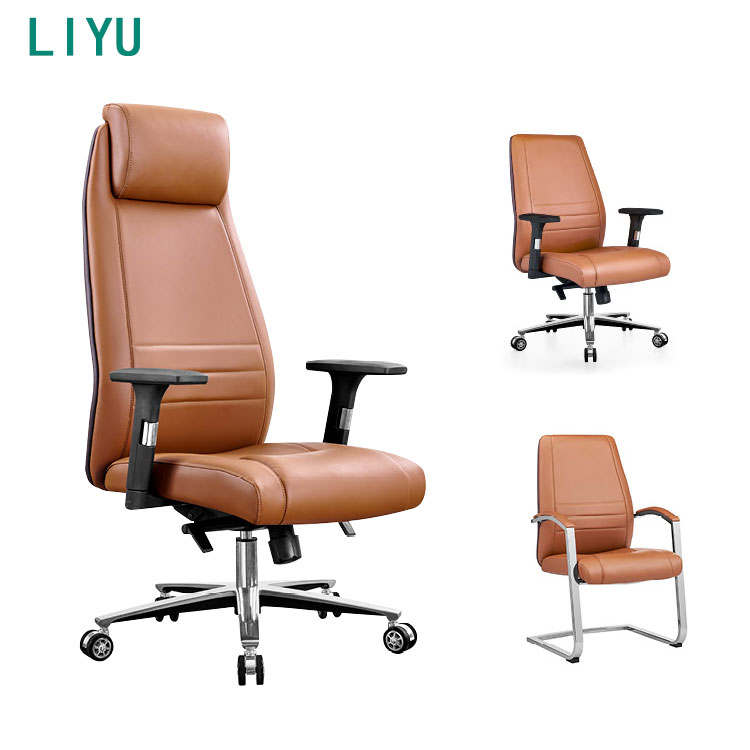
When selecting seating, users often weigh the aesthetic appeal of a sturdy executive chair against the functional adjustability of an ergonomic task chair. Plush, leather-bound executive chairs often boast thick padding and a commanding appearance. However, they frequently lack the micro-adjustments necessary for precise ergonomic alignment, such as independent lumbar depth or 4D armrests.
Thermal realities also play a significant role. Thick leather or faux-leather executive chairs retain significant body heat, which can cause discomfort for large users during long work sessions. Breathable commercial fabrics and reinforced mesh backrests found on ergonomic task chairs offer superior temperature regulation, keeping the user cool and focused throughout the day.
Chairs built to support 500 pounds feature heavy steel components. Shipping boxes often weigh over 70 to 100 pounds. Safe assembly practices are crucial. Unpacking and assembling these heavy-duty components typically requires two people to prevent injury and ensure parts are aligned correctly without cross-threading heavy bolts.
A combined load of a 500-pound user and a 70-pound chair exerts immense pressure on a small surface area. Standard casters will permanently damage hardwood, vinyl, or standard carpet under this weight. Tempered glass chair mats or specialized heavy-duty polyurethane rollerblade-style casters are highly recommended to protect flooring and ensure smooth movement.
Manufacturer warranties require careful scrutiny. Common loopholes include covering the metal frame for 10 years but limiting the gas cylinder, upholstery, and foam coverage to only one year. Additionally, some warranties restrict the weight capacity to single-shift (8 hours per day) use, voiding coverage if the chair is used in a 24/7 dispatch or continuous remote work environment.
Choosing a heavy-duty chair is a direct investment in physical health, orthopedic safety, and long-term productivity. Superficial design elements must take a back seat to strict mechanical specifications and verified weight ratings. Proper support prevents chronic pain and eliminates the cycle of constantly replacing broken standard chairs.
Follow these steps to finalize your selection:
A: A Class 4 cylinder features thicker steel walls and higher-pressure internal seals designed specifically to handle continuous loads of up to 500 pounds without sinking or leaking gas over time.
A: Yes, but you must use a heavy-duty chair mat, preferably tempered glass, or upgrade to specialized rollerblade-style casters. Standard plastic casters will sink into the carpet and damage the fibers under heavy loads.
A: For optimal comfort and to prevent hip compression, the seat pan should be a minimum of 22 to 24 inches wide. Always measure your seated hip width to ensure adequate clearance.
A: Leaning is typically caused by a warped tilt mechanism or a bent gas cylinder stem. This occurs when a standard chair is subjected to weight or leverage that exceeds its structural limits.
A: No. Memory foam compresses easily and retains heat. High-density, sculpted molded foam provides superior push-back support, preventing the user from bottoming out against the chair frame during long shifts.
A: Manufacturers will explicitly list ANSI/BIFMA X5.11 compliance in their technical specifications. You can also request the testing certificate directly from the manufacturer before purchasing.


