
Views: 0 Author: Site Editor Publish Time: 2026-07-25 Origin: Site


Standard office chairs are engineered for the 5th to 95th percentile of body types, leaving larger users with inadequate support, chronic discomfort, and frequent equipment failure. The physical and operational costs of using under-specced seating range from severe musculoskeletal pain and decreased productivity to the rapid degradation of gas cylinders and voided manufacturer warranties. Slapping a generic label on a standard frame does not solve the underlying mechanical deficiencies.
To solve this, organizations and individuals must move beyond marketing labels and utilize a strict evaluation framework based on structural integrity, verified weight ratings, and advanced ergonomic adjustability. Selecting the right seating requires understanding the biomechanics of larger bodies and matching those needs with industrial-grade components. You need a chair that actively supports posture, distributes pressure evenly, and withstands continuous heavy loads without structural fatigue.
Many manufacturers use terms like "big and tall" or "heavy duty" as marketing buzzwords rather than strict engineering classifications. In most cases, these designations merely indicate that the chair features a slightly wider seat pan or a taller backrest. The internal mechanical components—such as the tilt mechanism, the pneumatic cylinder, and the structural frame—often remain identical to those found in standard office chairs. When a larger user sits in these chairs, the standard components experience accelerated wear. The seat foam compresses permanently, the armrests wobble under pressure, and the tilt mechanism fails to provide adequate tension, leading to an unsafe reclining experience.
True bariatric office chair specifications represent a completely different tier of engineering. These chairs are specifically designed and tested for user weights ranging from 400 to over 500 pounds. The architecture includes reinforced steel plates within the seat pan, heavy-duty tilt mechanisms with upgraded tension springs, wider stances for enhanced stability, and specialized load-bearing casters. Every component is scaled up to handle immense downward force and lateral stress, ensuring the chair remains structurally sound and ergonomically effective over years of daily use. You cannot rely on visual inspections alone; the internal build quality dictates the lifespan.
When inspecting a chair for heavy-duty use, look at the thickness of the steel used in the mechanism housing. Standard chairs use stamped steel that is roughly 2mm thick. Bariatric models utilize 4mm or thicker steel plates, often reinforced with welded gussets to prevent bending under load. The connection points where the armrests attach to the seat pan or backrest also require heavy-duty machine screws threaded into steel inserts, rather than wood screws driven directly into a plywood base.
Evaluating the structural integrity of a chair requires looking past marketing claims and examining verified testing data. The ANSI/BIFMA X5.11 standard is specifically designed for large occupant office chairs. Unlike standard BIFMA testing, which assumes a user weight of around 253 pounds, the X5.11 standard rigorously tests chairs for occupants weighing up to 400 pounds. This involves drop tests, backrest durability tests, and caster rolling tests under maximum load conditions to ensure no component buckles or fractures.
Understanding commercial chair durability is critical for liability mitigation and safety compliance. A chair that fails under a user can cause severe injury. By mandating ANSI/BIFMA X5.11 compliance, you guarantee that the seating solution has undergone independent, scientific stress testing. This certification provides peace of mind, ensures regulatory safety compliance, and guarantees that the chair will maintain its structural and ergonomic integrity throughout its intended lifecycle.
Testing protocols for these chairs are brutal. The drop test involves dropping a heavy weight onto the seat from a specific height to simulate a user sitting down forcefully. The backrest strength test applies hundreds of pounds of horizontal force to the backrest to ensure the recline mechanism and frame do not snap. When a manufacturer provides documentation passing these specific X5.11 tests, you know the chair is built for actual heavy-duty application.
The pneumatic gas cylinder is the most common point of failure in office seating for heavy users. Standard Class 3 cylinders are not designed to sustain constant pressure above 250 pounds, resulting in the notorious "sinking chair" syndrome where the seat gradually loses height throughout the day. Heavy-duty Class 4 or specialized Class 5 pneumatic cylinders are mandatory for large users. These cylinders feature thicker steel walls and higher-pressure nitrogen chambers, allowing them to support 400 to 500 pounds without leaking gas or failing structurally.
Equally important is the wheelbase. Standard nylon or plastic bases flex under heavy loads, eventually leading to stress fractures and catastrophic failure where the cylinder drags on the floor. A proper heavy-duty chair requires a five-star base constructed from cast aluminum or reinforced steel. These metal bases distribute the immense downward force evenly across the casters, providing a rigid, unyielding foundation that prevents the chair from tipping or collapsing during dynamic movements.
| Component | Standard Office Chair | Bariatric Specification |
|---|---|---|
| Gas Cylinder | Class 3 (Up to 250 lbs) | Class 4 or 5 (400 - 500+ lbs) |
| Wheelbase Material | Nylon / Plastic | Cast Aluminum / Reinforced Steel |
| Mechanism Steel Thickness | ~2mm Stamped Steel | 4mm+ Steel with Welded Gussets |
| Caster Load Rating | Standard (50 lbs per caster) | Heavy-Duty (100+ lbs per caster) |
The seat pan is where the user's weight is concentrated, making foam density a critical factor in long-term comfort. Low-density memory foam may feel plush initially, but it compresses completely under sustained load. This "bottoming out" effect forces the user's ischial tuberosities (sit bones) directly against the hard plastic or wood of the seat pan base, causing severe tailbone pain and restricted blood flow. Sculpted, high-density, high-resiliency molded foam is essential. It maintains its shape, provides continuous pushback, and evenly distributes weight across the entire surface area of the thighs and buttocks.
Seat width and depth dimensions must accommodate the user without causing secondary ergonomic issues. The seat pan should provide 1 to 2 inches of clearance on both sides of the hips to prevent painful hip-squeeze and allow for natural movement. Proper thigh support is crucial; the seat must be deep enough to support the femurs but short enough to leave a two-finger gap behind the knees. If the seat presses into the back of the knees, it cuts off circulation and causes nerve compression. Proportional fit adjustments, specifically an independent seat slider, are non-negotiable. Seat depth control allows the user to align their pelvis correctly against the backrest, preventing the lumbar spine from collapsing into a slouched posture.
When evaluating foam, look for density ratings. Standard chairs often use foam with a density of 1.5 to 2.0 pounds per cubic foot. Bariatric seating requires foam densities of 3.0 pounds per cubic foot or higher. This high-resiliency foam bounces back immediately after the user stands up, preventing permanent body impressions from forming over time.
A common mistake is assuming all heavy users are also exceptionally tall. The "Short-Heavy" versus "Tall-Heavy" dynamic presents a unique ergonomic challenge. Buying a generic oversized chair often fails users with shorter popliteal heights (the distance from the floor to the underside of the thigh behind the knee) or shorter torsos. A chair that is too tall prevents the user from planting their feet flat on the floor, shifting excess weight onto the back of the thighs. A backrest designed for a tall torso will position the lumbar support too high, pushing into the shoulder blades rather than the lower back.
Precise measurements are required to ensure a proper fit. You must measure the user's popliteal height and hip width. The popliteal height dictates the required range of the pneumatic cylinder. Shorter users need a cylinder that drops low enough to allow flat-footed seating, while taller users need extended cylinders to prevent their knees from rising above their hips. Hip width dictates the minimum distance between the armrests. Understanding these specific physiological metrics ensures the chosen chair provides customized support rather than a generic, ill-fitting solution.
Proper spinal alignment requires comprehensive support from the sacrum up to the shoulders. A high back office chair plays a vital role in properly distributing upper body weight and reducing spinal compression during long seated sessions. By providing a tall surface area, the backrest allows the user to recline slightly, transferring the weight of the torso off the intervertebral discs and onto the chair frame. This mechanical offloading is essential for preventing chronic lower back pain and muscle fatigue.
Dynamic lumbar support systems are vastly superior to static cushions. The lumbar curve varies significantly from person to person, especially among larger users where weight distribution affects pelvic tilt. The lumbar support must be adjustable in both height and depth to perfectly match the user's natural lordotic curve. Furthermore, upper back and neck support prevent thoracic strain. Taller users require a backrest that stabilizes the scapula, preventing the shoulders from rounding forward and causing tension headaches and neck stiffness.
Achieving true ergonomic support requires addressing four distinct physiological zones simultaneously. When these four points are properly aligned, the body remains in a neutral, stress-free posture.
Static chairs force the body to adapt to the furniture. Ergonomic chairs adapt to the body through multi-point mechanical controls. Seat pan height and angle adjustments are critical. The seat must be adjusted so the front of the knees is level or slightly below the hips, with feet firmly planted on the ground. A forward tilt or slope adjustment is highly beneficial for larger users, as it opens the hip angle, relieves hamstring pressure, and naturally rotates the pelvis forward to maintain the lumbar curve.
Armrests must be fully adjustable to prevent shoulder and neck strain. 4D armrests offer width, height, depth, and pivot adjustments. Width adjustment is particularly crucial for larger users, allowing the armrests to be moved outward to accommodate wider torsos without pinching or restricting movement. Height adjustment ensures the shoulders remain relaxed, not shrugged. Finally, the tilt tension and locking mechanism must feature robust, heavy-duty springs. Standard springs cannot safely support or balance a heavy user in a reclined position. Heavy-duty tension controls allow the user to recline smoothly without feeling like they are falling backward, providing secure, controlled movement.
| Feature Category | Sturdy Executive Chairs | Ergonomic Task Chairs |
|---|---|---|
| Design & Aesthetics | High-end upholstery, plush padding, commanding presence. | Utilitarian, breathable mesh or performance fabric, technical look. |
| Adjustability | Basic height and tilt; often lacks independent seat depth or 4D arms. | Maximum micro-adjustments (seat depth, forward tilt, independent back angle). |
| Usage Duration | Suitable for intermittent use and meetings. | Engineered for 24/7 intensive, multi-shift continuous use. |
| Material Breathability | Leather or faux leather can retain body heat. | Heavy-duty mesh promotes airflow and temperature regulation. |
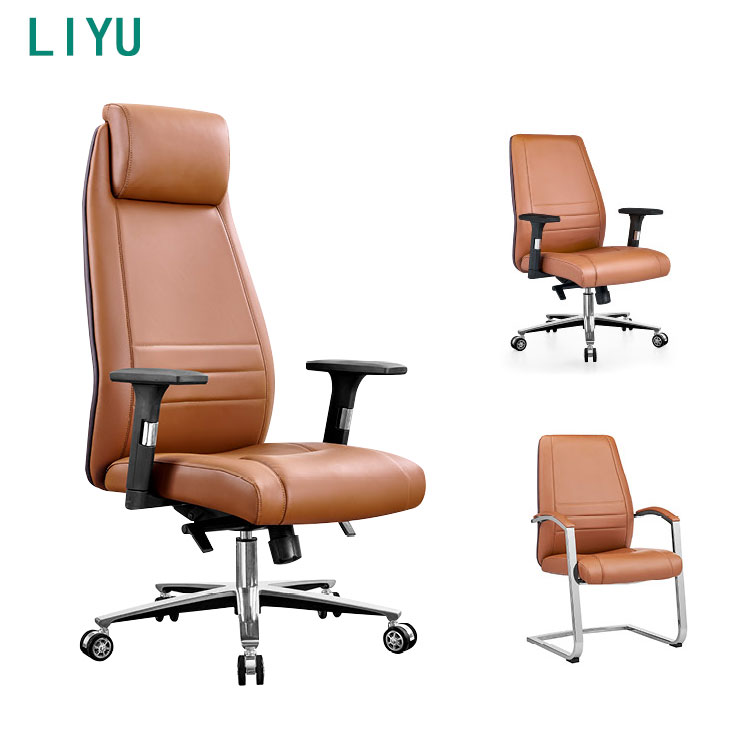
For management roles and client-facing environments, aesthetics play a significant role in furniture selection. A sturdy executive chair provides seamless visual integration into professional office spaces. These chairs typically feature high-end leather or premium fabric upholstery, combined with plush, high-density padding that offers immediate comfort. The commanding design conveys authority and professionalism.
However, executive chairs often prioritize form over advanced function. They frequently lack the micro-adjustments necessary for strict ergonomic compliance. Features like independent seat depth sliders, forward tilt mechanisms, and highly articulated 4D armrests are often omitted to maintain a sleek silhouette. While comfortable for shorter durations, they may not provide the precise physiological alignment required for eight to ten hours of continuous desk work.
When continuous, intensive use is the primary requirement, ergonomic task chairs are the superior solution. These chairs represent the pinnacle of ergonomic office seating. They offer maximum adjustability, allowing every aspect of the chair to be fine-tuned to the user's specific body mechanics. Built for dispatch centers and intensive multi-shift environments, their structural integrity is unmatched.
Task chairs utilize highly breathable materials, such as heavy-duty elastomeric mesh or specialized heat-dissipating fabrics, preventing heat buildup and excessive sweating during long shifts. The primary drawback is their utilitarian design aesthetic, which may look out of place in a traditional executive boardroom. However, for sheer performance, health benefits, and continuous support, heavy-duty task chairs are the optimal choice.
Purchasing a chair without verifying its exact weight capacity is a significant implementation risk. Exceeding the manufacturer's stated weight limit immediately voids the warranty on standard office chairs. If a 300-pound user sits in a chair rated for 250 pounds and the cylinder fails, the manufacturer will not cover the replacement. This makes under-specced chairs a poor investment, as they will require frequent, out-of-pocket replacements.
When evaluating a bariatric chair, scrutinize the warranty details carefully. Ensure that the coverage explicitly includes the pneumatic mechanisms, foam degradation, and caster failure, not just the steel frame. A robust warranty demonstrates the manufacturer's confidence in their heavy-duty components. Look for multi-year coverage on all moving parts to protect your investment against premature wear and tear.
A high-quality chair is only effective if it functions properly within the existing workspace environment. Caster selection is critical for safety and floor protection. Hard nylon casters are designed for carpeted floors, allowing the heavy chair to roll easily without bogging down. Conversely, soft polyurethane-coated casters are mandatory for hard floors (wood, tile, concrete) to provide traction, prevent the chair from sliding out from under the user, and protect the flooring from severe damage under heavy loads.
Desk clearance is another major compatibility issue. Bariatric chairs feature wider armrests and often have higher minimum seat pan heights due to the heavy-duty cylinders and thick foam. There is a high risk that the chair will not fit under existing workstations. You must measure the clearance from the floor to the underside of the desk and compare it against the chair's maximum armrest height and seat height specifications. Failing to do so forces the user to sit too far away from the keyboard, leading to severe shoulder and back strain as they reach forward to work.
A: Standard big and tall chairs often just have wider seats and taller backs but use standard internal mechanics. True bariatric chairs are engineered from the ground up for 400+ lbs, featuring reinforced steel frames, heavy-duty Class 4 or 5 cylinders, and upgraded tilt mechanisms to withstand immense continuous force.
A: The seat pan should be wide enough to provide 1 to 2 inches of clearance on both sides of the user's hips. This prevents painful hip-squeeze, allows for natural shifting and movement, and ensures the armrests do not dig into the user's thighs or torso.
A: Sculpted, high-density, high-resiliency molded foam is the best option. It resists permanent compression and provides continuous pushback. Low-density memory foam should be avoided, as it bottoms out under heavy weight, exposing the tailbone to the hard seat base.
A: A sinking chair is caused by a failing pneumatic gas cylinder that can no longer hold pressure. To prevent this, heavy users must select chairs equipped with heavy-duty Class 4 or Class 5 cylinders, which are specifically designed to support 400 to 500 pounds without leaking.
A: Yes, provided the chair uses heavy-duty, industrial-grade elastomeric mesh and is rated for the user's weight. High-quality mesh provides excellent support and breathability, but standard, low-cost mesh will stretch and sag under heavy loads over time.
A: 4D armrests adjust in four directions: height, width, depth, and pivot angle. Width adjustment is crucial for larger users, as it allows the armrests to move outward, accommodating wider torsos and preventing shoulder strain without restricting movement.
A: Look for ANSI/BIFMA X5.11 certification. This specific standard indicates the chair has passed rigorous independent stress testing for large occupants up to 400 pounds, verifying the durability of its frame, casters, backrest, and tilt mechanisms.


