
Views: 0 Author: Site Editor Publish Time: 2026-07-26 Origin: Site


Standard ergonomic chair specifications are engineered for the 5th to 95th percentile of the population, leaving users over 6'2" with misaligned lumbar support, inadequate thigh clearance, and chronic discomfort during long hours of sitting. Purchasing an office chair based on overall height rather than specific torso-to-leg proportions leads to poor circulation, shoulder impingement from low backrests, and cumulative back pain. Standard testing fails tall users because it ignores these critical anatomical variations. Multi-week panel testing and blind fit testing evaluate seat depth, backrest height, and armrest metrics without brand bias. This methodology is essential to locate the best office chair for tall person requirements. This guide provides a biomechanical and technical framework for evaluating office chairs, moving beyond generic labels to focus on verifiable metrics like seat depth, cylinder extension, and armrest-to-desk alignment.
Tall individuals do not scale uniformly. Some possess disproportionately long legs, while others have elongated torsos. Users with long legs require extreme seat depth and elevated cylinders. This prevents their knees from rising above their hips. Users with long torsos require extended backrests and high lumbar tracking. Standard chairs fail both anatomical profiles. They force tall users into a posterior pelvic tilt. This flattens the lumbar spine and increases intradiscal pressure during long hours. Proper ergonomic assessment requires measuring the torso and legs independently to ensure the chair frame matches the skeletal structure.
Industry terminology often misleads buyers. Manufacturers frequently combine "Big" and "Tall" into a single category, which creates significant problems for slim users. "Big" indicates reinforced mechanisms, 400lb+ weight limits, and wide seat pans. "Tall" indicates extended cylinders, sliding seat pans, and high backrests. A slim, tall user purchasing a "Big & Tall" chair faces severe ergonomic risks. Armrests sit too far apart on wide seat pans, leading to shoulder strain and a complete lack of lateral support.
| Category | Primary Focus | Key Features | Ideal User Profile |
|---|---|---|---|
| Big | Weight Capacity | Reinforced steel, wide seat pan, heavy-duty tilt | Users over 300 lbs, average height |
| Tall | Vertical Dimensions | Extended cylinder, sliding seat pan, high backrest | Users over 6'2", slim to average build |
| Big & Tall | Combined Extremes | Wide seat, extended cylinder, 400lb+ capacity | Users over 6'2" and over 300 lbs |
Improper seating creates localized stress points for tall users. Thoracic spine compression occurs when backrests end below the shoulder blades. Cervical neck strain develops from low headrests pushing into the upper back. Pressure concentrates heavily on the ischial tuberosities, or sit bones, when seat pans are too short. The femur lacks support, forcing the pelvis to bear the entire upper body weight. Alleviating these pressure points requires exact alignment between the chair frame and the user's skeletal structure.
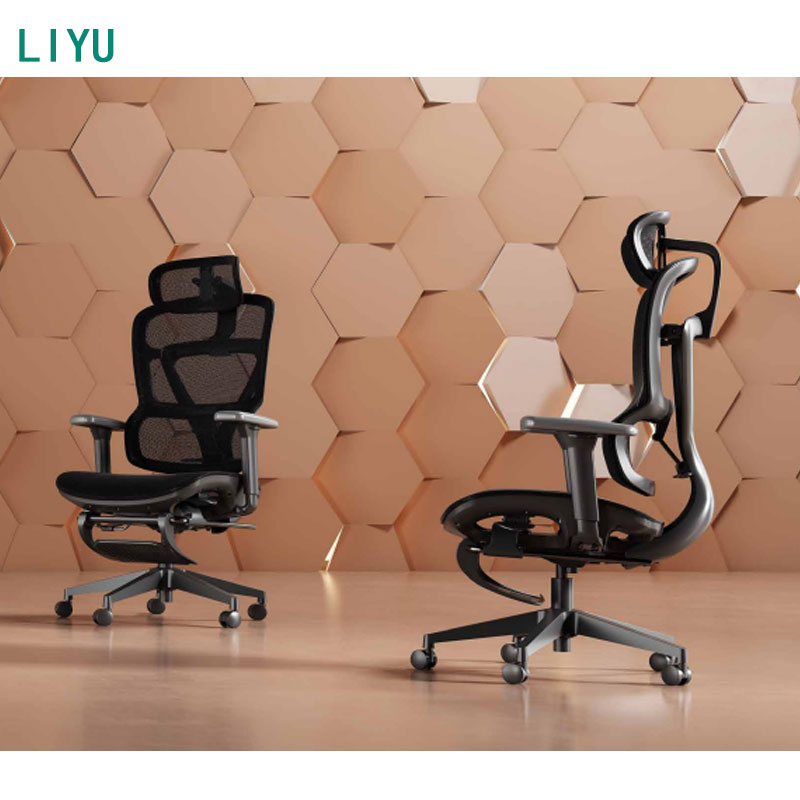
The foundation of proper posture is the seat height range. The optimal metric for users over 6'2" must reach or exceed 20 to 22 inches from the floor. Standard cylinders top out around 19 inches. This forces tall users to bend their knees acutely. Upgrading to aftermarket or OEM extended gas cylinders solves this issue. Class 4 heavy-duty cylinders provide the necessary elevation and stability. Premium chair models often offer these extended cylinders as factory options.
Seat depth determines lower body comfort. Ergonomists use the "two-finger rule" to measure this metric. You should fit exactly two fingers between the seat edge and the back of your knee. Longer femurs shift this requirement drastically. A sliding seat pan mechanism is absolutely necessary. It accommodates longer legs and distributes pressure evenly across the thighs. Without a sliding mechanism, tall users experience restricted blood flow and nerve compression in the lower legs.
A true high back ergonomic chair must support the entire spine. The minimum backrest height requirement typically exceeds 22 inches. Shorter backrests dig painfully into the shoulder blades. Lumbar support mechanisms also require extensive vertical travel. Fixed lumbar systems rarely align with a long torso. Height-adjustable lumbar systems allow users to position the apex of the curve exactly at the L4-L5 vertebrae. This prevents slouching and maintains the natural lordotic curve.
Armrests must support the forearms without interfering with the desk edge. 4D armrests offer height, width, depth, and pivot adjustments. Tall users face specific challenges when armrests cannot adjust high enough. If the armrests fail to meet the desk at a 90-degree elbow angle, users experience trapezius strain. They unconsciously shrug their shoulders to reach the typing surface. Highly adjustable armrests eliminate this muscular tension and improve typing ergonomics.
High-end task chairs offer exceptional modular adjustments. These standard footprint chairs often feature extended cylinder options. They utilize high-quality suspension materials and precise tension controls. They provide a tailored fit for slim or average-build tall users. The primary advantage is the sheer volume of micro-adjustments available. Users can dial in exact specifications for their unique proportions. Buyers may need to custom-order extended parts directly from the manufacturer.
Heavy-duty models cater to users requiring both height and higher weight capacities. These chairs feature extreme durability and reinforced steel frames. They utilize wider seating areas and thick high-density foam. They excel in structural integrity but often lack micro-adjustments. The armrests may sit too wide for proper ergonomic typing posture. These models suit users with broad shoulders and larger frames perfectly. Slimmer users should avoid them to prevent ergonomic misalignment.
Integrating headrests requires careful consideration for tall users. A proper headrest office chair supports the cervical spine directly. Fixed headrests often fail tall users completely. They push into the upper back or shoulders, forcing the user forward. Articulating, height-adjustable headrests solve this problem. They extend vertically and pivot to meet the natural curve of the neck. This provides critical relief during reclined working postures.
Saddle stools and kneeling chairs offer niche alternatives for active sitting. These options can be configured with tall cylinders. They promote an open hip-angle posture and naturally encourage lumbar lordosis. They feature high default seat heights ideal for tall individuals. However, they lack thoracic support for long hours of use. They also require a transition period to condition the leg and core muscles. Active seating works best as a secondary chair rather than a primary workstation solution. Evaluating an office chair for tall users often means balancing active and supported postures.
Material selection impacts long-term comfort for tall users. Hard plastic rims on mesh backrests cause severe shoulder blade impingement if the backrest is too short. Mesh provides excellent thermal regulation but requires a perfectly sized frame. Upholstered cushions offer more forgiveness at the edges. However, standard foam risks bottoming out under heavier or taller users. High-density molded foam or advanced elastomer suspension provides better longevity and sustained support.
Finding the right fit often requires customization. Ordering chairs with factory-installed extended cylinders takes time. Specialized tall headrests also add to the lead time. Off-the-shelf retail models rarely meet the strict requirements of users over 6'2". Buyers must weigh the immediate availability of retail chairs against the ergonomic necessity of custom parts. Investing time in a custom order prevents years of physical discomfort.
The refurbished market offers compelling alternatives. Buying new consumer chairs often yields inferior build quality. Refurbished tier-1 commercial chairs provide access to premium ergonomics. Models from top brands can be fitted with customized tall cylinders during the refurbishment process. This approach secures high-end adjustability and durability. It allows tall users to access professional-grade seating solutions efficiently.
Tall users exert different leverage and weight distribution on chair components. The tilt mechanism and gas cylinder endure higher stress over time. Evaluating warranty coverage is a critical step. Look for 10-to-12-year warranties that explicitly cover the pneumatic cylinder. The warranty must also cover the tilt lock under continuous use. Robust warranty terms indicate a manufacturer's confidence in their heavy-duty components.
Elevating a chair to achieve proper leg angles introduces a new problem. The standard 29-inch fixed desk suddenly becomes too low. The user must hunch forward to reach the keyboard. This chair-to-desk height mismatch is the most common post-purchase failure. Mitigating this risk requires calculating the required desk height. Base this calculation on the new elevated seated elbow height. This adjustment frequently necessitates upgrading to a height-adjustable standing desk.
Buyers must follow a strict measurement protocol before purchasing. Never rely on generic height recommendations without verifying these critical dimensions.
The ideal seating solution for a tall person requires more than just an extended cylinder. It demands a holistic match of seat depth, backrest height, and armrest adjustability. Follow these actionable next steps to secure the right fit:
A: Users over 6'2" require a maximum seat height of at least 20 to 22 inches. This elevation ensures the hips remain slightly above the knees, maintaining a healthy 90-to-100-degree knee angle and promoting proper blood circulation.
A: Yes, tall users should only opt for highly adjustable articulating headrests. Fixed headrests often hit the upper back or shoulders instead of the neck, pushing the user forward and causing severe cervical strain.
A: "Tall" focuses strictly on vertical dimensions like extended cylinders and high backrests. "Big and tall" includes wider seat pans and reinforced weight capacities, which can cause armrest misalignment for slim, tall users.
A: The seat pan should have a depth of 19 to 21 inches. The inclusion of a seat slider is highly recommended to ensure the front edge of the seat rests exactly 2 to 3 inches behind the knee.
A: A backrest that is tall enough prevents the hard frame from digging into the scapula. This allows for proper shoulder retraction and reduces the muscular tension that leads to chronic shoulder pain.
A: Aftermarket cylinders can fix improper leg angles by raising the seat. However, they do not solve the issues of inadequate seat depth, low armrests, or low backrest heights that plague standard chairs.
A: If your new chair positions you above a standard desk, you must adjust your workstation. Options include installing under-desk keyboard trays, using desk risers, or transitioning to a height-adjustable standing desk.


