
Views: 0 Author: Site Editor Publish Time: 2026-07-22 Origin: Site


Navigating the office furniture market often feels like wearing someone else's shoes. Most commercial seating is optimized for the 50th to 95th percentile male. For anyone under 5'4", this physical reality results in dangling feet, numb thighs, and forced slouching. Generic ergonomic labels do not guarantee a proper fit. Using a chair with incorrect dimensions leads to compromised circulation, musculoskeletal strain, and decreased productivity over long work sessions. Evaluating an office chair for short person use requires strict attention to dimensional specifications rather than relying on marketing claims. You must look closely at seat depth, cylinder height, and armrest width to build a workstation that actually supports your body mechanics. Ignoring these metrics guarantees discomfort. Proper alignment requires matching the equipment to your exact skeletal structure.
Standard manufacturing defaults to a one-size-fits-most approach that inherently excludes petite frames. The design parameters of an office chair for tall users dominate the commercial market. These chairs feature deep seat pans, tall pneumatic cylinders, and wide armrests designed to accommodate broader shoulders and longer femurs. When a user under 5'4" attempts to use this equipment, the biomechanical mismatch is immediate. The chair forces the body into unnatural postures to compensate for the excess space and height. Manufacturers build for the middle of the bell curve. This leaves anyone on the lower end of the height spectrum dealing with equipment that actively works against their anatomy. You cannot simply adjust a massive chair down to fit a small frame. The baseline dimensions remain too large.
Consider the structural frame of standard seating. The backrest width, the distance between armrest posts, and the minimum height of the lumbar support are fixed variables. Even at their lowest settings, these components sit too high or too wide for a petite user. This forces the user to adapt to the chair, rather than the chair adapting to the user. The result is a constant state of muscle tension. Your body works overtime just to maintain a stable seated position. This constant micro-exertion accelerates fatigue and reduces your ability to focus on actual work tasks.
Improper dimensions trigger a cascading effect of physiological issues. A seat pan that is too deep forces the user to slide forward to bend their knees, completely negating any back support. High armrests cause constant shoulder shrugging, leading to severe upper back and neck tension. Dangling feet pull the pelvis forward, resulting in lower back hyper-extension and strain. Over time, the pressure on the back of the thighs restricts blood flow, causing numbness and fatigue. The popliteal artery, located just behind the knee, is particularly vulnerable. When a seat edge presses into this area, it restricts circulation to the lower legs.
This restricted blood flow causes swelling in the ankles and feet. It also increases the risk of deep vein thrombosis during prolonged sitting. Furthermore, the lack of proper lumbar support alters the natural curvature of the spine. When you slide forward to let your feet touch the ground, your lower back flattens out. This places immense pressure on the spinal discs. The muscles in your lower back must then work continuously to stabilize your torso, leading to chronic pain and stiffness by the end of the workday.
Short users frequently face a frustrating double-bind dilemma. You must choose between sliding all the way back to access the lumbar support, which leaves your feet dangling and cuts off circulation, or sitting forward to plant your feet on the floor, which leaves your lumbar spine completely unsupported. Neither option allows for sustainable, all-day comfort. This lived experience highlights the critical failure of standard seating for petite individuals. You are forced to choose which part of your body will suffer.
Many users attempt to solve this by stacking pillows behind their back or placing boxes under their feet. These makeshift solutions are unstable and often create new ergonomic hazards. A pillow shifts throughout the day, providing inconsistent support. A cardboard box compresses and fails to provide a solid foundation for your feet. True ergonomic support requires stable, integrated solutions that maintain your body in a neutral posture without requiring constant readjustment.
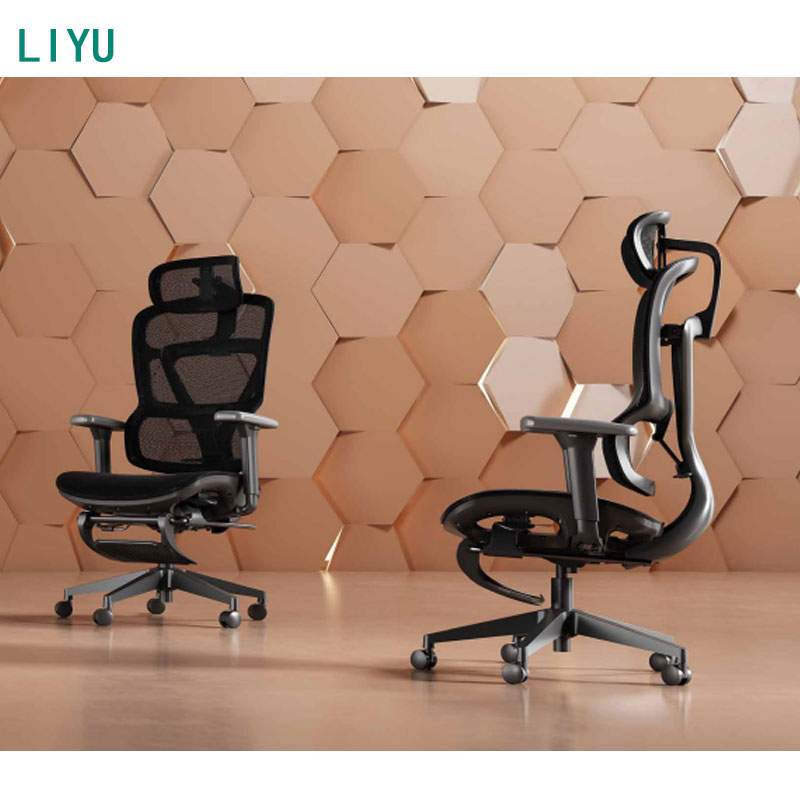
The foundation of proper seating is the ability to rest your feet flat on the floor with your knees at a 90-degree angle. For shorter users, the ideal seat height range typically falls between 14.5 and 17 inches. Reading pneumatic cylinder specifications is crucial. Standard cylinders usually start at 18 inches, which should be an immediate disqualifier. Look for chairs equipped with short or petite cylinders that allow the seat to drop low enough to accommodate shorter lower legs. The cylinder is the engine of the chair's height adjustment. If it bottoms out at 18 inches, no other feature matters.
Replacing a standard cylinder with a shorter one is sometimes possible, but it requires specific tools and mechanical knowledge. It is far better to purchase a chair designed with a short cylinder from the factory. When evaluating specifications, pay attention to the stroke length of the cylinder. A standard 5-inch stroke might go from 18 to 23 inches. A petite cylinder might offer a 4-inch stroke, going from 14.5 to 18.5 inches. This lower range is exactly what you need to ensure your feet remain firmly planted on the floor.
Seat depth dictates whether you can utilize the backrest while maintaining healthy circulation in your legs. The technical framework for measuring seat depth relies on the "two-finger rule." You need 1 to 2 inches of clearance between the back of your knee and the front edge of the seat. If the seat presses against your calves, it is too deep. High-end models often feature seat sliders, allowing you to adjust the depth precisely to your femur length. A seat slider mechanism moves the seat pan forward and backward independently of the backrest.
Without a seat slider, you are locked into the factory depth. For a petite user, a fixed seat depth of 19 inches is unworkable. You need a depth closer to 15 or 16 inches. When testing a chair, sit all the way back so your lower back firmly contacts the lumbar support. Then, check the clearance behind your knees. If you cannot fit two fingers between the seat edge and your leg, the chair will cause circulation issues over time.
Fixed lumbar supports are dangerous for shorter torsos. Instead of supporting the natural inward curve of the lower back, a fixed lumbar pad on a standard chair often pushes uncomfortably into the glutes or the mid-back. This misalignment forces the spine out of its neutral position. Height-adjustable lumbar mechanisms are a strict requirement. You must be able to slide the support down to match the exact position of your lumbar curve. The apex of the lumbar support should rest right in the curve of your lower back, just above your belt line.
Some chairs offer depth-adjustable lumbar support in addition to height adjustment. This allows you to control how aggressively the pad pushes into your back. For petite users, a less aggressive curve is often more comfortable. The goal is to maintain the natural lordotic curve of the spine without feeling like you are being pushed out of the chair. Test the lumbar support by sitting upright and relaxing your back muscles. The support should feel natural and unobtrusive.
The market splits into two viable paths for shorter users. Dedicated petite-built models are engineered specifically for shorter skeletons and narrower pelvises. These chairs inherently feature shorter cylinders, shallower seats, and narrower armrests. Alternatively, highly adjustable standard commercial-tier chairs can be configured down to fit shorter users. While standard chairs offer robust build quality, petite models eliminate the guesswork by starting with appropriate baseline dimensions. You do not have to fight the chair to make it fit.
| Dimension | Standard Chair Specification | Petite Chair Requirement |
|---|---|---|
| Seat Height Minimum | 18 inches | 14.5 - 16.5 inches |
| Seat Depth | 19 - 21 inches | 15 - 18 inches |
| Armrest Width | 20+ inches | 16 - 18 inches |
| Lumbar Height | Fixed for 5'8"+ | Adjustable down to 6 inches from seat |
| Base Diameter | 27 - 29 inches | 24 - 26 inches |
When choosing between the two paths, consider your specific body proportions. If you have very narrow shoulders, a dedicated petite chair is usually the better choice, as the armrests will be mounted closer together. If you have a shorter torso but average shoulder width, a highly adjustable standard chair might work well, provided it has a seat slider and a short cylinder option. Always verify the minimum dimensions before making a decision.
Headrests introduce significant trade-offs. On standard models, a headrest office chair often pushes a shorter user's shoulders or upper back forward, rather than supporting the neck. The anatomical mismatch forces the cervical spine out of alignment. If a headrest is mandatory for your workflow, you must establish strict criteria for highly adjustable, articulating headrests that can drop low enough and pivot to meet the actual curve of your neck. A fixed headrest is a liability for a petite user.
An articulating headrest offers multiple points of adjustment. It can move up and down, tilt forward and backward, and sometimes even adjust in depth. This level of customization is necessary to ensure the headrest contacts the occipital bone at the base of the skull without pushing the head forward. If the headrest hits the back of your head and forces your chin toward your chest, it will cause severe neck strain. Often, skipping the headrest entirely is the safest ergonomic choice for shorter individuals.
Comparing structural differences reveals that a high back ergonomic chair can restrict scapula movement for shorter users. The aggressive upper back curves often hit the back of the head or push the shoulders forward. Mid-back designs are frequently a safer, more supportive choice for petite frames. They provide necessary lumbar and thoracic support without interfering with shoulder mobility or forcing the neck into awkward angles. A mid-back chair allows your shoulder blades to move freely.
This freedom of movement is essential for tasks that require reaching or turning. A high backrest that is too tall will trap your shoulders, forcing you to round your upper back to type or use a mouse. Mid-back chairs typically end just below the shoulder blades, providing support where you need it most while allowing your upper body to remain dynamic. When testing a backrest, ensure you can pull your shoulders back comfortably without hitting rigid plastic frames.
Height-only armrests fail because they do not account for shoulder width. Narrower shoulders require armrests that adjust inward (width adjustment) to prevent splaying the elbows outward. Depth and pivot adjustments allow you to support your forearms while typing. Furthermore, armrest-to-desk clearance is vital. The armrests must lower sufficiently to slide completely under the desk surface, allowing you to sit close to your keyboard without leaning forward and straining your lower back. 4D armrests provide the necessary range of motion.
If your armrests hit the edge of your desk, you will be forced to sit too far away from your monitor and keyboard. This leads to reaching, which strains the shoulders and upper back. The ability to drop the armrests completely out of the way is a crucial feature for many users. Look for armrests that can lower to at least the height of the seat cushion.
The practicalities of a smaller wheelbase are often overlooked. A base footprint under 26 inches prevents the chair legs from interfering with your foot placement. Standard wide bases force shorter users to place their feet awkwardly around the casters. A compact base also makes maneuvering in tight workspaces much easier, reducing the physical effort required to roll the chair between desk zones. Large bases are designed for stability on tall chairs, but they become an obstacle on petite models.
Caster selection also plays a role in overall height and mobility. Standard 65mm casters add significant height to the chair. Switching to smaller 50mm casters can lower the overall seat height by half an inch, which can make a noticeable difference for a petite user. Additionally, ensure you select the correct caster material for your floor type. Hard nylon casters are for carpet, while soft polyurethane casters are required for hard floors to prevent slipping and damage.
The most common implementation failure is buying a petite chair but keeping a standard 29.5-inch desk. If you lower your chair to plant your feet, the desk becomes too high, forcing you to hike your shoulders to type. Holistic ergonomic alignment requires evaluating the chair and desk together. You must implement keyboard trays or invest in a height-adjustable desk to maintain a healthy 90-degree elbow angle while keeping your feet flat on the floor. The desk must adapt to the chair.
A standard desk height of 29.5 inches is designed for someone who is 6'0" tall. For a user who is 5'2", the ideal typing height is closer to 24 or 25 inches. If you cannot replace the desk, an articulating keyboard tray is mandatory. The tray must drop below the desk surface and offer negative tilt to keep your wrists neutral. This allows you to lower your chair to the correct height for your feet while bringing the keyboard down to the correct height for your hands.
Short women, typically between 5'0" and 5'3", face specific design gaps. Standard executive office chairs ignore narrower shoulder spans and differences in pelvic tilt. Women generally require highly customizable armrest widths to prevent shoulder strain and specific seat pan contours that accommodate a different center of gravity. Recognizing these nuances reinforces the need for chairs with granular adjustability rather than generic sizing. A flat seat pan often causes pressure points for female users.
Look for seat cushions with a waterfall edge and contoured foam that distributes weight evenly. The angle of the seat pan is also important. Some chairs offer a forward seat tilt mechanism, which helps open the hip angle and reduces pressure on the lower back. This feature is particularly beneficial for petite women who experience lower back pain from sitting with their hips locked at a strict 90-degree angle.
Ergonomic footrests provide a realistic mitigation strategy when cylinder limits are reached or desk heights cannot be altered. They solve the immediate issue of dangling feet and reduce pressure on the thighs. However, they should be framed as a secondary solution rather than a primary fix. A footrest does not correct a seat pan that is too deep or armrests that are too wide. It is a patch, not a cure.
If you must use a footrest, select one that is wide enough to allow you to shift your feet throughout the day. It should offer angle adjustment to support your ankles in a neutral position. Avoid small, fixed-angle footrests that lock you into a single posture. Remember that using a footrest means you cannot easily roll your chair around your workspace without leaving your foot support behind.
Purchasing specialized seating carries financial risks. You must evaluate warranties, restocking fees, and mandatory trial periods. A quick sit in a showroom cannot simulate an 8-hour workday. Look for manufacturers that offer a 30-day trial period. This allows you to test the chair in your actual workspace, ensuring the seat depth, cylinder height, and lumbar support perform correctly under real-world conditions. Do not commit to a chair you cannot return.
Read the fine print on return policies. Some companies charge exorbitant return shipping fees or restocking fees that make returning the chair financially unviable. Keep all original packaging until you are certain the chair fits your body. Test the chair for at least two weeks before making a final decision, as your body needs time to adjust to a new ergonomic posture.
A: The ideal seat height typically ranges from 14.5 to 16.5 inches, depending on your specific leg-to-torso ratio. Your feet should rest flat on the floor with your knees bent at a 90-degree angle without feeling pressure under your thighs.
A: Sit up straight against a wall. Measure the distance from the wall to the back of your knee. Subtract roughly two inches from this measurement to find your maximum allowable seat depth.
A: A footrest solves the issue of dangling feet and reduces thigh pressure. However, it does not fix a seat pan that is too deep or armrests that are too wide. It is a helpful mitigation tool but not a complete ergonomic solution.
A: Generally, no. Gaming chairs feature bucket-seat designs with deep seat pans, aggressive fixed headrests, and pronounced side bolsters. These dimensions rarely align with petite frames and often force shorter users into slouched, unsupported postures.
A: Standard headrests are positioned for taller torsos. For a shorter user, the curve of the headrest hits the upper spine or pushes the shoulders forward instead of supporting the natural cervical curve, leading to severe neck strain.
A: Dedicated petite chairs are engineered with narrower seat pans, shorter cylinders, and lower lumbar zones specifically for smaller frames. Highly adjustable standard chairs rely on extensive mechanisms to scale down but may still have wider bases.
A: Look for chairs with 4D armrests that offer significant height adjustment. Measure the armrest-to-floor clearance at their lowest setting and ensure this measurement is lower than the underside of your desk or keyboard tray.


