
Views: 0 Author: Site Editor Publish Time: 2026-07-10 Origin: Site


Selecting seating for executive spaces presents a specific design challenge. You must balance orthopedic health requirements for long-duration use with the aesthetic demands of high-end interiors. Highly ergonomic chairs often feature exposed mechanisms that look sterile, clashing with refined decor. Conversely, minimalist furniture frequently lacks the spinal support required for an eight-hour workday. A poorly chosen chair disrupts the visual harmony of the space or leads to physical discomfort, fatigue, and decreased productivity. This guide provides a technical evaluation framework for selecting a gray office chair. We focus on material durability, ergonomic adjustability, value tiers, and seamless integration with broader architectural finishes. By understanding these components, you can specify seating that supports both the human body and the interior design vision.
An executive chair must project authority and professional refinement without dominating the room's visual hierarchy. It needs to look like a cohesive piece of furniture, not a sterile piece of machinery. Achieving this balance is the primary success criterion for modern executive seating. Highly adjustable chairs often suffer from the ugly ergonomic chair dilemma. Their exposed levers, knobs, and structural ribs can look bare and overly technical. Choosing a gray finish softens these complex mechanical components. The lighter, neutral tone makes the engineering look integrated rather than industrial, allowing the chair to blend smoothly into a curated environment.
Gray office seating offers significant spatial advantages. It absorbs ambient light gently and complements both warm wood tones and cool industrial concrete. Heavy black leather chairs can visually shrink a space and create a visual black hole. Gray maintains an open, airy feel within the office. Utilizing a neutral gray chair aligns well with corporate identity strategies. It allows interior designers to deploy bold brand colors on accent walls, acoustic panels, or soft seating without creating visual clutter. The chair acts as a stabilizing element, ensuring the overall design remains professional and focused. This approach supports a cohesive branded workplace design that feels intentional and well-planned.
When specifying furniture for a new build or renovation, the interaction between natural light and upholstery color requires attention. South-facing windows flood a room with warm light, which can make cool grays look muddy. North-facing windows provide cooler light, which can make warm grays look overly blue. Testing physical swatches in the actual space under the planned lighting conditions prevents costly specification errors. You must evaluate how the gray fabric interacts with the specific color temperature of the overhead LEDs, typically ranging from 3000K to 4000K in commercial environments.
The specific materials available in gray tones dictate operational realities and comfort ratings for long-duration seating. You must evaluate these options based on thermal regulation, durability, and maintenance requirements. The choice of office chair upholstery color directly impacts the daily cleaning schedule and the long-term visual degradation of the asset.
Different upholstery materials offer distinct advantages and evaluation points. You must match the material to the specific use case of the executive environment.
| Material Type | Thermal Regulation | Durability Metric | Maintenance Profile |
|---|---|---|---|
| Elastomeric Mesh | Excellent (High airflow) | Tension retention over 5+ years | Low maintenance, vacuum only |
| Performance Fabric | Moderate (Depends on weave) | 50,000+ Wyzenbeek double rubs | Requires spot cleaning, shows spills |
| Top-Grain Leather | Low (Retains body heat) | Resists tearing, susceptible to scratches | Requires conditioning, wipeable surface |
Mesh offers high thermal regulation and a modern aesthetic. When evaluating gray elastomeric mesh, assess the tension consistency over time. High-quality mesh prevents sagging during extended daily use, maintaining ergonomic support. Performance fabric provides the broadest spectrum of gray shades, from heather gray to deep charcoal. Require commercial-grade textiles with high double-rub counts to prevent premature pilling and wear. Leather delivers a traditional executive feel. Gray leather requires specific tanning processes to maintain color uniformity. It is highly susceptible to dye transfer from dark clothing, such as raw denim.
Analyze the trade-offs of your upholstery color choices. Light gray shows dirt, ink, and spills more readily, requiring frequent spot cleaning. Charcoal or slate gray hides dust, lint, and stains effectively, lowering corporate maintenance overhead and keeping the chair looking pristine longer. Facilities teams must implement specific cleaning protocols based on the upholstery code. Water-based stains on performance fabric require different treatment than oil-based stains on leather. Establishing these protocols before deployment extends the lifespan of the seating investment.
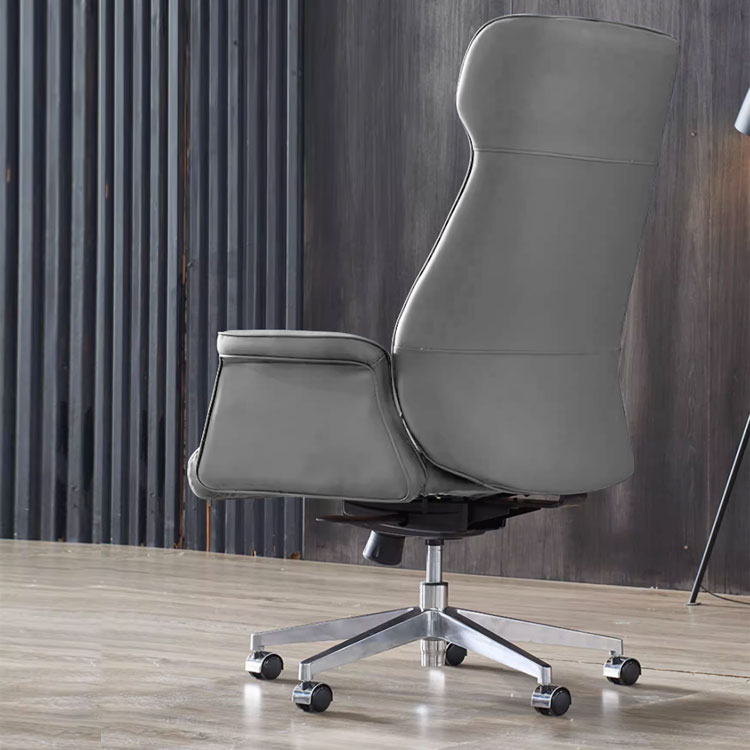
Establish a strict technical baseline for health and productivity. The chair must function as a professional orthotic tool, not just a design prop. Aesthetics should never compromise spinal support. Modern office seating requires specific mechanical capabilities to support the human body during extended periods of focused work.
Height- and depth-adjustable lumbar systems are necessary to prevent lower back strain during long workdays. Premium seating integrates these systems internally to maintain a sleek, clean gray exterior without exposing bulky, unattractive plastic mechanisms. Buying a chair with superior built-in adjustability is critical. External lumbar pillows ruin the clean aesthetic of a designer executive space and often provide inferior, non-dynamic support. The lumbar mechanism must track with the user's movements, providing continuous support whether they are leaning forward to type or reclining to read.
A synchro-tilt mechanism is a strict requirement. This feature allows the backrest to recline at a higher ratio than the seat pan, keeping feet flat on the floor and promoting active sitting. Evaluate weight-sensitive, self-adjusting tension controls against manual user tension controls, especially in shared executive spaces. Weight-sensitive mechanisms automatically adjust the recline resistance based on the user's body weight, eliminating the need for manual tweaking.
Additionally, 4D armrests (adjustable in height, width, depth, and angle) and seat depth sliders are essential to accommodate different physical statures and ensure proper ergonomic alignment for every user. A chair without a seat depth slider will cut off circulation for taller users and force shorter users to perch on the front edge, negating the benefits of the backrest.
The combination of the gray upholstery with the chair's structural components dictates its final design tier. Frame pairings significantly influence the perceived value of the seating. Specifying a custom office chair finish allows you to tie the seating directly into the architectural hardware of the room.
Different frame materials create distinct aesthetic profiles. You must match the frame finish to the existing design language of the executive suite.
| Frame Finish | Aesthetic Profile | Best Architectural Pairing |
|---|---|---|
| Polished Aluminum | Classic, High-Contrast | Walnut desks, glass partitions, traditional executive suites |
| Matte Black | Industrial, Contemporary | Concrete floors, exposed ductwork, modern tech offices |
| Mineral / White | Scandinavian, Minimalist | Light oak floors, white desking, high natural light environments |
Polished aluminum creates a high-contrast, classic executive look when paired with mid-gray tones. Matte black offers a contemporary, industrial contrast, grounding lighter gray fabrics. White or mineral frames produce a monochromatic, ultra-modern Scandinavian aesthetic. These lighter frames are highly susceptible to scuff marks from shoes, requiring more frequent cleaning by the facilities team.
Specify soft polyurethane casters for hard surfaces like hardwood or polished concrete. Use hard nylon casters for low-pile executive carpets. Proper caster selection ensures smooth mobility and prevents costly floor damage. Installing hard casters on a polished concrete floor will result in scratching and a loud, grinding noise during movement. Installing soft casters on thick carpet will make the chair incredibly difficult to roll, causing user frustration and potential ergonomic strain.
Categorize the gray office chair market into distinct investment tiers to guide corporate purchasing decisions effectively. Understanding what features are standard at each tier prevents overspending on unnecessary options or underspending and receiving a product that fails prematurely.
Expect standard ergonomics, basic gray mesh or fabric, limited custom frame options, and shorter warranties. These chairs suit light use but lack long-term durability. The foam in the seat pan will likely compress and lose its resilience after a few years of continuous use. The mechanisms are often basic center-tilt rather than advanced synchro-tilt, providing inferior ergonomic support.
Expect comprehensive adjustability, wider selections of gray performance fabrics, BIFMA-certified builds, and standardized 10-year warranties. This tier offers a solid balance of comfort and value. You will find better quality elastomeric mesh that retains its tension and higher-density molded foam that provides consistent support over a decade of use. The frame options expand to include various powder-coated finishes.
Expect fully integrated, hidden ergonomic mechanisms, premium custom finishes, engineered elastomeric mesh, and comprehensive 12-year, 24/7-use warranties. These chairs represent the pinnacle of seating engineering. The mechanisms are often weight-sensitive and require zero manual adjustment. The materials are rigorously tested for off-gassing and environmental sustainability. The aesthetic integration is flawless, with no exposed screws or bulky plastic housings.
Avoid the common pitfalls of buying seating based solely on 3D interior design renders or brief showroom visits. Rigorous evaluation is necessary to mitigate implementation risks. A chair that looks perfect in a rendering may cause severe back pain after a week of actual use.
Look beyond aesthetics and verify BIFMA compliance. Evaluate warranty lengths specifically for the pneumatic cylinder, tilt mechanism, and fabric degradation. Aim for a minimum 10-12 year warranty for commercial investments. A warranty that only covers the frame for 10 years but limits the fabric and mechanisms to 3 years is a red flag. The moving parts and the upholstery are the components most likely to fail.
A five-minute sit-test fails to reveal long-term spinal discomfort. Institute a 30-day pilot program for executive staff before committing to a fleet-wide purchase to ensure the chairs meet real-world ergonomic needs. Gather structured feedback on lumbar support, seat pan comfort, and armrest adjustability. This data-driven approach prevents costly specification errors and ensures high user adoption rates.
Order physical fabric swatches to test under the actual lighting conditions of the executive office. Gray upholstery can easily pull unwanted blue, green, or pink undertones depending on the lighting environment. A gray fabric that looks perfectly neutral under 4000K fluorescent lights in a showroom may look distinctly purple under 3000K LED lights in the actual office space. Always verify the color in situ.
A: Yes, light gray upholstery shows dirt, dust, and spills more readily than darker shades. It is highly susceptible to dye transfer from dark clothing, such as raw denim. Specifying performance coatings or choosing a darker charcoal shade mitigates these maintenance issues.
A: Check the manufacturer's cleaning code on the tag. "W" means water-based cleaners only, "S" requires solvent-based cleaners, and "W/S" allows both. Always spot-test the cleaner in an inconspicuous area first to ensure it does not cause discoloration.
A: Matte black provides an industrial contrast suitable for modern spaces. Mineral or white frames suit minimalist Scandinavian designs. Polished aluminum offers a traditional, high-end executive look that pairs well with wood veneers and glass.
A: High-quality, commercial-grade elastomeric mesh is highly durable and resists sagging over time. Cheaper mesh loses tension, leading to poor ergonomic support. Premium performance fabric or top-grain leather generally offers superior long-term abrasion resistance compared to entry-level mesh.
A: Yes, most commercial office chairs use standard 11mm stem casters that pull out easily. You can swap hard nylon casters for soft polyurethane casters if you move the chair from a carpeted office to a space with hard flooring.
A: Yes, lighting significantly alters color perception. Warm lighting (3000K) can make gray look brown or muddy, while cool lighting (4000K+) can pull out blue or purple undertones. Always test physical swatches in the actual space.


