
Views: 0 Author: Site Editor Publish Time: 2026-07-09 Origin: Site


Executive seating carries a dual demand in any professional environment. It must project undeniable authority and sophistication while supporting rigorous, long-hour ergonomic requirements in modern office seating. A poorly chosen chair compromises both physical health and visual impact. Many buyers prioritize aesthetic appeal over structural integrity. This oversight leads to investments in chairs that suffer from premature upholstery peeling, poor temperature regulation, or inadequate lumbar support.
To avoid these mistakes, you need an objective framework for evaluating a premium black leather office chair. We will break down the technical aspects of leather grading, ergonomic mechanisms, interior design integration, and workspace-specific deployment. By understanding these core components, you can select seating that delivers lasting comfort and professional prestige.
Success in executive seating relies on strict baseline criteria. A chair must withstand daily usage of eight or more hours without structural degradation. Weight capacity is another critical metric. Premium models support 300 pounds or more through reinforced Class 4 pneumatic cylinders and cast metal bases. Warranty length serves as a direct indicator of manufacturer confidence. You should look for structural guarantees extending beyond five years for the frame and mechanisms.
To evaluate a chair properly, follow these specific assessment steps:
Historically, buyers faced a compromise between plush, oversized executive designs and health-focused ergonomic engineering. Traditional models offered visual weight but lacked dynamic support. Modern engineering bridges this gap. Today, you can secure a chair that commands attention while featuring synchronous tilt mechanisms and adjustable lumbar nodes hidden beneath tailored upholstery. The integration of these mechanisms requires precise manufacturing tolerances to ensure the chair remains silent and stable during movement.
Executive seating also serves as a visual anchor within a branded workplace design. The strategic deployment of leather in private offices contrasts purposefully with task-specific mesh seating in open areas. This contrast establishes a cohesive visual hierarchy. It signals leadership zones while maintaining functional appropriateness throughout the floor plan. The physical scale of the chair must align with the architectural volume of the office to prevent the furniture from looking disproportionate.
Requirements shift slightly between corporate headquarters and high-end home offices. High-traffic corporate environments demand extreme durability and strict compliance with commercial standard ratings like ANSI/BIFMA. In contrast, executive home offices allow for more personalized design accents. Here, custom details, specific upholstery textures, and unique base finishes take priority over standardized fleet deployment. The home office environment often features softer flooring and different lighting conditions, which influences caster selection and leather finish preferences.
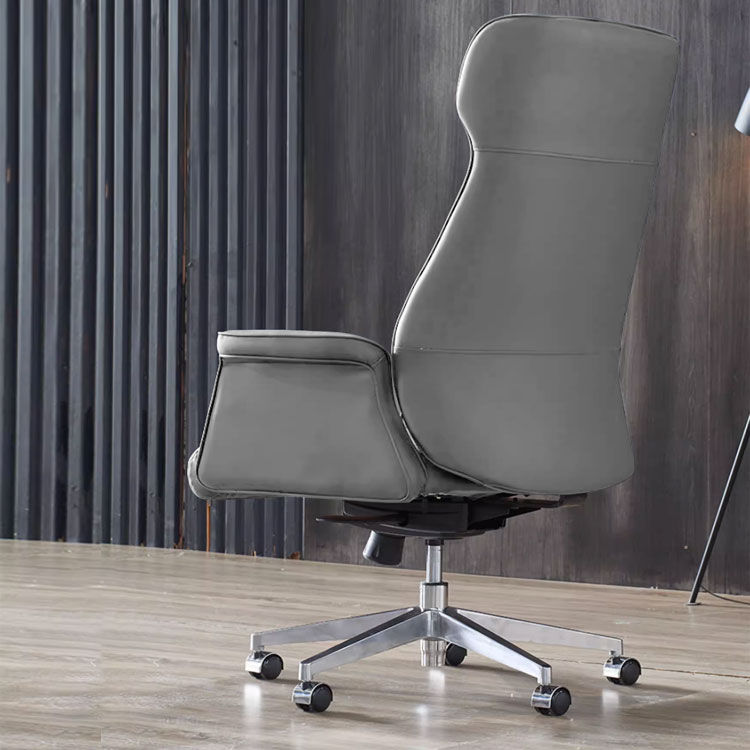
The structural integrity of your chair depends entirely on the hide's grade. Full-grain leather remains unaltered by sanding or buffing. It retains the complete natural grain, offering maximum durability and tear resistance. Over time, full-grain leather develops a rich patina that enhances its appearance and softens its texture without losing strength. Top-grain leather undergoes a sanding process to remove surface imperfections. This creates a uniform appearance while maintaining high durability. Both grades represent the only acceptable standards for high-traffic modern office seating.
| Leather Grade | Processing Method | Durability Level | Aging Characteristics |
|---|---|---|---|
| Full-Grain | Unaltered surface, natural grain intact | Maximum (15+ years) | Develops a rich, natural patina |
| Top-Grain | Sanded to remove imperfections, pigmented | High (10-15 years) | Maintains uniform color, resists stains |
| Bonded | Scraps mixed with polyurethane binders | Low (1-3 years) | Prone to peeling and delamination |
Bonded leather consists of leftover leather scraps pulverized and mixed with polyurethane binders. It is essentially a synthetic product with a thin leather veneer. Faux alternatives like PU and PVC rely entirely on plastic compounds. These materials carry severe implementation risks. Delamination and peeling occur rapidly under daily friction, leaving unsightly patches on the seat pan and armrests. Furthermore, synthetic materials often suffer from off-gassing, releasing volatile organic compounds that compromise indoor air quality in enclosed private offices.
High-end manufacturing techniques elevate a chair from basic to bespoke. Double-needle stitching reinforces structural seams, preventing blowout under pressure when the user reclines. Contrast piping adds visual definition to the chair's edges. Pairing black leather with charcoal or deep brown cording highlights the chair's silhouette against lighter office backgrounds. Tufting techniques, whether traditional button or modern blind tufting, prevent the leather from stretching excessively over the foam core, maintaining a taut, professional appearance over years of use.
Thermal properties vary drastically between genuine hide and synthetics. Natural leather features microscopic pores that allow air circulation. It adapts quickly to body temperature, remaining comfortable during extended sitting sessions. Synthetics act as vapor barriers. They trap heat and moisture, leading to severe discomfort in poorly ventilated spaces. When evaluating climate control, natural hide consistently outperforms polyurethane alternatives, especially in offices with large windows that experience significant solar heat gain during the afternoon.
Selecting the correct frame size prevents musculoskeletal strain. High-back executive chairs provide complete thoracic and cervical support, ideal for users over six feet tall or those requiring dedicated headrests. Mid-back chairs optimize active, collaborative movement. They suit standard desk proportions and facilitate easier rotation and reaching across large L-shaped desks. Match the backrest height to the user's torso length for optimal support. A mismatched backrest places the lumbar curve in the wrong position, causing lower back pain rather than preventing it.
Static, over-stuffed backrests force the spine into unnatural positions. A true ergonomic chair requires dynamic lumbar support. The system must offer both height and depth adjustability. This ensures the lumbar node aligns precisely with the spine's natural S-curve. Modern tension-based lumbar systems flex with the user's movements, maintaining constant contact and support during recline. Some advanced models utilize hidden cable-driven mechanisms to adjust the lumbar tension without compromising the sleek leather exterior.
A synchronous tilt mechanism is non-negotiable for long-term comfort. This system reclines the backrest and seat pan at a 2:1 ratio. It keeps the user's feet flat on the floor while opening the hip angle, promoting better circulation. Armrest configurations also dictate comfort. Minimalist, polished aluminum loop arms with integrated leather padding suit classic executive settings. However, highly adjustable 4D armrests prove essential for intense keyboard and mouse use. These armrests adjust in height, width, depth, and pivot angle, preventing shoulder fatigue and carpal tunnel strain.
A seat slider accommodates different femur lengths. Proper depth leaves two to three fingers of space between the seat edge and the back of the knees, known as popliteal clearance. This ensures proper blood flow to the lower extremities and prevents nerve compression. Interior materials matter just as much. High-density, cold-cured foam prevents the "bottoming out" effect. It retains its shape and resilience far longer than standard cut foam, ensuring the seat pan remains supportive even after thousands of hours of compression.
Black remains the standard for executive environments due to its timelessness and visual weight. It projects professional authority and offers superior stain resistance against coffee spills or ink marks. When evaluating office chair upholstery color, black anchors a room effortlessly. Alternatives like deep espresso, chocolate brown, and cognac introduce warmth to a space. However, black interacts most predictably with different lighting temperatures. It maintains its sharp, defined appearance under both natural daylight and 3000K–4000K office LED fixtures, whereas browns can look muddy under cool lighting.
The frame, base, and caster materials must match your interior aesthetic. A custom office chair finish ties the room together. Polished aluminum offers a classic, high-contrast look that pairs well with glass and chrome desks. Brushed steel provides a contemporary, subdued appearance suitable for transitional spaces. Matte black nylon or metal creates a monochromatic, ultra-modern vibe that fits perfectly in industrial-style offices. Caster selection depends entirely on your flooring material to prevent damage and ensure smooth rolling.
| Caster Type | Material Composition | Ideal Flooring Surface |
|---|---|---|
| Hard Casters | Solid Nylon or Hard Plastic | Commercial Carpet, Rugs |
| Soft Casters | Polyurethane-Coated | Hardwood, Polished Concrete, Tile |
| Glides | Felt or Rubber Base (No Wheels) | Stationary Conference Tables |
Pairing your chair with executive desk materials requires careful scaling. A massive black leather chair overwhelms a delicate glass desk, making the workspace look unbalanced. Pair heavy leather seating with substantial materials like thick walnut veneers, raw steel frames, or concrete slab desks. Ensure the chair's silhouette scales appropriately with the room layout and ceiling height. A high-back chair demands a spacious office with high ceilings to avoid making the room feel cramped. Additionally, measure the armrest height to ensure the chair can tuck neatly under the desk when not in use, maintaining clear walkways.
Environmental factors degrade leather rapidly if unmanaged. Direct UV exposure dries out natural hides, leading to fading and structural cracking. Proximity to HVAC vents accelerates this desiccation by blowing dry, conditioned air directly onto the upholstery. Low-humidity environments pose similar risks during winter months. Mitigate these issues through strategic office placement. Keep chairs away from direct sunlight and install window UV-filtering treatments to protect the upholstery. Maintain indoor humidity levels between 40% and 60% to keep the leather supple.
Implement a realistic maintenance schedule to preserve the leather. Perform weekly dusting with a dry microfiber cloth to remove abrasive particles. Remediate spills immediately with a dry, absorbent towel, blotting rather than rubbing the liquid. Apply a high-quality, pH-neutral leather conditioner bi-annually to restore natural oils. Strictly avoid harsh chemical compounds. Alcohol, bleach, and silicone-based sprays strip the leather's protective finish, alter the color, and cause irreversible damage to the hide's cellular structure.
Understanding office furniture warranties prevents future headaches. Manufacturers often split coverage into different categories. The structural frame, cast base, and pneumatic cylinder usually carry 5 to 12 years of coverage. However, the leather upholstery itself is often limited to 1 to 3 years due to the variables of user care and environmental exposure. Read the fine print to understand what constitutes normal wear and tear versus a manufacturing defect. Look for warranties that cover the foam core against severe compression and loss of shape.
A premium black leather office chair functions as a health tool first and a status symbol second. Prioritizing genuine leather and advanced ergonomics yields the highest long-term return on your furniture investment. To finalize your selection and ensure a successful deployment, follow these immediate next steps:
A: A chair upholstered in top-grain or full-grain leather typically lasts 10 to 15 years with proper conditioning. The natural hide resists tearing and punctures. In contrast, bonded leather or PU synthetic alternatives usually begin peeling and degrading within 1 to 3 years of daily use.
A: Leather offers superior durability, spill-resistance, and a premium aesthetic. Commercial-grade mesh or fabric provides better breathability and lower upfront costs. Choose based on your role, the office climate control, and whether you prioritize longevity or maximum airflow.
A: For minor surface abrasions, clean the area first with a damp cloth. Apply a specialized leather filler if the scratch is deep. Once dry, use a color-matched black leather dye to blend the repair. Finish by applying a high-quality leather conditioner to restore the finish.
A: Cast aluminum or reinforced steel bases provide the maximum weight capacity and structural longevity. They significantly outperform standard nylon bases, especially for heavy-duty applications requiring support for 300 pounds or more, preventing base cracking over time.
A: Yes, prolonged exposure to UV rays breaks down natural dyes, causing black leather to fade and dry out. Limit direct sunlight exposure by adjusting blinds and apply UV-protectant leather conditioners bi-annually to maintain the deep color and suppleness.
A: Traditional executive chairs focus on large proportions, plush padding, and aesthetic status. Ergonomic chairs prioritize adjustable components, posture alignment, and movement. Modern premium chairs successfully combine both, offering executive aesthetics with hidden ergonomic mechanisms.


