
Views: 0 Author: Site Editor Publish Time: 2026-07-20 Origin: Site


Procuring commercial seating often forces a difficult compromise between maintaining a professional aesthetic and adhering to strict procurement limits. Facility managers and procurement teams frequently face the challenge of balancing visual appeal with commercial-grade durability. Utilizing cheap, residential-grade furniture in high-traffic corporate environments leads to rapid degradation, frequent replacement cycles, and ultimately, a higher financial burden over the furniture's lifespan. Establishing a technical evaluation framework is essential to identifying a good office sofa that meets commercial durability standards without exceeding the project furniture budget. You need actionable strategies for evaluating materials, optimizing configurations, and navigating vendor selections to ensure your commercial seating investments deliver long-term value and sustained ergonomic support.
Assessing the expected daily user volume is the first step in determining the necessary structural integrity and fabric wear resistance of any commercial seating. A reception area in a high-traffic corporate headquarters experiences vastly different wear patterns compared to a private executive suite. Procurement teams must evaluate the frequency of use, the average duration of seating sessions, and the diversity of users. High-traffic zones demand reinforced frames and heavy-duty upholstery that can withstand constant friction, spills, and weight fluctuations without compromising structural stability or visual appeal. We look at daily foot traffic data to baseline these requirements.
Commercial seating requires higher foam density and firmer support than typical residential lounge furniture. While residential sofas prioritize deep, plush sinking for relaxation, commercial environments necessitate structured seating that accommodates diverse users, promotes good posture, and facilitates easy ingress and egress. Firmer cushions prevent the awkward struggle of rising from a deeply sunken seat. This matters in professional settings where clients or employees wear formal attire. Ergonomic support in commercial sofas ensures that users remain comfortable yet alert during waiting periods or collaborative meetings.
Modern workplace design increasingly favors "resimercial" aesthetics. This blends residential warmth with commercial durability. Sourcing designs that evoke a welcoming, domestic feel without sacrificing professional aesthetic standards or industrial-grade durability is essential for contemporary offices. You achieve this balance through the careful selection of textured fabrics, warm color palettes, and inviting silhouettes that still feature heavy-duty internal frameworks and high-performance textiles. The goal is to create environments that reduce workplace stress and foster collaboration while maintaining a polished, corporate image.
Matching the sofa's footprint and design language to specific operational zones is vital for cohesive interior architecture. A formal reception area requires seating that communicates stability, professionalism, and brand identity. You often utilize sleek lines and premium materials like top-grain leather or high-performance vinyl here. Conversely, a casual breakout zone benefits from modular, colorful, and adaptable seating that encourages spontaneous interaction. Procurement teams must ensure that the selected seating solutions align with the spatial constraints and the overarching brand narrative of the facility.
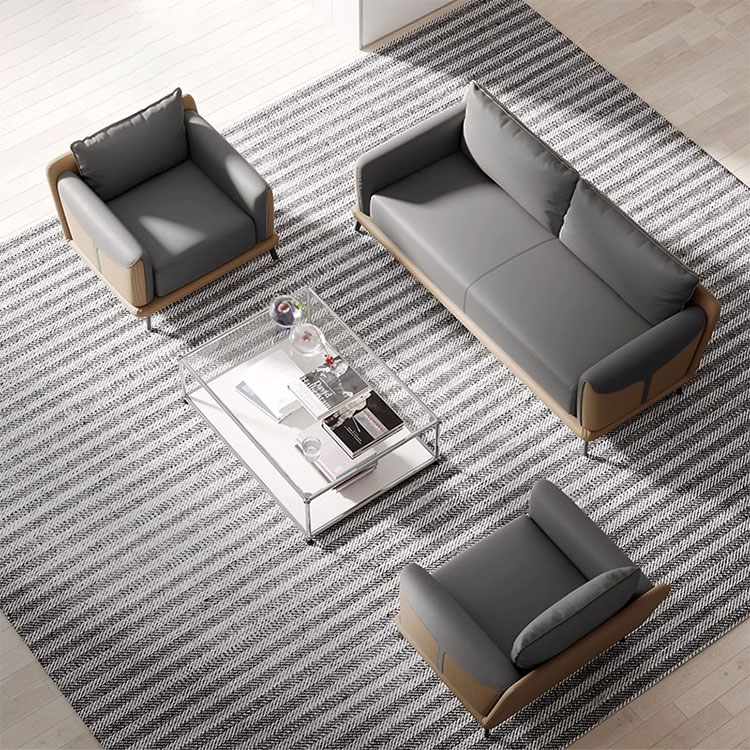
Client-facing environments demand seating that delivers high visual impact alongside exceptional durability. Reception areas serve as the first physical touchpoint for visitors. The condition and style of the seating directly reflect the brand. Prioritizing firm seating and stain-resistant materials is necessary. Upholstery must be easily cleanable to handle accidental spills and daily dust accumulation. Structured, linear designs often work best in these zones. They provide clear seating boundaries that respect personal space while accommodating multiple guests simultaneously.
Modern offices require dedicated spaces for informal meetings, brainstorming sessions, and employee decompression. Sourcing modular sectionals allows facility managers to reconfigure seating arrangements as team dynamics evolve. Posture-supporting alternative seating provides quiet zones for focused work or relaxation. Integrating power and data ports directly into the seating framework is increasingly necessary in these zones. This enables employees to charge devices and work seamlessly away from their primary desks.
Seating within private offices must maximize floor space while maintaining an executive aesthetic. Sourcing compact, premium-finish 2-seater or loveseat options provides comfortable seating for one-on-one meetings without overwhelming the room's footprint. These pieces often feature higher-end finishes, such as polished metal bases or premium leather upholstery. They reflect the status of the space while offering a comfortable alternative to standard guest chairs.
Navigating tight physical footprints requires matching specific seater configurations to wall length and traffic clearance constraints. Selecting compact 2-seaters is often necessary to stay within strict 8-to-9-foot architectural boundaries. Facility planners must account for ADA compliance, ensuring adequate clearance for wheelchairs and pedestrian flow. Mixing single-seaters, 2-seaters, and 3-seaters allows for flexible space planning. This ensures that every square foot is utilized efficiently without creating cramped or obstructed pathways.
The internal framework dictates the lifespan of commercial seating. Comparing the longevity of kiln-dried hardwood and heavy-gauge steel frames against budget-tier engineered wood reveals significant differences in durability. Kiln-dried hardwood resists warping and cracking, providing a stable foundation for high-traffic use. Heavy-gauge steel offers unparalleled strength and is often utilized in modular or high-capacity seating. Budget-tier engineered woods frequently fail under the stress of continuous commercial use, leading to premature replacement.
| Frame Material | Durability Rating | Weight Capacity | Best Application |
|---|---|---|---|
| Kiln-Dried Hardwood | High | Excellent | Executive suites, formal reception |
| Heavy-Gauge Steel | Maximum | Superior | High-traffic lobbies, modular seating |
| Engineered Wood (Plywood) | Moderate | Standard | Low-traffic breakout rooms |
| Particleboard | Low | Poor | Not recommended for commercial use |
Evaluating materials based on Wyzenbeek or Martindale rub counts is a standard industry practice for determining fabric durability. Commercial environments typically require fabrics rated for at least 50,000 to 100,000 double rubs. Comparing commercial vinyl, performance woven fabrics, and top-grain leather involves assessing cleanability, breathability, and wear resistance. Vinyl offers excellent moisture resistance and ease of cleaning. Performance wovens provide a softer, residential feel with advanced stain-repellent treatments. Leather offers exceptional longevity and a premium aesthetic.
Selecting upholstery color schemes and textures that harmonize with existing capital assets is essential for budget management. Coordinating seating with existing carpet tiles, wall finishes, and millwork avoids the need for costly full-room remodeling. Procurement teams should request physical fabric swatches to evaluate color accuracy under the specific lighting conditions of the installation site. Neutral base colors paired with vibrant accent pillows or textured weaves often provide the most versatile and timeless aesthetic integration.
Specifying high-resiliency (HR) foam prevents the sinking effect and maintains the structural appearance of the seating over years of continuous use. Commercial-grade HR foam typically has a density rating of 2.5 lbs per cubic foot or higher. This density ensures that the cushions return to their original shape immediately after use. It prevents the development of unsightly indentations and maintains the ergonomic support necessary for professional environments.
Ensuring compliance with regional fire codes and commercial durability standards is a mandatory step in the procurement process. Seating must meet specific flammability standards, such as CAL 117, to ensure occupant safety. Certifications from organizations like ANSI/BIFMA verify that the furniture has undergone rigorous testing for weight capacity, stability, and durability. Specifying certified furniture mitigates liability risks and guarantees a baseline level of commercial performance.
Specifying a strategic mix of single-seaters and double-seaters alters the overall financial requirements compared to ordering custom multi-seat sectionals. Single-seaters offer maximum flexibility and are easier to relocate or replace individually if damaged. Multi-seat configurations often provide a lower cost per seat. Analyzing the specific spatial requirements and usage patterns allows procurement teams to optimize the configuration mix, balancing flexibility with cost efficiency.
Understanding the difference between retail and wholesale sourcing is necessary for budget optimization. Bulk purchasing, trade programs, and direct-factory sourcing significantly alter the baseline cost of commercial seating. Retail channels often include substantial markups to cover showroom overhead and marketing expenses. Engaging directly with commercial manufacturers or specialized commercial dealers provides access to tiered discount structures based on volume. This stretches the procurement budget.
Accurate financial modeling requires accounting for all implementation costs beyond the initial unit price. Freight shipping for large, bulky items can consume a significant portion of the budget. White-glove installation, which includes unboxing, assembly, and placement, is often necessary for commercial projects but comes at a premium. Space planning fees and the cost of disposing of old assets must be factored into the comprehensive budget to prevent unexpected overruns.
Procurement teams must balance the desire for custom brand colors and specific dimensions against the cost efficiency and speed of standardized, quick-ship models. Custom upholstery and tailored dimensions require longer lead times and higher manufacturing costs. Quick-ship programs offer a curated selection of pre-manufactured seating in standard finishes, significantly reducing both lead times and costs. For projects with strict deadlines or tight budgets, leveraging quick-ship inventory is often the most practical solution.
Evaluating potential vendors through case studies, client references, and their history with similar-scale corporate projects is essential for mitigating procurement risk. A reliable supplier should demonstrate a proven ability to manage complex logistics, adhere to strict delivery schedules, and provide consistent product quality. Requesting references from facilities with similar usage profiles allows procurement teams to verify the long-term performance of the supplier's seating solutions.
Differentiating between limited residential warranties and comprehensive multi-year commercial guarantees is a critical evaluation metric. Commercial warranties should explicitly cover frames, foam, and fabric under heavy-use conditions. Understanding the specific terms of the warranty, including the process for filing claims and the availability of replacement parts, ensures that the investment is protected against premature failure and manufacturing defects.
Structuring a detailed Request for Quote (RFQ) ensures transparent line-item pricing, accurate lead times, and clear delivery terms. When requesting a reception seating quotation, procurement teams must specify exact quantities, required certifications, desired fabric rub counts, and installation requirements. Clear communication of project constraints and expectations enables suppliers to provide accurate, comprehensive proposals. This facilitates objective vendor comparisons and secures the best possible value.
A: A high-quality commercial-grade sofa typically lasts between 7 to 10 years under heavy daily use. Lifespan depends heavily on frame construction, foam density, and fabric durability. Regular maintenance and immediate attention to spills also significantly extend the usable life of the furniture.
A: Commercial seating costs are driven by industrial-grade materials required for durability and safety compliance. Heavy-gauge steel frames, high-density foam, fire-retardant treatments, and fabrics tested for over 50,000 double rubs increase manufacturing costs. These components ensure the furniture withstands constant public use.
A: For high-traffic commercial reception areas, fabrics should meet or exceed 50,000 double rubs on the Wyzenbeek scale. In extremely heavy-use environments, specifying fabrics with 100,000 double rubs or utilizing high-performance commercial vinyl is recommended to prevent premature wear.
A: Using residential furniture in a commercial setting is highly discouraged. Residential pieces lack the structural reinforcement, high-density foam, and durable fabrics required for constant public use. They frequently fail quickly in office environments, leading to rapid replacement costs.
A: An accurate quotation requires exact quantities, specific configuration types, desired fabric specifications, required commercial certifications, and detailed delivery requirements. You must specify whether white-glove installation, freight, or debris removal is necessary.
A: Foam density determines the cushion's ability to retain its shape and provide support over time. High-resiliency foam with a density of 2.5 lbs/cu.ft or higher prevents the cushions from compressing permanently. This ensures the seating remains comfortable and ergonomically supportive.
A: For tight waiting areas, compact 2-seaters are generally the most cost-effective and space-efficient solution. They provide multiple seating positions while consuming less floor space than two separate single-seaters. This configuration maximizes seating capacity within strict architectural boundaries.


