
Views: 0 Author: Site Editor Publish Time: 2026-07-18 Origin: Site


The reception area serves as the physical manifestation of a company’s brand. Client perception anchors firmly within the first few seconds of entering the space. Facility managers and business owners must constantly balance the demand for high-end, professional aesthetics with the harsh realities of high-traffic commercial environments. Spills, friction, continuous use, and strict budget constraints complicate seating choices.
While genuine leather offers undeniable prestige, modern synthetic alternatives have evolved significantly. This guide provides a technical and aesthetic framework for selecting a faux leather office sofa that delivers commercial-grade durability without compromising the executive experience. We will examine material specifications, structural integrity, and spatial planning to ensure your waiting room seating withstands daily commercial abuse while maintaining a pristine appearance.
Defining the success criteria for reception seating requires a hard look at visual impact, ease of sanitation, lifecycle longevity, and user comfort. Waiting rooms endure relentless daily use. Residential furniture simply cannot withstand the continuous cycle of clients sitting, shifting, and standing. You need seating engineered specifically for commercial environments. When evaluating materials, facility managers must look beyond the surface appearance and understand the chemical and mechanical properties of the upholstery.
Faux leather bridges the gap between the practical wipeability of hard plastic surfaces and the premium look of genuine hide. Genuine leather requires periodic conditioning to prevent cracking and absorbs spills if not treated promptly. Commercial fabrics, while offering diverse patterns, trap dust, absorb odors, and stain easily. High-quality synthetic leather provides a non-porous surface that resists immediate liquid penetration, making daily sanitation fast and effective. This non-porous nature is particularly critical in environments where hygiene is a primary concern, allowing maintenance staff to wipe down surfaces quickly between visitors.
Understanding commercial-grade upholstery means looking at the Wyzenbeek test. This mechanical test rubs cotton duck fabric against the test upholstery to simulate wear. A residential sofa might survive 15,000 double rubs. For a busy commercial waiting room, you must specify materials rated for at least 50,000 double rubs, with heavy-traffic healthcare facilities often requiring 100,000 or more. Anything less guarantees premature peeling and bald spots.
| Application Environment | Minimum Wyzenbeek Rating | Recommended Material Type | Expected Lifespan (Years) |
|---|---|---|---|
| Private Executive Office | 30,000 Double Rubs | High-Grade PU | 7 - 10 |
| Corporate Reception Lobby | 50,000 Double Rubs | Commercial PU or Silicone | 5 - 8 |
| High-Traffic Medical Clinic | 100,000+ Double Rubs | Heavy-Duty PVC or Silicone | 4 - 7 |
| Public Transit Lounge | 200,000+ Double Rubs | Reinforced PVC | 3 - 5 |
The data clearly shows that matching the material specification to the expected traffic volume prevents premature failure. Installing a low-rated fabric in a high-traffic zone leads to rapid degradation, forcing early replacement and disrupting facility operations. By establishing baseline metrics for waiting rooms, procurement teams can filter out inadequate options early in the sourcing process.
Modern reception areas thrive on sleek, clean lines and low profiles. Exposed chrome or matte black steel frames provide structural rigidity while maintaining a visually light footprint. Strategic use of neutral colorways anchors the room. Placing a crisp white or black leather office sofa in a contemporary creative agency or tech startup lobby communicates efficiency and forward-thinking design. The minimalist approach eliminates bulky cushions, favoring tight-seat construction that always looks tidy.
When executing this look, lighting and surrounding architecture play a massive role. Minimalist seating pairs best with polished concrete floors, glass partition walls, and linear LED suspension lighting. The tight upholstery prevents the fabric from puddling or wrinkling after someone stands up, ensuring the lobby maintains a sharp, architectural appearance throughout the workday without requiring staff to constantly fluff cushions.
Certain industries require an atmosphere of established trust and stability. Law firms, legacy financial institutions, and corporate headquarters benefit from traditional executive office furniture styles. Think Chesterfield designs, rolled arms, and deep button tufting. Rich, warm tones like espresso, burgundy, and chestnut emulate high-end luxury office seating. These substantial pieces visually anchor a large lobby and reassure clients of the firm's permanence and success.
Traditional styling often incorporates brass nailhead trim and dark mahogany or cherry wood bases. These details require careful manufacturing to ensure they withstand commercial use. The tufting must be secured deeply into the foam core, and the buttons must be anchored with heavy-duty twine to prevent them from popping off when subjected to shifting weight. When specified correctly, these robust designs offer exceptional longevity.
The resimercial design trend blends residential warmth with commercial-grade durability. This transitional look utilizes mid-century modern silhouettes, tapered wood legs, and softer, textured faux leathers in colors like cognac, olive, or slate gray. Co-working spaces, marketing agencies, and modern medical practices use this aesthetic to reduce client anxiety. The goal is to make the waiting experience feel less like a clinical holding area and more like a welcoming lounge.
Transitional spaces often mix seating types to accommodate different user preferences. You might pair a central sofa with high-back acoustic chairs for privacy and low ottomans for quick, informal touchpoints. The faux leather used in these environments often features a subtle grain pattern that mimics natural hide, providing a tactile warmth that stark, smooth vinyl lacks.
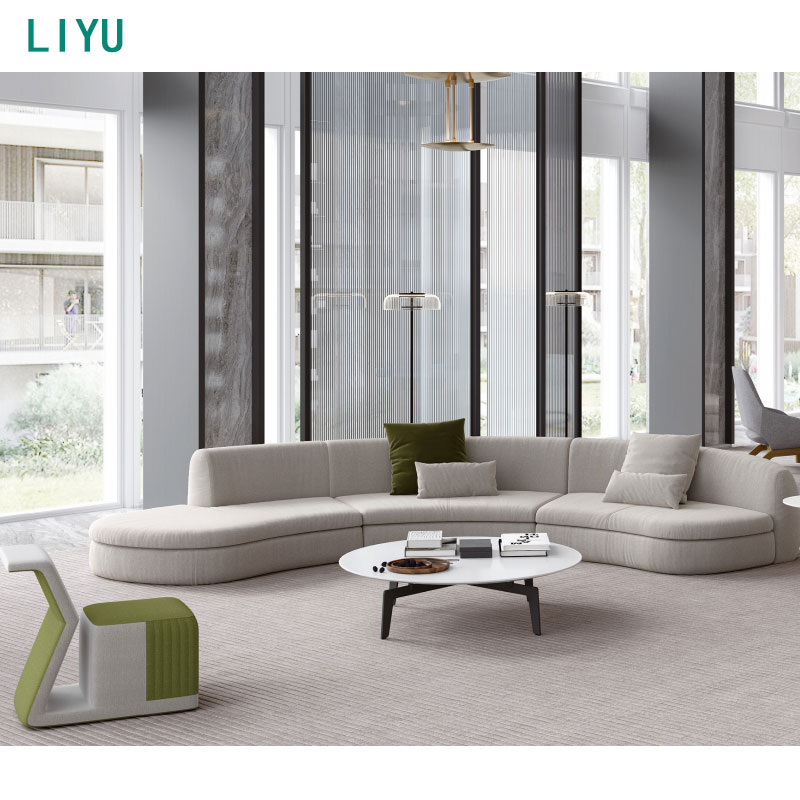
Determining the ideal sofa length depends entirely on your reception square footage. Standard 80-inch sofas work well in expansive lobbies, but compact 60-inch loveseats prevent overcrowding in narrow entryways. You must maintain safe and accessible walkways around all seating zones. ADA compliance and basic traffic flow dictate a minimum of 36 to 48 inches of clearance between furniture pieces and main circulation paths.
Proper spatial planning prevents bottlenecks during peak visitor hours. Facility managers should map out the floor plan using physical tape before ordering furniture. This practical step reveals how the seating will interact with reception desk sightlines, entrance doors, and hallway transitions. Consider the following layout strategies for commercial lobbies:
Sourcing furniture piecemeal often results in mismatched seat heights and clashing textures. Utilizing matching 3-to-5-piece commercial furniture collections ensures a cohesive layout. A coordinated set featuring a main sofa, matching club chairs, and low-profile benches provides flexible seating arrangements. Faux leather benches serve as excellent versatile dividers in open-concept spaces because they offer seating without blocking critical sightlines to the reception desk.
Polyurethane (PU) feels softer, more tactile, and highly breathable. It closely mimics the hand-feel of genuine hide. PU works best in climate-controlled environments where comfort is the primary goal. However, it is more susceptible to damage from harsh chemicals. Polyvinyl Chloride (PVC) is highly durable, completely non-porous, and resistant to harsh medical-grade disinfectants. It handles heavy wear effortlessly but lacks the soft drape of PU. Silicone-based synthetics represent the premium standard for durable sofa upholstery. Silicone resists ink, bleach, and hydrolysis, making it an exceptional, albeit more expensive, eco-friendly option.
When selecting the material, consider the specific maintenance protocols of your building. If your janitorial staff uses bleach-based solutions or heavy quaternary ammonium compounds, PU will degrade, crack, and peel within months. In those scenarios, PVC or silicone is mandatory. Conversely, in a high-end law firm where daily cleaning involves simple dusting and mild soap, PU provides a superior, luxurious tactile experience.
The frame dictates the lifespan of the sofa. Kiln-dried hardwood frames resist warping and cracking, while engineered steel frames offer unmatched rigidity for high-traffic zones. Inspect the reinforcement details. Commercial frames require corner-blocking, metal-to-metal connections, and heavy-duty sinuous spring systems. Always verify the weight capacity requirements. Commercial liability demands seating that can safely support a diverse range of users over a long period.
Avoid any seating constructed with particleboard or stapled joints. These residential construction methods fail rapidly under commercial loads. Look for frames assembled with dowels, heavy-duty screws, and industrial adhesives. The suspension system is equally critical. Eight-way hand-tied springs offer premium comfort but are rare in commercial faux leather pieces. Instead, look for heavy-gauge sinuous wire springs spaced closely together and tied laterally to prevent shifting.
Designing for the waiting experience means prioritizing support over plushness. Clients must be able to sit comfortably and stand up effortlessly. Sinking deep into a soft cushion core makes rising difficult, especially for elderly visitors. Specify high-resiliency foam with a minimum 1.8 to 2.5 lbs/cu. ft. rating. This density ensures the seat retains its shape and provides firm, ergonomic support throughout the workday.
The Indentation Load Deflection (ILD) rating also matters. For commercial reception seating, an ILD between 35 and 45 provides the firm support necessary for a professional environment. Additionally, ensure the seat depth does not exceed 22 inches. Overly deep seats force users to slouch or sit without back support, which is uncomfortable for short-term waiting and looks unprofessional.
Developing a strict facility maintenance schedule preserves your upholstery investment. Identify exactly which chemical cleaners degrade synthetic leather. High-alcohol or bleach concentrations will quickly strip the topcoat off delicate PU, leading to cracking. Use mild soap and water for daily cleaning, and specify PVC or silicone if your facility requires harsh hospital-grade disinfectants. Train your janitorial staff on these specific requirements to prevent accidental chemical damage.
Mitigate wear and tear by addressing common physical failure points early. Watch for seam separation, cushion flattening, and UV degradation from large lobby windows. If you use modular seating, rotate the pieces periodically. This strategy ensures even wear patterns across the entire reception layout, preventing one specific chair or sofa section from looking prematurely aged. Direct sunlight will fade and weaken synthetic materials over time, so consider installing UV-blocking window films in bright lobbies.
Evaluate commercial furniture warranties carefully. Separate the frame warranty from the upholstery warranty, as they rarely cover the same duration. A manufacturer might offer a lifetime warranty on the steel frame but only one year on the faux leather cover. Look for red flags in vendor service level agreements. Understand the difference between inside delivery with assembly and a basic curbside drop-off, which leaves your facility team responsible for moving heavy sofas into the building and disposing of the massive shipping crates.
Faux leather provides a highly pragmatic, aesthetically versatile solution for reception areas. Buyers must prioritize commercial-grade specifications over residential look-alikes to ensure long-term performance. Choose high-rub-count, bleach-cleanable PVC or silicone-based synthetics for healthcare and high-traffic public lobbies. Opt for premium PU in traditional or transitional styles for high-end professional services seeking a luxury aesthetic.
Take the following next steps to execute your lobby upgrade:
A: A commercial-grade faux leather sofa typically lasts 5 to 7 years in a high-traffic environment. Lifespan depends heavily on the double-rub rating of the material, the density of the foam, and strict adherence to proper cleaning protocols.
A: PU is softer and breathable, ideal for comfort in climate-controlled offices. PVC is rigid, non-porous, and withstands harsh disinfectants, making it perfect for healthcare. Silicone is a premium, eco-friendly option highly resistant to stains, ink, and peeling.
A: Use a soft cloth with mild soap and warm water for daily cleaning. Avoid abrasive sponges, alcohol-based solvents, or bleach unless the specific material is explicitly rated for harsh chemical disinfectants.
A: For a public waiting room, specify upholstery with a minimum of 50,000 double rubs on the Wyzenbeek scale. High-traffic transit or healthcare lobbies should aim for 100,000 double rubs to prevent premature wear.
A: Black sofas hide scuffs and denim dye transfer exceptionally well, making them practical for maintenance. However, in very small or poorly lit spaces, white or light neutral sofas can make the room feel larger and more open.
A: Choose a single sofa for tight spaces or formal, traditional layouts. Opt for multi-piece modular collections if you need flexible arrangements, have a large open floor plan, or want to easily replace single damaged sections rather than the whole unit.


