
Views: 0 Author: Site Editor Publish Time: 2026-07-06 Origin: Site


The reception and lounge areas serve as the physical baseline for corporate brand perception, functioning simultaneously as client waiting zones and employee collaboration hubs. When visitors walk through your doors, the seating arrangement immediately communicates your company culture, professionalism, and attention to detail. Selecting the right furniture involves far more than picking an attractive design from a catalog.
The core business problem lies in selecting seating that balances high-end contemporary aesthetics with the rigorous demands of commercial environments. Facilities managers and designers must account for daily wear-and-tear, maintenance protocols, and spatial constraints without overspending on residential-grade furniture that will inevitably fail prematurely under heavy use. A structured framework for evaluating commercial-grade seating based on modularity, material science, and ergonomic support is essential for making a sound investment.
By understanding the critical differences between commercial and residential specifications, you can choose a contemporary office sofa that delivers both visual impact and long-term durability. This guide provides actionable insights to help you navigate configurations, materials, and supplier vetting for your reception and lounge areas.
Before evaluating specific designs, clearly differentiate between short-term waiting areas and long-term collaborative zones. Reception lobbies typically host guests for 10 to 20 minutes. These spaces require firmer seating that facilitates easy standing and projects a formal aesthetic. Internal lounges serve employees for extended periods. These collaborative hubs demand deeper seats, integrated power options, and layouts that encourage informal meetings or focused solo work. You must map the physical footprint of the room against the expected dwell time of the user.
When planning these zones, consider the flow of foot traffic. A reception area needs clear pathways from the entrance to the reception desk, and then to the seating area. If guests have to navigate a maze of low tables and oversized chairs, the space fails its primary function. Internal lounges benefit from a more relaxed layout, but still require clear egress routes and sufficient space between furniture pieces to prevent a cramped environment.
Establishing baseline requirements for daily usage is non-negotiable. A high-traffic corporate lobby experiences significantly more wear than a private executive suite. Evaluate weight capacities, frame construction, and the necessity for robust commercial warranties. Furniture in these environments must withstand constant use without showing signs of structural fatigue or fabric degradation within the first few years. You need to look at the underlying frame materials—kiln-dried hardwood or heavy-gauge steel—rather than just the exterior upholstery.
| Environment Type | Expected Daily Users | Minimum Fabric Double Rubs | Frame Requirement |
|---|---|---|---|
| Executive Suite | 1 - 10 | 30,000 | Hardwood / Plywood |
| Standard Reception | 10 - 50 | 50,000 | Kiln-Dried Hardwood |
| High-Traffic Lobby | 50 - 200+ | 100,000+ | Steel / Reinforced Hardwood |
| Employee Lounge | 30 - 100 | 75,000 | Reinforced Hardwood |
Balancing the desire for striking design with practical maintenance is a common challenge. While a pristine white fabric sofa might perfectly align with a minimalist brand identity, it presents a functional nightmare for daily cleaning protocols. Select materials that offer high stain resistance and align with your facility's maintenance capabilities, ensuring the furniture remains presentable over its lifespan. Darker colors, textured weaves, or high-performance vinyls often provide a better balance of aesthetics and practicality.
Consider the lighting in your space when selecting colors and textures. Natural sunlight will fade certain fabrics over time, while harsh fluorescent lighting can alter the perceived color of a material. Always request physical swatches and view them in the actual environment where the furniture will be installed. This step prevents costly mistakes and ensures the final product matches your design vision under real-world conditions.
Solving the small-office footprint dilemma requires careful consideration of scale and visual weight. Compact reception areas can quickly feel overcrowded with bulky, floor-to-ceiling upholstered pieces. To prevent this, utilize low-profile benches or sofas with elevated metal or wood legs. These design choices allow light to pass underneath, creating an illusion of more space while maintaining necessary seating capacity.
Another strategy for managing visual weight is to use armless designs or pieces with low backrests. These configurations keep sightlines open across the room, making the area feel larger and more inviting. When dealing with tight corners, consider built-in banquettes or custom-sized modular units that maximize seating without encroaching on the central floor space.
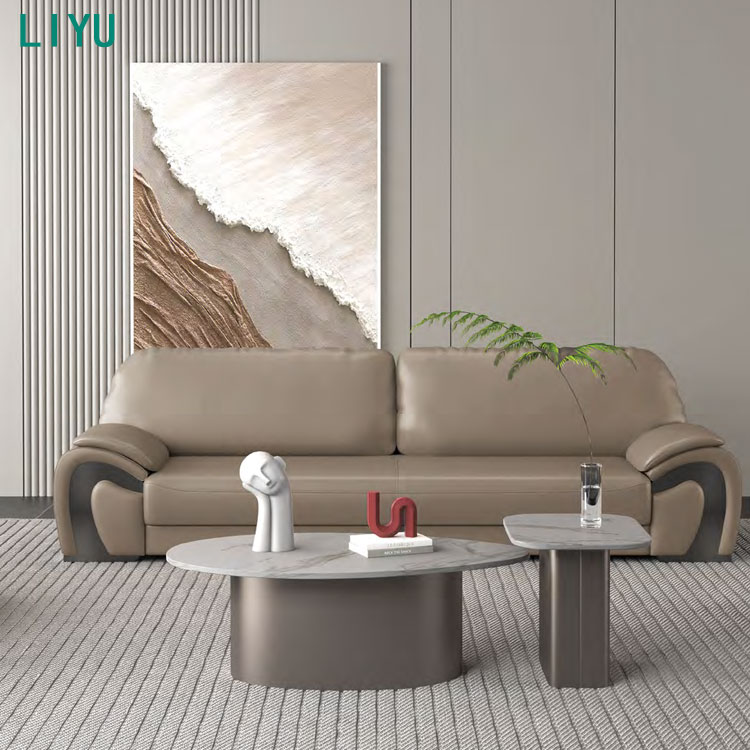
Reconfigurable sectional components, L-shaped modules, armless units, and matching ottomans define modular workplace seating. This category future-proofs your investment by allowing facilities teams to adapt layouts seamlessly. Whether you need to accommodate team expansions, utilize awkward corner spaces, or prepare for an office relocation, modular systems provide unmatched flexibility. The ability to replace a single damaged module rather than an entire sofa also offers significant long-term value.
Mid-century modern, tuxedo, and transitional Chesterfield designs feature clean lines, exposed frames, and uniform back-to-arm heights. These structured profiles project a formal, authoritative, yet modern aesthetic ideal for executive reception areas. Crucially, they prevent slouching, helping guests maintain a professional posture while waiting. The firm seating surfaces and upright backrests are specifically engineered for short-term comfort and easy egress.
When specifying structured profiles, pay close attention to the armrest height. Armrests that are too high can make the seating feel restrictive, while those that are too low fail to provide adequate support when standing up. A standard arm height of 24 to 26 inches from the floor generally accommodates the widest range of users comfortably.
Characterized by extended backrests and sound-absorbing upholstery panels, high-back sofas create micro-architectural zones within open-plan layouts. They facilitate deep work, private client discussions, or phone calls without the expense and permanence of drywall construction. These pieces act as functional partitions, improving acoustic comfort in busy environments by absorbing ambient noise and blocking visual distractions.
To maximize the effectiveness of acoustic seating, position these units away from high-traffic corridors and noisy equipment like printers or coffee machines. Grouping two high-back sofas facing each other creates an instant semi-private meeting room. Ensure the internal dimensions of these setups provide enough knee clearance for users sitting opposite one another.
Minimalist benches feature double-sided entry, clean geometric frames, and low visual barriers. They optimize high-traffic transitional zones and lobbies where guests require brief seating. By eliminating bulky backrests, these pieces prevent blocking sightlines or foot traffic paths, maintaining an open and airy feel in the space. They are particularly effective in narrow corridors or directly adjacent to large windows where you want to preserve the view.
Evaluating dimensions for accessibility and ease of ingress/egress is critical for an ergonomic office sofa. Seat height and depth must accommodate all age groups and physical mobilities, keeping ADA compliance in mind. High-resiliency (HR) foam and sinuous spring systems are non-negotiable for preventing sagging over a 5-to-10-year lifecycle, ensuring consistent support. A seat height of 17 to 19 inches and a depth of 20 to 22 inches generally provide the best balance of comfort and accessibility.
| Foam Density (lbs/cu ft) | Application | Expected Lifespan | Firmness Level |
|---|---|---|---|
| 1.5 - 1.8 | Residential / Light Use | 1 - 3 Years | Soft / Sinking |
| 2.0 - 2.5 | Standard Commercial | 3 - 5 Years | Medium Firm |
| 2.6 - 3.0+ | High-Traffic Commercial | 5 - 10+ Years | Firm / Supportive |
Analyzing the trade-offs between synthetic blends and natural fibers is essential for performance fabrics. Synthetics often offer superior durability and colorfastness. When comparing commercial-grade leather to high-performance faux leather (vinyl or polyurethane), assess cleanability, breathability, and infection-control protocols. These factors are especially crucial for healthcare facilities or high-traffic corporate lobbies requiring rigorous sanitization. Polyurethane offers a softer hand-feel than vinyl, while still providing excellent moisture barriers.
Always check the cleaning codes associated with your chosen upholstery. A fabric marked "W" can be cleaned with water-based solutions, while "S" requires solvent-based cleaners. For maximum operational efficiency, specify fabrics with a "W/S" code or those that are explicitly bleach-cleanable. This simplifies maintenance and reduces the risk of damaging the furniture during routine cleaning.
Modern lounge seating often features built-in AC outlets, USB-A/USB-C ports, and wireless charging pads. This integration transforms a passive waiting area into an active, functional workspace. Specifying powered furniture requires careful evaluation of wire management and floor-core power access to avoid tripping hazards and unsightly cable clutter. You must coordinate with your electrical contractor early in the design phase to ensure power is routed correctly to the furniture locations.
Consider the placement of power modules on the furniture itself. Outlets located on the front face of the seat base are easy to access but can be visually intrusive. Modules integrated into the armrests or between seat cushions offer a cleaner look but must be designed to prevent debris or spilled liquids from entering the electrical components.
A sofa rarely functions in isolation. Integration with supporting office lounge furniture—such as power-enabled credenzas, media displays for presentations, strategic floor lamps, and side tables—creates a fully integrated collaborative hub. This ecosystem allows employees to transition seamlessly from solo work to team meetings within the same environment. The relationship between the seating height and the adjacent table heights is critical for user comfort.
Weighing the exact brand color matching and specific dimensions of custom builds against standard inventory involves significant trade-offs. Custom solutions offer tailored aesthetics but come with extended lead times and higher upfront costs. Off-the-shelf standard inventory provides faster delivery and lower initial expenditure, though it may require slight compromises on exact design specifications. For fast-track projects, standard inventory is often the only viable option.
If you choose to go the custom route, build extra time into your project schedule for shop drawing approvals and prototype reviews. Custom furniture requires a higher level of project management to ensure the final product meets your exact specifications. Always request a physical strike-off of custom fabrics or finishes before authorizing full production.
Selecting hyper-trendy colors or unconventional shapes carries financial risk, as these designs can quickly appear dated. Specifying neutral, timeless base pieces ensures aesthetic longevity. You can introduce contemporary trends through easily replaceable accents like pillows, rugs, or side tables, protecting your primary furniture investment. A charcoal grey or navy blue sofa will look professional for a decade, whereas a neon green piece might need replacing in two years.
When evaluating shapes, stick to classic geometries. Clean lines and simple curves withstand the test of time better than overly complex or asymmetrical designs. Focus on the quality of the tailoring—straight seams, tight upholstery, and perfectly aligned patterns—as these details communicate high quality regardless of the specific style.
Calculate the hidden costs of specialized cleaning for delicate fabrics versus the operational efficiency of easily maintained surfaces. Bleach-cleanable or easily wiped materials significantly reduce long-term maintenance overhead. Prioritizing operational efficiency ensures the furniture remains in excellent condition without requiring expensive, specialized cleaning services. A fabric that requires professional extraction cleaning every three months will quickly drain your facilities budget.
Implement a proactive maintenance schedule to extend the life of your furniture. Vacuum upholstery weekly to remove abrasive dust and dirt particles. Rotate loose cushions regularly to ensure even wear. Address spills immediately using the manufacturer's recommended cleaning protocols to prevent permanent staining.
The critical importance of ANSI/BIFMA certification for structural integrity cannot be overstated. Compliance with CAL 117-2013 or TB 133 for fire safety is often legally mandated in commercial spaces. Verifying these certifications ensures the furniture meets stringent safety and durability standards required for public and corporate environments. Never accept verbal assurances; always request the official testing documentation from the manufacturer.
In addition to safety and durability, consider environmental certifications. Products certified by GREENGUARD or similar organizations emit fewer volatile organic compounds (VOCs), contributing to better indoor air quality. This is particularly important in modern, tightly sealed office buildings where poor air quality can impact employee health and productivity.
Mitigate project delays by clearly understanding the difference between quick-ship programs and standard manufacturing lead times. While quick-ship items might arrive in a few weeks, standard commercial orders often require 8-to-12-week lead times. Accurate scheduling prevents situations where an office opens without functional reception seating. Always factor in transit time and potential customs delays if the furniture is manufactured overseas.
Communicate your project deadlines clearly to the supplier upfront. Ask about their on-time delivery rates and how they handle supply chain disruptions. A reliable supplier will provide regular status updates and proactively address any potential delays before they impact your project schedule.
Evaluate the supplier's capability for white-glove delivery and on-site assembly. Commercial furniture is often heavy and complex to install. Assess the enforceability of multi-year commercial warranties. A reputable commercial sofa supplier will provide robust post-sale support and readily available replacement parts. Ensure the delivery team is insured and experienced in navigating commercial loading docks and freight elevators.
Review the warranty terms carefully. Understand what is covered (e.g., frame, foam, fabric) and for how long. Pay attention to any exclusions, such as damage caused by improper cleaning or unauthorized modifications. A strong warranty demonstrates the manufacturer's confidence in their product and provides you with peace of mind.
Selecting a contemporary office sofa is an exercise in risk mitigation and spatial planning, not just interior decoration. Base final selections on a matrix of spatial function, required durability, and flexibility. To move forward effectively:
A: Commercial sofas feature reinforced frame construction, high-density foam, and fabrics with high rub counts (50,000+ double rubs). They undergo rigorous BIFMA testing for durability and carry commercial warranties, whereas residential sofas are built for lighter, less frequent use.
A: A high-quality commercial sofa should last 5 to 10 years in a high-traffic area. This expected lifecycle depends heavily on material quality, robust frame engineering, and consistent maintenance protocols.
A: The best options include high-performance synthetic blends, commercial-grade vinyl, and polyurethane faux leathers. These materials offer superior durability, stain resistance, and ease of sanitization compared to natural fibers.
A: Yes, they offer strong long-term ROI. Reconfigurability allows you to adapt the layout as team sizes change or floor plans evolve, avoiding the cost of replacing static furniture entirely.
A: Ergonomic office sofas feature firmer seat cushions, upright back angles, and optimized seat heights. These design elements promote professional posture and make it significantly easier for guests to stand up.
A: Maintain adequate clearance space for traffic flow. Use visually light designs, such as exposed-leg mid-century pieces or compact L-shaped corner sofas, to maximize seating without overcrowding the footprint.
A: Ask about manufacturing lead times, ANSI/BIFMA certification, fire retardant standards (CAL 117), warranty exclusions, and the long-term availability of replacement parts.


