
Views: 0 Author: Site Editor Publish Time: 2026-11-06 Origin: Site


The short answer: an office sofa quote is a bundle, not a number. Fix the configuration first, put every quotation on the same trade term, and write down the lines nobody quoted, because an item missing from a quote is still a cost you will pay later.
If you are comparing office sofa prices for a project, the hard part is rarely the number itself. It is finding out what the number assumes. Two quotations can sit far apart and describe the same furniture, or sit close together and describe different furniture on different delivery terms. This guide takes a quote apart so you can see what is inside it: the cost drivers behind the price, the line between product cost and project cost, a method for comparing two quotations like-for-like, and a way to decide where a richer specification earns its place and where a simpler one is the smarter buy.
The phrase office sofa price actually hides two questions: what does this model cost, and what will the project cost once the sofas are standing on your floor? Public price lists rarely answer either one, because both answers depend on configuration, quantity and delivery scope. So this guide works on the structure of a quotation rather than on figures, and it ends where a real price starts: with an itemized request.
Six drivers sit behind almost every quotation. None of them is a secret; the difficulty is that a one-line price collapses all six into a single figure, and two collapsed figures cannot be compared against each other. Work down the tree before you compare numbers, and ask the question on each branch.
What moves the number on an office sofa quote
Model and form. A set, a corner unit and a modular run are different products with different frames and different labor hours. Confirm the form and the model code in writing.
Upholstery and material zones. Contact surfaces, outside backs and sides can carry different materials and grades, and the grade moves the number. Confirm which material sits on which panels.
Size and footprint. Overall width, depth and seat height change material consumption and shipping volume. Confirm the dimensions of the quoted configuration, not of a similar photo.
Set composition. A set can mean the sofa only, or a sofa with armchairs and tables. Confirm the pieces and quantities, line by line.
Quantity and batch. Piece counts move unit pricing, color matching between units and how a container fills. Confirm the quantity the price is based on.
Delivery scope and trade term. The same sofa carries a different total on FOB, CIF or DDP, because freight, insurance and destination handling move in or out of the price. Confirm the term written on the quotation.
Concept layout of the cost drivers, for planning purposes; the branches, not the values, are the point.
The composition branch deserves a close look, because it is where buyers lose the most time. The LIYU photo of model YQ-SC2208, for example, shows a waiting-room arrangement: a three-seat sofa, two matching armchairs and a coffee table. A competing "similar" set might include only the sofa. That is why an office sofa set price can differ between suppliers for reasons that have nothing to do with quality or honesty: the two numbers can describe two different bundles of furniture. Ask every supplier to enumerate the pieces in writing, and compare the lists before the prices. A sofa set for office price listing follows the same rule: until the pieces behind the number are written down, the phrase describes a wish, not a product.
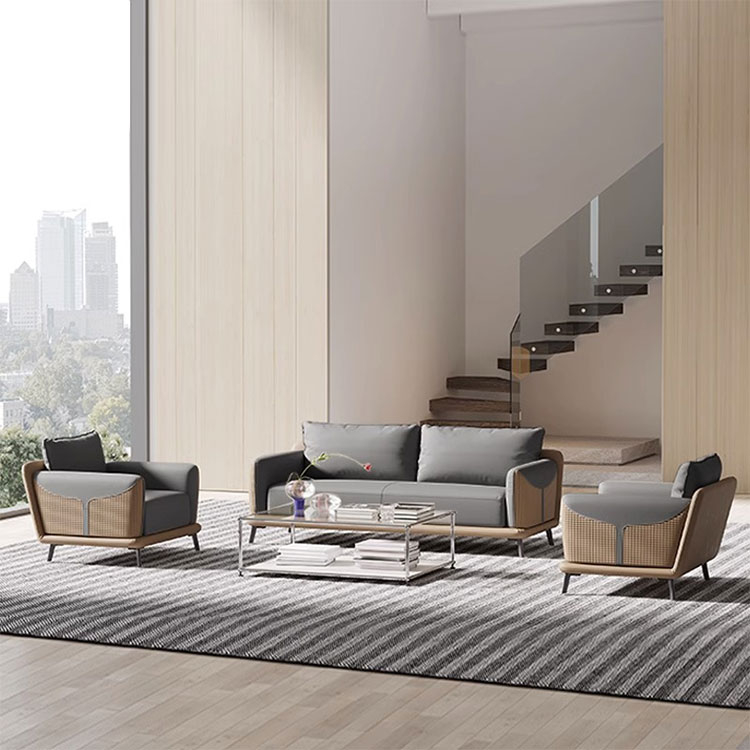
LIYU product page. Model YQ-SC2208, a waiting-room set photographed with its three-seat sofa, two armchairs and coffee table.
The factory price of a sofa and the landed cost of a sofa project are two different documents. The product price covers what leaves the factory. The project cost adds everything that has to happen between the factory floor and seats people actually use, and an imported order adds a second layer on top: charges that fall due around the destination port, which do not appear in the furniture price unless the trade term puts them there.
The template below is that separation as a checklist. Copy it, and fill each line from the supplier's quotation. Where a line stays empty, the money is still real; it is simply waiting for a later invoice.
Cost item | What it covers | Fill from the quote |
|---|---|---|
Product price | The sofas and any quoted armchairs or tables, per the listed pieces | |
Export packing | Crate or carton packing for international transport | |
Inland transport, origin | Factory to the port of loading | |
International freight | Port to port, sea or air, for the volume your configuration packs into | |
Insurance | Cover during transit, if arranged | |
Destination port charges | Handling, documentation and clearance fees at arrival | |
Duties and taxes | Import duty and VAT or sales tax owed under your country's rules | |
Onward delivery | Port or warehouse to your building | |
Installation and placement | Unpacking, assembly, positioning, debris removal | |
Quote validity | Currency, validity window, and whether the lead time is a fixed date or a window |
Two rules make the template work. First, treat an empty line as a cost still to come, not as zero. Second, decide who pays each line in writing: on some terms the supplier covers the freight line, and on others you settle the destination charges yourself, and the furniture price alone will not tell you which applies to your order. Duties and taxes deserve their own note: what you owe at import is set by your country's customs rules, so a supplier's quote can state what is included, while the final amounts come from your own broker or customs authority.
Two office sofa quotes can only be compared after the fields below match one to one. Where a field differs, the difference is the finding; it explains the price gap before any number is read. The layout puts the fields on two hypothetical quotations for the same executive room. It is a concept layout, and no prices are filled in, because invented figures teach exactly the wrong habit.
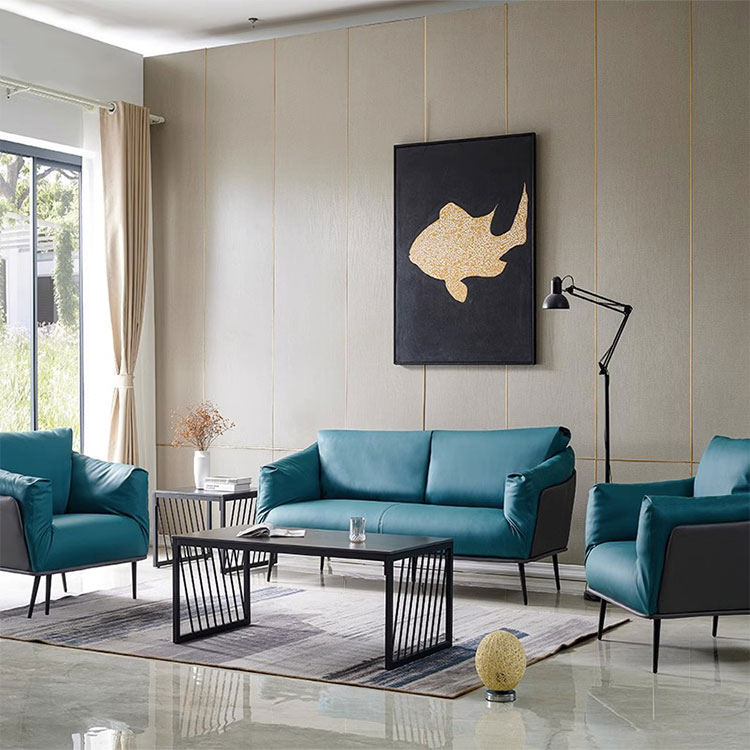
LIYU product page. Model YQ-SC2078, a set photographed with its two-seat sofa, two matching armchairs and a slat-sided coffee table.
Concept layout of two hypothetical quotations, for method only; the pieces, surfaces and terms shown are examples of what must align, not an offer.
Field | Quote A states | Quote B states |
|---|---|---|
Model and code | Named model, code written in full | "Executive three-seat", no code |
Pieces per set | Sofa, two armchairs and a table, itemized | Sofa only |
Seats | 3 nominal, usable seat width stated | "3 seats", no widths |
Upholstery, contact surfaces | Leather, grade named | "Genuine leather", grade not stated |
Upholstery, outer panels | Named per panel | Not stated |
Dimensions | Width, depth and seat height in millimeters | "Standard size" |
Quantity | 2 sets, pieces counted | 2 sofas |
Packaging | Export crate, stated per piece | Not stated |
Trade term | CIF, destination port named | FOB |
Validity | Currency and validity window stated | Not stated |
Exclusions | Installation excluded, listed | Not stated |
Every gap in Quote B is a question, and the questions are the comparison. Ask the second supplier to name the model code, list the pieces, state the grade and the dimensions, and re-quote on a single trade term if the terms differ. Only when the two columns agree line by line do the numbers describe the same purchase; until then, a cheaper number usually means a thinner quote.
The example uses an executive room on purpose. If that is your case, the executive office sofas page groups the three-seat and 1+2+3 forms these fields describe. For the selection method that fills the fields in the first place (footprint first, capacity at peak, material under the same conditions), the office sofa buying guide walks through it step by step.
A budget is not spent evenly, and it should not be. Seats take wear where people touch them, so the specification that matters most sits on the contact surfaces and in the frame underneath. Use three buckets to sort the decisions before you argue about the total.
Bucket | What belongs here | How to think about it |
|---|---|---|
Hold the specification | Contact-surface material and grade, frame and seating construction, seat count at peak, doorway and delivery-route fit | These take daily wear or decide whether the sofa is usable at all; changing them later means re-ordering, which costs more than specifying them once. |
Adjust to the project | Outer panel material, color range and stitching detail, companion armchairs and tables, packaging level | Each has a simpler and a richer version; choose by the room's traffic and your maintenance routine. |
Simplify or defer | Premium finishes, extra tables and accessories, color matching beyond the first order | Easy to add on a re-order once the first delivery has landed; hard to justify before it. |
Two questions sort most items into the right bucket. How often does this surface get touched? A waiting area that runs all day wears the seat fronts and arms continuously, so the richer grade there is protection against early re-upholstery, while a meeting room used twice a week can carry a simpler grade and the saving is real. And who maintains it? A surface your team will actually clean, with products they have on hand, outperforms a better surface nobody maintains. That is also the order of the decision: touch frequency first, then maintenance reality, then the catalog.
If the seating serves visitors rather than one office, the reception and waiting room sofas page is the shortlist to start from, because entrance duty decides most of the hold bucket on its own.
Where does the richer specification earn its place? In rooms where meetings run long and the sofa completes the desk line, the leather three-seat form is the classic answer, and the material grade on the contact surfaces is the part of that answer worth funding.
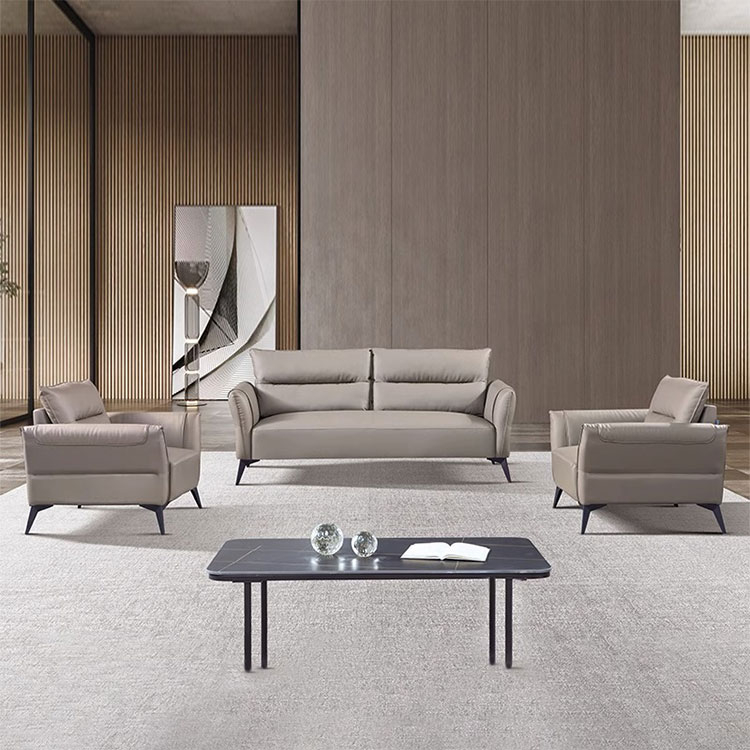
LIYU product page. Model YQ-SC2206, an executive three-seat sofa in leather, photographed with matching armchairs.
A request for quotation is a specification in miniature: the fields you fill in decide the quality of every answer that comes back. Send a one-line request and you will receive a one-line number with unknown assumptions behind it. Send the fields below and every supplier answers on the same basis, which is what makes the answers comparable.
Project: where the sofas will stand (reception, executive office, lounge) and how the space is used through the day
Model (optional): a code you are considering, or "suggest options"
Quantity: pieces or total seats, and whether the order will come in phases
Space: room dimensions or a floor plan with the entrance and fixed furniture marked, plus door and elevator widths on the delivery route
Material preference: family and grade direction, with a color reference if you have one
Delivery: country and city, and the target window
Packaging and site constraints: export packing assumed; mention narrow doors, elevators or stairs that affect delivery
To be stated in the answer: pieces per set, minimum order quantity for the model, sample cost and whether it is credited against a confirmed order, trade term, currency and validity, and the lead-time basis
Your contact: name, company and email
Quantity and samples belong in the same message. Ask each supplier to state the minimum order quantity for the model you are considering, what a sample costs, how long a sample takes, and whether the sample fee is credited against a confirmed order; those answers differ more between suppliers than the furniture does.
Email the brief to ada@liyu-furniture.com or send it through our contact page. If the plan is still rough, send the scenario and the city first; layout suggestions and quantity guidance can come before any formal quote exists.
This is a budgeting guide, so it ends on the border between guidance and pricing. No prices are listed on this page, and that is deliberate: a price you can use is itemized, states its currency, quantity basis, trade term and validity, and belongs to a configuration you have actually described. Anything less is a number that will move.
Ready for an itemized project quote?
Request an Itemized Project Quote
Before you send, browse the commercial office sofa options to shortlist the forms that fit your rooms; a model code in the brief sharpens every answer.
How do I compare office sofa quotes on different trade terms?
Normalize first. Ask one supplier to re-quote on the other's term, or add the missing lines (freight, insurance, destination charges) to the lighter quote from your own forwarder before reading the numbers. A price on CIF and a price on FOB are not two prices for the same scope.
Which project costs are paid at the destination port?
Depending on the trade term, destination handling, clearance fees, duties and taxes, and onward delivery usually fall on the buyer's side of the shipment. They rarely appear in the furniture price unless the term puts them there, so list them from your own forwarder or customs broker and compare project totals, not furniture lines.
How should currency, exchange rates and lead times be handled in a quote?
Ask for the currency, the validity window, and whether the lead time is a fixed date or a window, plus what happens to the price if the window slips. A quote without a validity date is an offer that can move before you have signed anything.
Why is there no reliable unit price before the configuration is fixed?
Because the configuration decides the inputs: pieces per set, material and grade on each panel, dimensions, quantity and delivery scope all move the number. A price given before those are fixed is an estimate that will change; the itemized route costs one more email and returns an answer you can actually compare.


