
Views: 0 Author: Site Editor Publish Time: 2026-08-31 Origin: Site


Balancing a professional, welcoming workspace with strict procurement limits presents a significant challenge for facility managers and designers. Finding a commercial-grade cheap office sofa set that withstands high traffic without inflating the overall project budget requires careful planning. Many buyers fall into the trap of purchasing low-quality residential furniture that looks appealing but fails within months under heavy daily use, leading to premature replacement cycles.
This guide provides an evidence-based breakdown of how to evaluate, specify, and source budget-friendly office sofas. We focus on lifecycle costs, material trade-offs, and strategic supplier negotiation. By understanding the core drivers of furniture manufacturing and commercial durability standards, you can secure reliable seating solutions that maintain their structural integrity and visual appeal throughout your lease cycle.
Shifting the focus from the lowest upfront price to the lowest overall lifecycle cost over a three-to-five-year lease cycle is critical. A sofa that costs slightly more initially but lasts five years is inherently cheaper than a residential alternative that requires replacement every twelve months. Establishing a baseline project furniture budget early in the planning phase ensures you account for seating density, spatial constraints, and necessary commercial certifications without overspending. You have to look at the long game. When you buy seating for a high-traffic lobby, the wear and tear accelerates exponentially compared to a living room. You need to calculate the expected lifespan based on the manufacturer's specifications and the actual foot traffic of your facility.
Facility managers often make the mistake of isolating the furniture budget from the maintenance budget. If you buy a sofa that requires specialized cleaning every month, the operational costs will quickly dwarf the initial savings. You must evaluate the total expenditure over the expected life of the product. This means factoring in delivery, assembly, daily maintenance, and eventual disposal or recycling fees. A truly cost-effective solution balances a low acquisition cost with minimal ongoing maintenance requirements.
Residential sofas consistently fail in commercial environments due to voided warranties, lack of fire compliance, and rapid foam degradation. When evaluating options, certain specifications remain non-negotiable. Fabrics must meet minimum Martindale or Wyzenbeek rub test ratings to endure constant friction. Additionally, internal frames must utilize kiln-dried hardwood or reinforced steel to prevent warping and structural collapse under heavy daily loads. You cannot compromise on the frame. If the frame cracks, the entire piece is garbage, regardless of how pristine the fabric looks.
We see this constantly on job sites. A client brings in a stylish, inexpensive sofa meant for a residential apartment. Within six weeks, the armrests are loose, the seat cushions have bottomed out, and the fabric is pilling. Commercial environments subject furniture to people sitting on armrests, dropping heavy bags on cushions, and sliding across the fabric repeatedly. You need a frame built with corner blocks, heavy-duty screws, and industrial adhesives. Plywood frames stapled together will not survive.
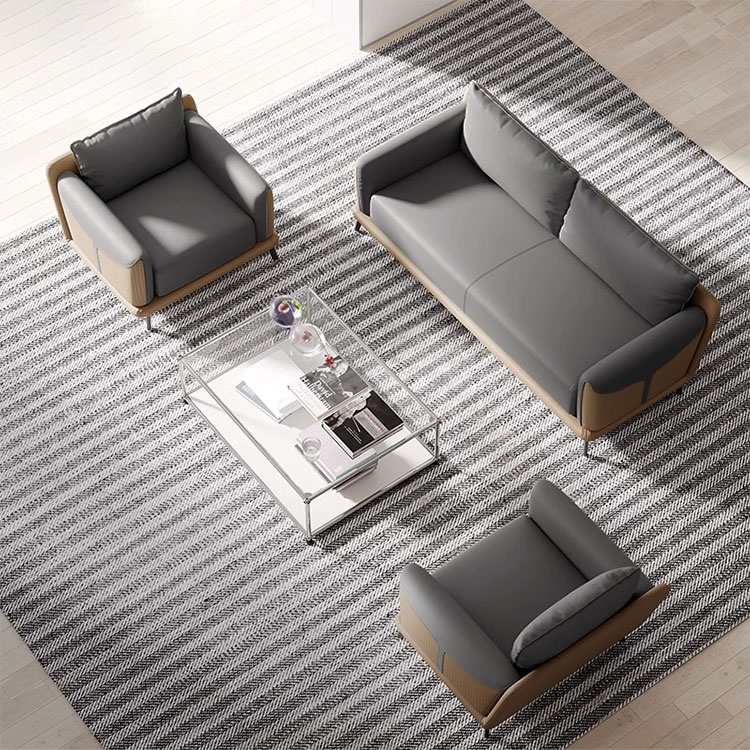
Understanding office sofa set price factors begins with the exterior materials. Commercial-grade polyester blends and polyurethane faux leather offer substantial savings compared to genuine leather or high-end wool while providing superior stain resistance. The rise of sustainable, post-consumer recycled fabrics allows companies to balance eco-compliance with strict procurement limits. Furthermore, investing slightly more in stain-resistant treatments upfront drastically reduces long-term cleaning and maintenance expenses.
| Material Type | Durability (Rub Count) | Maintenance Level | Cost Impact |
|---|---|---|---|
| Polyurethane (Faux Leather) | High (100,000+) | Low (Wipeable) | Low to Medium |
| Commercial Polyester Blend | Medium to High (50,000+) | Medium (Vacuum/Spot Clean) | Low |
| Genuine Leather | Very High | High (Conditioning required) | High |
| Woven Wool Blends | High | High (Professional cleaning) | High |
When you review fabric swatches, always check the backing. A good commercial fabric will have an acrylic backing to prevent stretching and pooling on the seat cushion. Without this backing, the fabric will quickly look loose and sloppy, even if the internal foam remains intact. You also need to consider the weave. Tight weaves resist snagging from keys and rivets on jeans, whereas loose, textured weaves will catch and fray.
The hidden components of a sofa dictate both its lifespan and its cost. High-density polyurethane foam retains its shape and provides consistent support, whereas lower-grade alternatives quickly compress, leaving seats looking worn and feeling uncomfortable. Spring systems also play a major role; sinuous springs offer reliable sag-resistance at a moderate cost, while basic webbing might reduce the initial purchase price but often leads to premature sagging.
Foam density is measured in pounds per cubic foot. For commercial seating, you want a minimum density of 1.8 to 2.0. Anything lower will crush under continuous use. You also need to look at the foam's Indentation Load Deflection (ILD), which measures firmness. A higher ILD means a firmer seat, which is generally preferred in office environments because it makes standing up easier for guests and maintains a crisp, professional appearance longer than plush, sink-in cushions.
Manufacturing complexity directly influences the final cost. Fixed-frame, traditional sofas require less engineering than modular, reconfigurable seating blocks, making them highly cost-effective. Low-profile modular benching serves as a high-density alternative to bulky sofas, reducing material usage while maximizing seating capacity. Standard, off-the-shelf designs eliminate the premium associated with custom or highly stylized contemporary pieces.
If you want to stretch your budget, stick to straight lines and right angles. Curves, tufting, and intricate stitching require more labor and generate more fabric waste during production, driving up the cost. A simple, boxy design with clean lines is cheaper to manufacture and easier to reupholster if necessary. You can always add visual interest through throw pillows or surrounding decor rather than paying a premium for a complex sofa shape.
Creating a welcoming reception area does not require a massive, expensive sectional. Pairing one affordable two-seater sofa with low-cost accent chairs creates visual volume and adequate seating capacity. Opting for armless designs saves space and reduces material costs, allowing you to furnish waiting areas efficiently without compromising the professional aesthetic.
Consider the actual usage patterns of your reception area. Rarely do strangers sit shoulder-to-shoulder on a three-seater sofa. They prefer individual chairs or sitting on opposite ends of a larger piece. By utilizing a smaller sofa flanked by individual chairs, you provide the personal space guests desire while spending less on large, continuous upholstered pieces. This configuration also offers greater flexibility for rearranging the space for events or cleaning.
Oversizing a cheap office sofa set ruins office aesthetics and compromises foot-traffic flow, creating a cluttered environment. Precise floor-plan scaling ensures sofa dimensions match spatial boundaries. By selecting appropriately scaled furniture, small offices retain an open, premium feel, proving that thoughtful space planning is just as important as the furniture itself.
Before ordering anything, tape out the dimensions on the floor. Include the necessary clearance for walkways and ADA compliance. A sofa that looks reasonably sized in a massive warehouse showroom will often overwhelm a standard office reception area. Pay attention to the depth of the sofa. Commercial sofas often have a shallower seat depth than residential ones, which encourages an upright, professional posture and saves valuable floor space.
Selecting lightweight, easily movable sofas allows seating to serve dual purposes, functioning for both casual meetings and employee breaks. Integrating built-in power outlets requires weighing the upfront premium against the cost of retrofitting floor power later. Dual-purpose furniture maximizes utility, ensuring every piece justifies its footprint.
If you opt for sofas with integrated power, ensure the electrical components are UL-listed and easily accessible for maintenance. Sometimes it is more cost-effective to purchase standard sofas and pair them with freestanding power hubs or side tables with built-in charging ports. This approach keeps the cost of the sofa low and allows you to upgrade the charging technology independently as standards change.
Low-back sofas maintain sightlines and make small spaces feel significantly larger. Wall-hugging designs and modular benching maximize seating capacity per square foot. These space-saving strategies prevent small rooms from feeling cramped while providing necessary functional seating for staff and visitors.
Bench seating without backrests is an excellent strategy for transitional areas like hallways or quick touchdown spaces. It requires less material, costs less to ship, and visually disappears into the space. You can push benches flush against walls or use them to divide open-plan areas without blocking natural light. When dealing with tight constraints, every inch of visual space matters.
Budget sofas can look premium when surrounded by the right elements. Complementing basic seating with affordable, high-impact DIY elements like acoustic partition panels, floating shelves, and targeted wall decor elevates the entire room. Contrasting, inexpensive throw pillows and side tables distract from basic upholstery, creating a cohesive and intentional design scheme.
Lighting plays a massive role in how furniture is perceived. A basic, inexpensive sofa placed under harsh fluorescent lighting will look cheap. That same sofa illuminated by warm, directional pendant lights or floor lamps will look significantly more upscale. Invest a small portion of your budget in ambient lighting and large-scale, low-cost artwork to draw the eye upward and away from the budget-friendly seating.
Analyzing the fine print of commercial warranties reveals significant differences between one-year and five-year coverage, particularly regarding frame versus fabric guarantees. Calculating the replacement frequency of ultra-budget options against mid-tier alternatives often highlights that spending slightly more initially yields better long-term value and fewer disruptions to office operations.
Read the warranty exclusions carefully. Many warranties cover the internal frame for five years but only cover the foam and fabric for one year. Since the fabric and foam are the first things to fail, a long frame warranty might not offer the protection you think it does. You need to ask the supplier specific questions about what constitutes "normal wear and tear" and what the process is for filing a claim if a seam splits or a cushion collapses.
Light-colored or heavily textured fabrics carry hidden operational costs in high-traffic zones due to frequent professional cleaning requirements. Wipeable faux-leather or vinyl surfaces often win in budget-conscious, high-turnover environments because they require minimal maintenance and resist permanent staining from spills.
If you must use woven fabrics, specify a crypton or similar moisture-barrier treatment. This prevents spills from penetrating the fabric and soaking into the foam. Once liquid reaches the foam, it breeds bacteria and odors that are nearly impossible to remove. A surface treatment allows your janitorial staff to wipe up spills quickly before they become permanent damage, extending the usable life of the sofa significantly.
Overly rigid or unsupportive breakout seating risks causing productivity loss or employee complaints. Balancing firm support, which lasts longer and resists sagging, with perceived comfort ensures that staff actually utilize the breakout spaces designed for their well-being.
Seat height is a critical ergonomic factor. A seat that is too low forces users to strain their knees when standing up, which is uncomfortable and unprofessional in a work setting. Aim for a seat height of 17 to 18 inches from the floor. The pitch of the backrest should support an upright posture rather than a deep recline. You want employees to be comfortable, but you also want them to remain alert and engaged during informal meetings.
Standardizing your Request for Proposal ensures suppliers quote apples-to-apples. Always specify dimensions, fabric grades, and delivery terms when requesting a reception seating quotation. Reviewing these documents carefully helps spot omitted costs such as liftgate fees or inside delivery charges that can unexpectedly inflate your final invoice.
When you receive the quotes, look at the line items for freight and installation. Some suppliers show a very low unit price for the sofa but mark up the shipping astronomically. You need to demand a fully landed cost. Ask if the delivery includes unboxing, placement, and removal of packing materials. If it is just a dock drop, you will have to pay your own maintenance team to move the furniture, assemble it, and dispose of the massive cardboard boxes and wooden pallets.
Consolidating purchases for desks, chairs, and sofas with a single vendor unlocks tiered discounting. Timing your purchase to align with end-of-quarter sales, inventory clearances, or discontinued fabric lines provides opportunities to secure premium commercial furniture at significantly reduced rates.
Suppliers want larger order volumes. If you are outfitting an entire office, do not buy the seating from one vendor and the desks from another unless the savings are undeniable. Bundle the entire package and negotiate a project discount. You can also ask about "quick ship" programs. Manufacturers often pre-build certain popular sofa models in standard fabrics. Because these are mass-produced and sitting in a warehouse, they are usually cheaper and ship much faster than custom orders.
Buying Grade-A refurbished seating from premium brands offers massive savings. Sourcing eco-friendly, recycled furniture components through circular liquidators supports sustainability goals. However, buyers must assess the risks of used furniture, including the lack of warranties and the potential difficulty of matching fabrics during future office expansions.
If you go the refurbished route, inspect the inventory in person if possible. Check for structural integrity by lifting one corner of the sofa; the frame should not twist or flex. Look closely at the seams and zippers for signs of stress. Refurbished furniture can be an excellent way to get high-end, durable frames at a fraction of the cost, but you must be prepared to accept minor cosmetic imperfections and the reality that you likely cannot order an exact matching piece two years down the road.
Flat-pack delivery reduces shipping costs but requires calculating the internal labor cost of assembly. Mitigating the risk of missing hardware or damaged parts upon arrival requires immediate inspection upon delivery and clear communication protocols with the supplier's customer service team.
Ultra-low prices often correlate with extended overseas shipping times. Planning phased rollouts ensures critical areas, like the main reception, receive furniture before secondary breakout spaces, preventing operational bottlenecks during a new office build-out or renovation.
Always ask the supplier where the furniture is currently located. If it is sitting in a domestic warehouse, you can expect delivery in a few weeks. If it is being manufactured overseas and shipped via ocean freight, you could be waiting months. Build buffer time into your project schedule. If the reception sofas are delayed, you need a contingency plan, such as renting temporary seating, so your business can still open its doors to clients on time.
A low-cost sofa set only serves as a smart investment if it meets baseline commercial durability standards; otherwise, it becomes a recurring liability. Prioritize frame construction and fabric rub-counts over fleeting aesthetic trends. Favor wipeable materials for high-traffic areas, scale pieces to prevent spatial clutter, and leverage modular designs for future flexibility.
A: A budget commercial office sofa typically lasts between three to five years under standard daily use. Lifespan depends heavily on the fabric's rub count, the density of the internal foam, and the structural integrity of the frame. Regular maintenance extends this period.
A: Using residential sofas in commercial spaces is highly discouraged. They lack the necessary fire safety certifications, structural reinforcement, and high-density foam required for constant use. Furthermore, placing residential furniture in a commercial setting immediately voids the manufacturer's warranty.
A: Commercial-grade polyurethane (faux leather) and tightly woven polyester blends are the most durable, cost-effective options. Faux leather is easily wipeable and resists stains, making it ideal for high-traffic reception areas and breakrooms where spills frequently occur.
A: Always request an itemized quotation that explicitly lists freight, liftgate service, inside delivery, and assembly charges. Clarify whether the delivery is dock-to-dock or includes placement and debris removal, as these logistical services often carry substantial hidden fees.
A: Traditional fixed-frame sofas generally have a lower upfront cost due to simpler manufacturing processes. However, modular sofas offer better long-term value because you can replace individual damaged sections rather than purchasing an entirely new sofa set.
A: Seating typically consumes 25 to 30 percent of an overall office furniture budget. This allocation covers desk chairs, reception sofas, and breakout area seating. Prioritize spending on ergonomic task chairs first, followed by high-traffic reception seating.
A: Flat-pack designs do not inherently compromise structural integrity if engineered correctly with heavy-duty steel brackets and solid wood framing. However, the longevity of flat-pack furniture relies entirely on proper, tight assembly according to the manufacturer's exact specifications.


