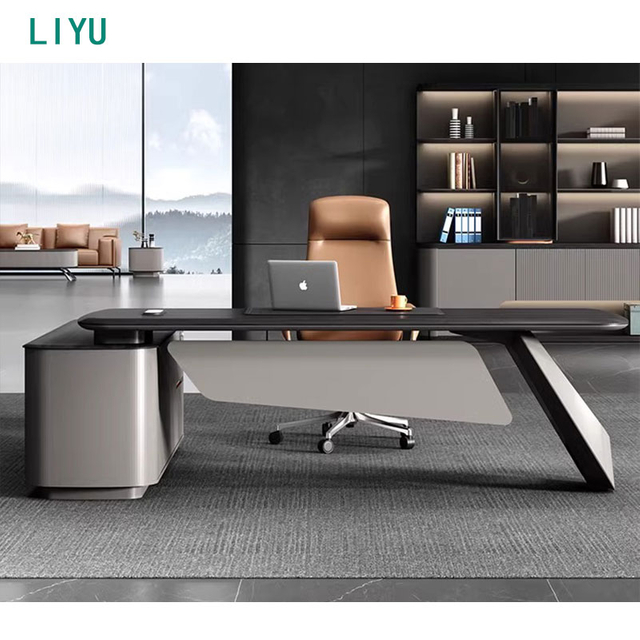
Views: 0 Author: Site Editor Publish Time: 2026-05-31 Origin: Site


Procuring office furniture at scale demands more than simply matching wood finishes and aesthetic preferences. Setting up a new leadership wing requires aligning spatial constraints, organizational hierarchy, and budget with the right physical assets. Making the wrong choice often disrupts the entire office layout.
Misjudging the difference between standard management furniture and executive pieces leads to serious operational issues. You might end up with inefficient floor plans, wasted procurement budgets, or severely under-equipped leadership spaces. Decision-makers need clear criteria to separate these distinct workstation categories accurately.
This guide provides a hard-number comparison to facilitate evidence-based procurement decisions. You will learn the exact dimensional differences, material lifespans, and functional setups defining each category. We break down the data to help you optimize your next commercial furniture investment.
Purpose: Executive desks are designed for private offices and authoritative presence; manager desks prioritize operational efficiency and space utilization in both private and shared layouts.
Footprint: Executive desks typically require a 12x12 ft room and 36–48 inches of clearance; manager desks fit efficiently within 8x8 ft to 10x10 ft spaces.
Materials & ROI: Standard manager desks use commercial laminates for a functional 8–15 year lifespan, whereas executive models leverage premium veneers or solid wood for 15–25 years of durability.
Cost Efficiency: Manager desks offer high scalability for departmental upgrades, allowing for bulk purchasing and flexible modularity.
Defining an executive desk requires looking at its intended environment. Manufacturers build it as the absolute focal point of a private office. Its primary function goes far beyond simple daily utility. It signals authority and establishes a commanding presence to anyone entering the room. Leaders use this expansive surface to host small face-to-face meetings directly at their workstation. It also provides secure, enclosed spaces for managing highly confidential paperwork. You commonly see this traditional setup in law firms, financial institutions, or corporate boardrooms.
Defining the manager desk reveals a completely different set of priorities. Furniture designers build these units for mid-level leaders, department heads, and operational supervisors. The primary function focuses on maximizing digital workflow efficiency. It ensures continuous team accessibility without commanding excessive square footage on the floor plan. This workstation acts as a vital structural bridge within the company. It sits comfortably between the standard employee workstation and the expansive C-suite setup. They keep supervisors integrated with their teams while still clearly defining their leadership role.
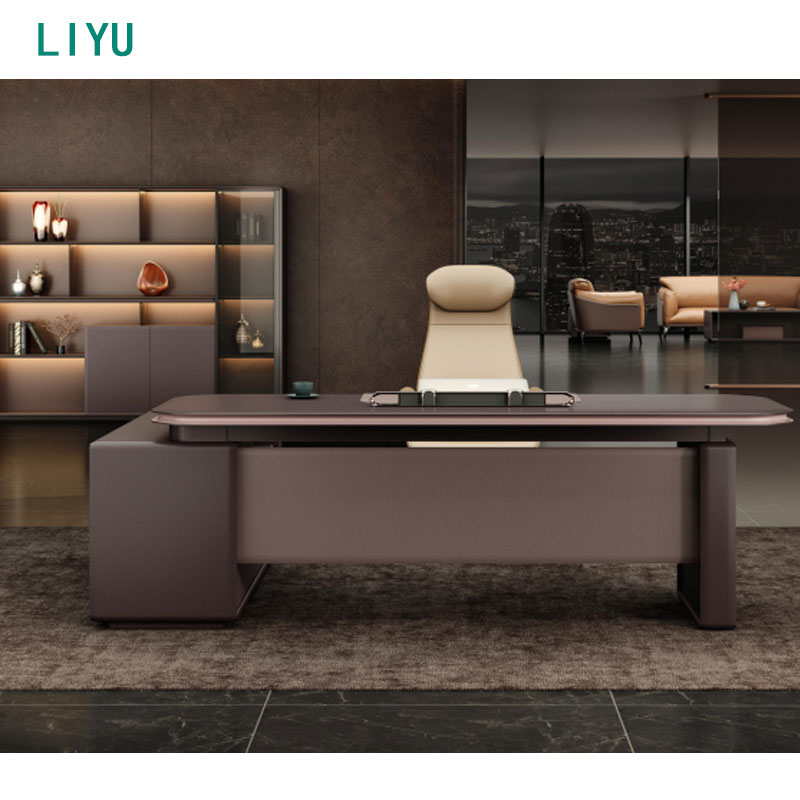
Understanding spatial requirements prevents cramped offices and poor ergonomic setups. Hard numbers separate these two distinct categories.
Desk Category | Typical Width | Required Room Size | Recommended Rear Clearance |
|---|---|---|---|
Executive Desk | 66 to 84 inches | 200 to 400 sq. ft. | 36 to 48 inches |
Manager Desk | 48 to 72 inches | 120 to 200 sq. ft. | 30 to 36 inches |
Executive desks typically span 66 to 84 inches wide. They require a dedicated 200 to 400 square foot private office to function correctly. Manager desks usually measure between 48 and 72 inches wide. The 160cm or 63-inch mark represents the accepted commercial standard. They fit efficiently within much smaller 120 to 200 square foot spaces.
Ergonomic guidelines published by BIFMA dictate specific clearance zones for safety and comfort. Executive setups demand 36 to 48 inches of rear clearance. They also require generous guest clearance. This extra space accommodates larger executive chairs and client seating arrangements. A typical commercial office desk designed for managers requires a much more compact 30 to 36 inch rear clearance. This tighter footprint preserves valuable floor space. It works perfectly in open-hub environments or shared-manager configurations.
The physical placement of these workstations heavily influences office dynamics. The executive desk utilizes the "Power Position." This layout places the desk facing the door directly. A solid wall usually sits right behind the chair. This configuration establishes strict hierarchy and eliminates any chance of the user being startled. Manager desks often utilize a "Collaborative Corner" approach. They frequently feature an L-shape layout. This allows the manager to face the room naturally. It keeps an adjacent surface completely open for impromptu team check-ins or quick collaborative reviews.
The materials used in construction dictate the initial price and the long-term value.
The executive tier relies on premium materials. Manufacturers construct these using solid wood, rich wood veneers, and premium metals. They feature noticeably heavier construction compared to standard office furniture. You will find hand-finished detailing and thick edge-banding protecting the borders. The ROI calculation involves a high initial capital expenditure. Prices typically range from $2,500 to $15,000 or more. However, this investment retains 60 to 80 percent of its functional value over an impressive 15 to 25 year lifecycle. High-end clients and visiting partners expect to see this level of quality.
The manager tier leverages engineered cores and commercial laminate finishes. Factories use high-density particle board for the main structure. Alternatively, they build an MDF office desk core wrapped tightly in scratch-resistant melamine. The ROI calculation changes significantly here. These units require a much lower initial investment, usually ranging from $800 to $3,500. This price point makes them ideal for bulk procurement. Facilities managers can expect a predictable 8 to 15 year lifespan. The zero-maintenance, wipe-clean surfaces save significant time for cleaning staff.
Workflow demands dictate how these desks handle paperwork and modern electronics.
Storage philosophies differ sharply between the two tiers. Executive setups feature heavy, integrated pedestals permanently attached to the frame. They include hidden wire-management cavities built directly into the modesty panels. These premium desks often provide 6 to 12 locking drawers. Leaders need this extensive capacity for securing highly sensitive corporate documents. Manager setups lean heavily toward flexibility and modularity. You rarely see permanently attached pedestals here. We usually pair them with mobile filing cabinets. Facilities teams can easily reconfigure these mobile units if the department restructuring requires a new layout.
Technology integration defines modern office efficiency. A modern office table for managers focuses heavily on hybrid work tools. The essential features include:
Pre-drilled desktop grommets for routing multiple cables.
Sturdy surface edges ensuring clamp-on monitor arm compatibility.
Integrated surface-level USB and power modules for quick device charging.
Executive desks prioritize a different technological aesthetic. They demand seamless, completely concealed technology. Manufacturers often embed hidden under-desk charging pads directly into the wood. They design discrete routing channels to keep all wires completely invisible. This hidden integration maintains a perfectly uncluttered aesthetic during crucial in-person client negotiations.
Selecting the right asset requires evaluating your unique organizational needs and spatial realities.
Your company culture should dictate your furniture strategy. Traditional or hierarchical organizations often lean toward executive desks. Law firms, financial institutions, and consulting groups fall into this category. They provide these premium setups even for mid-level directors. The goal is maintaining client-facing prestige across all meeting spaces. Flat or agile organizations approach this differently. Tech companies and modern startups usually standardize a high-quality manager office desk across all leadership levels. This promotes open accessibility, reduces ego clashes, and allows the company to scale operations easily.
Observe how the user actually works throughout the day. Many managers transition constantly between digital tasks on screens and physical tasks involving blueprints or contracts. In these cases, prioritize an L-shaped manager desk. This configuration allows for "zone partitioning." It physically separates the keyboard from the paperwork, which drastically reduces cognitive load. Conversely, some leaders host frequent 3-to-4 person meetings inside their private office. You should upgrade them to a U-shaped or larger executive desk. This prevents spatial crowding and provides enough surface area for everyone to review documents comfortably.
Follow these precise steps when finalizing your procurement plan:
Audit the floor plan carefully to measure exact knee-space and essential chair clearance.
Determine the actual need for sit-stand functionality. Electric height-adjustable bases are increasingly standard in both categories.
Request bulk-pricing quotes or physical material swatches from your commercial furniture vendors.
The choice between these two workstation categories represents a core decision of spatial economics and role alignment. It goes far beyond simply allocating a set budget. You must match the physical footprint and material grade to the daily realities of the user. Misaligned choices lead to cramped rooms or wasted corporate funds.
Invest confidently in executive desks for client-facing authority and private, high-stakes environments. They deliver the presence and security top leaders demand. Scale your remaining floor plan with managerial alternatives for your operational leaders. They require hybrid tech integration, modular storage, and space-efficient footprints to manage teams effectively.
Browse our complete selection of commercial workstations today. Contact our layout specialists to request a comprehensive dimensional audit of your new office space.
A: Yes. L-shaped manager desks are highly recommended as they separate computer work from paperwork or collaborative discussions, maximizing efficiency in a smaller footprint.
A: High-density MDF paired with commercial-grade melamine laminate is the industry standard for manager desks. It resists scratching, heat, and moisture far better than entry-level consumer furniture.
A: To accommodate a standard 72-inch executive desk, guest seating, and required ergonomic clearances, a minimum room size of 12x12 feet (144 sq. ft.) is strongly recommended to avoid a cramped environment.