
Views: 0 Author: Site Editor Publish Time: 2026-08-08 Origin: Site


High-traffic commercial spaces require seating that balances architectural intent with rigorous durability standards, making material and frame specification critical. Off-the-shelf residential leather seating fails rapidly in commercial environments, leading to premature wear, voided warranties, and compromised brand perception in client-facing areas. To successfully integrate a brown leather office sofa into a corporate environment, specifiers must evaluate contract-grade hide types, structural integrity, and custom configuration options that align with both aesthetic goals and facility lifecycle requirements. We see too many projects where designers specify a beautiful piece that looks great on day one but looks destroyed after six months of heavy lobby traffic. Proper specification requires understanding the underlying frame construction, the exact tanning process of the hide, and the foam density supporting the sit. You cannot cut corners on the foundational elements if you expect the furniture to survive daily use by hundreds of visitors.
Brown leather functions as a neutral anchor in commercial design, bridging the gap between stark modernism and traditional corporate warmth. The color temperature directly impacts client perception. A walnut or cognac finish influences the perceived trustworthiness of a financial or legal firm, projecting stability and approachability. Transitioning from residential aesthetics to structured, authoritative commercial applications requires careful material selection. To prevent a dark brown sofa from making an executive room or lobby feel cramped, dated, or visually heavy, designers must use strategic high-contrast surrounding elements. You want the seating to ground the room without absorbing all the natural light.
When you walk into a law firm or a wealth management office, the seating immediately communicates the firm's market position. Lighter tans and cognacs feel modern, transparent, and energetic. Darker chocolates and espressos feel established, secure, and serious. Specifiers need to match the hide color to the client's brand identity. We often use a matrix to help clients decide which direction to go based on their target demographic and existing interior architecture.
| Leather Tone | Psychological Impact | Best Commercial Application | Lighting Requirement |
|---|---|---|---|
| Cognac / Caramel | Approachable, modern, energetic | Tech firms, creative agencies, modern law | Moderate to high natural light |
| Chestnut / Medium Brown | Stable, reliable, grounded | Accounting, consulting, healthcare lobbies | Flexible lighting conditions |
| Espresso / Dark Chocolate | Authoritative, traditional, secure | Wealth management, heritage legal firms | Requires strong ambient or task lighting |
Establishing baseline requirements for Wyzenbeek or Martindale rub counts is necessary for commercial use. You should look for a minimum of 50,000 to 100,000 double rubs for any seating placed in a public lobby. Facility management must evaluate the maintenance burden of leather versus woven textiles. High-quality leather develops a patina over time rather than degrading, improving the long-term value of the furniture asset. Woven fabrics trap dust, absorb spills, and require frequent hot-water extraction. Leather, when specified correctly, can be wiped down daily with minimal effort.
Full-grain and top-grain hides have distinct structural differences. Full-grain retains the entire natural surface of the hide, including all imperfections and grain patterns. It is incredibly strong but highly susceptible to staining and scratching because it lacks a thick protective barrier. Top-grain is often preferred for commercial environments due to its balance of natural appearance and surface treatment receptivity. The top layer is sanded slightly to remove heavy scarring, allowing for a more uniform application of protective pigments and topcoats. Specifying bonded or bi-cast leather in commercial settings carries severe risks, including delamination and cracking under daily use. Bonded leather is essentially polyurethane mixed with leather dust; it will peel within a year in a busy waiting room.
Pure aniline offers aesthetic appeal but carries high vulnerability to scratching, fading, and liquid damage, restricting it to low-traffic private executive suites. It absorbs oils from human skin and stains easily. Semi-aniline acts as the optimal middle ground for a reception sofa finish, offering a natural hand-feel with a light protective coating. It breathes well and looks authentic while providing a moderate defense against spills. Pigmented or protected leather is recommended for ultra-high-traffic areas requiring maximum stain and fade resistance. The heavy pigment layer completely coats the hide, making it highly durable and easy to clean, though it sacrifices some of the natural softness.
Cognac, tan, and caramel serve as statement leather office sofa colors. They are optimal for modern, Scandinavian, or biophilic commercial designs but require careful lighting to prevent washing out. Chestnut and chocolate are ideal for high-traffic areas as they mask minor scuffs and soil, pairing well with industrial or traditional architectural elements. Espresso and black-brown suit formal executive environments, demanding adequate ambient lighting to avoid visual heaviness. When selecting the exact shade, always view the physical leather swatch in the actual space under the specified color temperature of the LED lighting. A brown that looks rich under 3000K warm lighting might look muddy or green under 4000K cool white office lights.
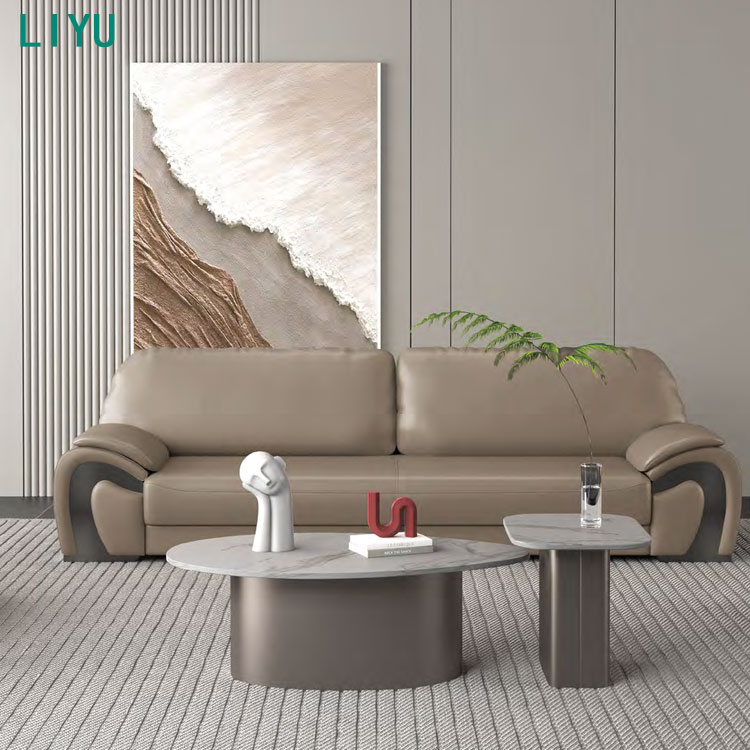
Track and square arms are best for minimalist, contemporary, coastal, or mid-century Scandinavian layouts. They project clean lines and maximize seating boundary efficiency. In a tight reception area, a narrow track arm allows you to maximize the interior seat width without expanding the overall footprint of the sofa. Rolled arms and Chesterfield detailing feature classic rounded arms with tufting and nailhead embellishments. These are ideal for traditional legal practices, heritage financial institutions, and classical executive offices. However, deep tufting requires more maintenance, as dust and debris tend to collect in the folds of the leather.
Specify structured, tight-back designs to maintain a tidy appearance without constant fluffing by facility staff. Loose back cushions look messy after one person sits on them, and maintenance teams do not have the time to constantly reset the lobby furniture. Elevated metal or hardwood bases facilitate easy floor cleaning and prevent scuffing from commercial vacuums. Incorporate modular side tables and heavy-duty armrests to assist users with mobility challenges. The seat height should sit around 18 to 19 inches to ensure guests can easily stand up.
Softer, deeper seating profiles support extended, informal meetings. You can specify a slightly deeper seat pan, perhaps 22 to 24 inches, to allow executives and their guests to sit back comfortably during long discussions. Utilize tufting, channel stitching, or contrast welting to elevate the visual authority of the piece. Coordinate the leather with existing millwork, desk finishes, and task seating. If the executive desk features walnut veneers, a warm chestnut leather creates a cohesive, intentional look.
Modular or sectional configurations can be reconfigured based on team needs. Specify custom power and USB modules directly into the sofa chassis. We typically install these power units flush into the front rail or the side of the armrest, ensuring they are easily accessible without creating trip hazards with trailing cords. Pair leather seating with acoustic baffling or high-back privacy panels to mitigate noise in open-plan offices. Leather reflects sound, so balancing it with sound-absorbing materials nearby is a practical necessity.
Incorporate cool-toned walls or bright warm neutrals to offset the density of dark brown leather. Select low-pile, high-contrast contract-grade rugs to anchor the seating group without color bleeding. Introduce complementary natural oak, matte black steel, or brushed brass accent tables and task lighting to create a layered modern aesthetic. Avoid matching the wood legs of the sofa exactly to the wood floor; you need contrast to make the furniture stand out. A dark espresso sofa on a dark walnut floor disappears visually and makes the room feel smaller.
Mandate kiln-dried hardwood or engineered steel frames, explicitly rejecting MDF or particleboard for commercial use. Particleboard will snap under the repetitive stress of hundreds of people sitting down heavily over a few years. Require double-dowelled, glued, and corner-blocked joints. The corner blocks must be screwed in, not just stapled. Evaluate eight-way hand-tied springs for luxury applications versus sinuous wire or heavy-duty webbing for standard commercial use. Sinuous springs provide excellent support if they are spaced closely together and tied with cross-wires to prevent shifting.
High-resiliency foam with a minimum 2.5 to 3.0 PCF density prevents pancaking under continuous daily use. Residential sofas typically use 1.8 PCF foam, which flattens out within a year in an office setting. Down-wrapped cushions offer high comfort but require high maintenance, whereas Dacron-wrapped foam provides a structured, low-maintenance solution. For commercial lobbies, we always specify a firm foam core wrapped in a thin layer of Dacron to keep the leather casing tight and wrinkle-free.
Outline the requirements for CAL 117-2013 compliance and the phase-out of toxic flame retardants. Commercial building inspectors will check furniture tags before issuing occupancy permits. ANSI/BIFMA testing ensures the sofa can withstand commercial weight and usage loads, specifically testing for drop impacts and armrest strength. GREENGUARD certification and sourcing hides from Leather Working Group certified tanneries support sustainability goals and ensure the furniture does not off-gas harmful VOCs into the office environment.
Compare the upfront premium of custom specification against the replacement costs of failed off-the-shelf residential sofas. Buying a cheap sofa three times over ten years costs more in product, shipping, and disposal fees than buying one properly engineered commercial piece. Acknowledge the 8-16 week lead times typical for custom commercial upholstery and factor this into project schedules. The intangible value of having a unique reception piece perfectly matches corporate branding and architectural intent. You get exactly the dimensions, power integration, and foam density your project requires.
Natural hides exhibit color variations; a specified brown may differ slightly from the showroom swatch. Leather is a natural product, and different hides absorb dyes differently based on the animal's origin and the specific tanning batch. Order cutting-for-approval swatches from the exact dye lot before finalizing the purchase order. This ensures the color you receive matches your design board.
UV exposure from large commercial windows can fade and desiccate leather, while HVAC proximity can dry out hides. Direct sunlight will bleach a beautiful cognac leather into a pale, dry yellow within a few summers. Specify UV-protective window treatments, utilize pigmented leathers in direct sunlight, and establish a quarterly leather conditioning protocol. Facility managers must apply commercial-grade leather conditioners to keep the hides supple and prevent surface cracking.
Large, custom-built sofas may fail to fit through commercial elevators, tight corridors, or standard doors. We have seen projects delayed by weeks because a 90-inch sofa could not clear a freight elevator door. Conduct rigorous site measurements, specify knock-down frames if necessary, and utilize specialized commercial installation teams. Knock-down frames allow the sofa to be shipped in pieces and assembled on-site, bypassing tight architectural bottlenecks.
A: Focus on semi-aniline or pigmented top-grain leather. These options provide the necessary durability and stain resistance required for high-traffic commercial environments, unlike pure aniline, which scratches easily.
A: A contract-grade leather office sofa typically lasts 7 to 15 years in a commercial setting. In contrast, using a residential-grade sofa in an office usually results in failure within 2 to 3 years.
A: Yes. Integrated power and data modules, including USB and standard outlets, can be specified and built directly into the sofa chassis during the manufacturing phase.
A: Commercial warranties cover multi-shift, high-weight usage in public or corporate settings. Placing residential furniture in a commercial office typically voids the manufacturer's warranty entirely.
A: Implement a low-impact maintenance schedule consisting of daily dusting with a dry cloth, immediate remediation of any liquid spills, and quarterly professional leather conditioning.
A: Medium-to-dark tones, such as chestnut, chocolate, and distressed cognac, are optimal for masking minor scuffs, soil, and daily wear in high-traffic areas.
A: Recommend sleek track arms, high-contrast lighter-colored commercial rugs, modern metal legs, and contemporary wall accents to maintain an updated, forward-looking aesthetic.


