
Views: 0 Author: Site Editor Publish Time: 2026-08-15 Origin: Site


The rise of "resimercial" design has elevated bold color choices in corporate environments, making blue a dominant choice for modern workspaces. However, residential inspiration often fails to meet commercial durability standards. Architects, facility managers, and procurement teams face the challenge of balancing aesthetic impact—such as matching brand identity or warming up cold architectural spaces—with strict requirements for high-traffic performance, maintenance, and fire safety compliance. Moving from a mood board concept to a finalized procurement order requires a rigorous evaluation of upholstery grades, frame construction, and custom manufacturing capabilities. This guide outlines the technical specifications and design frameworks necessary to source a commercial-grade blue office sofa that withstands heavy daily use while maintaining its structural and visual integrity.
Pinterest boards and residential design concepts frequently fail in commercial settings because residential furniture lacks the structural integrity required for continuous daily use. Success criteria in a corporate environment depend on longevity, compliance, and user ergonomics. You must evaluate seating based on structural warranties and performance textiles rather than just visual appeal. A commercial space demands furniture that withstands heavy traffic while maintaining its original shape and color. When specifying seating for a high-traffic lobby, the internal frame construction and foam density matter just as much as the exterior fabric. Facility managers need furniture that will not require replacement after two years of use.
Different shades of blue influence spatial perception in distinct ways. Navy blue establishes authority and stability in executive suites, anchoring the room with a sense of permanence. Cobalt and teal foster energy and collaboration in breakout rooms, encouraging active participation. Selecting the right shade aligns the physical workspace with your corporate identity. Blue naturally reduces stress and promotes focus, making it highly effective for high-stakes work environments. You should match the specific hue to the intended function of the room. A deep indigo might work perfectly in a quiet focus room, while a vibrant sapphire suits a lively cafeteria or brainstorming area.
Specifying a dark blue or navy sofa for workspaces with low natural light can make the environment feel cold. You can solve this by pairing blue seating with warm-spectrum lighting. Aim for lighting temperatures between 2700K and 3000K. Integrate light-reflective spatial accents like brass fixtures or warm wood paneling. These elements counteract the cool tones of the upholstery. Layering textures also adds visual warmth to sterile architectural spaces. A flat navy fabric under harsh 4000K fluorescent lights looks institutional, but that same fabric under 3000K LEDs with a walnut wood base looks sophisticated and inviting.
| Lighting Temperature | Visual Effect on Blue Upholstery | Recommended Application |
|---|---|---|
| 2700K (Warm White) | Warms up dark blues, adds a cozy, residential feel. | Private executive offices, quiet focus rooms. |
| 3000K (Soft White) | Balances cool tones without distorting the true color. | Main reception areas, collaborative lounges. |
| 4000K (Cool White) | Makes blues appear stark and sterile; highlights lint and dust. | Avoid for lounge seating; reserve for task-heavy workstations. |
Certain design traps make a blue corporate sofa look generic or low-cost. Flat, uniform nylon weaves often appear cheap under fluorescent lighting. You should select deep, complex dye lots and textured weaves to elevate visual depth. Bouclé, heavy wool blends, or high-grade leathers increase perceived brand value. Avoid standard black plastic glides. Instead, specify custom-finished structural bases to ensure a premium aesthetic execution. A polished aluminum or brushed brass leg instantly upgrades the look of a standard modular sofa, signaling quality to visitors and clients.
Integrating a blue centerpiece requires careful coordination with broader corporate color schemes. The sofa must not clash with existing architectural finishes, flooring, or secondary seating. You can define a cohesive executive seating palette by anchoring the blue upholstery with neutral tones. Grays, warm taupes, and natural wood grains provide a balanced backdrop. This approach ensures the blue seating stands out without overwhelming the space. When selecting secondary lounge chairs, opt for contrasting textures like a smooth saddle leather or a heavily textured cream bouclé to complement the primary blue sofa.
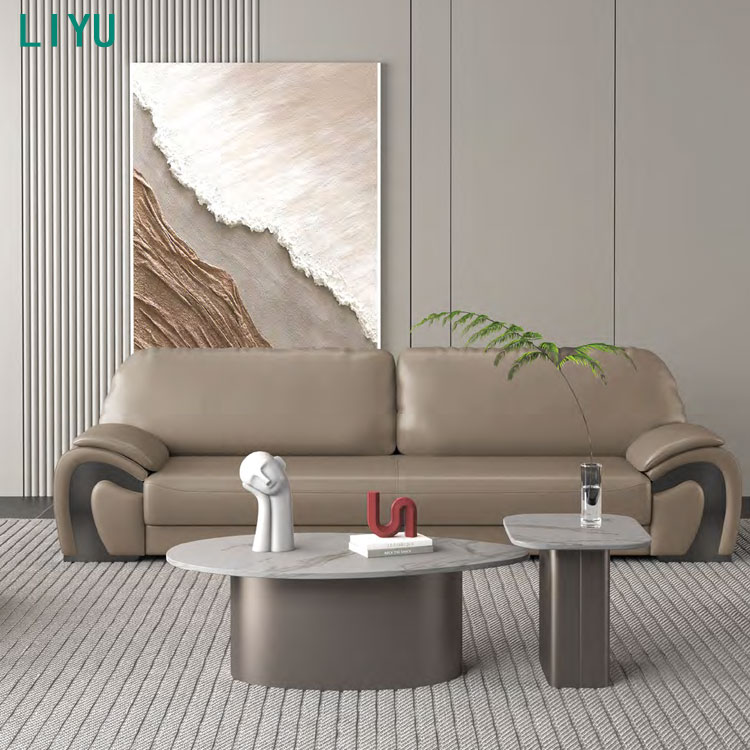
Performance textiles offer exceptional durability for heavy-use areas. Solution-dyed acrylics, crypton fabrics, and recycled polyesters provide excellent stain resistance. They also offer bleach cleanability and moisture barrier capabilities. These features are critical for maintaining hygiene in shared spaces where spills are inevitable. When specifying woven fabrics, look for tight weaves that resist snagging from rivets on jeans or hardware on bags.
Commercial leather presents a different set of trade-offs. Top-grain leather offers superior longevity and breathability compared to corrected-grain options. Dark blue and navy dyes perform well on leather over time, developing a rich patina. However, you must evaluate scratch resistance for high-traffic zones. Specifying the right leather office sofa colors involves choosing between classic midnight navy, cobalt, and slate-blue. These shades complement executive goals while effectively hiding natural wear. For healthcare-adjacent or ultra-high-traffic environments, vinyl or silicone-based faux leathers provide necessary cleanability while mimicking the look of natural hide.
Balancing visual weight and texture is crucial for reception areas. Flat weaves show fewer snags and withstand heavy use. Textured bouclés or velvets offer a premium aesthetic but require higher maintenance. The ideal reception sofa finish depends on your facility's cleaning capabilities and traffic volume. If your maintenance team uses heavy-duty extractors, ensure the fabric backing can withstand moisture without delaminating.
Contract-grade accessories help mimic residential comfort. Select commercial-grade throw pillows and accent textiles in complementary warm ochre, rust, or cream. Ensure all accessories pass CAL 117 fire testing. Color fastness is another critical requirement. Sunlit reception areas and glass-walled atriums demand UV-resistant materials to prevent rapid fading. A navy sofa placed in a south-facing atrium will turn a dusty purple within a year if the fabric lacks proper UV inhibitors.
Navigating ACT voluntary performance guidelines is mandatory for commercial procurement. You must verify flammability standards, specifically CAL 117-2013. Evaluate wet and dry crocking, colorfastness to light, and physical properties like pilling and seam slippage. Abrasion resistance is non-negotiable. Sustainability metrics also play a major role. Look for GREENGUARD Gold certification, PFAS-free treatments, and recycled content when selecting blue textiles.
| Performance Metric | Commercial Standard | Why It Matters |
|---|---|---|
| Abrasion (Wyzenbeek) | 50,000+ Double Rubs | Prevents fabric degradation in high-traffic areas. |
| Flammability | CAL 117-2013 | Ensures compliance with commercial fire safety codes. |
| Colorfastness to Light | Class 4 or 5 (40+ hours) | Prevents navy and dark blue dyes from fading in sunlit atriums. |
| Seam Slippage | 40 lbs minimum | Prevents the fabric from pulling apart at the seams under heavy weight. |
Commercial-grade framing separates professional furniture from residential alternatives. You must specify kiln-dried hardwood, CNC-routed plywood, or steel frames. Avoid residential MDF or particleboard entirely, as these materials warp and crack under continuous commercial use. Joinery standards dictate long-term stability. Require corner blocks, double-doweling, and heavy-duty hardware for continuous multi-shift usage. Glued and screwed joints provide the necessary rigidity for seating that accommodates dozens of different users daily.
Base and leg finishes significantly impact the overall aesthetic. Specify leg materials like brushed brass, warm walnut, or matte black powder-coated steel. These choices elevate the design and match surrounding interior hardware. Bariatric and high-capacity considerations are also essential. Specify weight ratings that exceed standard residential limits, aiming for at least 350 pounds per seat. Steel reinforced seat decks prevent the suspension system from bottoming out over time.
High-Resiliency (HR) foam is critical for commercial seating. You need foam densities of 2.0 lbs/cu. ft. or higher. This prevents "puddling" and structural breakdown over a 5-10 year lifecycle. Pitch and seat depth must align with the room's function. Design for an active, upright posture in waiting areas, which requires a shallower seat depth (around 20-22 inches) and a firmer back pitch. Allow for a more relaxed posture in private executive offices, where deeper seats and softer foam layers provide extended comfort during long meetings.
Modular seating systems offer significant operational benefits. They provide scalability and allow for targeted component replacement. You can swap a damaged seat cushion without replacing the entire unit, drastically reducing long-term replacement efforts. When specifying custom office furniture, consider integrated power and data. Specify custom power receptacles like USB-C and AC within the sofa chassis. Ensure these additions maintain UL compliance and aesthetic integrity by matching the faceplates to the upholstery or base finish.
Choosing between Customer's Own Material (COM) and graded-in fabrics impacts your timeline and budget. Graded-in fabrics are pre-approved by the manufacturer, streamlining the process and guaranteeing that the fabric works with the specific frame design. COM allows for precise brand alignment but requires sending custom fabric for testing and application. This adds financial costs and extends timelines, as the manufacturer must verify the fabric will not pucker or fail on their frames. Realistic expectations for custom commercial furniture manufacturing typically range from 8 to 14 weeks. Factor in shipping and installation scheduling when planning your project, especially if union labor is required for the installation phase.
Establishing facility management protocols based on cleaning codes extends the life of your furniture. Identify whether the upholstery requires W (water-based), S (solvent-based), WS (water or solvent), or X (vacuum only) cleaning methods. Implement strategies for mitigating wear. Rotate modular pieces regularly to ensure even usage across the entire seating arrangement. Apply compliant aftermarket soil retardants if necessary, ensuring they do not void the manufacturer's warranty or alter the fabric's flammability rating. Address dye transfer from denim immediately to protect lighter blue shades or heavily textured weaves from permanent staining.
A blue office sofa serves as a powerful design anchor, but its success relies entirely on strict adherence to commercial construction standards. Specifying the right materials, frame construction, and finishes ensures the piece withstands heavy traffic while maintaining its visual appeal. To move your procurement process forward, execute the following steps:
A: For heavy-duty commercial use, fabrics should exceed 50,000 Wyzenbeek double rubs. High-traffic reception areas often benefit from textiles rated for 100,000+ double rubs to ensure longevity.
A: Specify solution-dyed acrylic fabrics or textiles with a high rating for colorfastness to light. Look for Class 4 or 5 ratings at 40+ hours to effectively mitigate UV degradation.
A: High-performance fabrics offer better stain resistance and lower upfront costs. Commercial-grade leather provides superior longevity and a premium aesthetic, though specific blue leather dyes may require specialized maintenance.
A: Warm up the setting by specifying warm wood accents like oak or walnut frames. Pair the sofa with warm metallic details, use 2700K ambient lighting, and layer with contract-grade accessories in rust or mustard yellow.
A: Avoid flat, uniform nylon weaves. Opt for rich, multi-tonal yarns like wool blends or textured bouclé. Use high-quality leather with deep saturation and pair them with high-end, custom-finished structural bases.
A: COM stands for "Customer's Own Material." It allows designers to select a specific blue fabric not offered by the furniture manufacturer, provided it passes the manufacturer's upholstery testing.
A: Custom commercial furniture typically requires a lead time of 8 to 14 weeks. This timeline accounts for frame construction, fabric testing, upholstery, and final quality assurance before shipping.


