
Views: 0 Author: Site Editor Publish Time: 2026-07-03 Origin: Site


Purchasing a high-ticket office chair based solely on aesthetics or static padding while ignoring the underlying mechanical engineering exposes users to significant physical risks. A thick seat cushion might look inviting, but without the right hardware driving its movement, that same chair can quickly become an ergonomic hazard. Prolonged sitting requires dynamic movement. Maintaining a static posture for hours leads to spinal compression, restricted circulation, and musculoskeletal fatigue. The hardware component that dictates whether a chair supports active sitting or causes physical strain is the tilt mechanism.
To find the best reclining office chair, you must bypass marketing fluff and technically evaluate the hardware, tilt mechanics, and build quality. This guide breaks down how to match specific mechanical engineering to your body mechanics and daily workflows.
A successful recline is not just about leaning backward. Proper mechanics ensure you maintain eye level with your monitors, prevent your lower back from pulling away from the backrest, and keep your feet flat on the floor. If a chair fails any of these criteria during recline, the hardware is actively working against your body. When evaluating a chair on the floor, you need to look at how the mechanism handles the transfer of weight. A poorly designed pivot point will force your pelvis to tilt unnaturally, leading to immediate lower back strain.
Medical and ergonomic consensus emphasizes the necessity of micro-movements throughout the workday. A well-engineered reclining office chair mechanism facilitates continuous blood flow, reduces intervertebral disc pressure, and prevents static spinal load. When you lean back, the chair should absorb your weight smoothly, encouraging you to shift positions without conscious effort. The human spine is not designed to bear static loads for eight hours. The mechanism acts as a suspension system, absorbing the micro-shocks of daily movement and distributing your body weight across the seat pan and backrest.
Budget models often mask poor engineering with excessive foam. Common failure points in these cheap mechanisms include stripped tension knobs, snapping tilt locks, grinding springs, and degrading pneumatic cylinders. High-end engineering utilizes precision-machined parts that maintain consistent tension and smooth operation over years of heavy use. You can usually spot a low-quality mechanism by the amount of play or wobble in the seat pan before the tilt lock even engages.
| Mechanism Quality | Material Construction | Expected Lifespan | Ergonomic Impact |
|---|---|---|---|
| Low-End | Stamped steel, plastic gears | 1-2 years | High static load, poor circulation |
| Mid-Range | Cast aluminum, standard springs | 3-5 years | Moderate support, basic tension control |
| High-End | Machined aluminum, torsion springs | 10+ years | Dynamic movement, optimal spinal alignment |
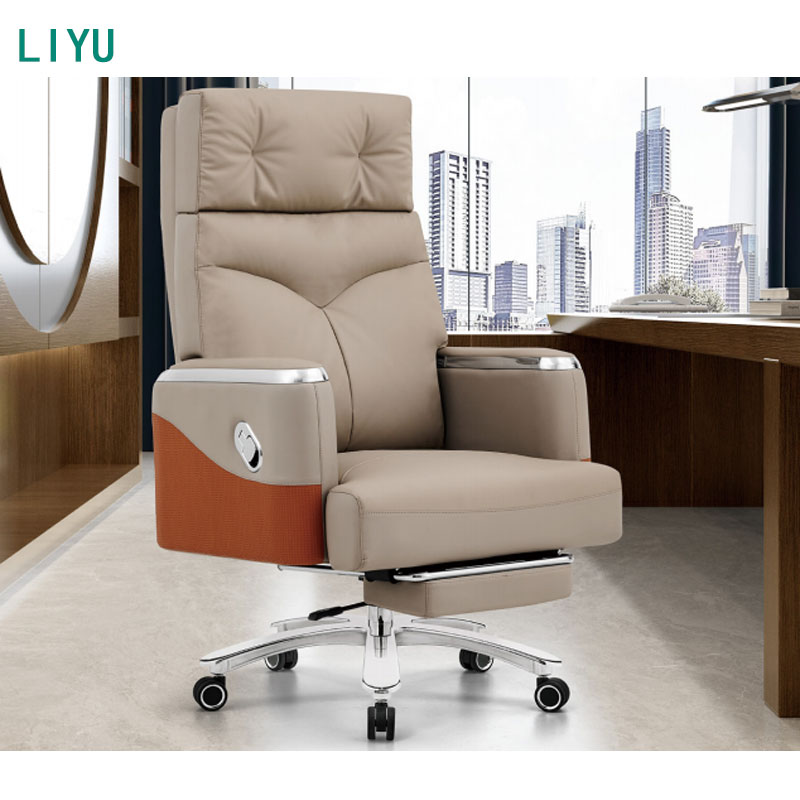
The center-tilt mechanism features a pivot point located directly under the center of the seat. While common, it carries a severe ergonomic drawback. Reclining in a center-tilt chair lifts the user's feet off the floor, causing under-thigh pressure and restricted blood flow. This mechanism is best reserved for light, intermittent use rather than full-time desk work. When you lean back, the front edge of the seat rises at the same angle as the backrest. This teeter-totter effect pinches the sciatic nerve and cuts off circulation to the lower legs. You will often see this mechanism in basic conference room seating where users are not expected to sit for extended periods.
Knee-tilt mechanisms shift the pivot point toward the front edge of the seat. This design is standard in a traditional executive comfort chair. It allows a deep recline while keeping your feet firmly planted on the ground. While it prevents under-thigh pressure, it lacks the sophisticated, synchronized angle adjustments found in modern ergonomic models. Because the pivot point is near your knees, your feet remain flat on the floor even when you lean back entirely. This is a significant upgrade over center-tilt designs, but it still maintains a fixed angle between the seat pan and the backrest, which does not open up the hip angle to improve digestion and breathing.
Synchro-tilt operates on a 2:1 or 3:1 ratio, meaning the backrest reclines faster than the seat pan. This synchronized movement prevents the "shirt-pull" effect, opens the hip angle to promote circulation, and maintains a stable focal line to your monitor. For anyone seeking a reliable long sitting chair, a synchro-tilt mechanism is a non-negotiable feature. When you recline 20 degrees, the seat pan only tilts up about 10 degrees. This differential keeps your feet flat, your thighs parallel to the floor, and your torso open. It is the most biomechanically sound way to sit for eight or more hours a day, reducing the load on the lumbar spine and preventing the slouching posture that leads to chronic pain.
These mechanisms use the sitter's body weight to automatically adjust recline tension without manual knobs. They offer excellent ease of use in hot-desking or multi-user environments. However, they lack manual override capabilities, meaning users with highly specific tension preferences might find them limiting. The internal gearing calculates the resistance needed based on the downward force applied to the seat pan. If you weigh 150 pounds, the chair provides less resistance than if you weigh 250 pounds. This is highly efficient for shared workstations, but power users who prefer a very stiff or very loose recline regardless of their body weight will miss the manual tension dial.
Multi-function mechanisms feature separate levers to lock the seat angle and backrest angle independently. This offers unmatched posture customization for specialized tasks. The trade-off is increased mechanical complexity and a steeper learning curve to find the correct ergonomic neutral position. You can lock the seat pan in a forward tilt while locking the backrest in a deep recline, or vice versa. This level of control is necessary for highly specific tasks like drafting, microscopic assembly, or intensive data entry. However, the sheer number of levers and knobs can be overwhelming, and users often lock the chair into poor ergonomic positions simply because they do not understand how to calibrate the mechanism properly.
Infinite tilt-lock allows you to secure the backrest at any exact angle, whereas multi-position lock limits you to three or five preset angles. A smooth, easily accessible tension dial is critical. Proper tension prevents the jarring "falling backward" sensation while ensuring you do not have to fight the chair to recline. The tension should be set so that you can recline smoothly by simply shifting your upper body weight backward, and return to an upright position by leaning forward, without needing to push off the floor with your feet. If you have to brace your legs to recline, the tension is too tight. If you feel like you are falling, it is too loose.
The recline mechanism must interact seamlessly with lumbar support. In a high-quality adjustable lumbar chair, the lumbar pad tracks with the spine during recline. Static lumbar pads lose contact and effectiveness the moment the user leans back, defeating their intended purpose. When you recline, your spine naturally lengthens and changes shape. A fixed lumbar pad will end up pushing into your mid-back or tailbone instead of supporting the natural curve of your lower back. Advanced mechanisms incorporate a sliding or pivoting lumbar system that moves in tandem with the backrest, ensuring continuous contact and support regardless of the recline angle.
Seat depth adjustment, or a seat slider, is critical to accommodate different femur lengths while reclining. Additionally, forward-tilt options, which typically angle the seat 5 degrees downward, are highly beneficial for intensive, task-focused, leaning-in work. If the seat pan is too deep, it will press against the back of your knees, cutting off circulation. If it is too shallow, it will not support your thighs, placing excessive pressure on your buttocks and lower back. The forward tilt function is particularly useful for keyboard-heavy tasks, as it rotates the pelvis forward, maintaining the natural inward curve of the lumbar spine even when you are leaning toward your monitor.
Armrest behavior during recline significantly impacts upper body comfort. Seat-mounted arms stay static, leaving your arms unsupported when leaning back. Back-mounted armrests recline dynamically with the backrest, maintaining support for the elbows and forearms to reduce neck and shoulder fatigue. If you spend a lot of time reading, taking phone calls, or using a tablet while reclined, back-mounted armrests are essential. They keep your arms in a neutral position, preventing the shoulder shrugging and neck strain that occurs when you have to reach forward to rest your arms on static, seat-mounted pads.
The structural integrity of the mechanism housing determines the chair's lifespan. Heavy-duty steel or cast aluminum housings withstand daily eight-hour use without failure. Cheap plastic composites and nylon housings are prone to cracking, squeaking, and wobbling under continuous stress. When you flip a chair over, examine the mechanism box. A solid metal housing indicates a chair built for longevity. Plastic housings, even those reinforced with fiberglass, will eventually warp or crack under the repeated torque of reclining. This warping leads to the dreaded side-to-side wobble that ruins the stability of the chair.
Meeting BIFMA standards is a baseline requirement. Look for Class 4 gas lift cylinders to ensure consistent recline performance. Inferior cylinders lose pressurization over time, causing the chair to sink unexpectedly during use. The gas cylinder is the backbone of the chair, supporting your entire body weight and facilitating the height adjustment. A Class 4 cylinder is rated for heavy-duty use and can support higher weight capacities without the seals degrading. If a chair uses a Class 2 or Class 3 cylinder, it is a clear indicator that the manufacturer is cutting corners on internal components.
The chair's base diameter and material directly impact safety. A wide, polished aluminum five-star base provides superior tipping resistance compared to narrow plastic bases, especially when a user relies on a deep-angle recline. The base must be wide enough to counteract the shift in your center of gravity when you lean back. A base diameter of at least 26 inches is recommended for chairs with a deep recline function. Aluminum bases are preferable to nylon bases because they do not flex under load, ensuring that the casters remain perfectly vertical and roll smoothly across the floor.
Always read the fine print on manufacturer warranties. A "lifetime warranty" often applies only to the static frame. Moving mechanical parts, gas cylinders, and mesh or fabric coverings typically carry much shorter warranties, ranging from one to five years. The mechanism and the cylinder are the most likely components to fail, so you need to know exactly how long they are covered. A robust warranty on the mechanism indicates that the manufacturer has confidence in their engineering. If the warranty on moving parts is only one year, you should expect to replace the chair or perform significant maintenance shortly after that period expires.
Deciding between a synchronized mechanism and a knee-tilt model depends on your daily hours seated and pre-existing back issues. Intensive desk work demands the ergonomic yield of a synchro-tilt mechanism, whereas lighter use or conference room settings may only require a standard knee-tilt. You have to evaluate your specific workflow. If you are up and down constantly, a knee-tilt might suffice. But if you are locked into a workstation for long stretches, the investment in a synchro-tilt mechanism pays off by preventing the fatigue and pain that reduce productivity.
Highly adjustable, multi-lever chairs offer precise alignment but introduce more moving parts, which equates to more potential wear-and-tear points. Simpler, robust weight-activated chairs have fewer points of failure, offering a trade-off between hyper-adjustability and long-term maintenance needs. Every lever, cable, and gear is a potential point of failure. If you work in a dusty environment or a high-traffic area, a simpler mechanism with fewer exposed moving parts will require less maintenance and cleaning. Conversely, if you need precise ergonomic calibration, you must accept the responsibility of maintaining a more complex mechanical system.
A: A synchro-tilt mechanism links the backrest and seat pan to recline at a 2:1 or 3:1 ratio. As you lean back, the backrest moves further than the seat. This opens your hip angle, promotes healthy blood circulation, and keeps your feet flat on the floor.
A: Yes, dynamic sitting is highly recommended by medical professionals. A supported recline reduces intervertebral disc pressure and allows spinal muscles to relax. Continuous micro-movements facilitated by a good mechanism prevent the stiffness associated with static posture.
A: For active typing and desk work, a slight recline of 100 to 110 degrees is optimal to reduce spinal load. For resting, taking calls, or reading, reclining up to 135 degrees is recommended to fully offload back pressure.
A: A center-tilt mechanism pivots from the middle of the seat, lifting your feet off the floor and causing under-thigh pressure. A knee-tilt mechanism shifts the pivot point to the front edge, allowing you to recline deeply while keeping your feet planted.
A: It depends on the design. Seat-mounted armrests remain stationary when you lean back, which can leave your arms unsupported. Backrest-mounted armrests recline with you, maintaining continuous support for your forearms and reducing shoulder fatigue.
A: It cannot act as a standalone medical cure for existing injuries. However, it can prevent posture aggravation, support natural spinal alignment, and significantly reduce the daily strain that contributes to chronic lower back pain.
A: Sinking is usually caused by gas cylinder failure or seal degradation, not the recline mechanism itself. When the pneumatic lift loses its internal pressurization, it can no longer support your weight, requiring a cylinder replacement.


