
Views: 0 Author: Site Editor Publish Time: 2026-07-17 Origin: Site


Purchasing a heavy-duty chair only to experience sinking cylinders, flattened seat cushions, or cracked bases within six months is a common frustration. Standard office chairs are engineered for 250 to 275 lbs. Exceeding this limit causes rapid mechanical failure, creates safety hazards, and eliminates ergonomic benefits, leading to chronic discomfort and lost productivity. Finding a legitimate 500 lb capacity office chair requires looking past marketing claims and evaluating the structural engineering, material density, and verified testing standards of the seating options. You need to inspect the actual build quality, from the thickness of the steel frame to the specific grading of the pneumatic lift. We will break down exactly what components fail under high loads and how to identify seating built to withstand continuous, heavy use without compromising on physical support or workplace safety.
Standard nylon bases crack, standard casters shatter, and standard tilt mechanisms warp under heavy pressure due to inadequate weight distribution. The physics of heavy-duty seating demand materials that can withstand sustained downward force and lateral stress without structural fatigue. When a user sits, the kinetic energy transfers directly through the seat pan into the central mechanism and down the cylinder to the base. Standard chairs use thin stamped steel or plastic composites in these critical junction points. Under a 300+ lb load, the shear force on the caster stems causes them to snap, while the central tilt mechanism bends, leaving the user permanently leaning forward or to one side.
Furthermore, standard five-star bases made of nylon flex under pressure. Over time, this continuous flexing creates micro-fractures in the plastic. Eventually, one of the legs will give out completely. To prevent this, heavy-duty seating requires a fundamental redesign of how weight is transferred from the user to the floor, utilizing thicker materials and reinforced geometric structures.
The pneumatic cylinder grading system determines a chair's lifting and holding capacity. A Class 4 cylinder, or a specialized heavy-duty cylinder, is the non-negotiable foundation of any high-capacity seating. Lower-class cylinders will inevitably leak gas and sink under higher weight loads. The cylinder acts as the central pillar of the entire chair. If it fails, the chair becomes unusable.
| Cylinder Class | Typical Weight Rating | Wall Thickness | Application |
|---|---|---|---|
| Class 2 | Up to 200 lbs | 1.2mm | Light residential use, budget task chairs |
| Class 3 | Up to 275 lbs | 1.5mm | Standard commercial office chairs |
| Class 4 | Up to 350 lbs | 2.0mm | Heavy-duty commercial use |
| Heavy-Duty (Class 4+) | 500+ lbs | 2.5mm - 3.0mm | Big and tall seating, 24/7 dispatch chairs |
When evaluating a chair, you must verify the cylinder class. Manufacturers of genuine heavy-duty chairs will explicitly state the use of a Class 4 or specialized heavy-duty gas lift. If the specification sheet omits the cylinder class, assume it is a standard Class 3 component that will fail under a 500 lb load.
Tubular steel frames provide superior strength compared to standard plastic or composite frames. Metal-to-metal fastening points are necessary to prevent the frame from flexing or snapping when subjected to continuous high-capacity use. Standard chairs often use wood screws driven directly into a plywood seat board. Under heavy loads, these screws strip out of the wood, causing the armrests or backrest to detach.
A properly engineered heavy-duty frame utilizes steel T-nuts embedded into a reinforced seat pan, or it bypasses wood entirely in favor of a solid steel chassis. The welds on these frames must be continuous, rather than spot-welded, to ensure the joints can handle the torque generated when a heavy user leans back or pushes off the armrests to stand up.
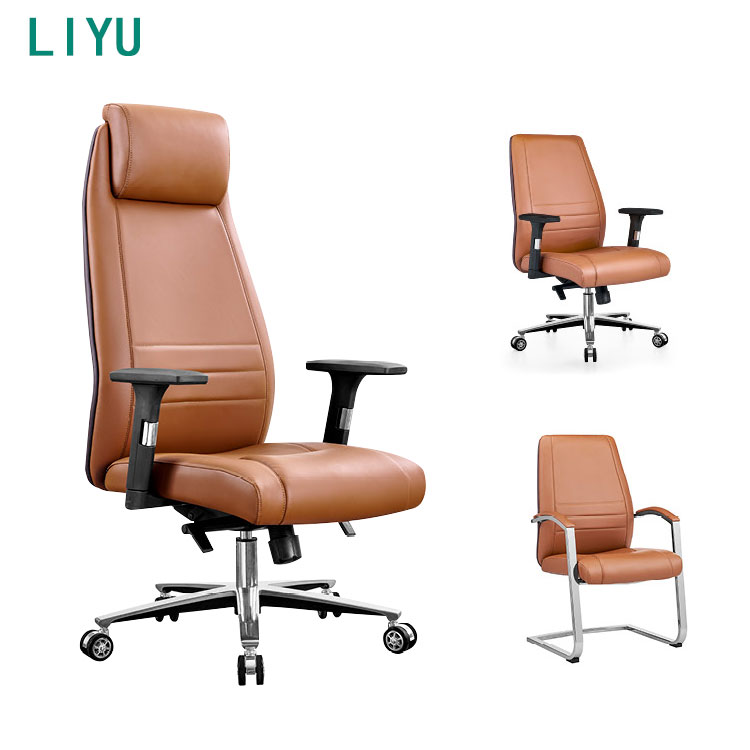
A 500 lb capacity requires a seat width of at least 22 to 24 inches. Adjustable seat depth is required to ensure proper thigh support and prevent the seat edge from cutting off circulation at the knees. Standard chairs typically offer an 18 to 19-inch seat width, which forces the user's hips against the armrest posts, causing severe discomfort and restricting movement.
Seat depth is equally critical. If the seat pan is too short, the user's weight is concentrated on a smaller surface area of the buttocks, leading to pressure sores and fatigue. If the seat pan is too long, the user cannot reach the backrest without slouching, which destroys lumbar alignment. A seat slider mechanism allows the user to adjust the depth, ensuring two to three fingers of clearance between the back of the knee and the front edge of the seat.
Memory foam compresses completely under heavy loads, offering little support. High-resiliency molded polyurethane foam retains its shape and provides consistent support, preventing the user from bottoming out on the hard seat pan. The density of the foam dictates its lifespan and performance.
Standard cut foam is essentially a sponge; it feels soft initially but flattens out within an hour of sitting. Molded foam is created by injecting liquid polyurethane into a mold, creating a dense, supportive structure with a sealed outer skin. For a 500 lb user, the foam density should exceed 50kg/m³. This ensures the cushion absorbs the impact of sitting down and distributes the static weight evenly across the entire seat pan.
Five-star or six-star cast aluminum or steel bases are necessary for stability. Larger, heavy-duty casters distribute weight more effectively, ensuring smooth rolling and preventing floor damage under heavy loads. A standard 50mm nylon caster will dig into carpet or scratch hard floors when subjected to extreme weight.
Heavy-duty chairs require casters with a minimum diameter of 65mm, featuring reinforced steel stems and polyurethane treads. The wider wheel base reduces the point load on the floor surface. Additionally, the base itself must have internal ribbing or gussets to reinforce the structural integrity of each leg, preventing them from bending upward over time.
Weight capacity is only one part of the equation. A chair must accommodate different physical proportions, such as wider hips versus longer legs, to provide true ergonomic support. Evaluating how a chair fits various body types ensures comprehensive comfort. A user who carries their weight in their lower body requires a wider seat pan and highly adjustable armrests. A user with a longer torso requires a taller backrest and higher lumbar support placement.
When testing a chair, pay attention to the clearance between the thighs and the armrests, the positioning of the lumbar curve relative to the spine, and the angle of the knees when the feet are flat on the floor. A chair that supports 500 lbs but forces the user into an unnatural posture is a failure of design.
A high back office chair distributes upper body weight and accommodates taller torsos and broader shoulders. Depth-adjustable lumbar support that resists snapping under pressure is essential for maintaining spinal alignment. Standard lumbar supports are often flimsy pieces of plastic that flatten out when a heavy user leans against them.
Heavy-duty lumbar systems utilize reinforced steel brackets or dense foam pads integrated directly into the backrest frame. The support must be adjustable in both height and depth to target the exact curve of the user's lower spine. Without adequate lumbar support, the pelvis tilts backward, leading to a flattened lumbar curve, muscle strain, and severe lower back pain.
Heavy-duty tension springs and multi-position tilt-locks are required to safely recline without tipping or sliding forward. Knee-tilt and synchro-tilt mechanisms must be reinforced to handle the increased leverage of a heavier user. A standard tilt mechanism relies on a single, thin coil spring to control the recline tension. Under a 500 lb load, this spring is easily overpowered, causing the user to fall backward rapidly.
A heavy-duty synchro-tilt mechanism uses dual torsion springs or heavy-gauge coil springs to provide smooth, controlled resistance. The mechanism housing itself is cast from thick aluminum or steel to prevent the internal gears from stripping. A multi-position tilt-lock allows the user to lock the backrest at various angles, providing stable support for different tasks without relying solely on the spring tension.
Armrests must be mounted directly to the steel mechanism, not just the seat board. This structural integration allows the armrests to withstand the significant force of a user pushing up to stand. Standard armrests attached with wood screws will quickly loosen and break off.
Furthermore, the armrests should offer 3D or 4D adjustability—moving up and down, forward and backward, and pivoting inward and outward. This allows users of different widths to position the armpads directly under their elbows, reducing strain on the neck and shoulders. The armpads themselves should be made of dense polyurethane to resist cracking and peeling under heavy use.
A sturdy executive chair typically features leather or heavy-duty polyurethane upholstery, plush padding, and a fixed back. It is best suited for private offices and shorter duration sitting, appealing to users prioritizing aesthetic authority. These chairs project a commanding presence and often feature thick, layered cushioning.
However, executive chairs are often less breathable and may lack micro-ergonomic adjustments. The fixed back angle means the user cannot fine-tune the recline or lumbar position. When selecting an executive model for a 500 lb user, verify that the internal frame is steel, not plywood, and that the base is cast metal rather than capped plastic.
Featuring high-tensile mesh or breathable fabric and modular support systems, this category provides optimal ergonomic office seating for long workdays. It is ideal for users with specific musculoskeletal pain points. The adjustability allows the user to customize the chair to their exact body dimensions.
High-quality mesh rated for 500 lbs requires specialized weaving techniques and reinforced attachment points to prevent sagging. The mesh must be tensioned correctly across a rigid frame to provide support without creating pressure points. While these chairs may look utilitarian, their performance in maintaining proper posture over an eight-hour shift is unmatched.
Built for continuous use by multiple users, these chairs feature ultra-dense foam and a steel chassis. They offer maximum commercial chair durability for call centers, control rooms, and dispatch centers. These environments require seating that never stops working.
Multi-shift chairs are over-engineered in every aspect. They utilize heavy-gauge steel frames, replaceable components, and fabrics tested to hundreds of thousands of double rubs for abrasion resistance. The trade-offs include a heavy, difficult-to-move structure and a utilitarian appearance. However, for environments where failure is not an option, this category is the only logical choice.
Many chairs in the lower tier of the market claim high weight capacities but fail to deliver long-term reliability. Structural compromises, such as lower-grade cylinders, thinner metal components, and low-density foam, are made to meet lower production costs. These chairs may hold 500 lbs statically for a short period, but they cannot withstand the dynamic forces of a heavy user sitting, moving, and reclining day after day.
Manufacturers of budget chairs often use deceptive marketing, highlighting a wide seat while ignoring the weak nylon base or Class 3 cylinder. Purchasing these chairs results in a cycle of frequent replacements, ultimately costing more in time, frustration, and potential injury than investing in a properly engineered product upfront.
Buying a low-tier heavy-duty chair that breaks annually offers poor return on investment. Investing in a structurally sound chair that lasts a decade provides superior long-term value and safety. A high-quality chair reduces the risk of workplace injuries related to chair failure, such as falls or chronic back pain.
When evaluating the cost, consider the cost per year of ownership. A well-built chair with a ten-year warranty will outlast five budget chairs, providing consistent comfort and support throughout its lifespan. The initial investment is higher, but the long-term reliability justifies the expense.
Check if the 500 lb rating is covered for standard 8-hour days or continuous 24-hour days. Determine whether the warranty covers the cylinder and foam compression, or just the metal frame, to understand the true level of protection. Many warranties contain clauses that void coverage if the chair is used for more than a standard workweek.
Look for warranties that explicitly cover pneumatic cylinders, mechanisms, and foam degradation. A warranty that only covers the steel frame is practically useless, as the frame is the least likely component to fail. Read the exclusions carefully to ensure your specific use case is fully protected.
True 500 lb capacity chairs feature heavy steel components. The mechanism alone can weigh over 20 lbs, making assembly difficult and potentially dangerous for a single person. Improper assembly, such as failing to tighten bolts to the correct torque, can lead to catastrophic failure.
Avoid keyword-stuffed product listings on online marketplaces that make unverified claims. Check manufacturer specification sheets for verified ANSI/BIFMA X5.11 compliance before purchasing to ensure the chair meets rigorous testing standards. The X5.11 standard specifically tests chairs for users up to 400 lbs, and some manufacturers test beyond this to certify for 500 lbs.
These tests include drop tests, back pull tests, and base stability tests that simulate years of heavy use. If a manufacturer cannot provide a testing certificate from an independent laboratory, their weight capacity claims are merely estimates and should not be trusted.
Testing chairs across multiple users or verifying return policies with minimum 30-day trials ensures physical compatibility with different body builds before committing to a purchase. A chair that looks perfect on paper may feel uncomfortable in reality due to the specific contours of the seat pan or the placement of the lumbar support.
Implement a pilot program where heavy users test a shortlist of chairs in their actual work environment. Gather feedback on comfort, adjustability, and perceived durability. This hands-on approach prevents costly mistakes and ensures the final selection meets the practical needs of the workforce.
A reliable 500 lb capacity office chair is defined by its cylinder class, structural frame, and foam density, rather than its visual bulk. Relying on marketing claims without verifying the underlying engineering leads to mechanical failure and physical discomfort. You must prioritize heavy-duty components over aesthetic features to ensure long-term safety and support.
A: A standard big and tall chair may just have wider dimensions but use standard components. A true 500 lb capacity chair utilizes heavy-duty steel frames, Class 4 cylinders, and high-density foam designed specifically to withstand sustained high weight loads without failing.
A: Look for specifications stating the chair uses a Class 4 gas lift cylinder or a specialized heavy-duty cylinder. Additionally, check for ANSI/BIFMA X5.11 certification, which verifies the chair's weight capacity claims through rigorous independent testing.
A: Yes, provided they use high-tensile, commercial-grade mesh and are explicitly rated for 500 lbs. High-quality mesh can offer excellent support and breathability for heavier users without sagging over time.
A: For a 500 lb capacity, look for a seat width of at least 22 to 24 inches to ensure comfortable seating without feeling constrained by the armrests or cutting off circulation to the legs.
A: Yes, a high back design distributes upper body weight more effectively and provides necessary support for taller torsos and broader shoulders, reducing strain on the lower back and neck.
A: A 24/7 rating means the chair is built for continuous use by multiple users around the clock. It indicates the highest level of durability, utilizing ultra-dense foam and heavy-duty steel chassis to withstand constant wear.
A: It can, unless equipped with the correct casters. Ensure the chair has heavy-duty casters with a minimum diameter of 65mm and polyurethane treads to distribute the weight evenly and prevent scratching or crushing the floor surface.


