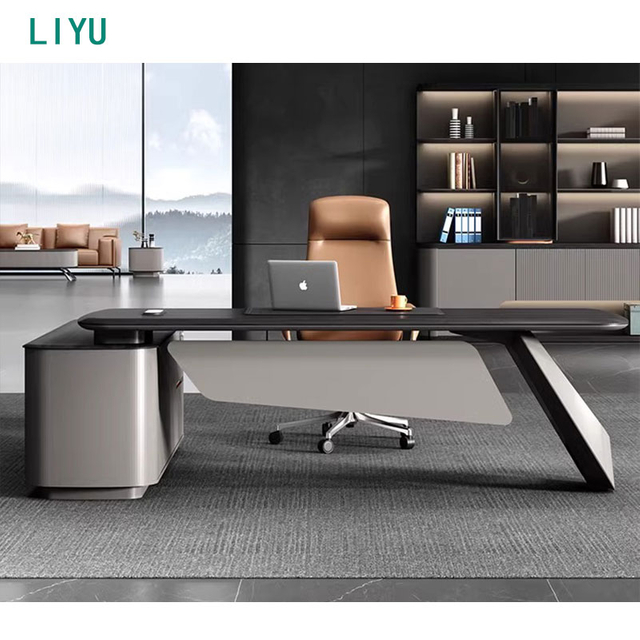
Views: 400 Author: Site Editor Publish Time: 2026-10-16 Origin: Site


The short answer. Matching a desk and chair comes down to three rules: keep 250–300 mm of height difference between the 750 mm desktop and the seat's highest working position, hold one style family across every piece, and let one color temperature (or one swatch set) run through desk, chair and storage. Then choose a configuration tier (desk plus chair, desk-chair-storage, or the full suite with meeting and lounge pieces) and buy the whole set from one finish program. A matched executive desk and chair set costs little more to ship than the desk alone and reads as a designed room instead of a furniture sale.

A full executive suite: desk, return, storage and seating drawn from one finish program. Sets read as designed rooms; mismatched pieces read as a warehouse. This guide is about making the first version happen deliberately.
A desk bought alone is a piece of furniture. A desk bought as a set is an office. That difference is commercial, not aesthetic: dealers report that matched suites lift perceived value across the whole category page, project buyers accept set pricing faster than piecemeal quotes, and end clients judge an executive room by whether the chair "belongs" to the desk. This guide is for the people assembling those sets: buyers furnishing complete executive spaces, dealers building bundle programs, and designers specifying desk-and-chair combinations for clients.
The pairing rules below are simple enough to run without a designer on call, the chair checklist covers what actually matters in an executive chair (benchmarked against ANSI/BIFMA X5.1 seating tests), and the configuration tiers show how a set grows from two pieces to a full room. Heights and clearances reuse the planning arithmetic from the size guide; where a number is a planning convention rather than a factory specification, the text says so.
Three rules cover the desk-to-chair relationship, and all three can be checked from a catalog sheet plus a tape measure:
1. Height difference. Fixed executive desks sit at 750 mm, the de-facto standard worldwide. The chair's seat should sit roughly 250–300 mm below the desktop in its working position, a planning convention that keeps forearms level with the top and thighs clear of the modesty panel. Adjustable chairs clear this rule automatically; fixed-height visitor chairs need checking against the desk's knee space.
2. Style family. Chair and desk should belong to the same style family defined in the trends guide: a sculptural modern desk pairs with a clean-line executive chair, a luxury-tech lacquer run pairs with a high-back leather chair, and a classic veneer desk wants a traditional stitched back. Mixing families is the single fastest way to make an expensive set look discounted.
3. Color echo. One element of the chair should repeat one element of the desk: the upholstery echoing the desk's wood tone, or the chair's frame finish matching the desk's metal legs, both locked through the factory's swatch and RAL/Pantone referencing system. "Close enough" between two suppliers is how rooms end up three shades of gray.
These are conventions of practice rather than laboratory constants, but they are the conventions professional buyers apply first, because they catch almost every visible mismatch before a purchase order is written.

A dark-palette pairing done deliberately: the chair leather, the desk lacquer and the backdrop all sit in the same temperature band, locked by one swatch set.
An executive chair is half the perceived value of the set, so the checklist deserves the same rigor as the desk's. Benchmark seating against ANSI/BIFMA X5.1, the seating test standard professional buyers reference in North American programs (EN 527 covers the desk side in Europe), and run this table:
Check | What good looks like | Why it matters |
Seat height | Adjustable range covering the 250–300 mm desktop gap | The pairing rule in Step 1 depends on it |
Lumbar and back | Adjustable lumbar support; high back at executive tiers | All-day seating health; the chair is used more than the desk |
Armrests | Height- and width-adjustable, upholstered at executive tiers | Arm position matches the desktop, not the chair |
Base and casters | Polished or painted metal base; casters suited to the floor type | The most-failed component in cheap chairs |
Upholstery | Leather or premium fabric keyed to the desk's swatch set | Carries the color echo from Step 1 |
Test references | ANSI/BIFMA X5.1 (or EN equivalents) named; reports on request | Turns claims into documents |
One buying note: the chair is also the most-sat-on warranty exposure in the set. Ask which components (gas lift, mechanism, casters) the warranty names, and for how long; the answer varies more between suppliers than any fabric choice.
Sets scale in the same three tiers used across this series, so a dealer can map a customer into a tier and quote the whole bundle per model:
Tier | Components | Fits |
Set 1 · Desk + chair | Executive desk + matching executive chair | Focused rooms, starter programs, category-page anchor |
Set 2 · + storage | Set 1 + side cabinet or credenza (+ hutch where walls allow) | Full working offices; the volume tier for dealer bundles |
Set 3 · + meeting & lounge | Set 2 + small conference table, guest chairs, office sofa | Complete CEO suites and flagship showroom corners |
Two program notes for dealers. First, tier contents are component lists, not price lists: every supplier quotes executive desk furniture sets per model and specification, and the tier framework is what keeps quotes comparable across suppliers. Second, the jump from Set 2 to Set 3 is mostly freight, not cost: chairs, conference tops and sofas from the same factory share the container and the finish lock, which is why Set 3 margins are often better than they look.

The pairing rules applied: the tan leather chair echoes the warm tone of the desk program, the metal accents repeat, and the seating height clears the 750 mm top. One swatch set covers both pieces.
Executive sets rarely stop at the private room. The extension logic keeps every adjacent space in the same family:
· Conference room: table finish matched to the desk surface (or deliberately contrasted and documented in the finish program), chairs from the same executive chair line scaled down.
· Reception and lounge areas: the reception desk carries the same swatch set as the CEO suite, because clients meet reception first and the CEO office second.
· Adjacent manager rooms: same family, lower tier; one finish program spanning tiers is the whole point of buying from a full-line manufacturer.
This is where single-source manufacturers earn their place in a project: matching finishes across desks, chairs, conference tables, sofas and reception desks from one swatch set removes the color-drift risk that mixed sourcing creates. For an executive chair and table for office projects that also needs sofas, panels and reception furniture, the full-line route is usually the shorter specification conversation.
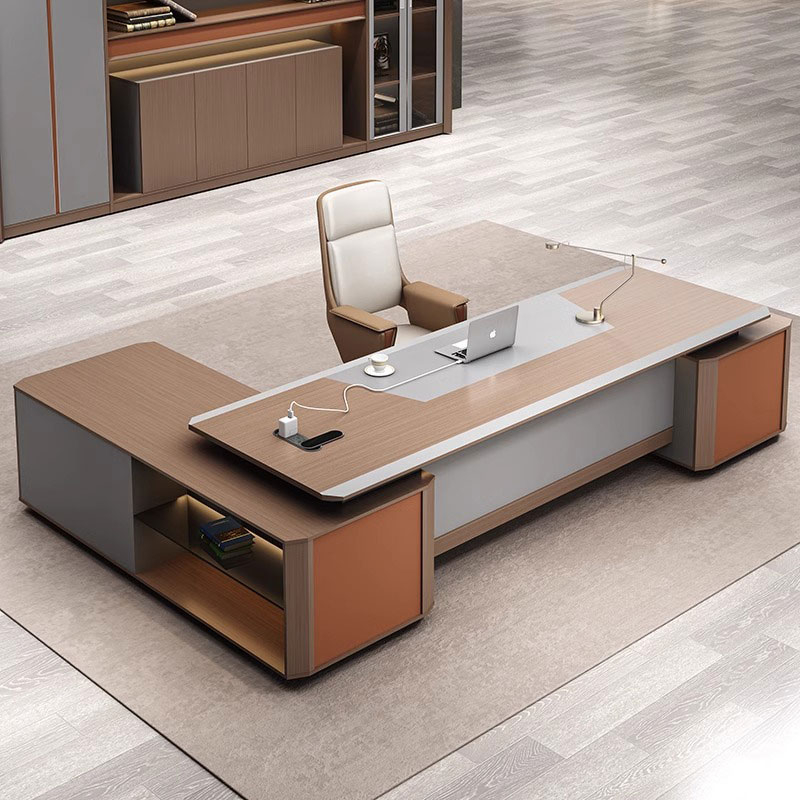
The light-finish version of the same logic: desk, storage and accents keyed to one swatch set. Light programs show color drift even faster than dark ones, which makes the swatch discipline more valuable, not less.
Sets fail on coordination, so this checklist adds the set-specific items to the standard desk checks:
# | Specification item | What "locked" looks like |
1 | Height pairing verified | Chair working height vs 750 mm desktop confirmed |
2 | Style family named | One family across desk, chair, storage (per the trends guide's five families) |
3 | Swatch set covers every piece | Desk, chair upholstery, cabinet, metal parts keyed to one set |
4 | Color references recorded | RAL/Pantone for painted and metal parts |
5 | Chair warranty named | Gas lift, mechanism and casters covered with terms |
6 | Extension pieces planned | Conference/reception pieces from the same finish program |
7 | Container plan | Set pieces packed for one shipment; volumes confirmed per model |
Item 3 is the one that protects re-orders: a swatch set that covers chair upholstery as well as desk panels means the suite ordered next year matches the suite ordered today. That single line is most of what "matching" means in production terms.
The working convention is 250–300 mm between the 750 mm desktop and the chair seat in its working position. Adjustable executive chairs clear this automatically; check fixed-height guest chairs against the desk's knee space instead.
Yes, and it is the recommended route: full-line manufacturers produce executive desks and executive chairs under one finish program, so swatches, color references and delivery all stay coordinated. Buying desk and chair from separate suppliers is the main source of color drift in executive rooms.
Matched sets read as designed rooms, which lifts perceived value across a category page and simplifies the buyer's decision to one tier choice. For dealers, sets also fill containers with pieces that sell together: chair, credenza and conference table from the same finish program.
Scale the table to the room (a 4–6 person table serves most executive meeting corners) and pull chairs from the same executive line as the desk chair, finished to the same swatch set. The table surface should reference the desk's finish, matched or deliberately contrasted and recorded in the finish program.
Exactly matching chair-to-desk color can look dated; the stronger convention is an echo: upholstery in the desk's tonal family, or frame metal keyed to the desk's legs and edges via RAL/Pantone references. Consistency of temperature and finish program matters more than identical color.
Yes. Executive desks and executive chairs are produced under one finish program with swatch locking across the range, and matched conference tables, storage and sofas extend the same program for full suites. Set configurations are quoted per model and specification, with OEM options for dealers building their own bundle programs.
· Ready to configure the set? Browse the executive desk and chair set range: desk and chair programs built to match.
· Pairing with a modern or luxury-tech desk? The modern executive desk range carries the flagship families referenced above.
· Custom finish programs across desk, chair and storage run through the customization process, or request a quote with your tier list attached.
Liyu Furniture is an office furniture manufacturer founded in 2007 in Lecong, Shunde (Foshan), Guangdong, in China's furniture manufacturing hub. Research, development, production, and sales run under one roof, and the catalog covers executive desks and tables, executive chairs, conference tables, file cabinets, office sofas, workstations and panels, and reception desks. OEM and ODM cooperation is welcome: production starts after drawings and samples are confirmed, and quotes are provided per model and specification.