
Views: 0 Author: Site Editor Publish Time: 2026-07-10 Origin: Site


The modern executive workspace demands a departure from standard black seating. Prioritizing aesthetic choices like a blue color palette often introduces risks of compromising on ergonomic performance and build quality. Decision-makers and interior architects struggle to balance the visual impact of a statement piece with the strict biomechanical requirements of prolonged executive work. This oversight frequently leads to investments in chairs that look impressive but fail in daily utility, causing physical discomfort and reduced focus for the user.
This guide provides a technical evaluation framework for selecting a blue office desk chair. We bridge the gap between high-end interior design requirements and rigorous ergonomic standards. You will learn how to assess material durability, structural integrity, and kinematic mechanisms. We focus on ensuring your seating choice supports both the physical well-being of the user and the architectural vision of the space without sacrificing mechanical reliability.
Establishing the minimum viable ergonomic features required for eight or more hours of daily use is mandatory before looking at any aesthetic elements. A high-performance chair must feature dynamic lumbar support that tracks the natural curve of the spine. You need seat pan depth adjustment to relieve pressure on the popliteal artery behind the knees. Multi-directional armrests are required to prevent shoulder shrugging and neck strain. These elements form the absolute foundation of biomechanical support in any professional setting.
You must incorporate flexible backrest dynamics that support focused, forward-leaning tasking as well as relaxed, reclined thinking or collaborative meetings. A rigid backrest restricts micromovements. This restriction leads to spinal compression and muscle fatigue over a long shift. Prioritizing sleek, minimalist designs that lack these necessary adjustability features introduces severe biomechanical risks. It defeats the purpose of high-end executive furniture entirely.
Executive suites often serve as transitional spaces for various leaders, board members, and guests. A single chair must accommodate a broad demographic spectrum. Tension controls and seat height ranges adapt the unit to different physical builds. A chair relying solely on standard gas cylinder heights leaves shorter users with dangling feet or taller users with inadequate thigh support.
Addressing the reality that one size does not fit all requires leveraging testing panel data. We look at how different physical builds experience seat-pan pressure distribution. High-density molded foam or advanced elastomeric suspensions distribute weight evenly across the seat pan. This prevents localized pressure points that cause numbness during long meetings.
Color psychology plays a heavy role in executive environments. Specific shades of blue, such as navy, cobalt, or slate, influence workplace psychology. They project stability, trust, and executive presence. Darker navy tones communicate authority and focus. Lighter slate or cobalt introduces a dynamic, contemporary energy into the room.
Integrating a specific office chair upholstery color with broader architectural finishes requires careful planning. You evaluate how the blue seating interacts with acoustic paneling, floor coverings, and corporate identity guidelines. When executed correctly, this integration reinforces branded workplace design seamlessly. It elevates the entire spatial experience without overwhelming the visual senses.
When selecting materials, the debate between performance fabrics and executive leather centers on breathability, maintenance, and durability. Blue performance fabrics offer superior thermal regulation. They must meet strict Martindale abrasion ratings. We look for a minimum of 100,000 double rubs for commercial use. This ensures they withstand daily friction without pilling or tearing. Dyed blue leather provides a premium tactile feel and easier wipe-down maintenance, though it traps heat more readily.
You must detail the reality of dye transfer risks and environmental degradation. Indigo denim transfer onto lighter blue shades of leather or fabric permanently stains the material. Ultraviolet fading in sun-exposed executive suites turns a vibrant cobalt into a washed-out grey over several years. You need UV-resistant treatments for any dyed upholstery near exterior windows.
Blue elastomeric mesh provides distinct technical benefits for thermal regulation in high-stress executive environments. By allowing continuous airflow, mesh prevents the heat buildup commonly associated with thick foam backrests. This material conforms dynamically to the user's spine. It offers targeted support without the need for manual lumbar adjustments in some advanced models.
You must examine the tension loss risks in lower-tier mesh chairs over a three-to-five-year lifecycle. Inferior mesh stretches and sags. This leads to a hammocking effect that destroys postural alignment. Premium self-tensioning meshes utilize complex woven polymers that retain their structural memory. They ensure the chair provides the exact same level of support in year five as it did on day one.
Specifying a custom office chair finish allows architects to harmonize the seating with the room's hardware. The process involves selecting custom frame colors to complement the chosen blue upholstery. Options include polished aluminum, hand-polished chrome, or matte slate. A matte black frame with navy fabric offers a subdued, professional look. Polished aluminum with bright blue mesh creates a striking, modern aesthetic.
Be aware of the impact these custom finishes have on procurement logistics. Non-standard frame colors extend manufacturer lead times significantly. You must verify how custom finishes affect warranty terms and the future availability of replacement parts. Ensure that a damaged caster or armrest pad can be replaced without replacing the entire chair.
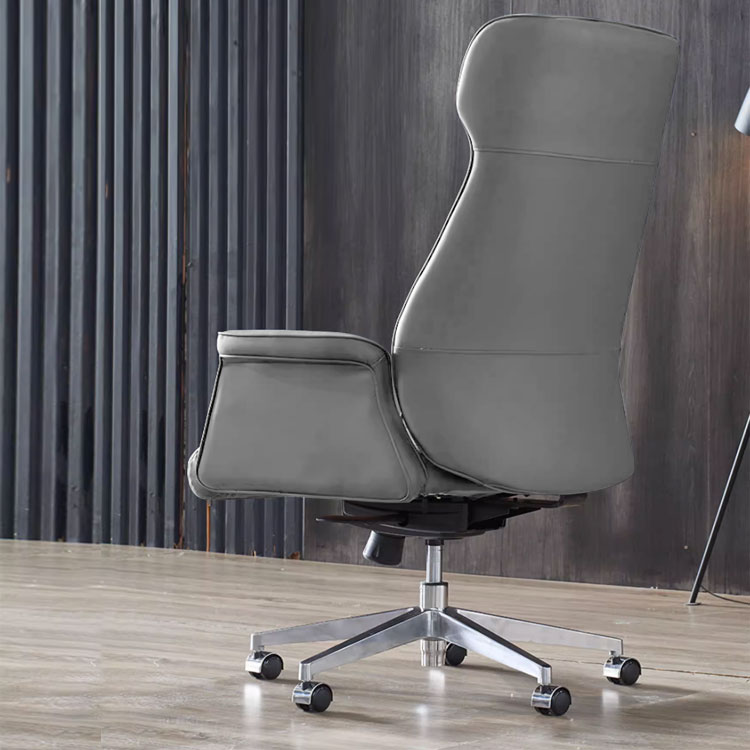
The foundation of any heavy-duty seating solution is its base. You establish the necessity of metal bases over nylon or plastic alternatives. We specify forged steel or die-cast aluminum. Metal bases provide the necessary structural durability and weight capacities required for executive use. They resist the stress fractures that plague plastic bases over time.
Equally important is the pneumatic cylinder controlling height adjustment. High-end seating demands Class 4 heavy-duty pneumatic cylinders. These components contain thicker steel walls and superior internal seals. They prevent the gradual sinking effect that occurs when lower-class cylinders fail under continuous load.
The movement of the chair dictates its ergonomic efficacy. Synchronous tilt mechanisms are essential. They allow the backrest and seat pan to recline at optimal ratios, typically 2:1. This synchronized movement ensures the user's feet remain flat on the floor while reclining. It maintains eye-level alignment with monitors and promotes spinal decompression without pinching the hips.
Tension control is another critical factor. The resistance of the recline must be adjustable to accommodate varying body weights in shared or transitional executive spaces. Advanced weight-activated mechanisms automatically adjust the tilt tension based on the user's mass. They provide immediate, customized support without requiring manual knob turning.
Industry-leading legacy brands engineer custom colored lines using their metal bases and proprietary ergonomic mechanisms as a strict quality benchmark. When evaluating modern office seating, these tier-1 manufacturers set the standard. They show how a chair should perform biomechanically while still offering extensive aesthetic customization.
It is vital to contrast the engineering integrity and parts availability of these tier-1 brands against generic, aesthetic-first import chairs. An imported chair might perfectly match your desired shade of blue. However, it often lacks the internal kinematic engineering required for long-term health. It relies instead on basic tilt-lock mechanisms that force static, unhealthy postures.
Verifying structural safety and durability claims requires looking for strict industry certifications. ANSI/BIFMA X5.1 certification is the baseline standard. For heavy occupants, look for X5.11. This testing protocol subjects chairs to rigorous drop tests, back pull tests, and caster durability cycles. It ensures the product survives demanding commercial environments.
Environmental certifications factor heavily into modern corporate ESG procurement. Certifications such as GREENGUARD Gold ensure the chair emits low levels of volatile organic compounds. This protects indoor air quality. Cradle to Cradle certification indicates the product was designed with sustainable materials and end-of-life recyclability in mind.
A common trade-off in executive interiors happens when highly stylized, architectural chairs sacrifice ergonomic adjustability for a clean silhouette. These chairs look beautiful in architectural photography. They often lack adjustable armrests, seat depth sliders, or adequate lumbar support. This leads to severe discomfort during prolonged use.
Beware of ergonomic washing. This is a practice where brands market basic, non-adjustable chairs as ergonomic solely based on a high price point and a minimalist appearance. True ergonomic solutions successfully achieve a stylish yet supportive workspace without compromise. They integrate adjustment levers seamlessly into the frame design so they do not detract from the visual appeal.
| Feature | Aesthetic-First Chairs | Ergonomic-First Chairs |
|---|---|---|
| Adjustability | Minimal (Height only) | High (Depth, Lumbar, Arms, Tilt) |
| Base Material | Often molded plastic or wood | Die-cast aluminum or steel |
| Mechanism | Basic center-tilt | Synchronized 2:1 tilt |
| BIFMA Certified | Rarely | Always |
Specifying custom colors and finishes introduces significant supply chain realities. You address the extended lead times associated with non-standard upholstery colors and custom frame finishes. These often range from 6 to 12 weeks. Standard black models ship in days. A specific cobalt blue mesh on a polished aluminum frame requires made-to-order manufacturing.
To mitigate these delays, provide strategies for phasing procurement. Align furniture ordering schedules with commercial interior construction milestones. Order the seating well in advance of the move-in date. Ensure the custom pieces arrive exactly when the site is ready for final staging.
Color rendering varies drastically under different lighting conditions. Recommend protocols for requesting physical fabric swatches. Evaluate color rendering under the specific Kelvin temperatures of your office lighting. A blue fabric that looks vibrant under 4000K LED lights appears dull or greyish under warmer 3000K lighting.
Outline the strategy of securing test chairs for a pilot group or executive committee. Gathering feedback on comfort, ease of adjustment, and material feel prior to placing bulk orders prevents costly mistakes. It ensures the final selection meets the rigorous demands of the actual users.
A blue office desk chair anchors a modern executive interior effectively when the underlying mechanics meet rigorous ergonomic, structural, and tier-1 manufacturing standards. Buyers filter candidates by BIFMA compliance, metal base construction, and dynamic adjustability first. You narrow the shortlist by available blue upholstery options and custom finishes only after confirming the mechanical foundation.
A: Darker shades like navy blue hide wear, dirt, and indigo denim dye transfer significantly better than lighter colors. For maximum durability in high-traffic areas, ensure the chosen fabric has a high double-rub count (minimum 100,000 Martindale) and is treated with a stain-resistant finish.
A: Yes, top-tier manufacturers offer COM (Customer's Own Material) programs and modular frame finishes. You can specify custom powder coats or polished metals, though these modifications will extend manufacturing lead times and may require minimum order quantities.
A: Look for independent adjustability. A truly ergonomic chair features adjustable seat depth, movable lumbar support, adjustable tilt tension, and multi-directional armrests. Always verify that the chair holds ANSI/BIFMA certification, which guarantees structural integrity over mere marketing claims.
A: Mesh provides superior thermal regulation, keeping the user cool during high-stress situations. High-density foam covered in fabric often provides better pressure distribution across the seat pan. The choice depends on the ambient temperature of the office and user preference.
A: Metal bases, such as die-cast aluminum or steel, provide superior structural integrity, a higher weight capacity, and resistance to stress fractures. They ensure the chair remains stable and safe over a 10+ year lifespan, whereas plastic bases degrade and crack under continuous heavy use.
A: Standard manufacturer fabrics, including their standard blue options, carry full warranties. However, using a COM (Customer's Own Material) or making aftermarket modifications to the frame finish may alter or void specific warranty coverages regarding fabric wear or structural integrity.


