
Views: 0 Author: Site Editor Publish Time: 2026-09-08 Origin: Site


Determining exactly how much is an office desk for a large-scale commercial project requires looking far beyond retail catalogs. Consumer sticker prices reflect individual purchases, marketing overhead, and single-unit shipping. Corporate procurement quotes rely on an entirely different mathematical foundation. Facility managers and procurement teams constantly face opaque quoting models, fluctuating logistics fees, and complex space utilization metrics. Forecasting an accurate budget demands a clear understanding of manufacturing variables and supply chain mechanics. The challenge lies in scaling workspace costs accurately. A single workstation might seem straightforward, but multiplying that unit across multiple floors introduces significant variables. Hidden freight charges, specialized installation labor, and tiered volume discounts fundamentally alter the final invoice. We will deconstruct the exact formulas, material choices, and logistical realities that dictate bulk commercial furniture quotes. This breakdown enables buyers to evaluate proposals with technical precision and negotiate effectively.
Understanding corporate furniture procurement starts with separating retail pricing from wholesale frameworks. Manufacturers establish a list price for every component. This list price serves as an artificial baseline rather than a realistic purchase figure. Dealers and bulk buyers receive substantial discounts off this list price based on their purchasing volume and relationship with the factory.
The standard wholesale calculation involves base manufacturing costs, factory operating margins, and dealer markups. When a procurement team requests a quote, the dealer calculates the net price. This net price reflects the actual cost the client pays after all factory discounts apply. Evaluating a proposal requires ignoring the inflated list price and focusing entirely on the net price per unit. To illustrate the mechanical differences between these procurement channels, consider the structural variations in how quotes are generated.
| Pricing Component | Retail Model | Wholesale Corporate Model |
|---|---|---|
| Base Calculation | Fixed MSRP with occasional seasonal sales | List price minus tiered volume discounts |
| Logistics | Often bundled into the sticker price | Itemized freight classes and fuel surcharges |
| Installation | DIY or flat-rate third-party assembly | Calculated by union labor rates and site conditions |
| Customization | Limited to stock finishes and sizes | Bespoke dimensions and custom RAL color matching |
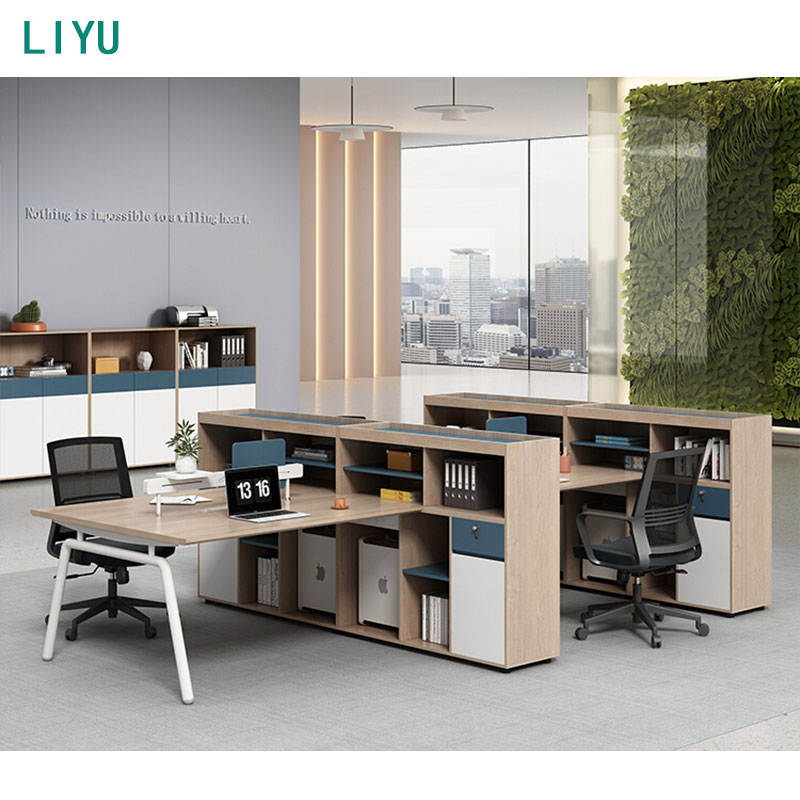
Budgeting for a new facility requires calculating the cost of a complete workstation rather than just the desk surface. A functional workstation includes the primary work surface, ergonomic seating, monitor supports, and basic personal storage. Facility managers must establish a baseline budget for this entire cluster before applying any volume discounts.
Total office square footage and spatial layout dictate this initial baseline. A dense call center utilizes compact benching systems, maximizing headcount per square foot. A spacious tech hub might prioritize larger, freestanding height-adjustable stations with acoustic privacy screens. Facility teams utilize CAD software and space planning calculators to determine maximum desk capacity. They balance this maximum capacity against optimal ergonomic spacing to finalize the total unit count. Effective space planning requires a systematic approach to site evaluation.
Standard open-plan workstations represent the entry-level tier for corporate environments. These units typically feature thermally fused laminate surfaces, basic steel C-leg frames, and minimal acoustic partitioning. They prioritize density and rapid deployment over individualized features. The manufacturing process for these units is highly automated, keeping base costs manageable. Factories utilize high-speed edge-banders and automated panel saws to churn out thousands of identical tops per week.
Sit-stand and ergonomic desks occupy the mid-tier category. These units incorporate dual-motor lifting mechanisms, collision detection sensors, and integrated cable management trays. The inclusion of electronic components and heavier steel bases increases the manufacturing cost. Buyers must account for the specialized hardware required to maintain stability at standing heights. The steel columns require precise tolerances to prevent wobbling when fully extended, demanding higher-grade steel and more complex welding techniques.
Private office setups and a custom executive desk represent the premium tier. These pieces utilize high-pressure laminates, premium wood veneers, or solid wood construction. They feature bespoke dimensions, integrated credenzas, and sophisticated power routing. The labor-intensive craftsmanship and premium raw materials drive the baseline cost significantly higher than open-plan alternatives. Craftsmen hand-match veneer flitches to ensure consistent grain patterns across massive conference tables and executive returns.
Modern procurement relies heavily on utilization metrics rather than simple headcount. Hybrid work schedules fundamentally alter how many physical desks a company actually needs. Facility managers calculate actual desk requirements by analyzing monthly occupancy rates. They divide the total headcount by average occupied desk-days to find the true required volume.
Implementing hot-desking and flexible schedules reduces the total volume of furniture required. This reduction in quantity might shift a buyer into a lower volume discount tier with the manufacturer. However, the savings generated by purchasing fewer units allow companies to upgrade their selections. Procurement teams often reallocate these funds into higher-durability, height-adjustable furniture designed to withstand continuous multi-user wear and tear. A desk shared by three different employees throughout the week experiences accelerated wear, necessitating robust lifting columns and scratch-resistant surfaces.
Raw material selection directly dictates the base manufacturing cost of any desk. Substrate density plays a crucial role in longevity. Medium-density fiberboard (MDF) provides better screw retention and structural stability than standard particleboard. When installers attach heavy steel frames to the work surface, MDF prevents the screws from stripping out over time. Surface durability also varies. High-pressure laminate (HPL) withstands impact and scratches far better than basic melamine. HPL consists of multiple layers of kraft paper saturated with phenolic resin, pressed under extreme heat. This process creates a rigid surface that resists the daily wear of keyboards, coffee cups, and office equipment. Thermally fused laminate (TFL) offers a cost-effective alternative for lighter-use areas, but it lacks the impact resistance of true HPL.
Commercial certifications introduce a pricing premium. Furniture that carries ANSI/BIFMA certifications has undergone rigorous independent testing for weight capacity, stability, and durability. Manufacturers invest heavily in engineering and testing to meet these standards. Drop tests, leg strength evaluations, and cycle testing for drawer glides ensure the product survives a demanding corporate environment. Additionally, specifying sustainable materials like FSC-certified wood or recycled steel components for LEED accreditation will incrementally increase the raw material costs.
| Material Type | Durability Profile | Manufacturing Cost Impact |
|---|---|---|
| Thermally Fused Laminate (TFL) | Moderate scratch resistance, suitable for light use | Entry-level baseline |
| High-Pressure Laminate (HPL) | Excellent impact resistance, ideal for high-traffic areas | Mid-tier premium |
| Wood Veneer | Requires maintenance, susceptible to scratching | High-tier premium |
| Medium-Density Fiberboard (MDF) | Superior screw retention and core stability | Mid-tier premium |
Manufacturers structure bulk quotes around specific volume tiers. Ordering ten desks yields a different net price than ordering two hundred. This tiered structure exists because of manufacturing setup costs. Calibrating CNC machines, loading edge-banding tape, and setting up paint lines takes time. Spreading these fixed setup costs across a larger production run significantly reduces the per-unit price.
Economies of scale provide substantial negotiation leverage. Companies standardizing a single desk model across multiple regional offices can pool their purchasing power. Committing to a standardized workstation allows the factory to run continuous production batches. This efficiency translates directly into deeper discounts on the final corporate quote. Factories prefer predictable, high-volume runs because they minimize downtime between product changeovers.
Deviating from standard factory specifications introduces cost multipliers. Requesting non-standard laminate finishes, custom edge-banding colors, or specific RAL powder-coat matching requires the factory to halt standard production. These custom interventions increase both lead times and per-unit costs. Standardized finishes always yield the most aggressive bulk pricing.
Modularity and technology integration further influence the quote. Desks designed to easily reconfigure into different pod formations require specialized linking hardware. Integrating technology directly into the work surface adds complexity. Under-desk power hubs, flush-mounted Qi chargers, and custom grommets for heavy-duty monitor arms require precision CNC routing and additional electrical components. Every custom cutout requires a specific machine program, adding engineering time to the front end of the order.
Bulk furniture procurement rarely includes free shipping. Desks ship flat-packed but remain incredibly heavy and bulky. Freight carriers calculate costs based on freight class and dimensional weight. A shipment of heavy steel frames and dense laminate tops incurs significant logistical expenses. The National Motor Freight Classification (NMFC) system assigns a specific class to furniture based on its density, handling, stowability, and liability. Knocked-down (KD) desks ship at a lower freight class than fully assembled units, saving money on the initial transport. Fluctuating fuel surcharges also impact the final delivery cost, often changing weekly based on national diesel averages.
The shipping method drastically alters the freight line item. Less Than Truckload (LTL) shipping involves sharing trailer space with other goods. This method increases the risk of transit damage due to repeated handling at various terminals. Full Truckload (FTL) shipping dedicates an entire trailer to the order. FTL reduces handling risks and generally offers better rates for large-scale rollouts. Buyers must also account for holding fees if the construction site experiences delays and cannot receive the product on time. Warehousing massive pallets of furniture quickly drains procurement budgets.
Receiving and assembling commercial furniture requires specialized labor. The installation quote covers unloading trucks, staging materials on the correct floors, unboxing, and assembling complex modular systems. Installers must also level every desk using laser levels to ensure continuous benching systems align perfectly across uneven concrete floors. They manage the disposal of massive amounts of corrugated cardboard, wooden pallets, and plastic wrapping, which often requires renting dedicated dumpsters.
Site conditions heavily influence the installation quote. Buildings lacking dedicated loading docks or oversized freight elevators slow down the staging process. If installers must break down pallets on the street and carry components up passenger elevators, labor hours multiply rapidly. Many commercial high-rises mandate after-hours installation to avoid disrupting other tenants. Furthermore, installing furniture in major metropolitan commercial centers often requires utilizing union labor. Union labor rates significantly increase the installation line item and must be factored into the initial budget. A comprehensive site survey prevents unexpected installation surcharges.
Procuring directly from the factory offers specific advantages for massive rollouts. This approach eliminates middleman markups entirely. Buyers gain a direct line to factory engineers for custom modifications and bespoke dimensions. Direct relationships provide tighter control over the supply chain during multi-phase regional deployments.
However, direct sourcing comes with strict limitations. Factories enforce high minimum order quantities to justify direct sales. They rarely provide localized installation support, forcing the buyer to contract independent labor teams. Direct purchasing also limits the ability to blend different brands or aesthetics within a single workspace. You manage the logistics, the freight claims, and the installation coordination entirely in-house.
Partnering with a commercial dealership provides a turnkey procurement experience. Dealers offer comprehensive project management, advanced space planning, and dedicated installation crews. They maintain relationships with dozens of manufacturers, allowing buyers to blend premium executive pieces with entry-level open-plan benches seamlessly.
Dealers also handle all warranty claims and localized maintenance support. While dealer margins are embedded into the final net price, the value of their logistical management often offsets this premium. Procurement teams should utilize dealers for complex, multi-zone office fit-outs. Direct-to-manufacturer sourcing remains best suited for highly standardized, single-SKU orders deployed at massive scale.
A: A standard commercial workstation ranges from entry-level laminate benches to premium height-adjustable systems. The final quote depends entirely on the materials selected, the volume ordered, and the specific manufacturing tier. Always request net pricing based on your exact volume rather than relying on published list prices.
A: The total cost encompasses the desk frame, the substrate material of the surface, and any integrated technology like power modules. You must also include the cost of the ergonomic chair, monitor arms, acoustic privacy screens, and the prorated cost of freight and professional assembly.
A: Divide your total employee headcount by your average daily attendance. Multiply this by the number of working days in the month to find your occupied desk-days. This utilization formula reveals your true volume requirement, which is usually significantly lower than a strict one-to-one ratio.
A: Factories base discounts on production efficiency. Setting up machinery for a specific desk takes time. Larger orders spread this fixed setup cost across more units, lowering the per-unit manufacturing expense. Standardizing your finishes and dimensions maximizes these production efficiencies.
A: Commercial office furniture utilizes higher-density substrates, thicker steel gauges, and more durable surface laminates. It undergoes rigorous independent testing, such as BIFMA certification, to ensure it withstands continuous daily use by multiple employees. Retail furniture lacks this structural reinforcement and testing.
A: They are rarely included in the raw unit price. Freight and installation are typically separate line items due to fluctuating fuel costs and varying site conditions. Always ask vendors to clarify if their quote is ex-works for the product only or landed to include shipping and assembly.


