
Views: 0 Author: Site Editor Publish Time: 2026-03-17 Origin: Site


Finding the perfect office desk height is one of the most important factors in creating a comfortable and productive workspace. Whether you work from home or in a corporate office, the height of your desk directly affects your posture, comfort, and overall health. In this comprehensive guide, we’ll explore how high an office desk should be, how to measure the ideal height for your body, and what to consider when choosing the right desk for your workspace.
The height of your office desk influences how your body aligns during work. A desk that’s too high or too low can lead to discomfort, muscle strain, and even chronic pain over time. Ergonomic research shows that proper desk height supports natural posture, allowing your shoulders to relax, your elbows to stay at a 90-degree angle, and your wrists to remain straight while typing or writing.
When your desk height is properly adjusted, you can maintain better focus and reduce fatigue. This small but crucial adjustment can make a significant difference in your productivity and long-term well-being.
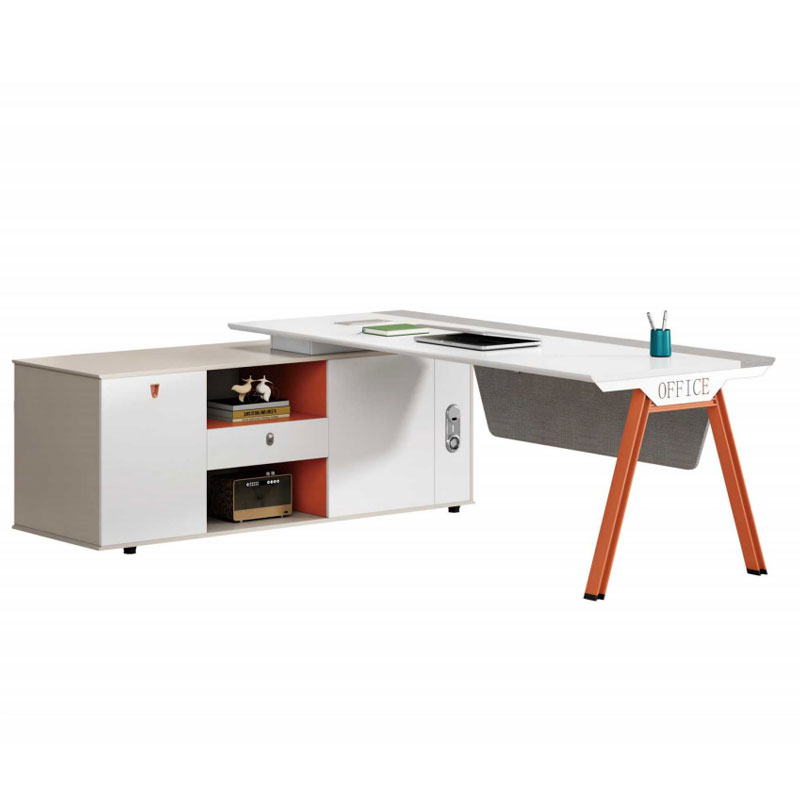
The standard height for most office desks is around 28 to 30 inches (71 to 76 cm) from the floor to the top of the desk surface. This range is designed to accommodate the average adult, typically between 5'8" (173 cm) and 6'0" (183 cm) tall. However, since everyone’s body proportions are unique, this standard height may not be ideal for everyone.
To determine if your desk height is right for you, sit comfortably in your chair with your feet flat on the floor and your knees bent at a 90-degree angle. Your elbows should also form a 90-degree angle when your hands rest on the desk surface. If your arms are raised or your shoulders feel tense, your desk might be too high. If you need to hunch forward or reach up, it’s too low.
Elbows should be at a 90-degree angle when typing.
Wrists should be straight and aligned with your forearms.
Shoulders should remain relaxed, not hunched.
Eyes should be level with the top third of your monitor screen.
Your feet should rest flat on the floor or on a footrest.
Adjustable office desks—also known as sit-stand desks—have become increasingly popular because they allow users to modify desk height to their exact comfort level. These desks typically range from 22 inches (56 cm) to 48 inches (122 cm) in height, making them suitable for both sitting and standing positions.
By alternating between sitting and standing throughout the day, you can reduce back pain, improve circulation, and increase energy levels. When standing, ensure your elbows are still at a 90-degree angle relative to the desk surface, just as they would be when sitting.
Encourage movement and reduce sedentary behavior.
Improve posture and reduce strain on the lower back.
Enhance productivity and focus.
Allow multiple users to share the same workspace comfortably.
To find your personal ideal desk height, follow these steps:
Sit in your office chair with your feet flat on the floor.
Adjust the chair height so that your knees are at a 90-degree angle.
Relax your shoulders and bend your elbows at 90 degrees.
Measure the distance from the floor to your elbows—this is your ideal desk height.
If your desk is not adjustable, you can modify your setup by adjusting your chair height and using accessories like a footrest or keyboard tray to achieve proper alignment.
Depending on your work type, the ideal desk height can vary. Here are some general recommendations based on common tasks:
For computer-based tasks, your desk should align with your elbow height while typing. This ensures your wrists remain straight and your shoulders relaxed. A keyboard tray can help fine-tune this position if your desk is not adjustable.
For writing or drawing, a slightly higher desk height—around 1 to 2 inches above elbow level—can provide better control and visibility. Drafting tables often have adjustable angles to support this type of work.
When standing, the same ergonomic principles apply. The desk surface should be at elbow height, allowing your arms to rest comfortably at a 90-degree angle. Consider using an anti-fatigue mat to reduce pressure on your feet and legs.
Here’s a quick reference chart to help you find the right desk height based on your height:
Person HeightIdeal Desk Height (inches)Ideal Desk Height (cm)5'0" (152 cm)24-25"61-64 cm5'4" (163 cm)26-27"66-69 cm5'8" (173 cm)28"71 cm6'0" (183 cm)29-30"74-76 cm6'4" (193 cm)31-32"79-81 cm
These measurements are approximate and should be adjusted based on your comfort and the type of chair you use.
While desk height is crucial, it’s only one part of the ergonomic equation. To create an optimal workspace, consider the following additional factors:
Your chair should support your lower back and allow your feet to rest flat on the floor. Adjustable chairs with lumbar support help maintain the natural curve of your spine and prevent slouching.
Position your monitor about an arm’s length away, with the top of the screen at or slightly below eye level. This helps prevent neck strain and eye fatigue.
Keep your keyboard and mouse close enough to avoid reaching forward. They should be at the same height as your elbows, with your wrists straight and supported.
Good lighting reduces eye strain and improves focus. Natural light is ideal, but if that’s not possible, use adjustable desk lamps with warm light tones. Keep your workspace clutter-free to enhance concentration and efficiency.
Many people unknowingly set up their office desk incorrectly. Here are some common mistakes to avoid:
Desk too high: Causes shoulder tension and wrist strain.
Desk too low: Leads to slouching and back pain.
Ignoring chair height: A mismatched chair and desk can ruin posture.
Monitor too low or high: Causes neck discomfort and eye fatigue.
Not adjusting for footwear: High heels or thick soles can change your ergonomic measurements.
When selecting an office desk, consider your height, work style, and available space. Here are the main types of desks and their advantages:
These are traditional desks with a set height. They’re affordable and suitable for users who fit within the average height range. However, they offer limited flexibility.
Adjustable desks allow you to fine-tune the height to your exact preference. They’re ideal for shared workspaces or users who value ergonomic customization.
Sit-stand desks provide the best of both worlds, enabling you to switch between sitting and standing positions. This flexibility promotes movement, reduces fatigue, and supports better posture throughout the day.
Keep your back straight and shoulders relaxed.
Adjust your chair so your knees are level with your hips.
Take short breaks every 30 minutes to stretch and move.
Use a footrest if your feet don’t touch the floor comfortably.
Position your monitor directly in front of you, not off to the side.
For children or shorter adults, standard desks may be too high. In these cases, an adjustable desk or a lower desk height (around 24-26 inches) is recommended. Pairing the desk with an adjustable chair and footrest ensures proper ergonomics for smaller users.
When working in a standing position, your office desk should be at a height where your elbows form a 90-degree angle while your wrists remain straight. For most adults, this is between 38 and 46 inches (97 to 117 cm), depending on your height. Standing desk converters are a great option if you want to transform a traditional desk into a standing workstation.
Choosing the correct office desk height is essential for maintaining comfort, health, and productivity. While the standard height works for many, the best approach is to tailor your setup to your body’s unique proportions. Whether you prefer a fixed, adjustable, or sit-stand desk, the key is to maintain proper posture and regularly move throughout your workday.
Investing in a well-designed office desk offers numerous advantages:
Improved comfort: Ergonomic design reduces strain and fatigue.
Enhanced productivity: A properly adjusted desk helps maintain focus and efficiency.
Better health: Supports spinal alignment and reduces the risk of musculoskeletal disorders.
Versatility: Adjustable options accommodate different users and work styles.
Professional appearance: A high-quality desk elevates the look of your workspace.
Ultimately, the right desk height allows you to work smarter, healthier, and more comfortably. Take the time to measure, adjust, and optimize your setup—you’ll feel the difference every day.


