
Views: 0 Author: Site Editor Publish Time: 2026-03-17 Origin: Site


When setting up your workspace, one of the most common questions people ask is: how deep is an office desk? The depth of your desk plays a crucial role in your comfort, productivity, and how well your equipment fits your workspace. Whether you’re furnishing a home office or designing a corporate workspace, understanding the ideal office desk dimensions ensures that you make the most of your available space without compromising ergonomics or aesthetics.
Before diving into desk depth, it’s important to understand the overall dimensions of a typical office desk. These dimensions generally include three main measurements: width, depth, and height. Each of these factors influences how comfortable and functional your workspace will be.
Width: The horizontal measurement from left to right, usually ranging between 100 cm (39 inches) to 180 cm (71 inches).
Depth: The distance from the front edge to the back of the desk — this is the key focus of our discussion.
Height: The vertical distance from the floor to the top surface, typically around 73–76 cm (29–30 inches).
The depth determines how much space you have for your monitor, keyboard, documents, and other accessories. It also affects how far you sit from your screen, which impacts your posture and eye comfort.
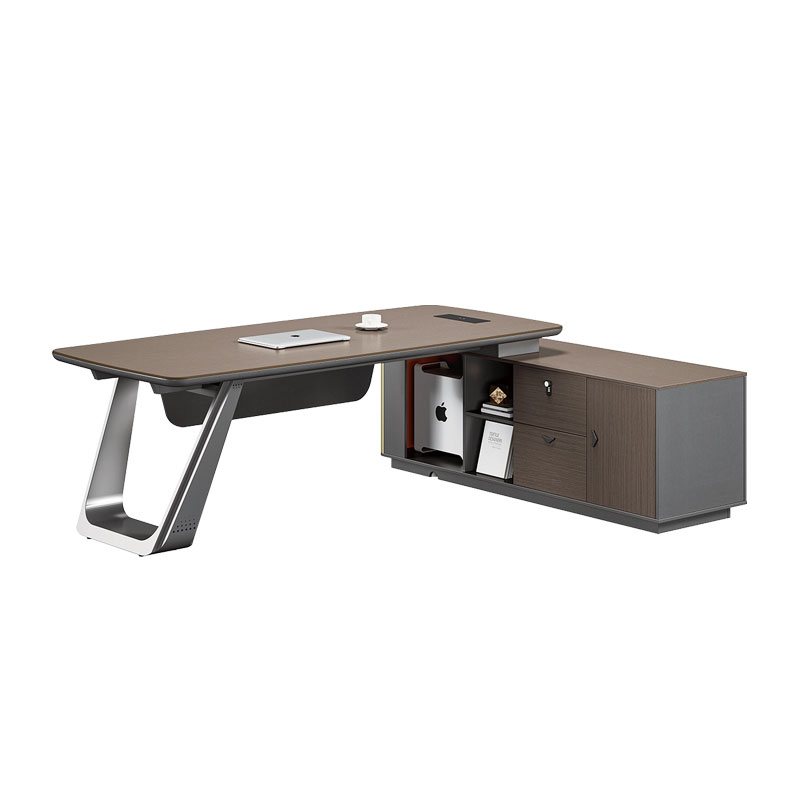
The standard office desk depth typically ranges from 60 cm (24 inches) to 80 cm (32 inches). This range accommodates most office setups, including computers, monitors, and writing space. However, the ideal depth depends on the type of work you do and the equipment you use.
Writing Desk: Around 60 cm (24 inches) deep — perfect for paperwork, reading, and light computer use.
Computer Desk: Around 70–80 cm (28–32 inches) deep — provides enough space for monitors, keyboards, and accessories.
Executive Desk: 80–90 cm (32–36 inches) deep — ideal for professionals who need extra workspace for multiple monitors or documents.
The deeper the desk, the more flexibility you have for organizing your setup. However, a desk that’s too deep can make it difficult to reach items at the back or may take up too much room in smaller offices.
There isn’t a one-size-fits-all answer to “how deep is an office desk.” The right depth depends on several factors, including your work habits, room size, and ergonomic needs. Let’s explore these considerations in detail.
If your job involves mostly computer work, you’ll need enough depth to position your monitor at a comfortable viewing distance — typically 50–70 cm (20–28 inches) from your eyes. For designers or engineers who use large monitors or dual screens, a deeper desk (around 80–90 cm) helps prevent eye strain and clutter.
Your office desk depth should accommodate your computer, keyboard, mouse, and any additional equipment like printers or docking stations. If you use a laptop and external monitor, you may need a bit more surface area to maintain proper ergonomics.
In smaller offices or apartments, you might not have the luxury of a deep desk. Compact desks with a 50–60 cm depth can save space while still providing functionality. For larger offices, deeper desks can create a more spacious and organized appearance.
Ergonomic experts recommend ensuring that your arms rest comfortably on the desk while your monitor is at eye level. A desk that’s too shallow can cause you to sit too close to the screen, while one that’s too deep can make it hard to maintain proper posture.
If you plan to include drawers, shelves, or cable management systems, the depth of your office desk should allow for these additions without compromising legroom or comfort. Modern desks often integrate cable trays or hidden compartments, which may require extra depth.
Different desk styles have varying standard dimensions. Here’s a breakdown of common office desk types and their typical depths:
Desk Type Typical Depth Best For Standard Office Desk 70–80 cm (28–32 inches) General office use, single monitor setups Corner or L-Shaped Desk 60–80 cm (24–32 inches) per side Multitasking, dual setups, maximizing corner space Standing Desk 70–80 cm (28–32 inches) Adjustable height workstations, ergonomic setups Compact Desk 50–60 cm (20–24 inches) Small rooms, minimalist setups Executive Desk 80–100 cm (32–40 inches) Large offices, multitasking professionals
Measuring your office desk correctly ensures that it fits your space and meets your functional needs. Follow these simple steps:
Use a measuring tape to measure from the front edge of the desk to the back edge — this gives you the depth.
Measure the width from left to right and the height from floor to top surface for reference.
Consider any overhangs or built-in storage that might affect usable depth.
Leave at least 80–100 cm (31–39 inches) of clearance behind the desk for your chair and movement.
By measuring accurately, you can ensure your desk fits perfectly into your workspace layout.
When deciding how deep an office desk should be, think about your daily tasks and comfort preferences. Here are some practical recommendations:
Home Office: A 60–70 cm deep desk works well for most home setups, offering enough space for a laptop, monitor, and writing area.
Professional Office: Opt for a 70–80 cm desk to accommodate multiple devices and paperwork.
Design or Gaming Setup: Choose 80–90 cm depth for extra workspace and better monitor distance.
Shared Workstations: Deeper desks (80 cm or more) are ideal for two-person setups or collaborative environments.
Even with the perfect office desk depth, your setup must be ergonomically optimized to prevent fatigue and injury. Here are a few tips:
Position your monitor so the top of the screen is at or slightly below eye level.
Keep your keyboard and mouse at elbow height for natural wrist posture.
Leave enough space under the desk to stretch your legs comfortably.
Use an adjustable chair that supports your lower back.
Maintain a 90-degree angle between your arms and body while typing.
These adjustments can greatly enhance comfort and productivity throughout your workday.
When planning your workspace, consider how your office desk fits into the overall room layout. A deep desk in a small room can make the space feel cramped, while a shallow desk in a large office may look out of proportion.
To optimize your layout:
Leave at least 90 cm (36 inches) of clearance behind the desk for easy movement.
Ensure there’s enough space for drawers, filing cabinets, or chairs to move freely.
For open offices, consider modular desks that can be arranged in clusters without wasting space.
Today’s office desk designs focus on flexibility, ergonomics, and aesthetics. Adjustable standing desks, minimalist styles, and modular systems are increasingly popular. These designs often maintain a standard depth of 70–80 cm but offer height and layout customization.
Some modern desks feature integrated cable management, wireless charging pads, and smart storage — all of which may influence the required depth. If you value a clean, clutter-free workspace, choose a desk with thoughtful design elements that complement your workflow.
Many people make the mistake of selecting a desk based solely on appearance or price, neglecting functional depth requirements. Here are some pitfalls to avoid:
Choosing a desk that’s too shallow: This can lead to cramped typing space and poor monitor positioning.
Ignoring room proportions: A desk that’s too deep may dominate the room and limit movement.
Overlooking ergonomic spacing: Ensure adequate distance between your chair, monitor, and keyboard.
Forgetting about accessories: Printers, lamps, and organizers need surface space too.
The average office desk depth ranges from 70 to 80 cm (28–32 inches), suitable for most office tasks and computer setups.
Yes, a 60 cm (24-inch) depth can work for light tasks or laptop use, but it might feel cramped for dual monitors or extensive paperwork.
Executive desks are typically 80–100 cm (32–40 inches) deep to provide extra space for documents, monitors, and accessories.
Absolutely. Many manufacturers offer customizable desks, allowing you to choose the depth that best fits your workspace and ergonomic preferences.
Standing desks generally follow the same standard — around 70–80 cm deep — ensuring enough space for monitors and accessories while maintaining balance and stability.
So, how deep is an office desk supposed to be? The answer depends on your personal needs, equipment, and workspace layout. For most people, a depth of 70–80 cm strikes the perfect balance between comfort, functionality, and space efficiency. However, always consider your work style, ergonomics, and available room space before making your final decision.
A well-designed office desk offers numerous advantages that can transform your work experience:
Ergonomic Comfort: Proper depth ensures better posture and reduced strain during long work hours.
Efficient Use of Space: Optimized dimensions allow you to organize equipment and documents neatly.
Enhanced Productivity: A clutter-free, comfortable workspace promotes focus and efficiency.
Stylish Design: Modern office desks combine functionality with aesthetics, elevating your workspace’s look.
Durability and Quality: High-quality materials and thoughtful construction ensure long-lasting performance.
Whether you’re setting up a home office or redesigning your corporate workspace, choosing the right office desk depth is a smart investment in your comfort and productivity. Take the time to measure, plan, and select a desk that fits your needs perfectly — your body and workflow will thank you.


