
Views: 0 Author: Site Editor Publish Time: 2026-05-22 Origin: Site


Have you ever walked into an office where the desk still looks solid, clean, and stable even after years of heavy use, while in other workplaces the furniture already looks worn out, unstable, or outdated within a short period of time, and have you ever wondered what exactly causes such a big difference in long-term performance even when the initial appearance looks similar? The answer is rarely about design alone, but instead lies in the material selection, structural engineering, and production quality behind the furniture, especially in environments where daily working demands place continuous stress on every surface and joint.
In modern office environments, furniture is no longer treated as a short-term decorative element but as a long-term investment that directly affects productivity, cost efficiency, and employee experience, and this is why more companies are now shifting toward solid wood solutions that can withstand intensive daily working conditions without losing stability or visual appeal. Among these materials, maple wood has become one of the most reliable choices due to its natural hardness, fine grain structure, and strong resistance to deformation under long-term pressure.
In this article, we will take a deep and practical look at why a maple office desk is widely considered one of the best options for long lasting daily working environments, how it performs under real office conditions, what structural advantages it offers compared to other materials, and how businesses can choose the right configuration for different workplace needs while ensuring both durability and aesthetic consistency.
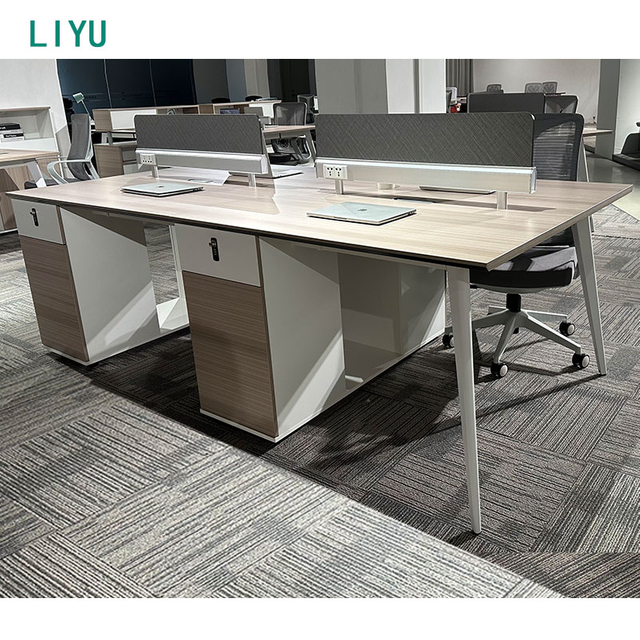
In any professional workplace, office desks are exposed to constant and repetitive stress throughout the entire working day, including the weight of computers, monitors, documents, and other equipment, as well as continuous writing, typing, and movement activities that gradually affect structural stability over time. When low-quality materials are used, these pressures often lead to visible damage such as surface scratches, edge chipping, wobbling legs, or even internal structural weakening, which not only reduces visual appeal but also disrupts workflow efficiency.
A durable office desk is therefore not just about maintaining appearance but about ensuring uninterrupted functionality in long lasting daily working conditions, because any instability or discomfort in the workspace can directly affect concentration, productivity, and overall employee satisfaction. Businesses that frequently replace desks due to poor quality materials often underestimate the hidden operational costs, which include not only the purchase of new furniture but also downtime, relocation efforts, and inconsistent workspace experiences for employees.
This is why more organizations are investing in high-density hardwood solutions such as the maple office desk, which offers a significantly longer lifespan and better structural performance under continuous usage compared to engineered or low-density materials commonly used in mass-produced office furniture.
The maple office desk stands out in the office furniture market primarily because of the inherent physical properties of maple wood, which is classified as a dense hardwood with excellent strength-to-weight ratio and high resistance to mechanical wear. These characteristics allow it to maintain structural integrity even under heavy daily working loads, making it particularly suitable for professional environments where desks are used intensively for long hours every day.
One of the most important advantages of maple wood is its natural resistance to deformation, meaning it is far less likely to warp, bend, or crack over time compared to softer wood types or engineered boards. This stability is especially important in office environments where temperature changes, humidity fluctuations, and constant pressure can gradually affect weaker materials.
Additionally, the fine and uniform grain structure of maple wood allows for high-quality surface finishing, which not only enhances visual appearance but also improves scratch resistance and long-term durability, ensuring that the maple office desk remains functional and visually appealing even after years of long lasting daily working use.
A well-designed maple office desk provides more than just structural durability; it also enhances the overall working experience by improving comfort, usability, and workspace efficiency. In modern offices where employees often spend eight or more hours at their desks, these factors play a critical role in maintaining productivity and reducing physical fatigue.
The first major advantage is load-bearing stability, as a maple office desk can easily support multiple monitors, desktop systems, printers, and other office equipment without surface sagging or structural imbalance, making it highly suitable for both individual workstations and executive office setups. The second advantage is ergonomic comfort, since natural wood surfaces provide a warmer and more comfortable tactile experience compared to cold metal or reflective glass surfaces, contributing to a more pleasant long-term working environment.
The third advantage is long-term visual consistency, because even after extended use in daily working conditions, a maple office desk retains its natural texture and aesthetic quality, which is particularly important for client-facing offices where first impressions and professional appearance are essential.
Different office environments require different desk configurations depending on workflow structure, space limitations, and functional requirements, and the versatility of maple wood allows it to be adapted into multiple design formats that support various long lasting daily working scenarios.
Modern minimalist designs typically feature clean geometric lines combined with metal frames and slim profiles, making them ideal for corporate offices and startups that prioritize efficiency and visual simplicity. Executive-style designs, on the other hand, use thicker wooden surfaces and more substantial structures to create a strong sense of authority and leadership presence, which is commonly seen in CEO offices and high-level management spaces.
L-shaped configurations are widely used in operational environments where multitasking is required, as they provide extended surface area for multiple workflows, while custom-built solutions allow businesses to tailor dimensions, storage systems, and functional integrations according to specific office requirements.
To better understand the long-term value of a maple office desk in daily working environments, it is important to compare it with other commonly used office furniture materials in terms of durability, usability, and long-term performance consistency.
Feature | Maple Office Desk | Oak Desk | MDF Desk | Metal Desk |
Structural durability | Very high | High | Medium | Very high |
Resistance to deformation | Very high | High | Low | High |
Long-term stability | Very high | High | Low | High |
Daily working comfort | High | High | Medium | Low |
Surface longevity | High | High | Low | Medium |
Maintenance requirement | Medium | Medium | High | Low |
From a long lasting daily working perspective, the maple office desk demonstrates a strong balance between durability, comfort, and long-term usability, making it one of the most efficient choices for professional office environments that require both performance and aesthetic stability.
Workspace design has a direct impact on employee productivity, and furniture selection plays a much more important role than many businesses initially realize, especially in environments where employees rely on stable and comfortable surfaces for long periods of focused work. A maple office desk contributes to productivity by providing a stable working platform that minimizes distractions caused by movement, vibration, or structural instability.
At the same time, the natural texture of maple wood creates a visually calming environment that reduces mental fatigue during long working hours, which can significantly improve concentration levels and task efficiency. In addition, the professional appearance of a maple office desk enhances workplace satisfaction and creates a more positive psychological association with the working environment, which can indirectly improve motivation and retention rates among employees.
The long-term performance of a maple office desk depends not only on the material itself but also on manufacturing processes that determine structural strength and surface durability. High-quality production begins with proper wood drying techniques that remove excess moisture and prevent internal stress, which is essential for ensuring long lasting daily working stability.
Precision cutting and structural alignment ensure that all components fit perfectly without weak points, while advanced surface finishing techniques improve scratch resistance and enhance visual appeal. Reinforced structural support systems are also essential in ensuring load distribution across the entire desk surface, especially in heavy-use office environments.
In recent years, office furniture design has evolved significantly due to changes in work culture, technology integration, and sustainability requirements, and the maple office desk category has also adapted to these trends. One major trend is the development of ergonomic and modular desk systems that support flexible working styles and hybrid office environments.
Another important trend is the combination of natural wood with modern materials such as steel or aluminum to create hybrid designs that enhance both durability and visual contrast. Sustainability has also become a key factor, with businesses increasingly prioritizing responsibly sourced materials that align with environmental standards while maintaining high-quality long lasting daily working performance.
Selecting the right maple office desk requires careful evaluation of office space, usage intensity, and functional requirements to ensure optimal performance over time. Larger office environments can accommodate executive or L-shaped designs, while smaller spaces benefit from compact minimalist configurations that maximize efficiency without compromising comfort.
Functional requirements such as storage capacity, cable management systems, and device compatibility should also be considered, especially in modern offices where digital equipment is heavily used. Surface finishing selection is equally important, as matte finishes often perform better in reducing glare and visual fatigue during long working hours.
To ensure long-term durability in daily working environments, proper maintenance practices are essential for preserving both structural integrity and visual appearance. Regular cleaning with soft cloth materials helps maintain surface quality, while avoiding excessive moisture exposure prevents potential wood damage.
Protective accessories such as desk pads and heat-resistant mats can further extend the lifespan of the maple office desk, especially in high-intensity usage environments. Periodic refinishing can also be applied to restore surface texture and maintain aesthetic consistency over time.
Despite the availability of many modern materials, the maple office desk continues to be widely preferred because it offers a rare combination of strength, stability, comfort, and long-term value. Its ability to perform consistently under continuous daily working conditions makes it a reliable investment for businesses that prioritize both functionality and professional appearance.
Unlike short-term furniture solutions that degrade quickly under pressure, a maple office desk is designed for longevity, making it a cost-effective and strategic choice for organizations that value stability and long-term operational efficiency.
A maple office desk represents one of the most dependable solutions for long lasting daily working environments, combining natural durability, structural stability, and timeless design appeal into a single furniture category that meets the demands of modern professional spaces. Its consistent performance under heavy usage conditions makes it a practical and strategic investment for businesses that aim to build efficient, comfortable, and visually stable office environments over the long term.
Yes, a maple office desk is highly suitable for long lasting daily working environments due to its hardwood structure, which provides excellent durability and stability under continuous use.
With proper maintenance and standard office conditions, a maple office desk can last many years, often significantly longer than engineered wood alternatives used in daily working environments.
Maple wood has strong resistance to warping and deformation, making a maple office desk highly stable even under long lasting daily working conditions.
Yes, due to its high density and structural strength, a maple office desk can easily support multiple monitors and heavy office equipment used in modern daily working setups.
Compared to MDF, a maple office desk offers significantly higher durability, better structural stability, and a much longer lifespan, making it more suitable for long lasting daily working environments.

