
Views: 0 Author: Site Editor Publish Time: 2026-09-01 Origin: Site


Automotive environments subject furniture to extreme wear and tear. High-volume dealership showrooms see constant foot traffic, while rugged service drive-lanes expose surfaces to grease, heavy hardware, and outdoor elements. This daily activity far exceeds standard corporate environments. Utilizing consumer-grade or generic office furniture in an automotive setting leads to rapid degradation. It compromises cable management for complex Dealer Management Systems (DMS) and creates a disjointed brand presentation during client negotiations. Selecting the right automotive office desk requires evaluating specific commercial-grade features. You must look at spatial configurations, OEM (Original Equipment Manufacturer) compliance, and material durability. Dealerships cannot afford downtime caused by failing drawer slides or chipped laminates. Upgrading to purpose-built workstations ensures long-term operational efficiency. It also maintains a professional environment that builds trust with buyers right at the point of sale.
Automotive workspaces demand a unique approach to interior planning. You cannot treat a dealership like a traditional quiet office. The environmental wear and tear is significantly higher. Customers constantly walk through the showroom, often bringing in dirt and moisture from the lot. Service advisors drop heavy metal keys, clipboards, and two-way radios onto desk surfaces all day long. Parts department staff handle heavy cardboard boxes, brake rotors, and metal components directly on their counters. You must assess this high-frequency, multi-user reality before selecting any furniture. Desks built for light typing will fail within months under these conditions.
Navigating OEM facility image programs is another mandatory step. Major automotive manufacturers enforce strict brand guidelines. Programs like Ford Trustmark or Toyota Image USA dictate specific desk designs. They control color palettes, material finishes, and even the exact dimensions of the transaction tops. Ensuring your furniture complies with these guidelines is non-negotiable. Failing an OEM audit results in severe penalties. It can delay facility certifications and hold up factory incentive payouts. You must verify that the furniture lines you select are pre-approved by the manufacturer or perfectly match the required architectural specifications.
You must balance client-facing aesthetics with back-office utility. The showroom requires premium, brand-aligned finishes. Customers expect a high-end experience when purchasing a vehicle, especially in luxury dealerships. However, the service and parts departments require rugged, utilitarian designs. These areas prioritize function and durability over luxury. A high-gloss veneer looks great on the sales floor but will be destroyed in a week on the service drive. Understanding where to deploy specific materials prevents premature wear.
Security and privacy compliance heavily influence desk selection. Automotive dealerships handle sensitive financial data daily. Desk designs must support privacy screens. They require secure, lockable storage for customer credit applications, driver's license copies, and active deal jackets. Maintaining compliance with the GLBA (Gramm-Leach-Bliley Act) and FTC Safeguards Rule is mandatory. Proper furniture design helps prevent unauthorized access to physical documents and computer screens. Desks must be positioned and shielded so that a customer walking by cannot read the screen of an F&I manager or a sales consultant.
Dealerships rely on complex IT infrastructure. A standard workstation requires multiple power and data connections. Dual monitors are the industry standard for running CDK Global, Reynolds and Reynolds, or Dealertrack DMS platforms. Signature pads, VoIP phones, and heavy-duty laser printers add to the cable load. Evaluating integrated grommets is essential. Wire troughs and modesty panels conceal heavy cabling. This keeps the workspace looking professional and prevents accidental disconnections caused by staff kicking wires under the desk.
Clean cable management directly impacts customer perception. A messy desk with tangled wires looks unprofessional. It breaks trust during a high-stakes negotiation. Proper cable routing also reduces trip hazards for staff and customers. It improves IT maintenance efficiency. When a computer needs replacing, IT staff can easily access organized cables without disrupting the entire office. We always specify oversized J-channels under the work surface to handle the thick CAT6 bundles and heavy power bricks required for dealership networks.
Selecting the right surface material prevents premature failure. Automotive applications require specific laminates. High-Pressure Laminate (HPL) offers the best durability. It consists of multiple layers of kraft paper saturated with phenolic resin, pressed under extreme heat. This process creates a surface that resists scratches from keys and metal hardware. Thermally Fused Laminate (TFL) works well for lighter-use areas like the BDC or accounting offices. Wood veneer provides a luxury feel but requires careful maintenance. It is best reserved for executive suites where heavy hardware is not present.
| Material Type | Durability Level | Best Automotive Application | Maintenance Requirements |
|---|---|---|---|
| High-Pressure Laminate (HPL) | Maximum | Service Drives, Parts Counters, Sales Floors | Low - wipe clean, highly scratch resistant |
| Thermally Fused Laminate (TFL) | Moderate | BDC Call Centers, Back Office Admin | Low - standard cleaning |
| Wood Veneer | Low to Moderate | General Manager Suites, Executive Offices | High - requires polishing, prone to scratching |
| Powder-Coated Steel | Maximum | Desk Chassis, Modesty Panels, Legs | Low - highly impact resistant |
Edge banding is a critical failure point. Desks take constant abuse from rolling chairs, belt buckles, and heavy boots. Look for 3mm PVC edges. This thick edge banding absorbs impacts. It prevents the laminate from chipping or peeling away from the core board. We reject any desks with standard paper edge banding for dealership use. They simply will not survive the first year on a busy sales floor. Furthermore, the core material must be high-density particleboard or MDF to prevent swelling when exposed to mop water during nightly cleaning.
Dealership shifts are long. Employees often work ten to twelve hours a day, especially during month-end closes. Integrating sit-stand mechanisms reduces employee fatigue. Height-adjustable desks improve focus and energy levels. When evaluating these desks, check the weight capacity. Dual monitors, heavy paperwork, and peripheral devices require robust lifting columns. Motor reliability is vital for uninterrupted operations. We look for dual-motor systems with a minimum lift capacity of 250 pounds to ensure smooth operation without burning out the motors.
Modularity offers significant operational benefits. Dealerships frequently change headcounts. Seasonal sales pushes require different floor layouts. Showroom remodels happen every few years. Reconfigurable desk systems adapt to these changes easily. Modular furniture prevents you from having to buy entirely new setups during a redesign. You can simply add or remove components, swap out privacy panels, or reconfigure L-shapes into straight runs to fit the new floor plan.
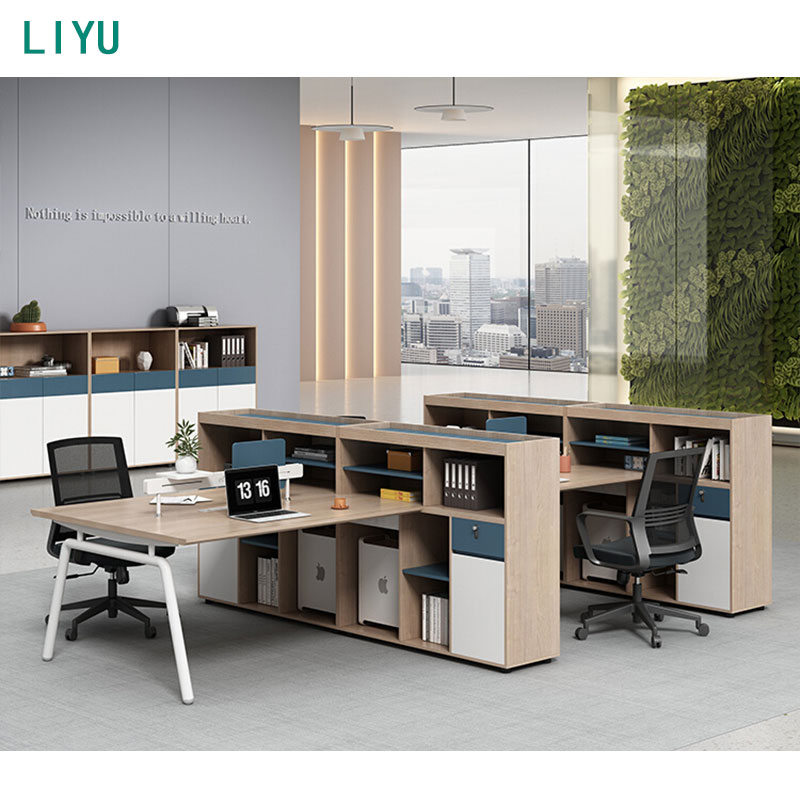
Sales floors require a welcoming approach. D-top or P-top collaborative desk shapes work best. These configurations allow sales consultants and buyers to review screens together. They remove physical barriers between the employee and the customer. This builds transparency during the negotiation process. When a customer can see the screen, they feel more confident in the numbers being presented. The traditional rectangular desk creates an adversarial, across-the-table dynamic that modern dealerships try to avoid.
Storage on the sales floor should remain minimal. Minimalist pedestal files prevent clutter from building up. They provide just enough space to secure active deal jackets, dealer plates, and a few personal items. Keeping the desktop clean ensures the focus remains on the vehicle and the customer. We recommend mobile pedestals with cushion tops. These provide an extra seat for a third guest during a busy Saturday rush when families come in to buy a car.
F&I offices handle intense document processing. Expansive work surfaces are mandatory. These desks must accommodate large impact printers for multi-part state contracts and dual-monitor setups. One monitor typically faces the manager. The second monitor faces the customer for digital signatures and menu presentations. The desk layout must facilitate the smooth passing of long contracts back and forth without knocking over pens or coffee cups.
Security is the primary focus in F&I. Maximum lockable storage secures sensitive financial documents. High-panel privacy configurations prevent eavesdropping. Customers must feel completely secure when discussing credit scores, income, and financing terms. We specify heavy-duty locking cores on all F&I desk drawers to ensure compliance with privacy laws. The desk must also have a solid modesty panel so that documents dropped on the floor cannot be seen from the hallway.
Service advisors need highly functional stations. Standing-height transaction counters work perfectly. They allow advisors to greet customers quickly as they pull into the drive lane. These stations must incorporate lower work surfaces for the advisor to type comfortably while standing or using a drafting stool. ADA-compliant transaction zones are legally required for wheelchair accessibility. You must include a section of the counter that is no higher than 36 inches from the floor.
Durability is the main focus here. Service desks face harsh conditions. They must resist grease and oil transferred from repair orders. If located near open bay doors, they must withstand outdoor temperature shifts, high humidity, and exhaust fumes. The desks endure constant leaning from customers. They require heavy weight capacity to support massive parts catalogs and diagnostic hardware. Steel frames and HPL tops are the only acceptable materials for this zone. We also specify heavy-duty leveling glides to compensate for uneven concrete floors in the service drive.
The BDC acts as the dealership's communication hub. High-density, space-efficient cubicles fit this environment. Benching systems tailored for call-center workflows maximize floor space. BDC agents spend their entire shift on the phone setting appointments. They need compact, highly organized spaces with easy access to power for headset chargers and dual monitors to view the CRM and inventory simultaneously.
Acoustic control is the priority. Showrooms are loud. Pages over the intercom and customer chatter create distractions. Integration of sound-dampening privacy panels minimizes background noise. This ensures clear communication during critical customer calls. We use fabric-wrapped acoustic panels that extend at least 20 inches above the work surface to block voice travel. The panels also provide a surface for agents to pin up daily sales goals and call scripts.
The General Manager oversees the entire operation. Their office requires a commanding presence. U-shape or L-shape footprints work best. These layouts provide expansive space for reviewing operational reports, signing checks, and analyzing inventory sheets. They also offer enough room to host private management meetings. The desk must support multiple monitors while leaving plenty of clear space for reviewing physical documents.
Aesthetics matter greatly in the executive suite. Upgrading to premium materials reflects the dealership's tier. Wood veneers, glass accents, and integrated lighting elevate the space. A custom executive desk aligns the office with the brand's overall identity. It sets a professional tone for vendor meetings and VIP customer interactions. We often integrate hidden power modules into the desktop to keep the surface pristine and free of visible wires. A matching credenza is also necessary for securing confidential HR files and dealership financial records.
You must understand industry testing standards. BIFMA (Business and Institutional Furniture Manufacturers Association) and ANSI certifications are mandatory. These certifications prove the furniture can handle a 24/7 automotive environment. They test weight capacity limits. They measure drawer cycle life to ensure tracks will not fail after a few months of heavy use. They verify structural stability under heavy loads, such as the 50-pound drawer drop test. Never install uncertified furniture in a commercial dealership. It will fail quickly and create safety hazards.
ADA compliance is a strict legal requirement. Transaction desks must meet the Americans with Disabilities Act standards. Customer-facing tables need specific height clearances. They require proper knee clearance for wheelchair users, typically a minimum of 27 inches high, 30 inches wide, and 19 inches deep. Failing to provide ADA-compliant furniture exposes the dealership to legal action and fines. Reputable commercial office furniture lines typically build these compliance standards directly into their designs, taking the guesswork out of the planning phase.
Understanding warranty length and inclusions protects your investment. You must know how to read a commercial warranty. Distinguish between structural guarantees and moving parts. Laminate wear is often covered differently than steel frames or height-adjustable motors. A robust warranty ensures you can repair or replace damaged components without significant delays. Look for warranties that cover parts and labor for at least ten years on the structural chassis and laminates.
Selecting the right vendor streamlines the entire project. OEM experience is incredibly valuable. A manufacturer experienced in executing specific automotive brand books saves time. They already understand the facility image programs. They know exactly which laminates and metal finishes meet the manufacturer's requirements. This prevents costly mistakes during the ordering process. A vendor who understands the difference between a Honda image program and a Lexus image program will guide you toward the correct material choices immediately.
Assess customization capabilities versus off-the-shelf solutions. Modular, quick-ship desks work well for standard BDC rooms or back offices. However, unique showroom footprints often require custom builds. A capable office desk manufacturer can blend standard products with custom transaction counters seamlessly. This hybrid approach keeps the project on schedule while delivering a tailored look that fits perfectly around structural columns or curved showroom glass.
Supply chain reliability dictates your opening schedule. Evaluate manufacturer lead times carefully. Dealership remodel schedules are strict. New facility launches cannot be delayed by missing furniture. Ensure the vendor has a proven track record of on-time deliveries. We always request references from other automotive groups before committing to a large furniture order. You need a partner who communicates shipping delays instantly so you can adjust contractor schedules.
Continuity of lines is vital for future growth. Dealerships expand. You might add three new sales desks next year as your volume grows. You need a manufacturer that guarantees the availability of matching finishes. Choosing a vendor with stable product lines ensures your showroom will not look mismatched in the future. If a manufacturer frequently discontinues laminate colors, you will be forced to buy entirely new desk pods just to maintain a uniform appearance.
Delivery and assembly present hidden logistical challenges. You must factor in white-glove installation. Standard drop-shipping leaves you with hundreds of heavy boxes sitting in the service drive, blocking customer traffic. Professional installers ensure desks are leveled, drawers are aligned, and cables are routed correctly through the grommets. In some major cities, you must account for union labor requirements during the installation phase. Trash removal is another massive undertaking. Disposing of pallets, foam, and cardboard requires dedicated dumpsters and coordination with local waste management.
Facility downtime disrupts daily operations. You must mitigate these disruptions. Phase the furniture installation carefully. Schedule heavy assembly during off-hours or overnight shifts. Utilize days when the dealership is closed, such as Sundays in certain states. This keeps the sales floor open and the service drive running smoothly. We often stage the furniture in an off-site warehouse and bring it in fully assembled to minimize the dust, noise, and disruption of a live remodel.
Future-proofing your workspace extends the life of the furniture. Avoid highly trendy finishes. Neon colors or ultra-modern textures look dated quickly. Favor timeless, brand-neutral colors like slate grays, crisp whites, or classic wood grains. These classic choices will survive the next OEM facility image program update. This strategic approach maximizes the lifespan of your commercial furniture and prevents you from having to replace perfectly good desks just because the factory changed its preferred color palette.
An automotive office desk is not a generic commodity. It is a specialized tool. It directly impacts customer perception and employee ergonomics. It secures your IT infrastructure and ensures OEM compliance. Selecting the right furniture demands a strategic approach focused on durability and function.
Prioritize commercial-grade materials like HPL and steel frames. Focus on department-specific configurations that support daily workflows. Ensure ADA compliance across all customer-facing zones. Demand robust cable management to handle complex dealership technology.
A: High-Pressure Laminate (HPL) is the best material for automotive desks. It offers maximum resistance to scratches, stains, and impacts. Dealerships require surfaces that can withstand heavy hardware, keys, and constant customer traffic. HPL combined with 3mm PVC edge banding provides the longest lifespan in these rigorous environments.
A: OEM image programs dictate the exact aesthetic standards a dealership must follow. They specify approved colors, desk shapes, and material finishes. Furniture must comply with these brand books to pass manufacturer audits. Non-compliance can result in severe penalties or the withholding of facility certification.
A: Service advisor desks require standing-height transaction counters and lower work surfaces for typing. They must include ADA-compliant transaction zones. The materials must resist grease, oil, and outdoor elements. Heavy-duty construction is necessary to support diagnostic equipment and constant leaning from customers.
A: Finance and Insurance offices handle highly sensitive customer financial data. Specialized desks provide maximum lockable storage to secure credit applications. They feature expansive surfaces for dual-monitor setups and heavy document processing. High-panel privacy configurations are essential to prevent eavesdropping and maintain GLBA compliance.
A: A General Manager's office serves as the operational hub of the dealership. A custom executive desk in a U-shape or L-shape commands authority. It provides expansive space for reviewing reports and hosting meetings. Premium materials like wood veneers reflect the dealership's brand tier and professionalism.
A: Dealerships rely on complex Dealer Management Systems (DMS) requiring dual monitors, signature pads, and hardwired networks. Advanced cable management uses grommets and wire troughs to conceal these heavy cables. This prevents trip hazards, improves the aesthetic for customers, and makes IT maintenance significantly easier.


