
Views: 0 Author: Site Editor Publish Time: 2026-09-26 Origin: Site


Executive workspace design has moved away from dark woods toward bright, minimalist aesthetics. This shift reflects modern leadership styles that prioritize open communication and focus. However, selecting white executive furniture introduces a specific operational conflict. You must balance the psychological benefits of a clean aesthetic against rigorous daily demands. White surfaces face constant threats from coffee spills, ink, and heavy equipment. Decision-makers require a structured evaluation framework before procurement. We developed this guide to help you assess materials, spatial requirements, ergonomic compatibility, and functional configurations. You will learn how to specify furniture that maintains its pristine appearance while supporting intensive leadership tasks. We cover everything from UV-resistant topcoats to structural cable management. By following these guidelines, you ensure your workspace remains highly functional without sacrificing the commanding visual presence expected in a leadership environment.
Material dictates longevity: High-pressure laminates (HPL) and thermoformed coatings are non-negotiable for preventing UV discoloration and surface staining on white desks.
Spatial planning requires dual-zone metrics: Executive desks must accommodate both intensive individual work and visitor-facing interactions, requiring specific clearance zones.
Hardware and edge profiles define the aesthetic: The success of a modern white office desk relies heavily on contrasting hardware (e.g., matte black or brushed brass) and precise edge detailing.
Cable management is critical for minimalism: The aesthetic value of a white desk is immediately compromised by visible wiring; integrated routing systems are a primary evaluation metric.
Logistics impact overall project success: White-glove delivery and professional assembly are necessary risk mitigations for large-format, high-end executive furniture.
Audit your daily usage before evaluating specific furniture models. You must define the ratio of focused computer work to face-to-face meetings. This ratio dictates your need for structural overhangs, guest seating clearance, and total surface area. A leader spending eighty percent of their day on digital tasks requires expansive monitor clearance and deep keyboard zones. Conversely, a leader hosting continuous one-on-one meetings requires a desk with a substantial front overhang. A standard consultation overhang requires at least 300mm of depth beyond the modesty panel. This prevents guests from striking their knees against the desk chassis. When you specify a CEO office desk, separate the digital work zone from the consultation zone. This separation often requires L-shaped configurations or extended rectangular footprints to prevent desktop clutter from interfering with visitor interactions.
Spatial and aesthetic requirements differ significantly between commercial headquarters and high-end home offices. Commercial environments typically feature reinforced flooring, wide corridors, and standardized lighting. These elements easily accommodate massive, heavy white desks. Premium home offices present unique residential constraints. You must account for narrow doorways, tight staircases, and residential baseboards. Residential elevators often max out at 2000mm in height, making single-piece 2400mm desk tops impossible to transport without a freight elevator or stair carry. Scale your furniture choices to match the physical constraints and visual language of the specific installation environment.
Conduct a thorough site inspection using these steps before finalizing any dimensions:
Measure the primary doorway width and height to ensure large modesty panels can pass through.
Check the turning radius in hallways and stairwells leading to the office.
Verify the floor load capacity if selecting heavy solid surface materials.
Map out existing wall outlets and floor cores to align with the desk's wire management grommets.
Minimalist white design promotes simplicity, focus, and increased perceived spatial volume. White surfaces have a high Light Reflectance Value (LRV), which reduces eye strain during long working hours by bouncing ambient light across the room. They also make compact rooms feel significantly larger. However, you must weigh these psychological benefits against the reality of maintenance. White surfaces highlight dust, fingerprints, and minor spills immediately. Establish baseline expectations for daily cleaning protocols. You cannot treat a white desk like a dark mahogany surface. Maintenance requires non-abrasive microfiber cloths and pH-neutral cleaners. Avoid melamine sponges on white laminates. These act as micro-abrasives and will strip the protective clear coat, leaving a porous surface that absorbs coffee and ink instantly.
Commercial-grade executive furniture falls into distinct material tiers based on structural engineering. You must separate aesthetic premiums from structural upgrades. Entry-level tiers often utilize basic melamine over particleboard. These look acceptable initially but chip easily under heavy use. Mid-tier options introduce high-pressure laminates, heavy-duty steel chassis, and integrated wire management. Premium tiers utilize solid surface materials, custom edge profiles, and advanced dual-motor sit-stand mechanisms. Allocate your budget toward durable topcoats and robust hardware first. An aesthetically pleasing desk fails quickly if the edge banding delaminates or the surface stains within the first year of use.
Material selection directly dictates the lifespan of your desk. High-pressure laminate (HPL) offers superior scratch resistance and structural rigidity. Factory production of HPL involves pressing 6 to 8 layers of kraft paper soaked in phenolic resin, topped with a decorative white layer and a clear melamine overlay. We press this stack at 1000 PSI at 300 degrees Fahrenheit. This process creates an exceptionally hard surface ideal for heavy daily use. However, HPL requires edge banding, which can create visible seams. Thermoformed coatings offer a different advantage. Manufacturers heat a continuous sheet of PVC or vinyl and vacuum-press it over a contoured MDF core. This creates a seamless edge, eliminating the risk of moisture penetrating the seams. Choose HPL for intensive, heavy-duty environments. Choose thermoformed finishes when seamless aesthetics and moisture resistance are your primary concerns.
Material Type | Manufacturing Process | Scratch Resistance | Moisture Resistance | Best Application |
|---|---|---|---|---|
High-Pressure Laminate (HPL) | Heat and pressure fused layers | Superior | Moderate (seam dependent) | Heavy daily commercial use |
Thermoformed Coating | Vacuum-pressed PVC over MDF | Moderate | High (seamless edges) | Environments requiring seamless looks |
Solid Surface (e.g., Corian) | Acrylic polymer and alumina trihydrate | High (repairable) | Absolute | Premium luxury suites |
Powder-Coated MDF | Electrostatic powder application | Low to Moderate | Moderate | Light-duty residential offices |
Budget-conscious executive setups sometimes utilize powder-coated MDF. Manufacturers apply an electrostatic powder to the wood and cure it under heat. This creates a smooth, seamless white finish. However, powder-coated MDF remains vulnerable to chipping along the edges if struck by heavy chairs or metal equipment. For true premium applications, evaluate solid surface materials like Corian or quartz composites. These materials offer absolute stain resistance because they are non-porous. Ink, coffee, and wine wipe away effortlessly. Solid surface materials are homogeneous. If a client scratches the surface with a metal briefcase, a maintenance technician can sand it out with 400-grit sandpaper and buff it back to a factory finish. Note that solid surface materials are exceptionally heavy. A standard top alone can weigh 80 kilograms.
A white desk serves as a blank canvas. You must anchor it within the broader office style using contrasting hardware. Minimalist straight edges pair perfectly with matte black steel framing, creating a stark, modern industrial look. Conversely, chamfered edges paired with brushed brass or polished chrome accents elevate the desk into a luxury focal point. Evaluate the durability of the metal bases supporting the white top. When specifying a heavy white top, the base must provide lateral stability. A 2400mm desk requires a steel underframe with a minimum wall thickness of 2mm to prevent racking when the user leans on the front edge. Ensure the hardware accents on your desk match your door handles, lighting fixtures, and seating frames for complete architectural cohesion.
The primary risk of white furniture is yellowing over time. Ultraviolet light breaks down inferior chemical topcoats, turning crisp white surfaces into a dingy yellow. You must verify that the manufacturer uses UV-resistant topcoats. Aliphatic polyurethane finishes resist UV degradation significantly better than aromatic polyurethanes. Request material specification sheets from your supplier. Review the chemical resistance ratings specifically. A true executive white office desk must withstand exposure to hot coffee, printer ink, and standard commercial cleaning solvents without staining or etching. If the specification sheet lacks chemical resistance data, you risk permanent surface damage within months of installation.
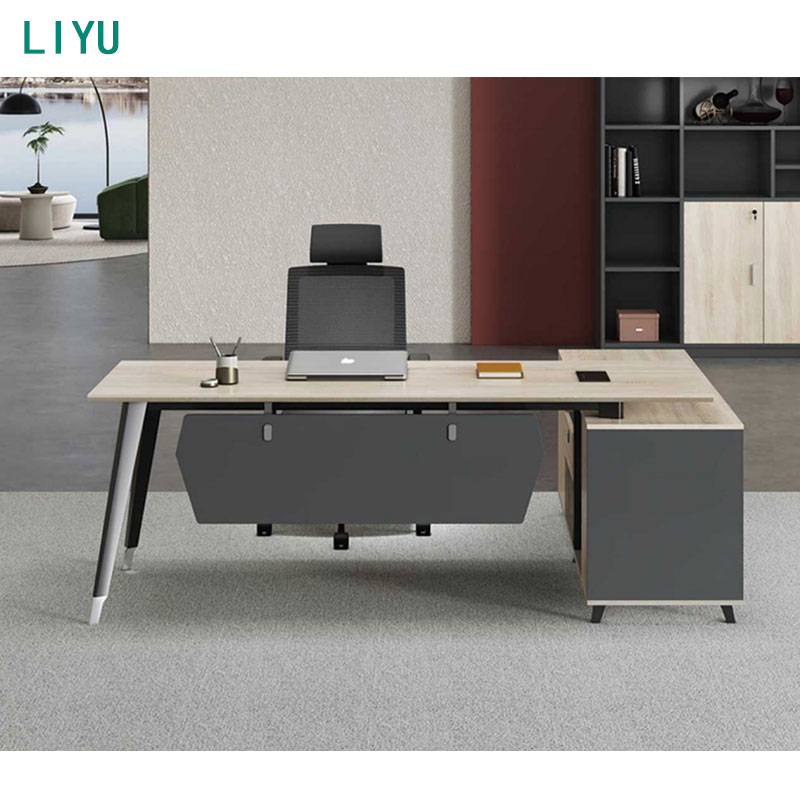
Baseline dimensions for executive functions start at 1200×600mm for highly compact spaces. However, true leadership roles require significantly more surface area. Standard executive footprints typically scale up to 1800×900mm. Large corporate suites often utilize desks measuring 2400×1200mm. Calculate your required desktop real estate based on your specific equipment. A dual 27-inch monitor setup requires a desk depth of at least 800mm. Anything shallower forces the user's eyes too close to the screens, causing fatigue. If the executive uses a 49-inch ultrawide monitor, the base footprint alone consumes massive desktop real estate. Ensure the surface area supports your workflow without forcing you to shuffle papers continuously.
Installing a large desk requires precise architectural clearance metrics. You must leave a minimum of 1200mm of clearance behind the desk. This space allows the executive chair to roll back, swivel, and recline without striking the wall or rear credenza. Visitor seating requires equal attention. Allocate at least 1000mm of clearance in front of the desk for guest chairs and legroom. The visual weight of a white desk works to your advantage here. White furniture reflects light and appears less imposing than dark mahogany. This optical illusion often allows you to install a slightly larger footprint without overwhelming the room's spatial balance.
Follow this sequence to map your spatial plan accurately:
Measure the total room dimensions from baseboard to baseboard.
Subtract 1200mm from the rear wall to establish the executive seating zone.
Subtract 1000mm from the front approach path for guest seating.
Identify floor core locations for power and data routing.
Tape the remaining allowable footprint on the carpet to visualize the desk's physical mass.
Modern leadership demands ergonomic flexibility. Integrating sit-stand functionality into a heavy executive chassis presents mechanical challenges. A standard executive desk can weigh 90kg empty. Add 30kg of computer equipment and books. A single-motor standing frame will burn out within six months under this load. You must specify a dual-motor or quad-motor system rated for at least 150kg. Verify the frame includes piezoelectric anti-collision sensors. These sensors stop the motors instantly if the desk contacts a filing cabinet or windowsill during descent. A premium sit-stand mechanism should operate silently and maintain absolute stability at its highest elevation.
Thick executive desk profiles often interfere with standard ergonomic accessories. Structural modesty panels mounted close to the front edge can block ergonomic chair armrests, preventing you from sitting close to the keyboard. Measure the clearance between the floor and the underside of the desk frame. Furthermore, thick MDF or solid surface tops complicate monitor arm installation. Standard C-clamp monitor arms typically max out at a 50mm clamping capacity. Thick solid surface tops reject standard C-clamp monitor arms. You must drill an 80mm grommet hole directly through the surface and use a through-bolt mount. Detail these technical requirements early to avoid damaging a pristine white surface with incompatible aftermarket clamps.
Complex workflows benefit from L-shaped and U-shaped configurations. These layouts allow you to separate digital work zones from analog meeting zones physically. You can dedicate the main desk to monitors and keyboards while keeping the return clear for signing documents or hosting quick consultations. A modern white office desk in a U-shape maximizes reachability, keeping all essential files within a single swivel radius. However, these configurations demand substantial floor space. Address the footprint trade-offs carefully. Measure all room access points, including door swings and radiator placements, before committing to a wrap-around layout. An improperly sized L-desk can trap you in a corner or block natural traffic flow through the office.
The aesthetic value of a minimalist white desk is immediately destroyed by a tangle of black power cables hanging beneath it. A luxury executive desk requires structural cable management, not flimsy aftermarket add-ons. Evaluate the integrated power grommets and under-desk cable trays. The desk should feature a continuous J-channel or hinged trough running the entire width of the surface. A proper J-channel should measure at least 150mm wide and 100mm deep. This accommodates large laptop power bricks, excess HDMI cable coils, and multi-outlet surge protectors. Structural modesty panels serve a dual purpose. They provide privacy for the user while effectively hiding wall outlets and floor cores from visitor view. Ensure the routing system allows cables to transition smoothly from the floor to the desktop without pinching or stretching.
Storage integration determines how clean your workspace remains. Assess the necessity of integrated versus modular storage. Integrated pedestals provide a seamless look but limit future reconfiguration. Modular mobile pedestals offer flexibility but can disrupt the desk's visual lines. The primary challenge lies in color-matching "white" across different materials. A metal filing cabinet painted white will reflect light differently than a wood-grain laminate desk finished in white. This discrepancy creates a mismatched, disjointed appearance. Mitigate this risk by utilizing single-supplier sourcing. Purchase your desk, credenza, and pedestals from the same manufacturer and the same product line to guarantee exact color and finish matching.
You will face a direct conflict between ultra-thin, sleek desk profiles and practical storage needs. Minimalist designs often eliminate drawers entirely to achieve a floating surface effect. While visually stunning, this forces you to store pens, secure documents, and hardware elsewhere. If you select a floating-top design with zero pedestal drawers, you must integrate a rear credenza. The credenza should match the desk's exact white finish and provide lateral filing for legal documents and secure storage for laptops. If you handle sensitive physical documents daily, a drawerless desk compromises your operational security and efficiency. Do not sacrifice daily functionality purely for a magazine-cover aesthetic.
Evaluate the long-term value of your investment by factoring in replacement cycles. Lower-grade white finishes degrade prematurely. They yellow under sunlight, chip at the edges, and absorb ink stains. While these desks require a lower initial outlay, you will likely need to replace them within three years. Premium materials like UV-resistant HPL or solid surface demand a higher initial commitment but maintain their structural and visual integrity for a decade or more. Calculate the disruption and expense of replacing a heavy executive desk multiple times versus investing in commercial-grade durability from day one.
Shipping large, heavy, easily scuffed white components introduces significant logistical risks. Standard LTL freight drops a 150kg pallet at the loading dock. Your internal IT or administrative staff cannot safely move this into an executive suite. Navigating these components into residential home offices with narrow access points compounds the risk. Mandatory white-glove delivery and professional installation are essential. White-glove teams uncrate the product on the truck, inspect the white finish for transit scuffs, and carry the components into the office using specialized lifting straps. Attempting to assemble a massive executive desk yourself risks personal injury and severe damage to the pristine white finish.
Commercial warranties require careful review, specifically regarding finish degradation. Standard warranties often cover structural failures but exclude surface wear. Instruct your procurement team to read the fine print regarding edge-banding delamination, UV yellowing, and motor failure on sit-stand models. A robust warranty should guarantee the topcoat against abnormal discoloration for at least three to five years. It should also cover the lifting columns and electronic control boxes for a minimum of five years. If a manufacturer refuses to warranty a white finish against standard office light exposure, select a different supplier.
Audit your exact office dimensions and tape out the proposed desk footprint on the floor to verify clearance zones.
Request physical material swatches from suppliers to test stain resistance and verify color matching under your specific office lighting.
Review product specification sheets to confirm monitor arm clamp compatibility and dual-motor weight capacities.
Schedule professional white-glove delivery to prevent handling damage during the final installation phase.
A: Inferior white finishes turn yellow when UV exposure breaks down the chemical topcoat. To prevent this, specify desks utilizing UV-resistant high-pressure laminates (HPL) or aliphatic polyurethane topcoats. These commercial-grade materials block UV degradation, ensuring the desk remains crisp and bright for years even in sunlit offices.
A: Standard dimensions for true executive function start at 1800mm in width and 900mm in depth. This size accommodates dual monitors, document review space, and guest interactions. Larger corporate suites frequently utilize desks measuring 2400mm by 1200mm to maximize surface area and visual impact.
A: Maintain white laminate by wiping it daily with a soft microfiber cloth and a pH-neutral cleaner. Avoid abrasive melamine sponges, bleach, and ammonia-based solvents. Harsh chemicals strip the protective topcoat, leaving the surface vulnerable to permanent staining and rapid discoloration from coffee or ink.
A: Yes, premium manufacturers integrate sit-stand functionality into luxury chassis. Look for heavy-duty dual-motor or quad-motor systems capable of lifting over 150 kilograms. These robust mechanisms ensure the desk remains stable and lifts heavy solid surface tops and integrated modesty panels without straining the motors.
A: High-pressure laminate (HPL) is the best material for heavy daily durability and scratch resistance. For premium luxury environments requiring absolute stain resistance and seamless edges, solid surface materials like Corian or quartz composites are the superior choice, though they require reinforced floor load capacities.
A: Hide cables by selecting a desk with built-in structural wire management. Look for integrated desktop grommets leading to continuous under-desk troughs or J-channels measuring at least 150mm wide. Structural modesty panels also effectively conceal wall outlets and floor cores from visitor view.
A: Standard C-clamp monitor arms often fail on thick executive desks because they lack the necessary jaw clearance, typically maxing out at 50mm. For thick MDF or solid surface tops, use grommet-mount monitor arms that bolt securely directly through the desktop using a pre-drilled 80mm hole.


