
Views: 0 Author: Site Editor Publish Time: 2026-09-08 Origin: Site


Sourcing materials for oversized workspaces presents unique mechanical and aesthetic challenges. Standard desk materials often fail under the structural demands of a large span. When you place multiple heavy monitors, mounting arms, and equipment on an inadequate surface, the results are predictable. Selecting the wrong wood leads to center sagging, surface denting from heavy equipment, and premature wear, ultimately requiring costly replacement.
To prevent these failures, you need a technical evaluation framework. Selecting the right material requires understanding the physical properties of different species and how they interact with your specific workspace environment. This guide breaks down how to evaluate materials based on load-bearing capacity, Janka hardness, environmental stability, and executive-level aesthetics.
The foundation of any reliable workspace surface begins with understanding the cellular difference between wood types. Hardwoods, derived from deciduous trees like Oak, Walnut, and Maple, offer the high density required for heavy daily use. Their complex cellular structure provides natural resistance to compression and impact. Softwoods, harvested from conifers like Pine, Fir, and Spruce, grow much faster and possess a looser cellular makeup. While softwoods are economical, they degrade rapidly. They dent easily under the pressure of standard office equipment or even the simple act of writing on a single sheet of paper.
Beyond structural integrity, these categories dictate how a wood office desk accepts protective finishes. Hardwoods generally absorb stains and protective oils evenly, resulting in a uniform, professional appearance. Softwoods possess uneven grain densities that cause finishes to absorb erratically. This leaves a blotchy, amateurish look unless the wood is heavily treated with pre-stain conditioners or sealed with opaque paints. For a professional environment, hardwoods establish the necessary baseline for both performance and visual appeal.
A large workspace must support substantial weight over a wide area. Modern setups frequently include dual or triple monitors, heavy-duty clamp mounts, desktop computers, and the resting body weight of the user. When you apply these loads across a wide gap between the desk legs, the material experiences severe stress.
Deflection refers to the degree a material sags over long spans, typically those measuring 72 inches and above. Woods with a low modulus of elasticity bow in the center under sustained weight, creating an uneven work surface and stressing the desk frame. To combat deflection without relying on intrusive center legs or massive steel aprons, the physical thickness of the slab must increase. For unsupported solid wood spans exceeding 60 inches, establish a baseline thickness requirement of 1.25 to 1.5 inches minimum. Thinner profiles require structural reinforcement to remain flat over time.
| Wood Species | Modulus of Elasticity (Stiffness) | Recommended Minimum Thickness (72" Span) | Deflection Risk (Unsupported) |
|---|---|---|---|
| White Oak | 1.78 million psi | 1.25 inches | Low |
| Hard Maple | 1.83 million psi | 1.25 inches | Low |
| Black Walnut | 1.68 million psi | 1.50 inches | Moderate |
| Eastern White Pine | 1.24 million psi | 2.00+ inches | High |
To objectively evaluate how well a surface will resist dents and scratches, the woodworking industry relies on the Janka hardness scale. This test measures the exact pounds-force (lbf) required to embed a 0.444-inch steel ball halfway into the wood. It provides a reliable metric for predicting daily wear and tear.
For heavy-use environments, establish a strict benchmark. Woods rating below 900 lbf, such as Pine, Alder, or Poplar, fail in office settings unless completely covered by protective desk pads. Dropping a stapler, clamping a monitor arm too tightly, or pressing hard with a ballpoint pen leaves permanent physical impressions on these softer species. Hardwoods rating above 1000 lbf provide the necessary surface tension to withstand dropped items, shifting equipment, and aggressive writing pressure. This ensures the surface remains smooth and functional for decades.
While high density solves durability problems, it introduces logistical challenges. Large, dense wood slabs are exceptionally heavy. A standard 72x30-inch White Oak top at 1.5 inches thick easily exceeds 100 pounds before you attach any hardware or framing. Moving, flipping, and assembling a desk of this mass requires multiple people and careful planning.
This immense weight dictates your choice of base. Standard motorized standing desk frames often max out at 150 to 200 pounds of lifting capacity. When the wood top consumes more than half of that allowance, you severely limit the amount of equipment you can place on the desk before burning out the lift motors. Heavy-duty, dual-motor, or four-leg motorized bases are mandatory for dense hardwood tops. You must also evaluate the material's workability. Extremely hard woods require sharp, high-quality drill bits and careful pilot hole sizing. Failing to properly drill these materials when installing custom cable management trays or aftermarket keyboard mounts results in snapped screws or split wood.
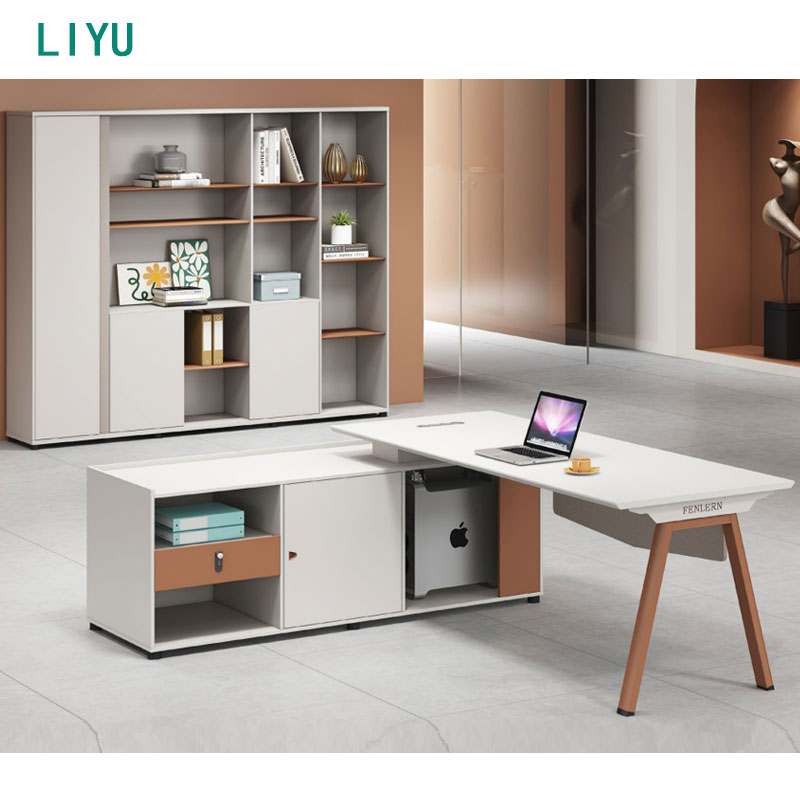
Oak remains the dominant choice for heavy-duty workspace surfaces, balancing accessibility with extreme structural integrity. With Janka ratings hovering between 1290 and 1360 lbf, Oak provides exceptional stiffness. It possesses excellent workability, meaning it resists cracking and splitting under the intense pressure of heavy-duty threaded inserts, large screws, and aggressive sawing during custom modifications.
When selecting Oak, you choose between the Red and White varieties. Red Oak features a prominent, traditional grain pattern with open pores that readily accept dark stains. White Oak offers a tighter, more modern grain structure. White Oak contains tyloses—cellular growths that plug the wood's pores, making it highly water-resistant. This closed-cell structure makes White Oak superior for resisting liquid spills and humidity changes. Oak stands as the most reliable baseline for balancing upfront costs with generational durability.
Walnut represents the premier choice for high-end aesthetics. Its rich, dark chocolate color, natural luster, and stable, swirling grain patterns instantly elevate the visual authority of a room. Unlike woods that require heavy staining to achieve a dark finish, Walnut's natural tone requires only a clear protective coat to look spectacular.
Structurally, Walnut offers moderate hardness, registering around 1010 on the Janka scale. While it is noticeably softer than Oak or Hard Maple, it remains structurally stable and holds up exceptionally well under heavy executive use. Wide-plank Walnut carries a significant cost premium due to its slower growth rate and high market demand. Despite being slightly softer than Oak, large Walnut slabs remain quite heavy, making the resulting furniture challenging to relocate without professional assistance.
For environments requiring ultra-durable, smooth surfaces, Hard Maple is an outstanding candidate. Registering an impressive 1450 on the Janka scale, it is highly affordable and exceptionally resistant to impact. Its tight, closed grain prevents dust and debris from settling into the wood, making it exceptionally easy to clean and maintain.
Birch serves as a dense, cost-effective alternative to Maple. It shares a similarly closed grain structure and bright, pale aesthetic, allowing for effortless daily maintenance. The primary challenge with both Maple and Birch lies in their finishing process. Their dense, uneven cellular density makes them notoriously difficult to stain, often resulting in severe blotchiness. To maximize their visual potential, use clear finishes that highlight their natural, bright aesthetics rather than attempting to alter their color with dark pigments. If you must stain Maple, applying a high-quality sanding sealer beforehand is mandatory to achieve even color distribution.
Ash is a highly durable, shock-resistant option that frequently mimics the aggressive, open grain pattern of Oak but often arrives at a lower price point. With a Janka rating of 1320, it easily withstands heavy impacts and daily friction.
Historically used for tool handles and baseball bats, Ash possesses unique flexibility and shock absorption properties. This makes it highly resilient against sudden impacts, such as dropping heavy equipment. It features excellent machining properties. Unlike Maple, Ash takes stains uniformly and deeply, making it an ideal candidate for custom-colored environments where you need the durability of a hardwood but the specific color palette of a branded workspace.
The primary advantage of a solid wood office desk is its long-term return on investment. Solid wood is the same material all the way through. After years of heavy use, accumulated scratches, and inevitable coffee rings, you can sand a solid slab down to raw wood and completely refinish it. This process restores the desk to factory-new condition, allowing the furniture to last for generations.
Aesthetically, solid wood provides continuous grain patterns that flow naturally across the surface and over the edges. Whether utilizing edge-glued planks or a single massive slab, the visual depth and organic variations of solid wood cannot be perfectly replicated by engineered alternatives. This authenticity is a major factor in executive environments where material quality signals professional standing.
Do not dismiss engineered construction. A high-quality wood panel executive desk utilizes a core of Medium Density Fiberboard (MDF) or high-density particleboard, wrapped in a thin layer of real wood veneer. This construction offers distinct structural advantages. Engineered cores are dimensionally stable; they do not expand, contract, or warp in response to seasonal humidity changes.
This stability eliminates the risk of seasonal wood movement, making engineered panels highly reliable for massive executive footprints where solid wood might cup or bow. They provide a much more budget-friendly entry point for achieving the look of exotic or expensive woods. The critical limitation is repairability. Veneers are typically only 1/40th of an inch thick. You cannot deeply sand them to remove major gouges. Once the veneer is breached, the engineered core is exposed, and the desk is permanently damaged.
Solid wood is a hygroscopic material; it constantly absorbs and releases moisture to reach equilibrium with its surrounding environment. Placing large solid wood desks in environments with fluctuating humidity—such as offices near exterior doors, over heating vents, or in non-climate-controlled buildings—carries significant risks. As the wood expands and contracts across its grain, it can crack, cup, or bow.
To mitigate these risks, proper acclimation is necessary before assembly. Follow these specific steps to ensure stability:
Film-building finishes, such as polyurethane, lacquer, and conversion varnishes, create a hard plastic-like shell over the wood. These finishes offer maximum protection against moisture, hot coffee spills, and the daily friction of sliding keyboards and paperwork. They seal the wood completely, making the surface highly resistant to chemical cleaners and liquid penetration.
The trade-off for this high level of protection is repairability. When a film finish is deeply scratched or chipped, moisture penetrates the breach, causing the finish to flake or peel. Spot-repairing polyurethane is notoriously difficult, as new layers do not melt into old layers seamlessly. Fixing a deep scratch usually requires sanding the entire surface down to bare wood and reapplying the finish to the whole desk. Application also requires a dust-free environment and significant curing time before the desk can handle heavy equipment.
Modern hard-wax oils, such as Rubio Monocoat or Osmo, have revolutionized executive desk finishing. Instead of sitting on top of the wood, these finishes penetrate the fibers and bond molecularly, leaving the natural texture of the wood exposed while providing robust liquid resistance.
The primary advantage of hard-wax oils is the ability to easily spot-repair damage. If a section of the desk gets scratched, you simply sand that specific area and rub in a little more oil. The new oil blends seamlessly with the old, without requiring you to strip the entire large desk surface. These finishes require periodic reapplication to maintain their liquid resistance. Hardwoods absorb these oils much more evenly and effectively than softwoods, resulting in a superior, matte aesthetic that feels like natural wood rather than plastic.
| Finish Type | Spill Resistance | Scratch Repairability | Tactile Feel |
|---|---|---|---|
| Polyurethane (Oil-based) | Excellent | Poor (Requires full sanding) | Smooth, plastic-like |
| Conversion Varnish | Outstanding | Poor (Requires full sanding) | Very smooth, hard shell |
| Hard-Wax Oil | Good (Requires maintenance) | Excellent (Spot repairable) | Natural wood texture |
When engineering a workspace with a span exceeding 72 inches, relying solely on the thickness of the wood is often insufficient. To prevent deflection over time, structural mitigation strategies must be implemented. The most effective method for stabilizing large office desk wood is the installation of steel C-channels.
C-channels are heavy steel bars routed directly into the underside of the wood. By slotting the screw holes in the steel, the wood is allowed to expand and contract seasonally across its width, while the rigid steel prevents the span from sagging lengthwise. For traditional desk designs, utilizing deep wooden aprons around the perimeter or installing a discreet center-support leg are also highly effective ways to transfer weight to the floor and eliminate center deflection.
Standard wood screws are a major point of failure in large, heavy desks subject to movement, vibration, or disassembly. Driving a tapered wood screw directly into the slab cuts the wood fibers. If you disassemble the desk for moving, driving that screw back into the same hole yields significantly less holding power. In softer woods, the threads easily strip out entirely under the upward pulling force of a heavy motorized frame.
To ensure structural longevity, install threaded inserts. These brass or steel cylinders are driven into carefully drilled pilot holes. They feature coarse external threads that bite deeply into the wood, and fine internal machine threads. This allows you to attach the desk frame using standard machine bolts. Threaded inserts distribute the load over a wider area of the wood and allow for safe, repeatable assembly and disassembly without ever degrading the wood's integrity.
A: High-stiffness hardwoods like White Oak, Hard Maple, and Hickory are the best choices to resist sagging. For any span over 72 inches, even these dense woods require a thickness of at least 1.25 inches and proper under-desk support, such as routed steel C-channels or a perimeter apron, to remain perfectly flat under heavy equipment loads.
A: Solid wood offers superior longevity because you can sand and refinish it multiple times over its lifespan to remove scratches and dents. High-quality veneer over an MDF core provides better climate stability, resisting the warping and cracking that solid wood experiences in environments with fluctuating humidity.
A: For a 72-inch span without a supporting wooden apron or steel frame directly underneath, solid wood should be between 1.25 and 1.5 inches thick. Thinner slabs will experience center deflection over time, especially when loaded with multiple monitors and heavy mounts.
A: Scratch resistance depends entirely on the topcoat finish applied to the surface, not the underlying core material. A wood panel desk finished with a high-quality polyurethane or conversion varnish resists scratches just as well as a solid wood desk with the exact same finish.
A: Walnut is highly sought after for its unique dark, swirling grain and natural luster that requires no stain to look premium. It offers excellent strength and stability under heavy use, and its historical association with high-end, bespoke furniture instantly elevates the authority of an executive workspace.
A: Heavy-duty C-clamp monitor mounts concentrate immense pressure on a small area, which dents even hard woods. Protect the desk by placing steel reinforcement plates or dense rubber pads between the clamp and the wood. This distributes the clamping force over a wider surface area, preventing localized crushing.
A: Softwoods are generally discouraged for heavy daily use. They possess a low Janka hardness, making them highly susceptible to denting from dropped items, clamping forces, and standard writing pressure. Their uneven cellular structure causes them to absorb finishes erratically, complicating the staining process.


