
Views: 0 Author: Site Editor Publish Time: 2026-03-25 Origin: Site


Modern workspaces are rapidly shifting away from flimsy, traditional laminates. Today, professionals increasingly embrace industrial wood and metal configurations. They offer a rugged, utilitarian edge. However, this aesthetic-driven shift creates a hidden problem. Buyers often purchase these desks purely for their trendy loft appearance. They completely ignore the structural physics required to support heavy-duty setups. Dual monitors, drafting equipment, and heavy sit-stand motors demand serious stability. This critical oversight inevitably leads to frustrating desk wobble. It causes premature surface wear and long-term ergonomic strain.
You need a strict evaluation framework to avoid these costly pitfalls. In this guide, we will thoroughly assess frame geometry and material resilience. We will also break down the total cost of ownership and strict spatial implementation rules. By the end, you will know exactly how to evaluate and select the right wood and metal office desk for your specific daily workflow.
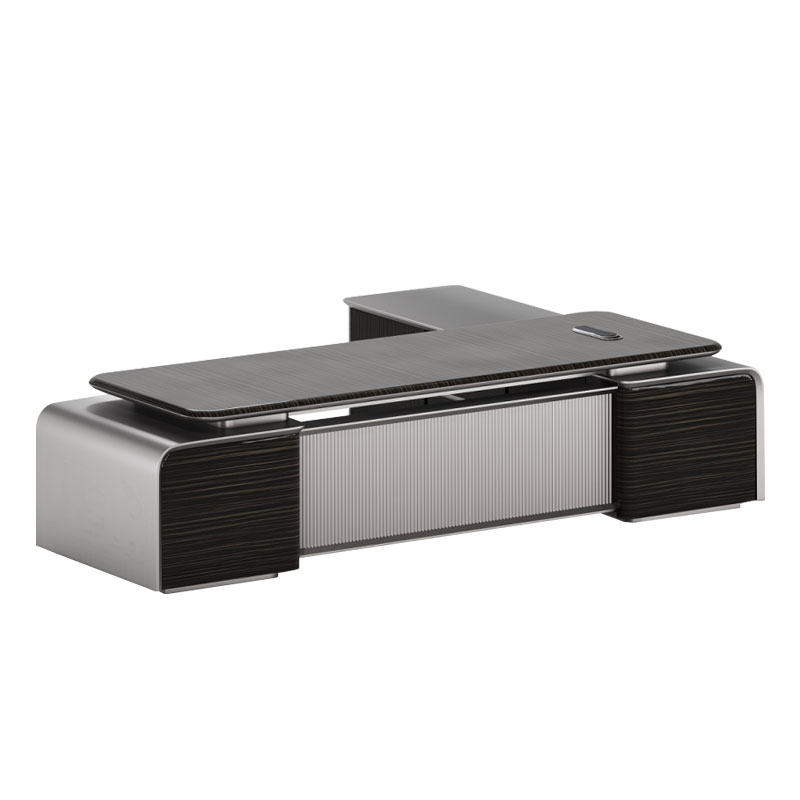
Stability is Frame-Dependent: Desk stability relies on metal leg profile, wall thickness, and crossbar geometry, not the density of the wood desktop.
Material Trade-offs are Inevitable: Metal resists deep dents but is prone to chipping and cold thermal transfer; commercial-grade wood or veneer offers a warmer ergonomic surface but requires specific finishing to resist scratches.
Sizing Impacts Workflow: Proper evaluation requires calculating room clearance, chair width buffers, and equipment payload before shortlisting.
Logistics Impact Upfront Costs: Heavy industrial desks require careful assessment of freight versus white-glove delivery to prevent unexpected installation bottlenecks.
You must categorize your daily desk usage before looking at aesthetics. Standard laptop work exerts minimal downward pressure. Conversely, engineering and drafting environments require high static load capacity. A heavy-duty multi-monitor array paired with heavy reference manuals demands robust structural integrity. Evaluate your daily friction points. If you routinely lean heavily on the front edge, you introduce longitudinal stress. Your chosen frame must explicitly counteract this specific daily workload.
Visual and tactile ergonomics directly dictate daily comfort. First, examine the desktop edge radius. A sharp, 90-degree industrial edge restricts blood flow to your wrists during long typing sessions. You need a slightly rounded or cascaded edge to maintain wrist neutrality. Next, evaluate the surface finish. High-gloss finishes reflect overhead lighting directly into your eyes. This causes severe visual fatigue over an eight-hour shift. Always mandate a matte or satin finish to mitigate reflective glare.
Industrial design often champions a raw, utilitarian "loft" aesthetic. You might love exposed hardware, distressed finishes, and bare welds. However, you must balance this raw appeal against professional corporate requirements. Unmanaged cables look chaotic against a minimalist metal frame. You need integrated cable trays to maintain visual order. Additionally, consider modesty panels. Open metal bases expose cords and legs, which may violate standard corporate aesthetic guidelines. Best practice: Choose industrial designs offering aftermarket cable management and modular modesty panels to bridge this gap.
Every industrial office desk falls into one of three distinct material categories. Understanding their unique traits helps you align your purchase directly to your operational environment.
Category Primary Material Best Use Case Key Trade-off Metal-Forward High-gauge steel / iron Warehouses, heavy machinery zones Cold surface, prone to chipping Wood-Forward Solid wood / reclaimed timber Executive offices, creative studios Vulnerable to humidity warping Commercial Veneer Engineered core + steel frame High-traffic corporate spaces Less "raw" authenticity
These desks utilize a high ratio of steel or iron. Manufacturers typically apply powder-coated finishes to protect the metal. They excel in harsh environments like industrial plants, warehouse management floors, and heavy machinery adjacent spaces. However, they carry distinct ergonomic trade-offs. Steel has high thermal conductivity, resulting in a cooler surface temperature. This feels uncomfortable against your forearms in air-conditioned spaces. Furthermore, heavy impacts can chip the powder coat, exposing bare steel to rust.
These models feature thick solid wood or reclaimed timber tops. Minimalist metal bases, such as arched trestles or U-shaped legs, support the massive wooden slabs. They look stunning in executive offices, creative studios, and premium home environments. Despite their beauty, solid wood reacts to environmental changes. It remains vulnerable to humidity warping if not properly acclimated. You must ensure the manufacturer uses high-grade commercial sealants to resist daily abrasion and moisture.
These desks combine an engineered wood core, realistic wood veneer, and high-gauge steel frames. They represent the ultimate compromise for high-traffic corporate environments. Engineered cores resist warping entirely. The laminate exterior resists spills, coffee stains, and deep scratches. They deliver strict aesthetic uniformity across large fleet deployments while maintaining a subtle industrial flair.
Desk wobble destroys concentration and damages sensitive equipment. Stability rarely depends on the desktop material. Instead, the geometric profile of the steel frame dictates lateral and longitudinal rigidity. Standard T-legs often permit lateral sway. To prevent this, structural physics demand crossbar inclusion. A horizontal crossbar connecting the rear legs prevents side-to-side deflection. Furthermore, heavy-duty leveling feet ensure continuous floor contact on uneven surfaces. If the frame geometry lacks cross-bracing, the desk will eventually shake.
Steel framing provides exceptional stiffness. Wood provides density. Understanding this ratio helps you evaluate load distribution. High-gauge steel (typically 14-gauge or 16-gauge for commercial furniture) resists bending under heavy localized loads. The wood desktop acts as a distribution plate. It spreads the weight of heavy monitors across the rigid steel framework underneath. Common mistake: Buying a massive 2-inch solid wood top supported by thin, tubular aluminum legs. The legs will buckle under the combined weight over time.
Industrial sit-stand models introduce complex payload physics. Solid wood tops and thick metal frames are incredibly heavy. You must calculate this baseline weight against the motor's total lifting capacity. If a dual-motor frame lifts 300 pounds, and the wood top weighs 120 pounds, you only have 180 pounds of usable capacity. You must factor in a 20% to 30% payload buffer. Running a motor consistently at maximum capacity guarantees rapid thermal burnout and mechanical failure.
The joints represent the weakest point of any desk. Many industrial designs feature exposed bolts and large rivets to enhance the rugged aesthetic. While visually striking, exposed hardware can loosen over time due to daily micro-vibrations. Evaluate the underlying joint integrity. The best manufacturers use integrated hidden fasteners or heavy-duty threaded inserts set into the wood. This approach allows repeated disassembly without stripping the wood fibers.
Initial purchase price rarely reflects true costs. A cheap, hollow-core laminate desk might save money upfront. However, it typically fails within two to three years in a demanding environment. The edges peel, and the center sags. Conversely, a heavy-duty wood and metal frame boasts a lifecycle exceeding a decade. When you calculate the replacement cadence, the industrial desk delivers a vastly superior return on investment. You buy it once, and it serves you indefinitely.
Factor in the hidden labor required for daily upkeep. Distinct materials demand different maintenance workflows. A scratched solid wood finish requires sanding, oiling, and curing time. This pulls the desk out of operation for several days. Powder-coated steel resists deep gouges but chips under hard impact. Repairing it requires specific touch-up paint to prevent rust. High-pressure laminates over steel frames usually offer the lowest maintenance burden, requiring only a damp cloth for daily sanitization.
Your facility will grow. Your furniture must scale seamlessly. When evaluating an industrial desk line, assess its modularity. Can you easily attach standardized privacy screens later? Does the vendor offer matching mobile pedestals or locking storage units? A rigid, non-modular desk becomes obsolete when your workflow changes. Prioritize vendors offering a comprehensive ecosystem of attachable accessories and standardized expansion shells.
Spatial planning prevents disastrous installation surprises. You cannot simply measure the desk footprint; you must calculate functional seating clearance. Standard industry guidelines mandate specific formulas for room layouts:
Chair Buffer: Add a minimum of 36 inches behind the desk to allow the user to push their chair back comfortably.
Aisle Spacing: Maintain at least 48 inches between the desk edge and the nearest primary walkway to comply with safety maneuverability standards.
Lateral Clearance: Ensure at least 30 inches of clearance between the sides of the desk and adjacent walls for proper ventilation and access.
Heavy materials generate intense point loads on your flooring. A 200-pound desk supporting 100 pounds of equipment focuses all that weight onto four small contact points. This easily gouges hardwood, cracks ceramic tile, or crushes commercial carpet. You must distribute this weight effectively. Evaluate the base feet. Use wide, stationary leveling glides for permanent setups. If you require mobility, mandate commercial-grade polyurethane caster wheels. Hard plastic wheels will immediately scratch your office flooring.
Logistical friction adds massive hidden costs to heavy furniture deployment. Standard curbside freight delivery means the carrier drops a 300-pound wooden crate on your sidewalk. Your internal staff must break down the crate, carry the steel and wood up the elevators, and assemble the components. This disrupts daily operations and risks employee injury. Always evaluate the cost difference for "white glove" inside delivery. Professional installers handle the heavy lifting, assembly, and debris removal, eliminating operational bottlenecks.
Filter your options based on environmental hazards. Exclude raw solid wood if your workspace experiences high moisture fluctuations or frequent chemical spills. Reject high-gloss metal surfaces if overhead lighting causes ergonomic glare concerns. Prioritize commercial laminates for high-traffic zones.
Do not trust marketing adjectives like "sturdy" or "heavy-duty." Demand exact specifications from the vendor. Ask for the specific steel gauge used in the legs. Confirm the inclusion of lateral crossbars. Request the certified static and dynamic weight limits. Data-driven vetting prevents weak purchases.
A warranty reveals the manufacturer's confidence in their materials. Scrutinize the fine print. Ensure the coverage explicitly includes metal weld failures and surface delamination. For sit-stand models, separate the frame warranty from the electronic motor warranty. Motors typically carry shorter coverage lifespans.
Never execute a massive fleet rollout blindly. Request a material swatch or purchase a single demo unit. Test the surface finish for tactile warmth. Verify mouse-tracking compatibility on the raw wood grain. Let your team test the frame stability under actual working conditions before committing your budget.
Selecting an industrial desk requires moving far beyond the visual appeal of exposed steel and raw timber. You must strictly vet the underlying structural physics, verify material resilience, and ensure strict ergonomic compliance. A sturdy workspace directly impacts daily productivity and long-term physical health.
To finalize your decision, take these immediate actions:
Audit your daily workflow to determine your precise static load and equipment payload requirements.
Measure your office space using standard clearance formulas to ensure proper chair push-back and aisle maneuverability.
Demand technical frame specifications from your vendor, prioritizing crossbar geometry and high-gauge steel.
Secure inside-delivery logistics for heavy units to prevent workplace injuries and installation delays.
An optimal industrial desk precisely aligns its material ratio and frame geometry with the daily realities of your specific workspace.
A: No, this is a common myth. While heavy steel frames prevent structural failure, full metal desktops easily chip, dent, and feel uncomfortably cold. High-density commercial-grade wood veneers or sealed solid woods handle daily surface abrasion better while providing superior tactile comfort.
A: You must distribute the heavy point loads concentrated at the table legs. Always use wide leveling feet for stationary setups. If you need mobility, insist on commercial-grade polyurethane caster wheels rather than hard plastic, which easily scratches hardwood and tile.
A: Industry standards require at least 36 inches of clearance directly behind the desk for chair push-back space. Additionally, you should maintain a minimum 48-inch aisle clearance from the desk's front edge to ensure safe, compliant walkway maneuverability in busy offices.
A: They can be, provided you plan ahead. The open-frame nature of industrial design exposes messy wires. You must specifically look for desks featuring built-in desktop grommets, attachable modesty panels, and aftermarket steel cable management trays to hide the clutter.


